
CNC machining accuracy depends on the machine, fixture, material, tool, thermal behavior and inspection method, not only the number of axes.
How accurate can CNC machining be? The answer cannot be based only on whether the machine is 3-axis, 4-axis or 5-axis. Axis count determines access and freedom of movement, but final part accuracy also depends on machine condition, fixture datum, material stability, tool wear, thermal behavior and inspection method.
For selected critical dimensions, tolerances such as +/-0.02 mm, +/-0.01 mm or even tighter values may be evaluated under suitable structure, material, fixturing and measurement conditions. This does not mean every dimension on every part should be specified at the same level.
OEMach reviews the drawing first, identifies the functional dimensions, and then chooses the practical process route. Sometimes 5-axis machining is the best way to reduce datum drift. Sometimes a stable 3-axis setup with a dedicated fixture is more reliable and cost-effective.
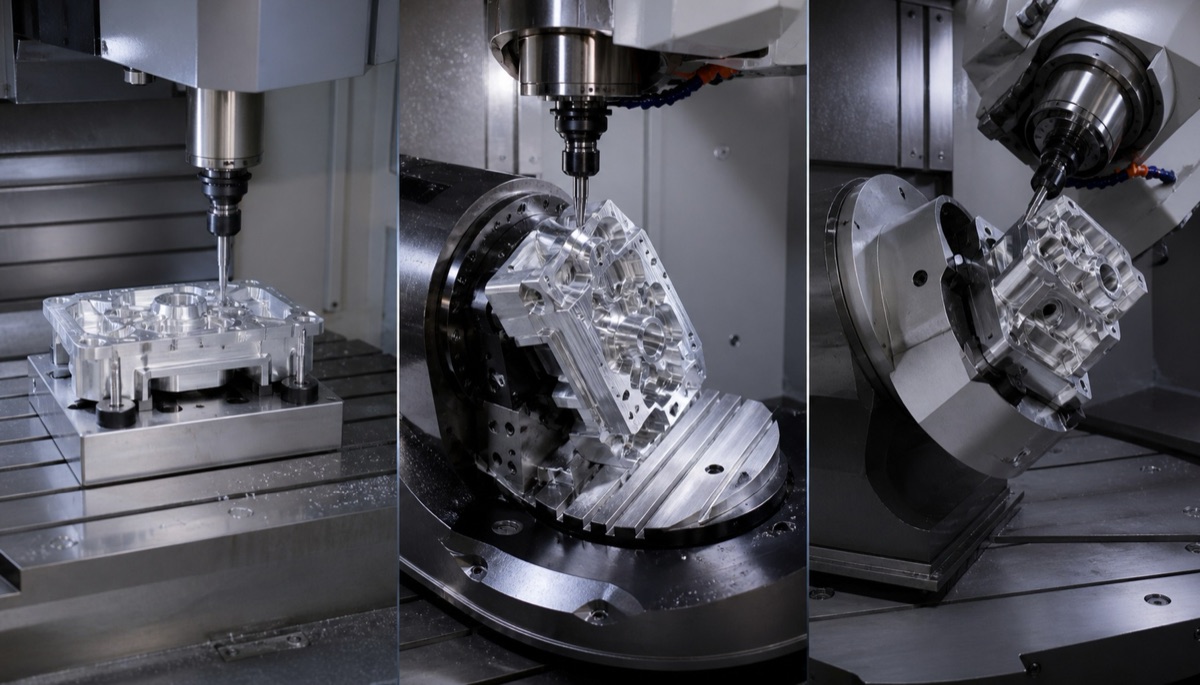
How to Understand 3-Axis, 4-Axis and 5-Axis Capability
| Process | Suitable parts | Typical accuracy discussion | Main risk |
|---|---|---|---|
| 3-axis CNC | Plates, brackets, housings and cavities | Key dimensions often depend on fixture and datum stability | Multiple setups can accumulate datum error |
| 4-axis CNC | Bushings, flanges, circular holes, tubular parts and multi-face structures | Circular relationships can be more stable around one rotary axis | Rotary alignment, coaxiality and clamping rigidity |
| 5-axis CNC | Complex surfaces, angled holes, lightweight frames and multi-angle brackets | Can reduce re-clamping and preserve complex relationships | Programming, tool posture, machine calibration and inspection difficulty |
| Mill-turn | Shafts, sleeves, cylinders and flange parts | Useful for coaxiality, runout and face relationships | Main-axis datum and secondary milling transition |
| Grinding or wire EDM support | Hardened steel, inserts, narrow slots and ultra-local precision areas | Local accuracy can be improved, but process chain grows | Cost, lead time and handoff between processes |
3-Axis Machining Is Not a Low-End Choice
Many buyers assume that 5-axis always means higher accuracy than 3-axis. For flat plates, simple brackets, standard housings and single-side hole patterns, 3-axis CNC with a stable fixture and correct datum may be the more robust route.
The weak point of 3-axis machining is usually re-clamping. Once a part needs features on multiple sides, each setup change introduces a datum transfer. Hole position, side-hole relationship and parallelism between opposite faces can start to drift here.
The key question is therefore not the axis count alone. It is whether the critical holes and faces can be machined in one setup, whether soft jaws and locating pins are stable, and whether first-article inspection uses the correct datum system.
4-Axis and 5-Axis Reduce Datum Drift
4-axis machining is useful for circular layouts, shaft sleeves, flanges, circumferential holes and multi-face continuous structures. Its value is that features can be indexed around one rotary axis instead of repeatedly flipped by hand. The risk is that rotary-axis alignment and clamping rigidity must be controlled.
5-axis machining becomes more valuable on complex parts. Angled holes, lightweight frames, deep side walls and curved support surfaces may lose datum relationship if they are repeatedly re-clamped on a 3-axis machine. 5-axis machining can reduce setup count and improve tool posture.
Still, 5-axis is not a magic answer. Thin-wall aluminum, stainless deep slots, PEEK rebound and hardened steel all depend on material behavior and tooling. Machine capability opens the door; process control determines what the part can actually hold.
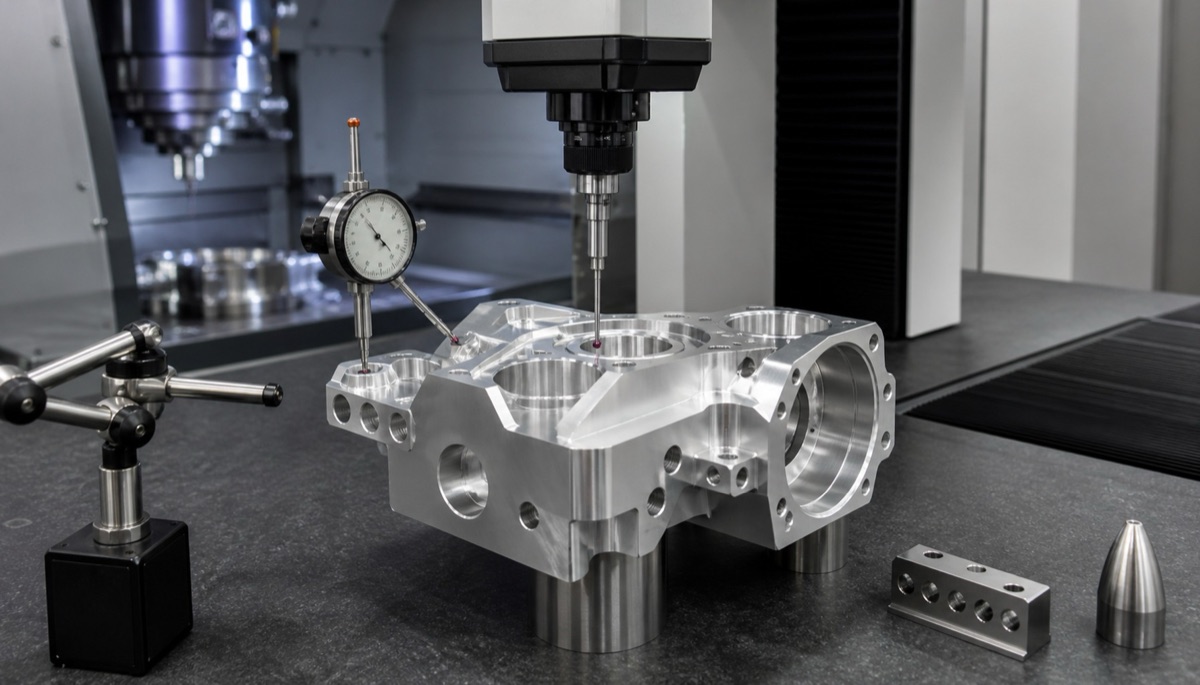
A Practical Process Selection Method
In one aluminum connection plate review, the initial request called for 5-axis machining. After drawing review, the critical holes and mounting faces were concentrated on two perpendicular datum faces. A 3-axis process with a dedicated fixture and controlled two-step positioning could meet the functional requirement more directly.
A different lightweight bracket required angled holes and multi-directional pockets. For that part, 5-axis machining reduced re-clamping and kept the hole relationship easier to inspect. The correct choice came from function and measurement logic, not from the machine name.
This is how OEMach approaches precision RFQs: identify the feature that matters, define the datum and inspection method, then choose 3-axis, 4-axis, 5-axis, mill-turn, grinding, wire EDM or a combined route.
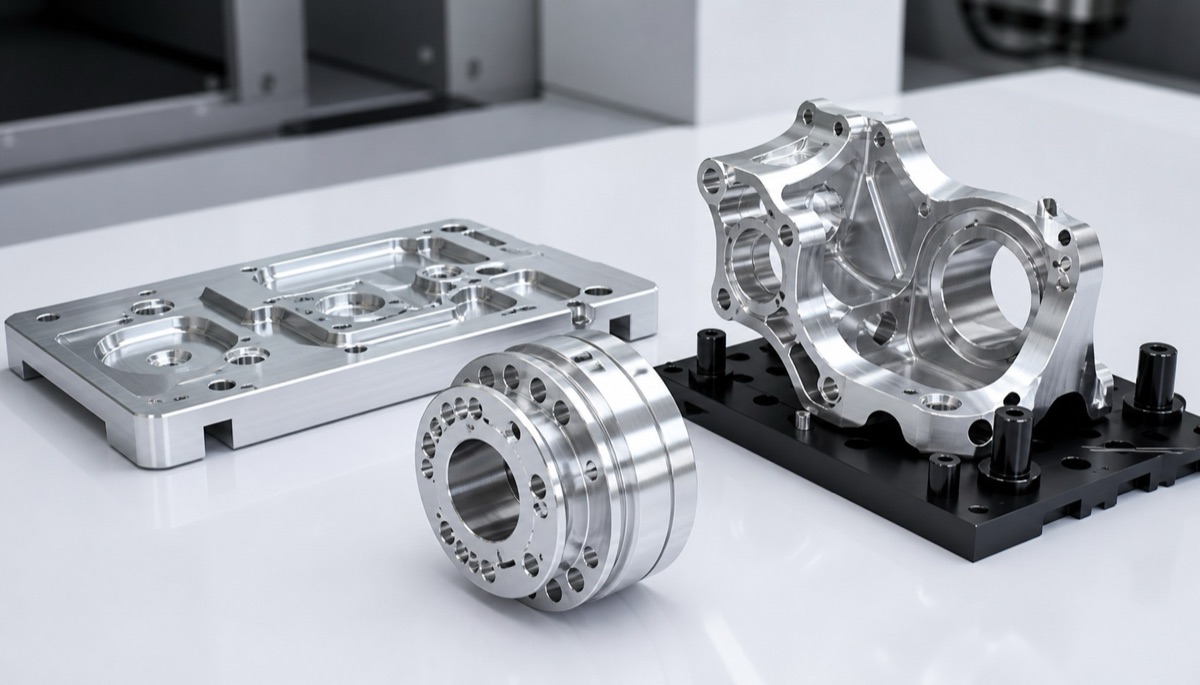
How to Ask About CNC Accuracy Before Ordering
Do not ask only, how accurate can you make it? Ask which critical dimensions can be controlled, by which process and by which inspection method.
Provide both 2D drawings and 3D models, and mark locating holes, bearing seats, contact faces and general profile dimensions separately.
State material, quantity, surface treatment and whether first-article or CMM reports are needed.
For complex parts, ask the supplier to explain whether machining datum and inspection datum are the same.
Separate general dimensions from critical dimensions so the whole drawing is not pushed into unnecessary high precision.
FAQ
Can CNC machining reach +/-0.005 mm?
Selected critical dimensions may be evaluated at this level when structure, material, fixturing, tool control and inspection conditions are suitable. It does not apply automatically to an entire part.
Is 5-axis CNC always more accurate than 3-axis CNC?
No. For simple plates or single-side features, 3-axis machining with a stable fixture can be more predictable. 5-axis is strongest when it reduces re-clamping or handles complex angles.
What parts are suitable for 4-axis CNC?
Shaft sleeves, flanges, circumferential hole patterns, tubular parts and multi-face features around a rotary axis are common 4-axis candidates.
What affects CNC machining accuracy most?
Machine condition, datum setup, fixture rigidity, tool wear, material stress, thermal deformation, process route and inspection method all affect final accuracy.
Can OEMach recommend the right CNC process?
Yes. OEMach can review drawings and recommend 3-axis, 4-axis, 5-axis, mill-turn, grinding, wire EDM or combined routes based on functional tolerances.
Summary
CNC machining accuracy is not defined by axis count alone. Real capability comes from matching the machine, fixture, material, tool, process route and inspection method to the critical dimensions on the drawing. The most accurate process is the one that protects the functional datum chain and makes the result measurable.
Ready to get a quote for your CNC machined parts?
Submit your engineering drawings to qiancj@oemach.com. We support prototype sampling and small-batch production with strict tolerance control.