
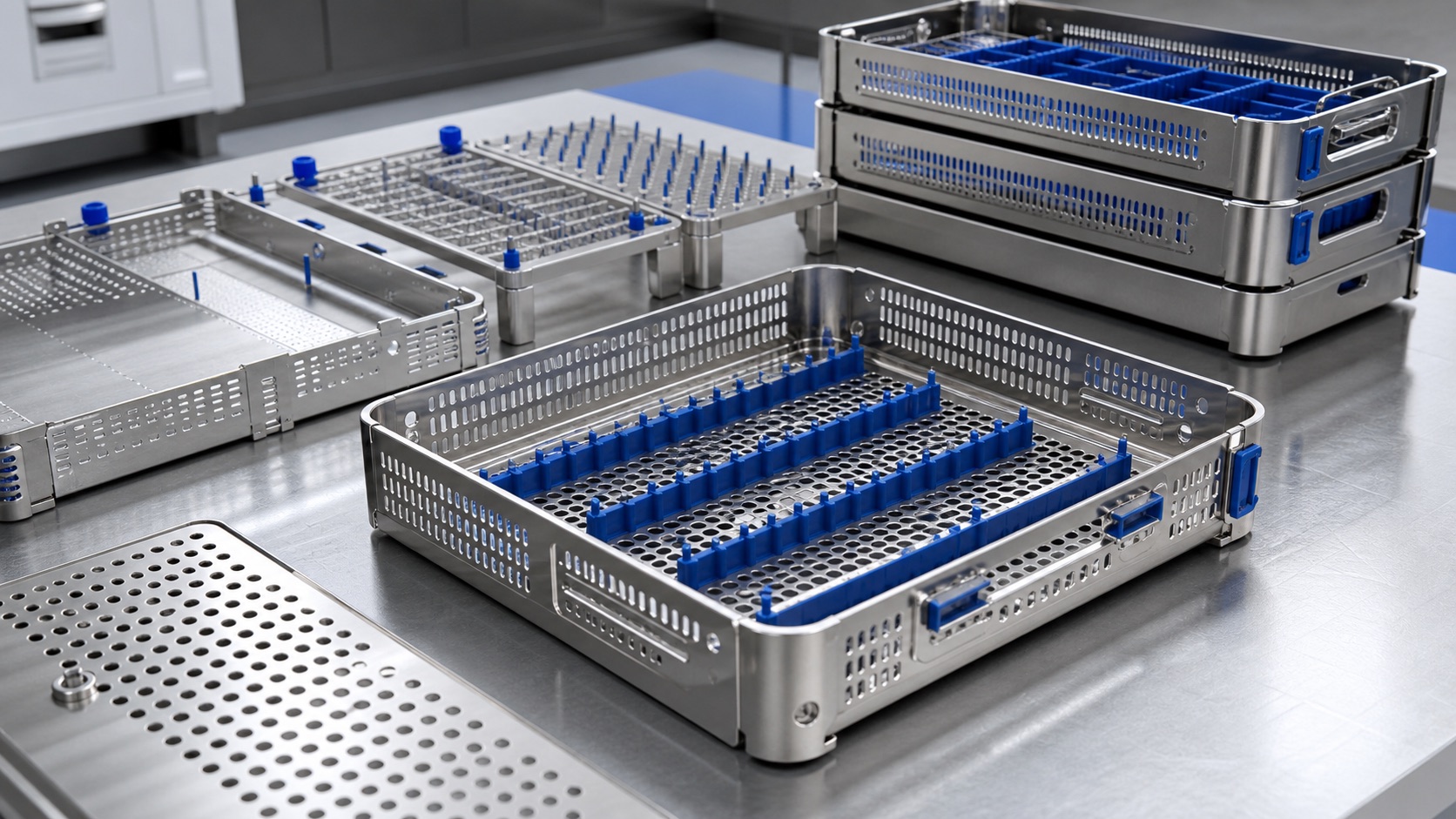
Technical guidance for CNC machining surgical sterilization trays and instrument cassette components, covering material choice, drainage features, modular holders, burr control, inspection and clean delivery.
Why Sterilization Trays Need Precision Machining
Surgical sterilization trays and instrument cassettes look like handling accessories, but their geometry has a direct effect on cleaning, protection and workflow. A tray frame must stay flat after repeated sterilization cycles, a removable holder must position instruments without scratching them, and a perforated panel must drain efficiently without leaving sharp edges. CNC machining is often selected for prototype and low-volume trays because it can combine custom layouts, accurate locating features and repeatable edge quality without waiting for stamping or forming tooling.
Material Choices for Autoclave and Cleaning Cycles
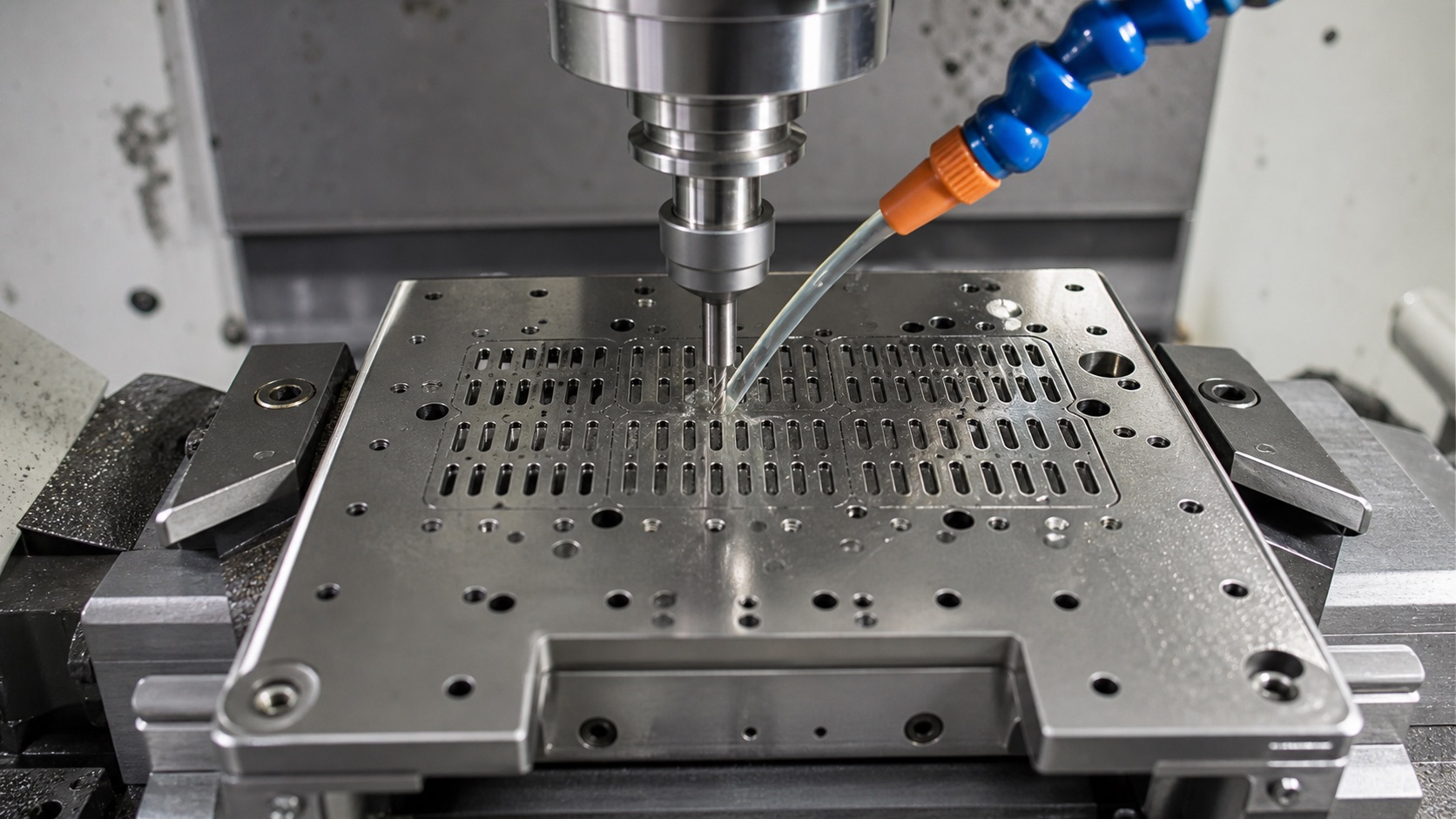
Common materials include 304 or 316 stainless steel for corrosion resistance, anodized aluminum for lighter cassette frames and selected engineering plastics for soft support inserts. The right choice depends on sterilization method, chemical exposure, weight target, instrument value and cleaning validation. Stainless steel is durable but requires careful tool control to avoid work hardening and burrs around holes. Aluminum is easier to machine and reduce weight, but anodizing requirements should be defined early. Plastics need stable clamping and rounded contact surfaces so they protect instruments rather than create new wear points.
Drainage Slots, Hole Patterns and Cleanability
The most visible features on a tray are often holes and drainage slots. They must allow wash water and steam to flow while maintaining rigidity and instrument support. Long slots should be machined with controlled radii to avoid stress concentration and difficult-to-clean corners. Dense perforation patterns require a stable fixture so the plate does not vibrate or bow during machining. If the drawing defines slot width, hole pitch, corner radius and minimum edge distance clearly, the supplier can choose cutting parameters that balance cycle time, flatness and edge quality.
Modular Holders, Latches and Assembly Interfaces
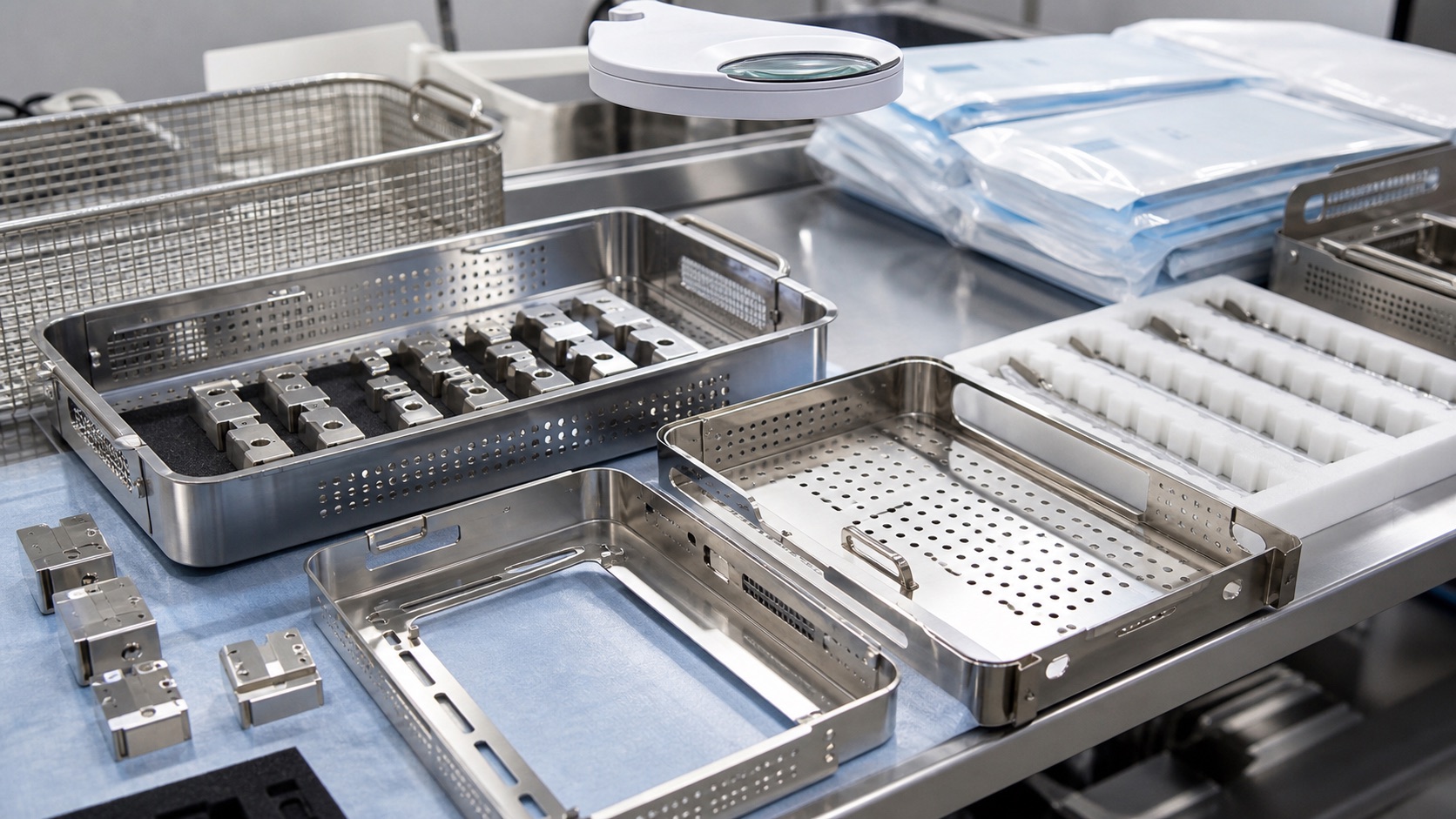
Instrument cassettes frequently use modular nests, rails, posts, latch blocks and removable brackets. These parts need consistent interfaces so the tray can be assembled, serviced and cleaned. CNC machining helps maintain pocket depth, screw positions, dowel holes and latch geometry across small batches. For complex layouts, it is useful to separate functional locating features from general clearance geometry on the drawing. That lets inspection focus on the features that actually control instrument position and user safety.
Deburring and Surface Finish Requirements
Burr control is central to tray manufacturing. Burrs can trap contamination, damage gloves or scratch instruments. The process should include toolpath planning, chamfering, brushing or controlled manual finishing, followed by microscope or visual inspection where small slots are dense. Edge breaks must be strong enough to remove sharpness but not so large that they change the fit of holders or latches. Stainless steel parts may also require passivation, while aluminum frames may need consistent pre-anodize surface preparation.
Inspection, Traceability and Clean Delivery
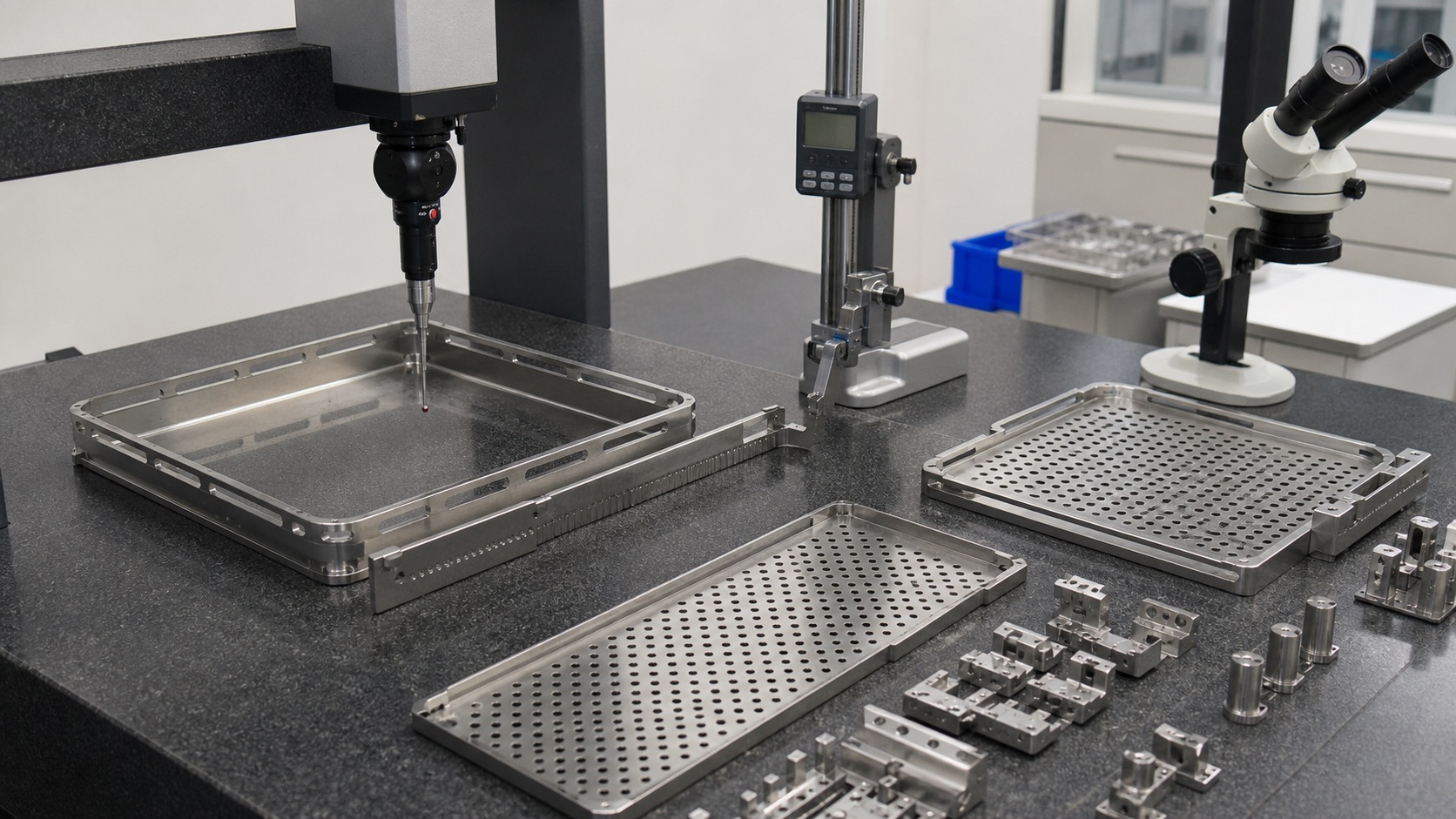
Inspection for sterilization trays normally includes flatness, hole position, slot width, frame height, latch fit, assembled alignment and cosmetic condition. Because trays often hold expensive surgical tools, packaging should prevent metal-to-metal contact during shipment. Lot traceability, material certificates, revision control and inspection reports make it easier for device teams to connect incoming parts to design changes. For an efficient RFQ, buyers should share CAD files, 2D drawings, material and finish requirements, expected quantity, critical dimensions, cleaning constraints and packaging expectations.
FAQ
What drawings are needed for a sterilization tray RFQ?
A 3D model, 2D drawing, material and finish requirements, tray layout, critical dimensions, quantity and packaging expectations are the most useful inputs.
Can CNC machining be used before stamping or forming tooling?
Yes. CNC machining is a practical route for prototypes, validation trays and low-volume instrument cassettes before production tooling is justified.
Which features usually need the closest inspection?
Flatness, slot width, hole pattern, latch fit, holder position, frame height, screw holes and any surfaces that touch the surgical instrument should be checked carefully.
How are sharp edges controlled on perforated plates?
Sharp edges are controlled through cutter selection, programmed chamfers, brushing, manual finishing where needed and visual or microscope inspection after deburring.
When should stainless steel be passivated?
Passivation is often specified when stainless steel components need improved corrosion resistance after machining, but the requirement should follow the device maker's specification.
What should be included in clean delivery?
Protective packaging, separated small components, clear labels, material records, inspection reports and revision traceability help protect parts before incoming inspection.
Email: tanghangyun@oemach.com