
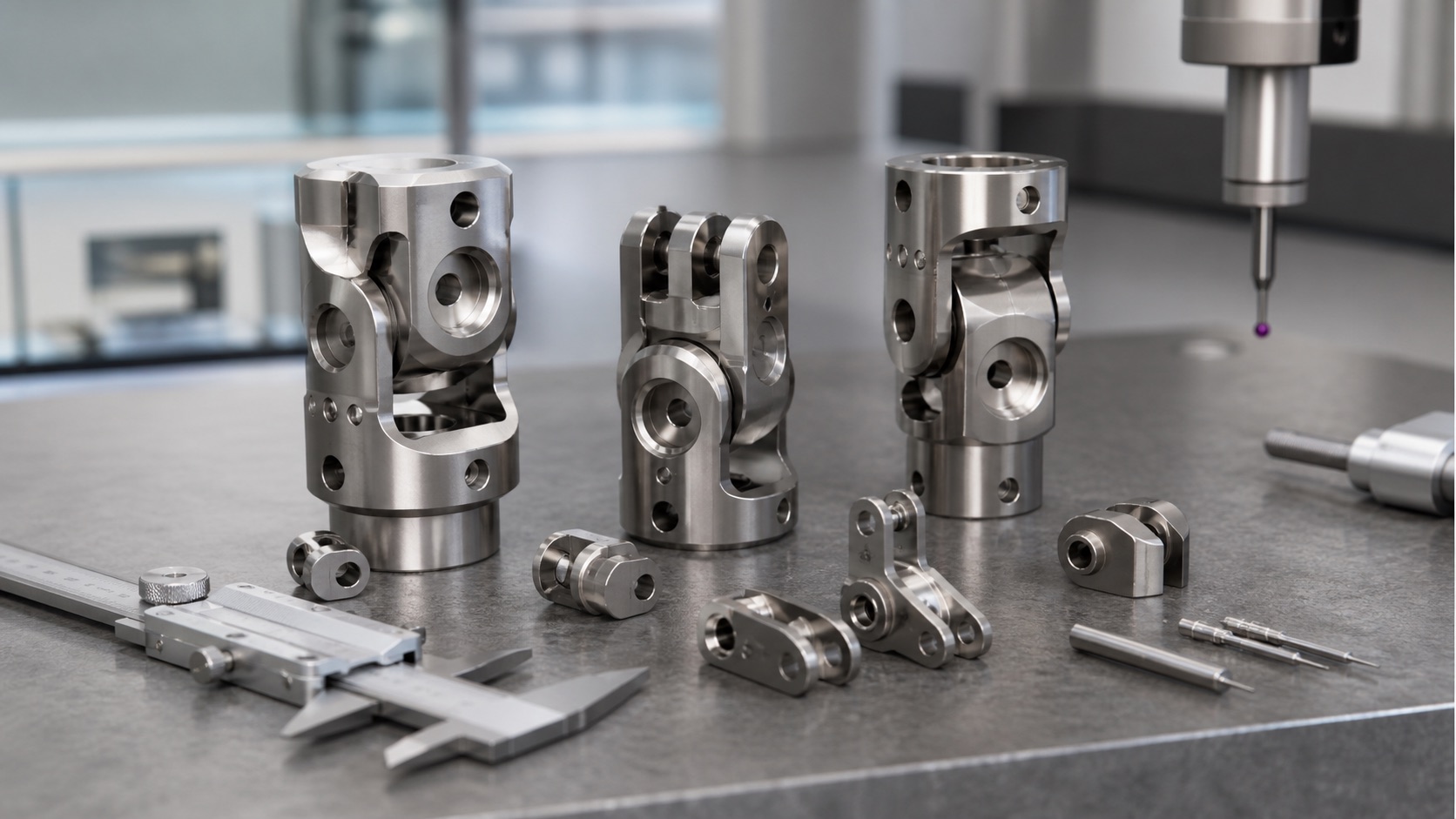
Technical guidance for CNC machining surgical robotic instrument joints and end effector components, covering material choice, micro bores, five-axis fixturing, burr control, inspection and clean delivery.
Why Surgical Robotic Instruments Are Demanding CNC Parts
Surgical robotic instruments combine a long, compact shaft with a small wrist or end effector that must move predictably inside a constrained operating field. The machined parts are small, but their performance requirements are not small at all. A wrist coupler, grasper jaw, hinge plate or pivot sleeve may need accurate bore position, smooth articulation, stable torque transfer and repeatable assembly with mating pins or shafts. For OEM buyers, the challenge is to find a machining partner that can hold miniature features without creating burrs, distortion or surface damage that later affects assembly.
Material Selection and Machining Risk
Common materials include 17-4PH stainless steel, 316L stainless steel, titanium alloys and selected engineering plastics for insulated or weight-sensitive elements. Each material creates a different machining risk. Stainless steel can work harden and generate stubborn burrs at cross holes. Titanium is strong and light, but heat control is critical because small features can lose dimensional stability. Plastics require sharp tooling and careful clamping to avoid deformation. Before quoting, the drawing should define whether the part is a prototype, validation build or production component, because inspection depth and process documentation usually change with the development stage.
Five-Axis Fixturing for Wrist and Jaw Geometry
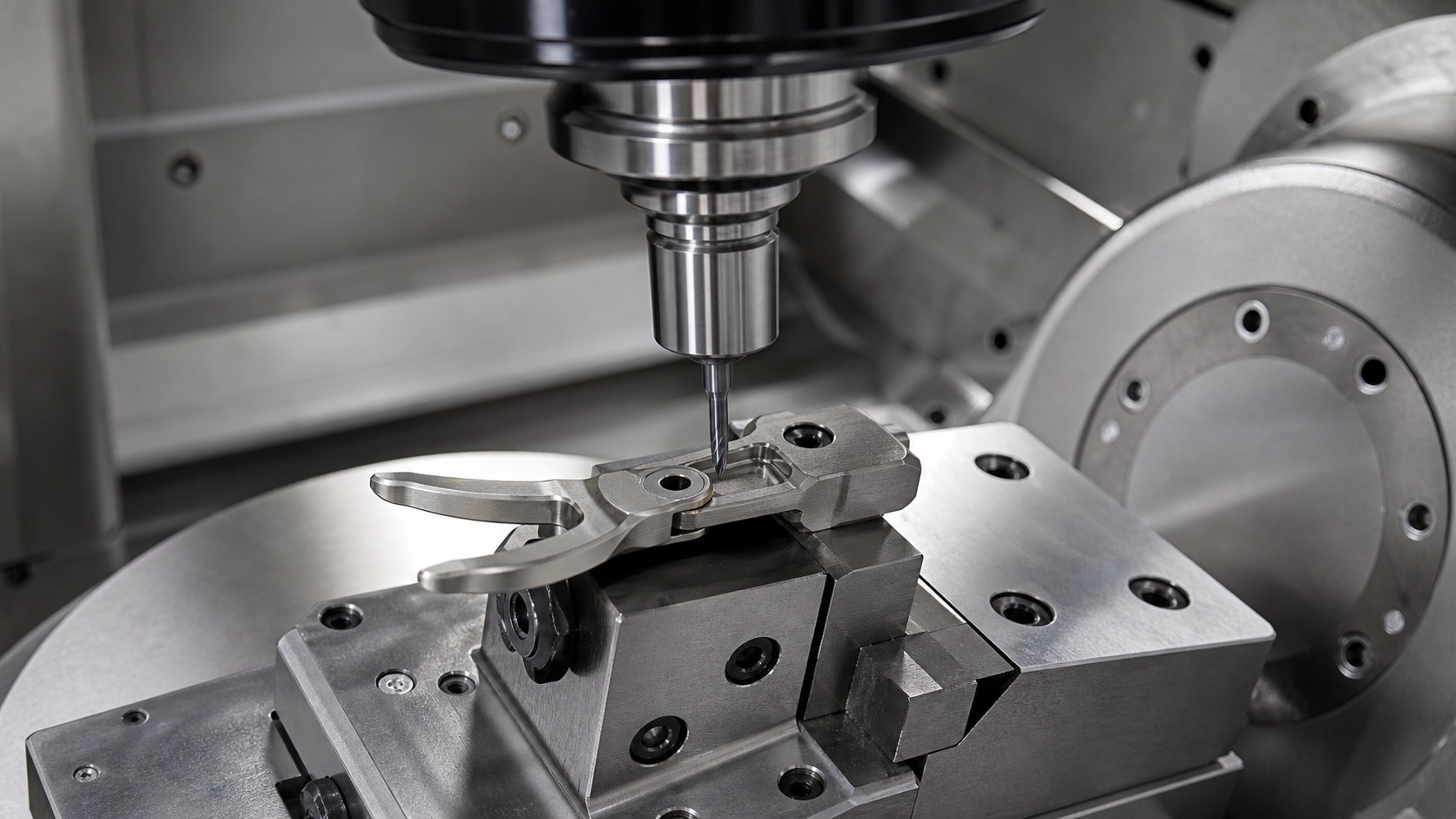
Many surgical robotic components have curved jaw profiles, side windows, coaxial pivot bores and pockets that cannot be reached efficiently from only three directions. Five-axis machining helps reduce setups and keeps geometric relationships tied to a common datum scheme. Even when a part is finished in several operations, the fixture plan should protect thin arms, small hinge bosses and long slender shafts from clamping marks. Soft jaws, expansion mandrels and modular nest fixtures are often used so that the cutting force is directed into stronger sections of the part rather than into delicate medical features.
Pivot Bores, Slots and Edge Breaks
The small bores in robotic wrist components are often the most sensitive features. A few microns of bore error can change jaw backlash, friction or assembly preload. Reaming, boring or thread milling may be selected depending on diameter, material and quantity. Slots and internal pockets need a burr strategy from the beginning, not after parts fail inspection. Edge breaks should be controlled enough to remove sharpness without rounding functional contact faces. Where the drawing allows, adding accessible reliefs or more practical radii can reduce tool wear and improve repeatability.
Inspection and Traceability
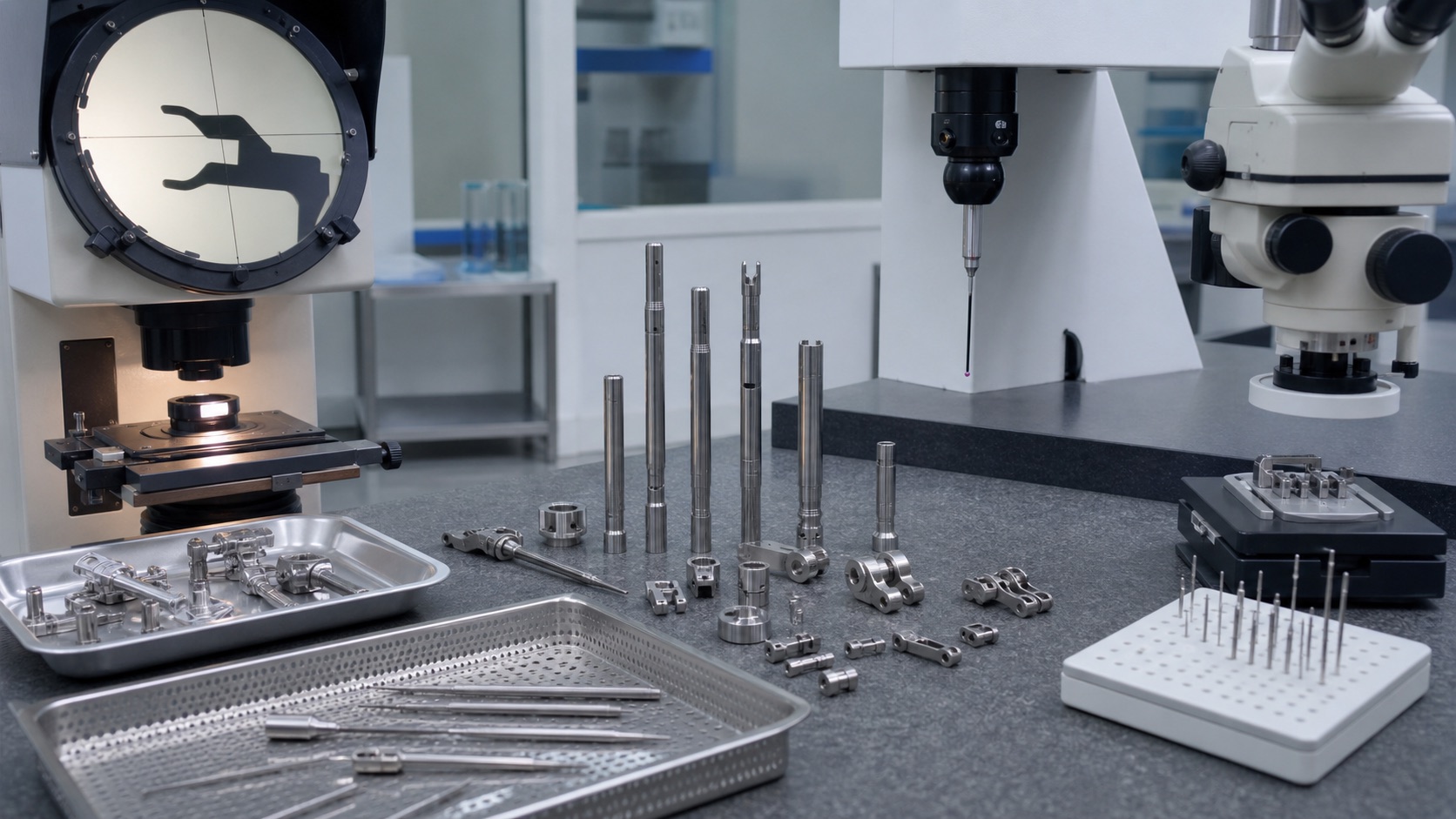
Inspection normally combines CMM, optical measurement, pin gauges, microscope checks and surface finish review. For small medical components, it is important to verify not only feature size but also feature relationship: bore-to-bore distance, coaxiality, perpendicularity, profile and datum repeatability. Buyers should request sample inspection reports during prototype stages so that tolerance assumptions can be confirmed early. Lot traceability, material certificates, revision control and clear packaging labels help the engineering team connect every part back to the drawing and purchase order.
Clean Finishing and Delivery for Medical Assemblies
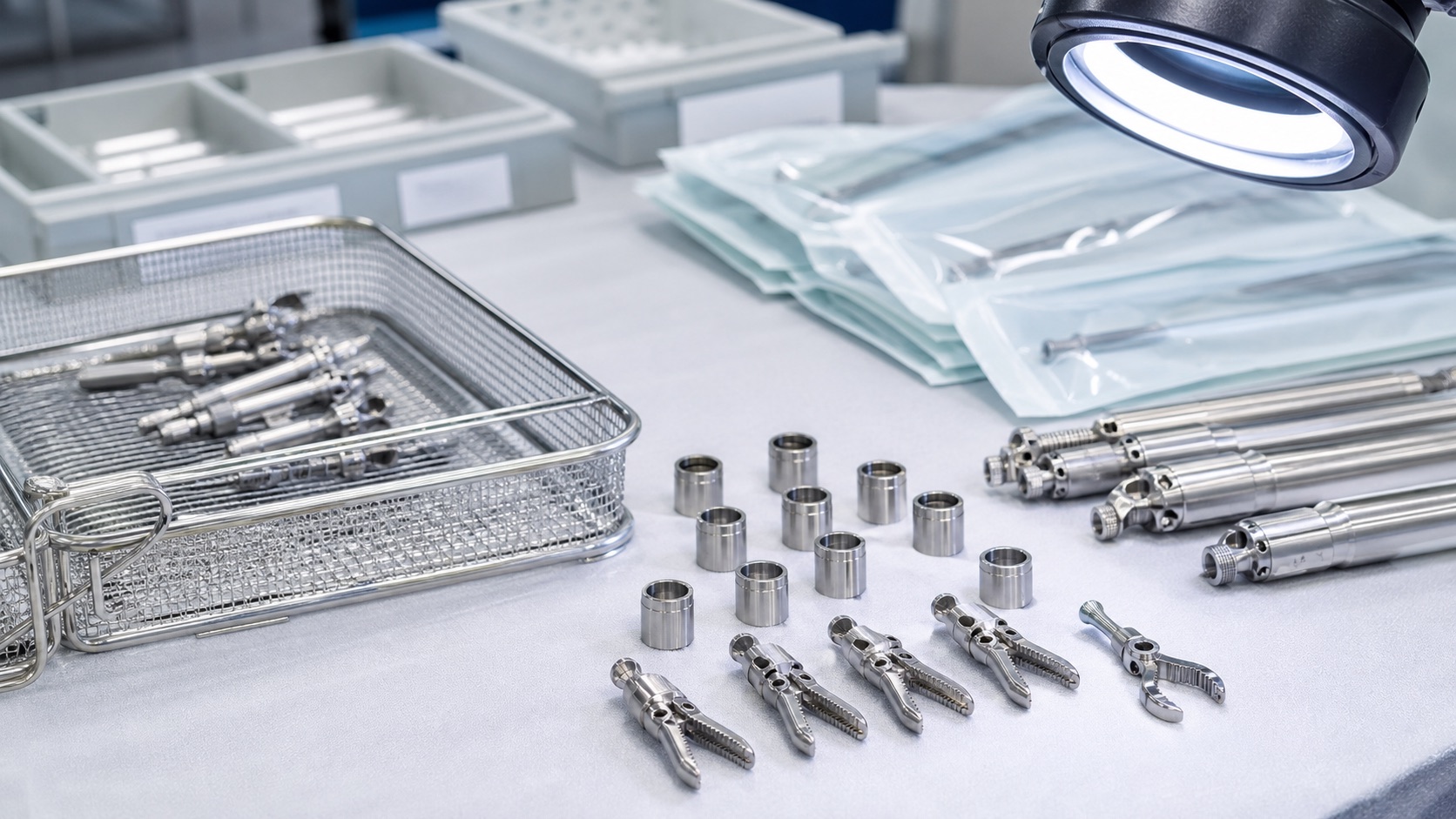
CNC machining is only part of the delivery chain. Surgical robotic instrument parts often need controlled deburring, passivation for stainless steel, ultrasonic cleaning, protective packaging and separation of small components to avoid scratches. A clean delivery process does not replace the device maker's validated cleaning or sterilization process, but it reduces contamination risk and protects precision surfaces before incoming inspection. For RFQ work, share drawings, CAD files, material requirements, expected quantity, critical features and any required inspection or documentation standard. That information allows the supplier to propose a realistic process instead of simply quoting the lowest cycle time.
FAQ
What files are useful for quoting surgical robotic instrument components?
A 3D CAD model, 2D drawing, material grade, quantity, critical dimensions, surface finish requirements and inspection expectations are the most useful starting points.
Can CNC machining support prototype and low-volume medical device parts?
Yes. CNC machining is well suited for prototypes, design validation lots and low-volume medical device components because tooling investment is lower than molding or stamping.
Which tolerances should be highlighted on the drawing?
Highlight pivot bores, datum surfaces, bore-to-bore distance, slot width, jaw profile, shaft concentricity and any feature that affects articulation or assembly preload.
How are burrs controlled on miniature medical parts?
Burrs are controlled through toolpath planning, sharp tooling, stable workholding, in-process edge strategy, microscope inspection and controlled manual or mechanical finishing.
Are stainless steel and titanium both suitable?
Both can be suitable, but the final choice depends on strength, corrosion resistance, weight, biocompatibility requirements, downstream finishing and the device maker's specification.
What should be included in a production handoff?
Include approved drawings, revision level, material certificates, inspection plan, packaging requirements, accepted samples and any clean handling or traceability requirements.
Email: tanghangyun@oemach.com