
Robot custom CNC machining quote differences usually come from material, process route and inspection requirements. Two suppliers may read the same drawing and quote very different prices because they are not promising the same delivery scope.
For engineering and purchasing teams, the important question is not only the unit price. A quote may or may not include material certificates, heat treatment or surface finishing, 5-axis machining, dedicated fixtures, CMM reports, first-article inspection, full inspection, protected packaging and repeat-order records.
OEMach normally starts with DFM review before quoting robot custom parts. Critical dimensions, ordinary profiles, assembly datums, finish requirements and inspection items are separated early so the quote becomes a manufacturable plan rather than a vague number.
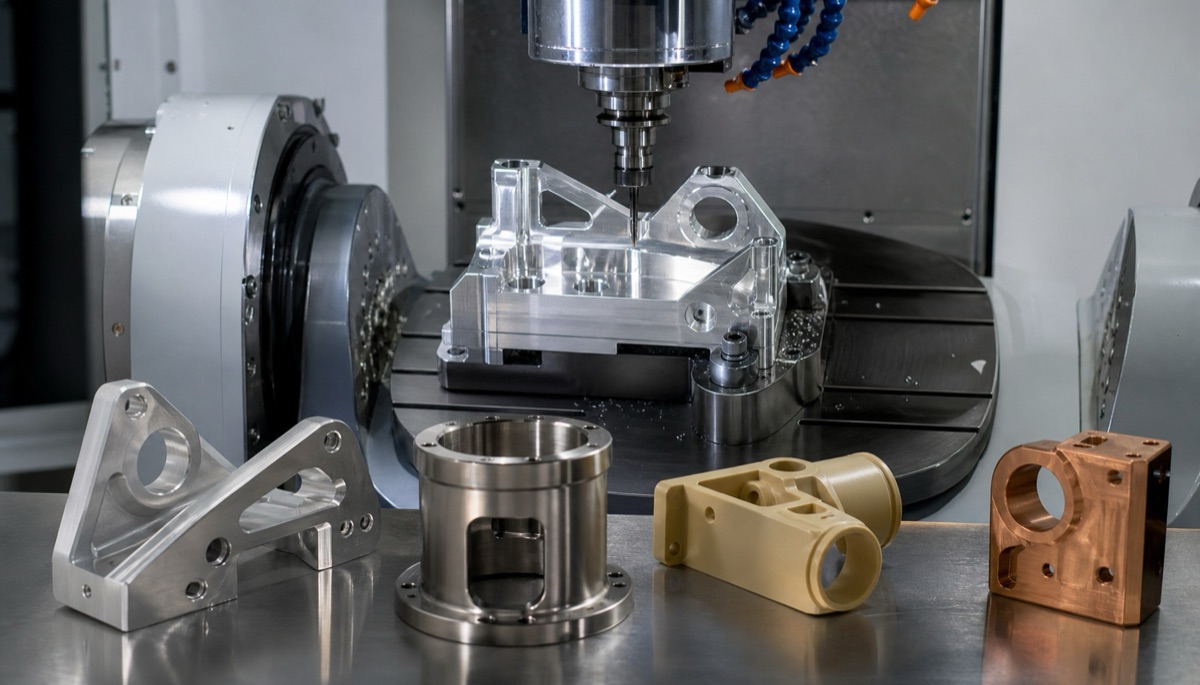
Quote Items That Change Real Cost
| Quote factor | Why cost changes | Common risk | What to confirm |
|---|---|---|---|
| Material | Aluminum, stainless steel, PEEK, copper alloys and titanium have different price, waste and lead time | Drawing only says aluminum or stainless steel | Grade, form, certificate and substitute material rules |
| Process route | 3-axis, 4-axis, 5-axis, turning-milling, EDM and secondary setups differ greatly | Quote ignores complex faces or re-location time | Key operations, setup count and fixture needs |
| Tolerance | Tight fits, position, flatness and coaxiality add machining and inspection time | Standard quote cannot meet assembly datums | Classify critical dimensions separately from general features |
| Surface finish | Anodizing, nickel plating, passivation, blasting and masking affect cost and dimensions | Post-finish size or color issues appear later | Finished dimensions, color, masked areas and reinspection |
| Inspection and delivery | First-article reports, CMM, full inspection and packaging all add responsibility | Low quote excludes inspection documents | Report type, sampling ratio and packaging method |
Material Grade Is More Than Raw Material Price
Material cost is only part of a CNC quote. Al6061 machines efficiently and is suitable for many brackets and mounting plates. Al7075 offers higher strength, but material cost, residual stress and surface-finish consistency need attention. Stainless steel is wear and corrosion resistant, yet it consumes more tool life and machining time. PEEK is expensive and sensitive to heat and burr control.
If a drawing only says aluminum alloy or stainless steel, the supplier cannot know which grade the project actually needs. Material grade, bar or plate size, procurement cycle and stock allowance all change the quote.
A better RFQ includes material grade, quantity, part function, certificate requirements and whether equivalent materials are allowed. Then quote differences become explainable and easier to compare.
Process Route Decides Machining Time and Risk
Robot custom parts often look small but contain dense hole systems, angled faces, thin walls and scattered datums. A part that can be finished in one 3-axis setup is not comparable with a part that needs 5-axis access, multiple flips or a dedicated fixture.
Complex surfaces, deep pockets, reverse-side holes, thin lightening slots, irregular contours and high-coaxiality holes all increase process risk. Quoting only from outside size can underestimate the real machining time.
During quoting, OEMach points out which areas affect clamping and tool access, which tolerances raise cost and which structures could be simplified by changing radii, hole depth or relief features.
Inspection Requirements Change Delivery Responsibility
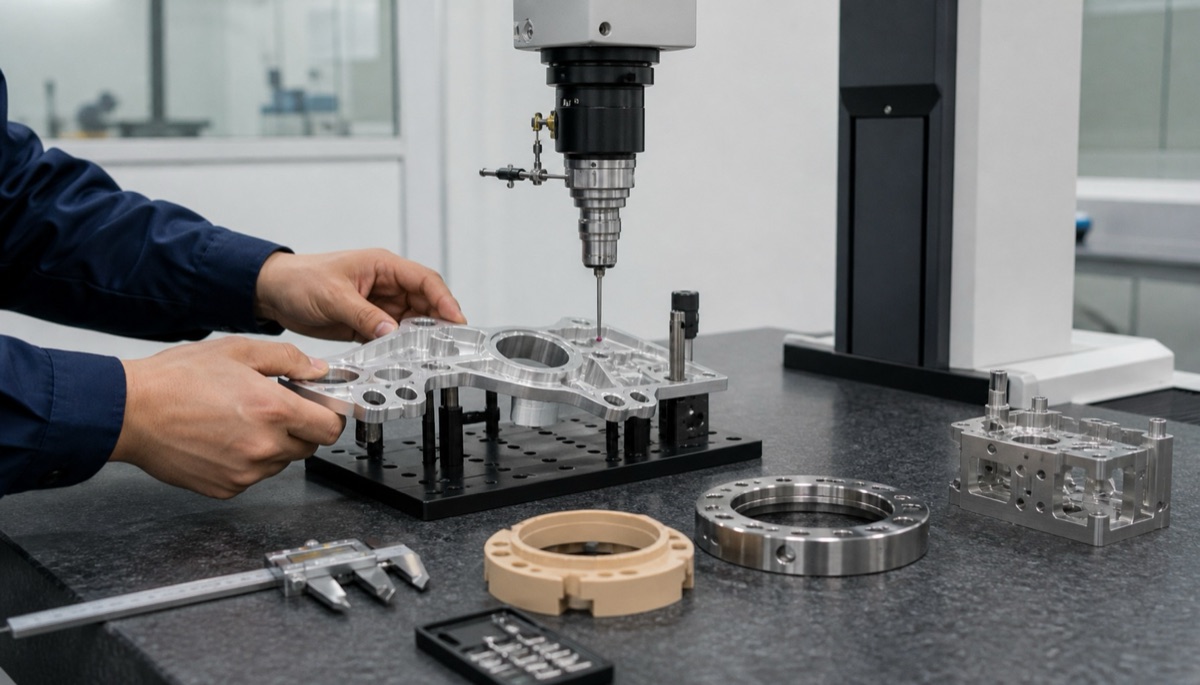
Some quotes include only machining and basic self-checking. Others include first-article reports, CMM inspection, critical-dimension records, post-finish reinspection and protective packaging. The price can be different because the responsibility is different.
Robot parts often contain assembly datums, bearing bores, dowel pin holes, threaded holes and sensor mounting faces. If these features require tight tolerance or geometric reports, inspection time and measurement equipment become part of the cost.
For prototype and small-batch production, inspection reports are not just paperwork. They help engineering teams determine whether a problem comes from the drawing, machining, surface treatment or assembly, and they preserve baseline data for repeat orders.
Five Controls Before Ordering
First, separate material, process, surface finish and inspection items during DFM instead of asking suppliers to quote one vague total from the full drawing.
Second, classify critical dimensions. Do not price the whole part at the highest precision level, but do not loosen features that control assembly.
Third, make the quote state whether material certificates, finish, masking, first-article reports, CMM reports and packaging are included.
Fourth, confirm the setup count and whether a dedicated fixture is needed for complex geometry. Fixture cost can be listed separately to avoid later disputes.
Fifth, keep first-article measurement data, process route and exception records so repeat orders follow the same acceptance logic.
OEMach Practice: Make Quotes Verifiable
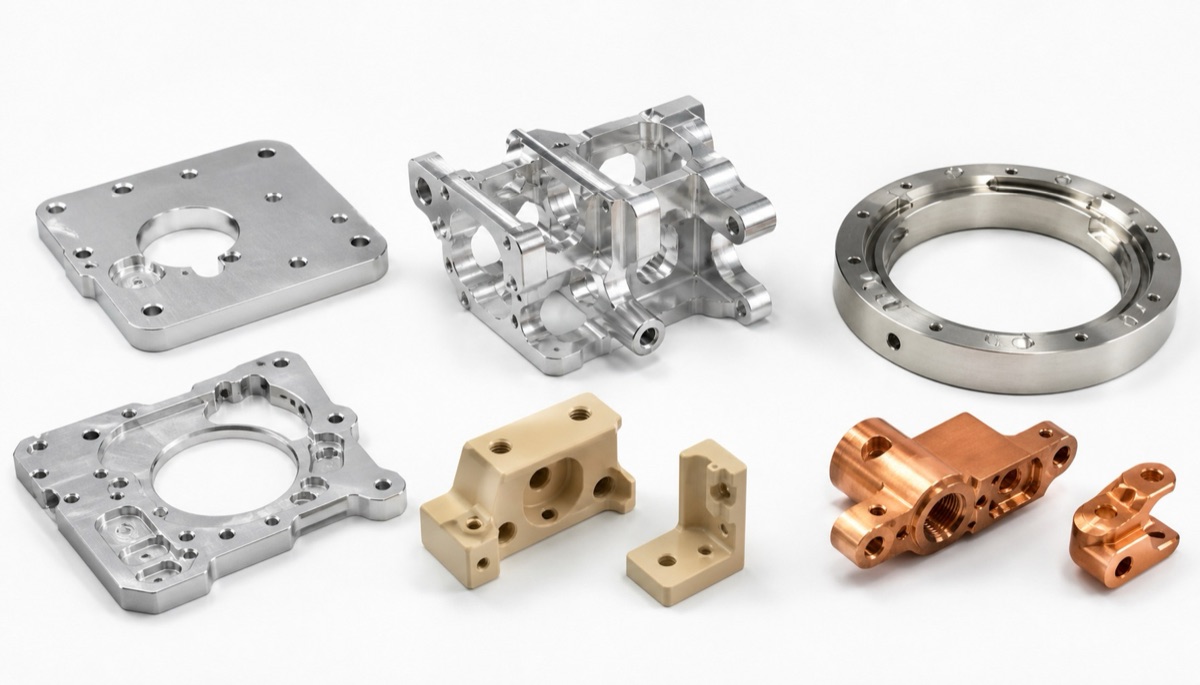
In one robot end-effector bracket project, several quote levels appeared at the RFQ stage. Instead of simply lowering the unit price, OEMach separated material, 5-axis access, anodizing, locating-hole reinspection and CMM reporting into visible quote items.
DFM review showed that two dowel pin holes, a thin lightening pocket and several angled mounting faces affected fixture planning. A low-price quote did not include dedicated fixturing or post-finish reinspection. The final route used staged clamping, controlled key-hole records and post-anodizing reinspection of assembly features.
This approach helps reduce rework risk because engineering, purchasing and machining teams compare the same scope instead of comparing different promises under one price column.
RFQ Questions for Engineering Buyers
| Question | Why it matters |
|---|---|
| Does the quote include material, machining, finish, inspection and packaging? | Missing scope creates later add-ons |
| Which dimensions are truly critical? | Precision should follow assembly function |
| Does the part require 5-axis machining, turning-milling, EDM or special fixturing? | Process route determines cost and risk |
| Will the part be repeated in small batches? | First-article data and process records stabilize reorder quality |
FAQ
Why do robot custom CNC machining quotes vary so much?
They vary because material grade, process route, setup count, tolerance level, surface finish, inspection report and delivery responsibility are different.
What information should be included in an RFQ?
Provide drawings, 3D models, material grade, quantity, surface finish, critical dimensions, inspection requirements and application context.
Is the lowest quote always a bad choice?
No. It can be considered if the delivery scope is the same. If inspection, finishing or fixture scope differs, unit price alone is misleading.
Does CMM inspection increase cost?
Yes, it adds measurement time and equipment use, but it is valuable for critical holes, GD&T and repeat-order stability.
Can OEMach provide DFM review before quoting?
Yes. OEMach can review material, process route, key tolerances, surface finish and inspection scope before quoting prototype or small-batch robot parts.
Summary
Robot custom CNC machining quote differences come from material, process route, setup count, precision level, inspection documents and delivery responsibility. Purchasing teams should compare the drawing version, material grade, key tolerances, surface finish and inspection files under the same quote scope. A transparent quote is usually easier to manufacture, inspect and repeat.
Ready to get a quote for your CNC machined parts?
Submit your engineering drawings to qiancj@oemach.com. We support prototype sampling and small-batch production with strict tolerance control.