
For humanoid robot aluminum parts, anodizing and electroless nickel are not a simple better-or-worse choice. The right finish depends on what the part does in the robot. If the part mainly needs lightweight appearance, matte black color, cosmetic consistency and basic corrosion protection, anodizing is often the practical choice. If the part must handle sliding contact, conductivity, shielding, corrosion resistance or uniform coating in complex internal features, electroless nickel should be evaluated.
Many engineering teams leave surface treatment until the last note on the drawing: black anodize, nickel plate or similar. For joint brackets, sensor mounts, motor covers, cable holders and small connection plates, that is risky. Film thickness, masking faces, thread condition and post-finish inspection can all change the assembled state.
OEMach reviews the surface finish during DFM. The review separates cosmetic faces, conductive faces, precision bores, threaded holes, contact faces and areas where coating is allowed to enter. This is more reliable than machining the part first and trying to repair fit problems after finishing.
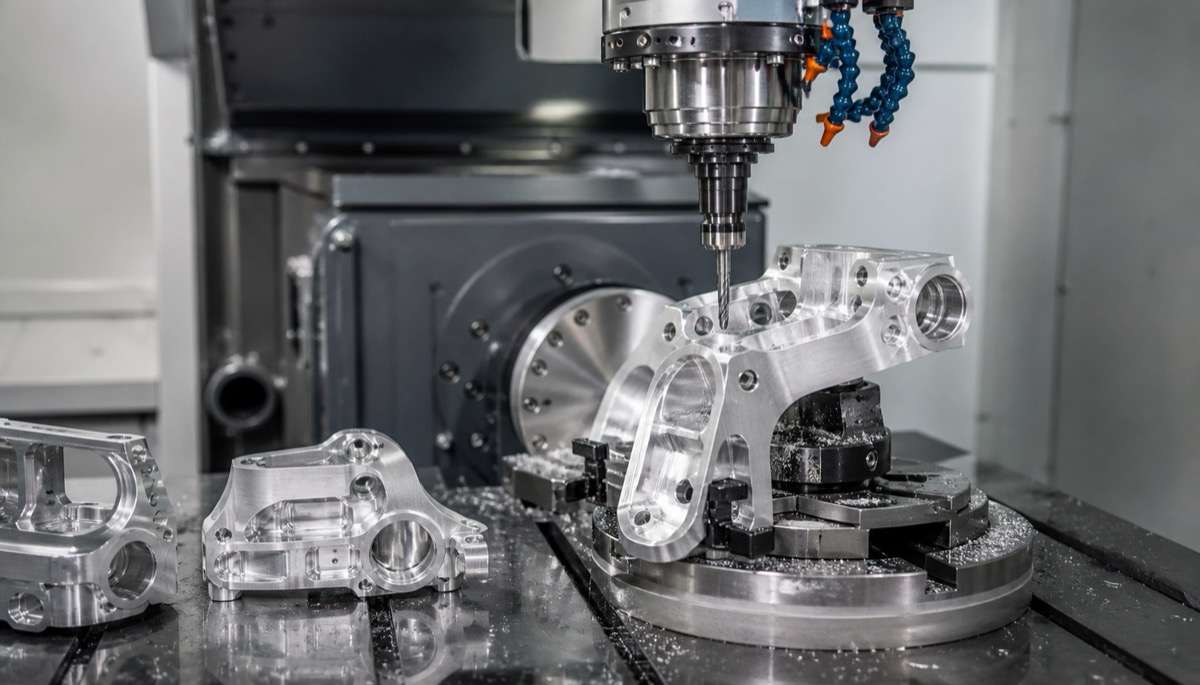
Quick Selection: Anodizing vs Electroless Nickel
| Decision factor | Anodizing is usually better for | Electroless nickel is usually better for | RFQ confirmation |
|---|---|---|---|
| Appearance and matte finish | Black, natural or blasted anodized exterior parts | Metallic gray functional surfaces | Define color, blasting texture, scratch level and batch consistency |
| Wear and friction | General wear or hard-anodized non-sliding areas | More stable wear resistance on sliding or repeated-contact faces | Confirm contact type, load and hardness requirement |
| Dimensions and film thickness | Features where film growth can be planned or masked | More uniform coverage in complex bores, grooves and cavities | State finished dimensions, masked areas and post-finish checks |
| Conductivity and shielding | Insulating oxide film; conductive faces need masking or film removal | Better conductivity for grounding or shielding areas | Define conductive faces, grounding zones and resistance requirements |
| Cost and batch use | Mature, cost-friendly route for many aluminum parts | Higher cost, best used where function justifies it | Classify parts and faces by function instead of tightening the whole batch |
Where Anodizing Fits Robot Aluminum Parts
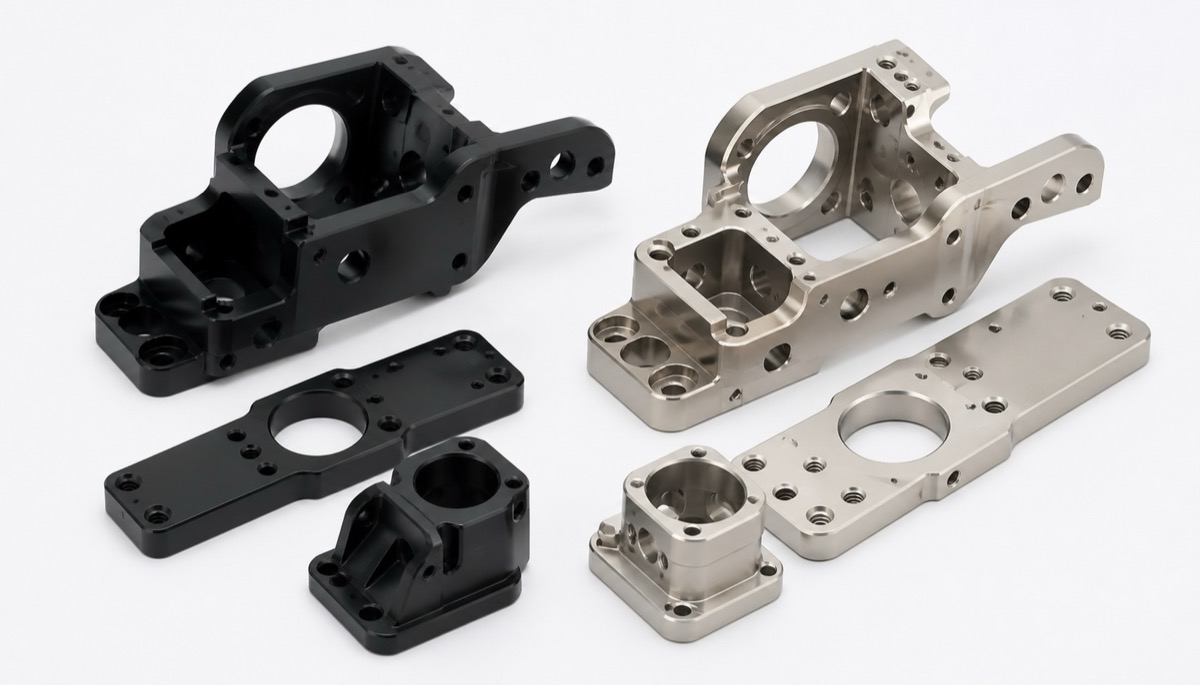
Anodizing gives aluminum parts a stable appearance, basic corrosion protection and improved surface durability. External connection plates, joint housings, sensor brackets, lightweight mounting seats and visible structural parts in humanoid robots often use black anodizing or blasted anodizing.
Black anodizing is also useful when the part needs low reflection. Brackets around vision modules, camera mounts and visible aluminum covers may value matte appearance and batch color consistency more than maximum coating hardness.
The caution is dimensional. Anodizing forms a film that can affect precision bores, threaded holes, bearing seats, dowel holes and contact datums. Critical locations should define whether dimensions apply before or after finishing, whether masking is needed and how the finished feature will be inspected.
Where Electroless Nickel Fits Functional Areas
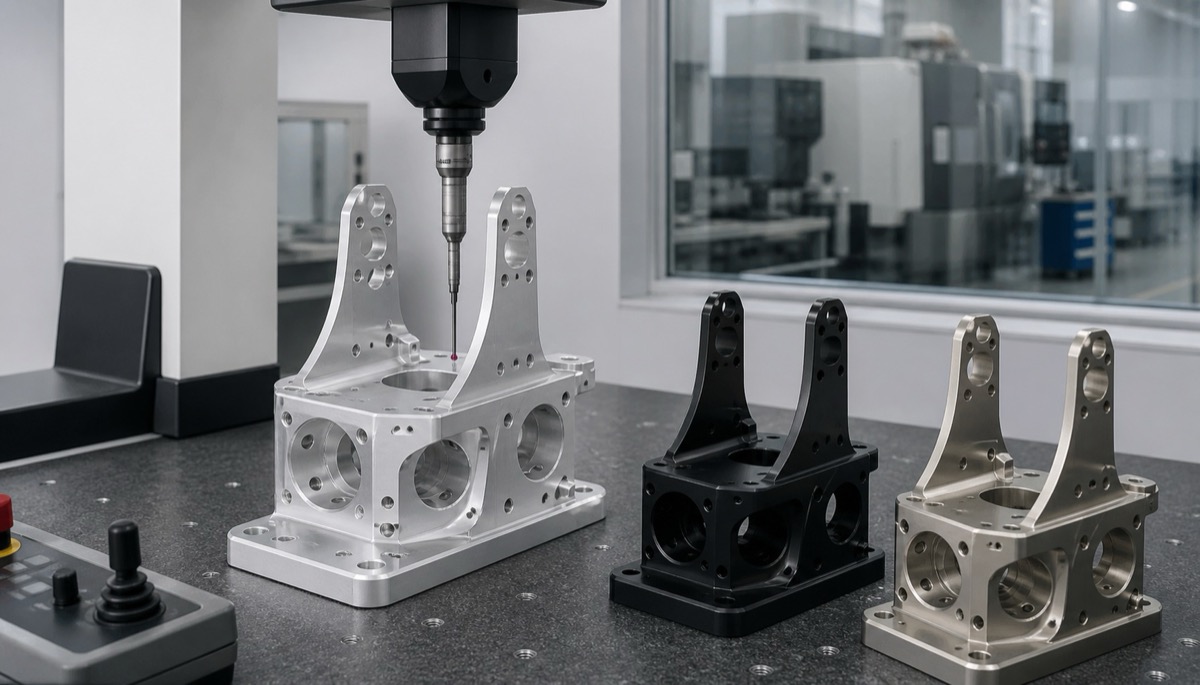
Electroless nickel is useful because the coating can be relatively uniform, including on complex cavities, grooves and irregular surfaces. It is often considered for robot aluminum parts that need wear resistance, corrosion resistance, conductivity, shielding or stable contact performance.
Examples include grounding bases, sensor shielding housings, frequently assembled contact faces, sliding contact areas and complex internal aluminum cavities. If these areas are simply anodized, conductivity, wear behavior or internal coverage may not be suitable.
Electroless nickel is not a universal upgrade. It adds cost and requires tighter control of pretreatment, thickness, edge condition and assembly interfaces. The design should confirm whether nickel is truly needed instead of applying it just because it looks more durable.
Look at Three Areas Before Choosing
| Area | What to evaluate | Practical guidance |
|---|---|---|
| Cosmetic face | Color, blasting consistency, scratch level and batch color | Anodizing is usually cost-effective for visible aluminum parts |
| Functional contact face | Friction, compression, conductivity, grounding or shielding | Consider electroless nickel, masking or post-machining film removal |
| Precision assembly face | Bearing bores, dowel holes, threads, steps and datums | Inspect the finished state, not only the CNC-off-machine size |
Five Manufacturing Controls
First, mark cosmetic faces, functional faces, masked faces and reinspection faces during DFM. Do not leave the whole decision in a short finish note.
Second, confirm finished dimensions for critical bores, threads and locating faces. When needed, allow for coating thickness and check with pin gauges, go/no-go gauges or CMM after finishing.
Third, control material batch, blasting parameters and packaging for anodized parts to reduce visible color variation.
Fourth, for electroless nickel, confirm coating thickness, conductive areas, wear areas and edge burr condition before production.
Fifth, keep first-article before-and-after finishing data so repeat batches use the same inspection logic.
OEMach Engineering Practice
In one humanoid robot aluminum joint bracket project, the customer initially requested black anodizing for the whole part. During DFM, OEMach identified exterior faces that needed a matte black appearance, a sensor grounding area that needed conductivity, and two locating holes that needed a stable assembly feel.
The final plan separated the requirements by area: exterior faces used blasted black anodizing, the conductive area was masked, and locating holes were planned with coating allowance and checked after anodizing. For another connection seat that needed higher wear resistance and conductive stability, electroless nickel was evaluated as the better functional route.
This area-by-area method reduces first-article uncertainty because surface treatment is considered together with machining datum, masking and inspection.
RFQ Questions Before Ordering
| Question | Why it matters |
|---|---|
| Is the main requirement appearance, corrosion protection, wear resistance, conductivity or dimensional stability? | The finish should follow the part function |
| Are drawing dimensions specified before finishing or after finishing? | Finished dimensions control assembly |
| Which bores, threads, contact faces and grounding faces need masking or post-finish inspection? | These features decide fit and electrical contact |
| Are color, thickness, hardness and batch consistency acceptance criteria defined? | Clear criteria reduce disagreement at delivery |
FAQ
Should humanoid robot aluminum parts use anodizing or electroless nickel first?
Start from the function. Use anodizing for appearance, matte finish and basic protection; evaluate electroless nickel for wear, conductivity, shielding or complex internal coverage.
Does anodizing affect aluminum part dimensions?
Yes. The anodic film can affect bores, threads, contact faces and datums. Critical features should allow for finish effects and be inspected after treatment.
Is electroless nickel always better than anodizing?
No. It has advantages for wear, conductivity and uniform coverage, but it costs more and is not necessary for every visible lightweight aluminum part.
Which robot aluminum features often need masking?
Common masking areas include dowel holes, bearing bores, threaded holes, contact datums, grounding faces and precision mating features that must keep finished fit.
Can OEMach review machining and surface treatment together?
Yes. OEMach can review finish selection, masking, coating allowance and post-finish inspection during DFM to reduce rework in prototype and small-batch projects.
Summary
The surface finish for humanoid robot aluminum parts is a tradeoff among appearance, wear, corrosion protection, conductivity, film thickness and assembly accuracy. Anodizing is usually better for lightweight exterior and matte parts. Electroless nickel is better for functional areas that need wear resistance, conductivity or more uniform coating behavior. The safest process is to define finish by area, then connect it to machining allowance, masking and post-finish inspection.
Ready to get a quote for your CNC machined parts?
Submit your engineering drawings to qiancj@oemach.com. We support prototype sampling and small-batch production with strict tolerance control.