
Titanium CNC machining is not solved by simply slowing down ordinary material parameters or using a harder cutter. Titanium has poor thermal conductivity, high cutting temperature, obvious elastic springback and tool wear that can quickly affect burrs, dimensions and surface quality.
Special-metal CNC projects are common in lightweight robotics parts, high-end equipment connectors, medical device structures and load-bearing brackets for optical equipment. Quantities are often small, but requirements for dimensional stability, surface integrity and delivery rhythm are high.
A stable approach must evaluate tool coating, cutting-edge strength, coolant delivery, fixture rigidity, staged machining and inspection datum as one system.
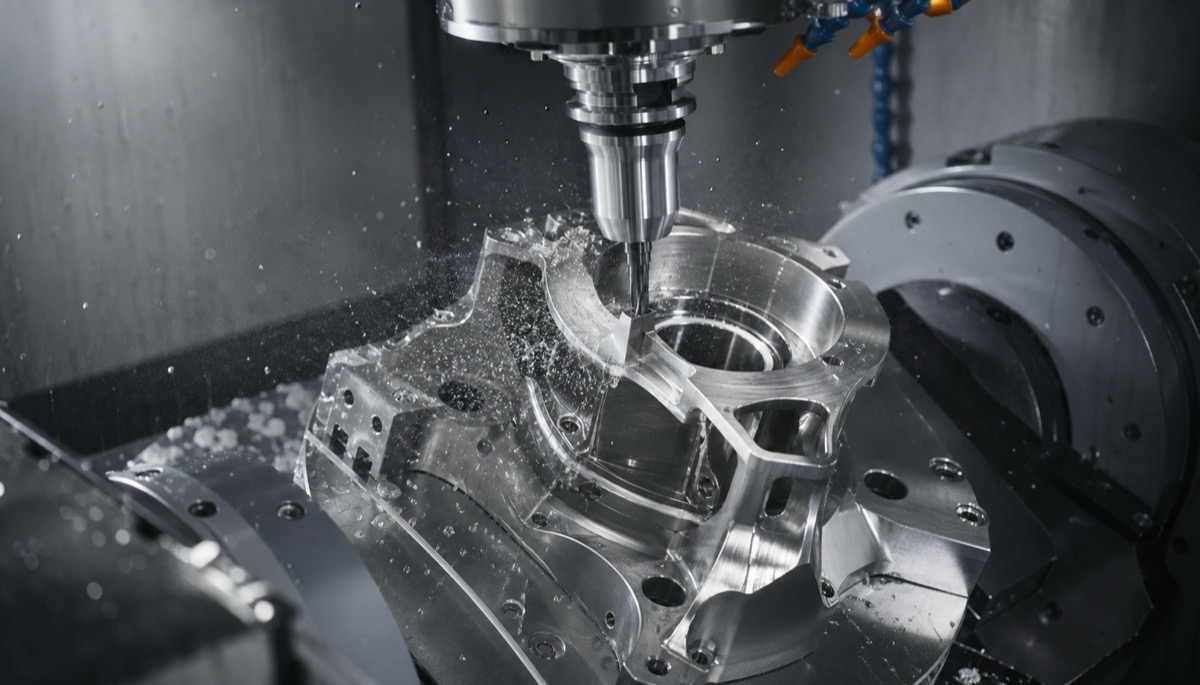
Titanium CNC Challenges and Process Responses
| Challenge | Typical behavior | Process response | Buyer acceptance focus |
|---|---|---|---|
| Poor thermal conductivity | Heat concentrates near the cutting edge and tool temperature rises quickly | Use coated carbide tools, effective coolant delivery and stable chip evacuation | Check surface burns, size drift and tool-life records |
| Fast tool wear | Edge chipping, higher cutting force and rougher surface | Optimize edge strength, tool overhang, cutting speed and process rhythm | Recheck key dimensions and roughness after first article |
| Elastic springback | Bores, thin walls and slot width change after cutting | Use light finishing passes, small depth of cut and stable allowance | Reinspect critical holes and functional widths |
| Thin-wall deformation | Part deforms under clamping and springs back after release | Use soft jaws, low-stress clamping, staged machining or 5-axis route to reduce flips | Review flatness, profile and trial assembly |
| Chip and burr control | Chips do not break easily; hole-mouth and edge burrs are obvious | Improve chip path and add deburring and edge-protection steps | Confirm chamfers, thread feel and edge condition |
Tool Selection Is More Than Hardness
Coated carbide tools are common for titanium, but harder is not always better. If the cutting edge is too sharp, it may chip. If it is too blunt, cutting heat and work-hardening risk increase. The tool must match the titanium grade, wall thickness and toolpath.
Holder rigidity is equally important. Long overhang, deep cavities, narrow slots and small-diameter tools increase vibration risk, which leads to visible marks, burrs and size variation. Complex parts may use 5-axis machining to reduce overhang or split operations to lower cutting load.
A practical strategy is to prioritize chip evacuation and tool life during roughing, then focus on size and surface integrity during finishing. Critical surfaces should be finished with stable allowance and light passes, not forced by one heavy final cut.
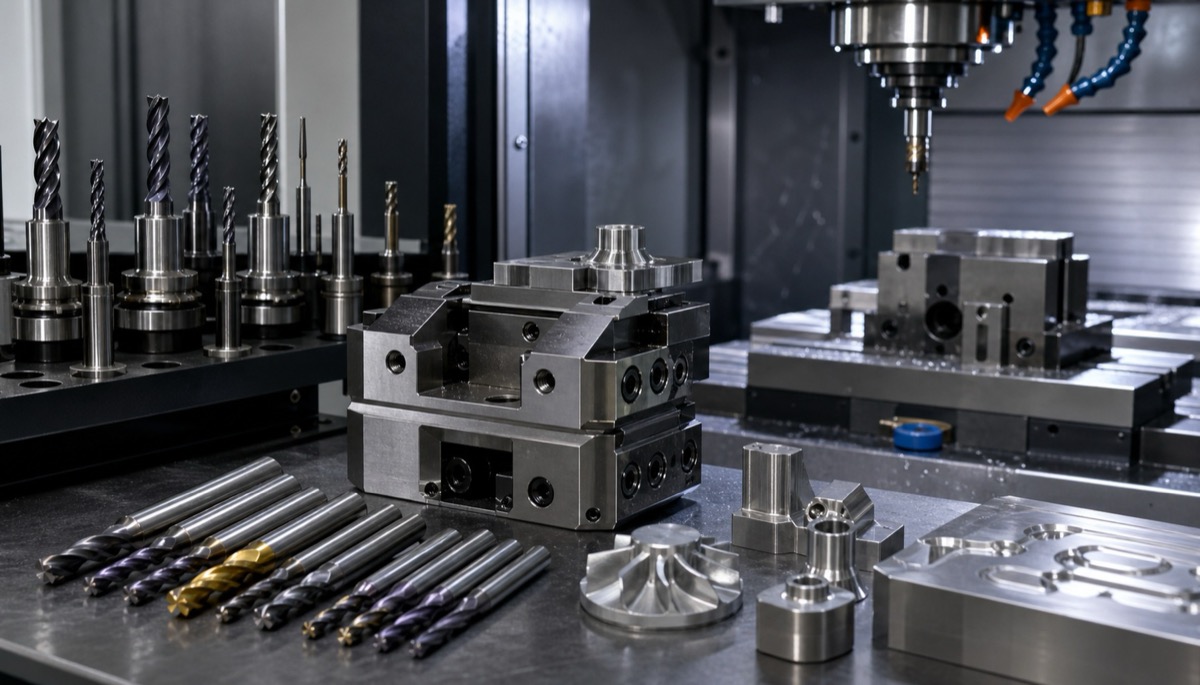
Process Route Should Control Heat and Springback
Titanium does not conduct heat away easily. If coolant delivery is poor, cutting speed is too high or chips are trapped, tool wear quickly appears as dimensional drift and surface problems.
Elastic springback also makes bores, thin walls and slots harder to control. A part may look acceptable immediately after machining but show small changes after resting or after clamping force is released.
The route should therefore be designed around heat and springback: separate roughing and finishing, use small finishing passes, keep stable allowance, use effective coolant, apply low-stress fixturing and re-cut critical faces at the right stage.
Why Special-Metal Prototyping Needs Process Records
The Yangtze River Delta has dense robotics, high-end equipment, optical instrument and medical device projects. R&D teams often need mixed-material prototypes in titanium, stainless steel, aluminum and engineering plastics to verify structures quickly before scaling.
For these projects, a supplier needs more than CNC machines. The team must understand material behavior, tool strategy, surface condition, inspection reporting and repeat-order stability. For special metals, if first-article process experience is not recorded, the next batch may require trial adjustment again.
OEMach links DFM review, tool selection, trial cutting, CMM inspection and low-volume repeat records into one workflow so buyers can see a repeatable delivery basis.
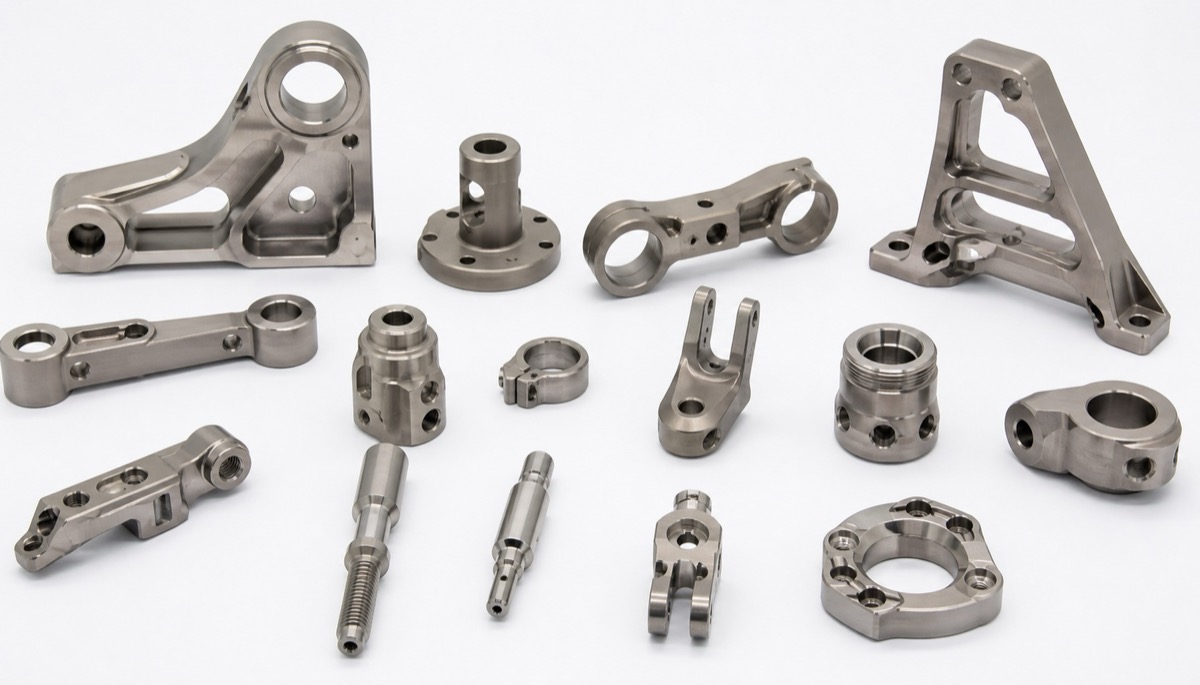
Five Controls for Titanium and Special Metals
| Action | How to apply it | Why it helps |
|---|---|---|
| Confirm material grade and state | Do not only write titanium; specify grade and condition | Different titanium alloys machine differently |
| Match tooling to geometry | Review deep cavities, thin walls, narrow slots, small holes and curved surfaces separately | Avoids vibration, burrs and tool overload |
| Plan coolant and chip evacuation | Use effective coolant delivery and clear chip paths | Reduces cutting-edge heat and burr risk |
| Separate roughing and finishing | Keep stable allowance for critical holes, contact faces and profiles | Improves dimensional stability |
| Inspect size and surface condition | Review flatness, burrs, thread feel, roughness and trial assembly in addition to size | Matches inspection with real assembly needs |
How OEMach Handles Titanium Projects
In one titanium lightweight bracket workflow, the customer's initial focus was lead time. During DFM review, OEMach identified that thin ribs, deep slots and precision holes could combine vibration, springback and tool-wear risk.
The machining plan used coated carbide tools, effective coolant, staged roughing, stable finishing allowance and a multi-axis toolpath to reduce overhang in local deep cavities. First-article inspection then checked hole position, profile and flatness with CMM data.
This method takes more planning than treating titanium like a slower aluminum job, but it reduces uncontrolled burrs and rework risk and makes low-volume repeat machining easier to reproduce.
Questions Before Ordering
| Question | Why it matters |
|---|---|
| Is the material grade and condition specified? | Titanium grade affects tool choice, cutting strategy and quote risk |
| Which features carry critical tolerance? | Bores, hole positions, thin-wall faces and assembly faces should be marked clearly |
| Are roughness, deburring or thread trial-fit requirements needed? | Titanium edge condition directly affects assembly feel |
| Will the first-article report include measured values and process notes? | Repeat low-volume orders depend on recorded process memory |
FAQ
Why is titanium CNC machining difficult?
Titanium has poor thermal conductivity, high cutting temperature and obvious elastic springback. Tool wear, burrs, thin-wall distortion and dimensional drift are common risks.
What tools are suitable for titanium machining?
Coated carbide tools are common, but they must be combined with proper edge strength, holder rigidity, cutting parameters, coolant and chip evacuation.
Can titanium parts hold very tight tolerance?
Some critical dimensions can be controlled tightly, but the final tolerance should be evaluated based on part structure, size, fixturing and inspection conditions. Do not tighten the entire part blindly.
Which projects need special-metal CNC machining?
Robotics lightweight parts, high-end equipment connectors, medical device structures and optical equipment brackets are common low-volume applications.
What should be sent for quotation?
Send STEP files, 2D drawings, material grade and condition, critical tolerances, surface requirements, deburring notes, quantity and inspection needs.
Summary
Titanium precision CNC machining is a system problem. Tooling, coolant, fixturing, toolpath strategy and inspection datum must work together. For low-volume special-metal parts, recording the validated process is just as important as producing the first acceptable article.
Ready to get a quote for your CNC machined parts?
Submit your engineering drawings to qiancj@oemach.com. We support prototype sampling and small-batch production with strict tolerance control.