
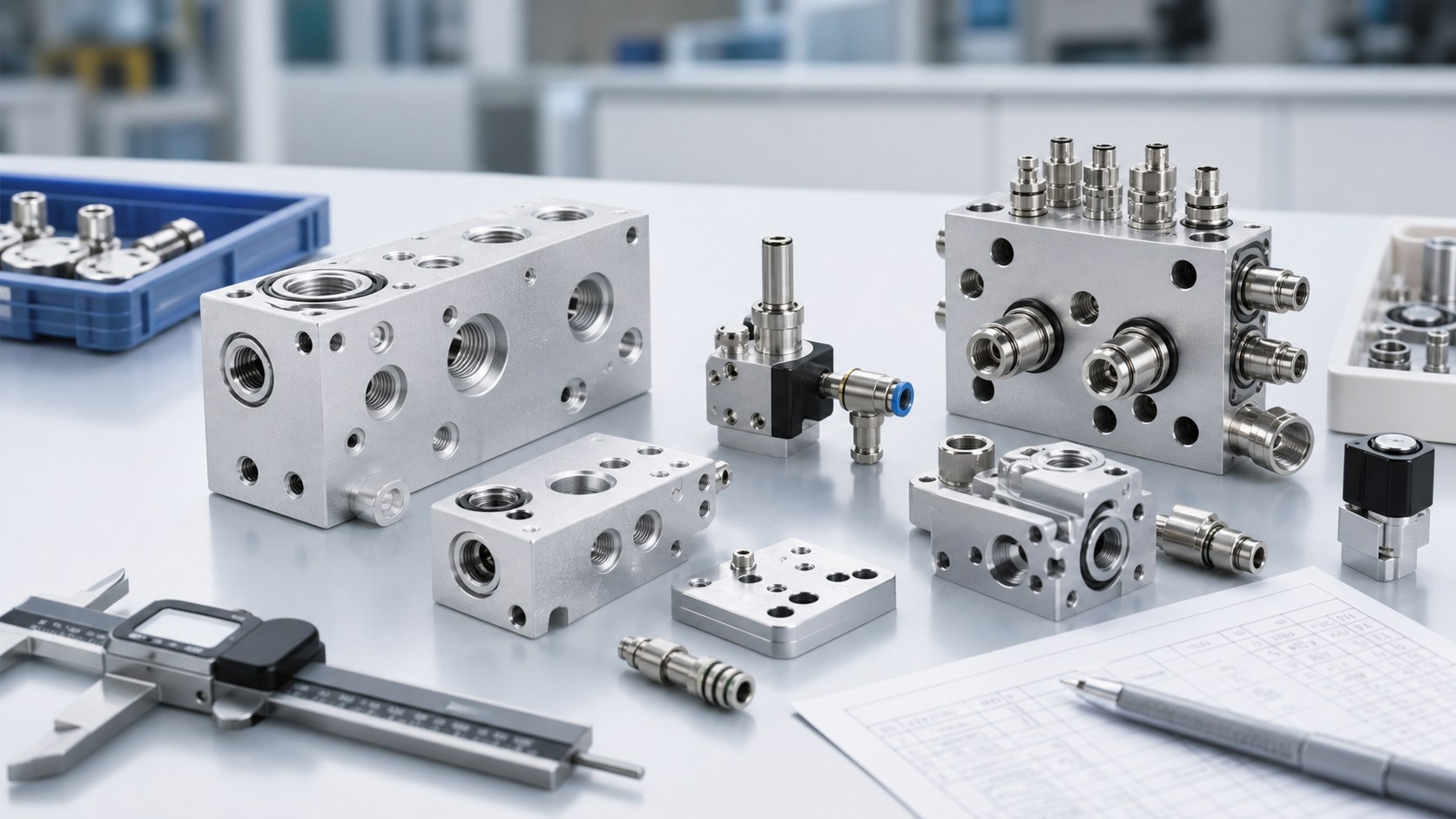
Ventilators, anesthesia machines and respiratory test systems rely on compact pneumatic valve blocks to route air and medical gases through controlled passages. CNC machining can produce prototype and low-volume valve manifolds with precise threaded ports, O-ring seats, sensor mounts and flat sealing faces, but the process must control internal burrs, port alignment and cleanliness from the first drawing review.
Medical gas blocks are functional flow systems
A valve block is more than a metal block with holes. Each port, cross-drilled passage, O-ring groove, sensor seat and solenoid interface affects flow restriction, leakage and assembly repeatability. The drawing should identify flow paths, sealing surfaces, critical threads and datum references for inspection.
For quoting, send STEP files, 2D drawings, port standards, plug or fitting details, gasket or O-ring data, material grade, surface finish and test pressure if known. Assembly sketches are useful when several valves, sensors and fittings share one compact manifold.
Material choice affects corrosion and sealing
Aluminum alloys are widely used for pneumatic manifolds because they are light, stable and suitable for anodizing. Stainless steel is useful for threaded fittings, wear areas or blocks exposed to repeated cleaning. Engineering plastics such as PEEK can support insulating plates or nonmetallic fixtures.
Material notes should define grade, certificates, anodizing, passivation, cleaning expectations and cosmetic limits. If the part will be used in validation testing, documentation requirements should be stated before machining begins.
Cross-drilled passages need burr control
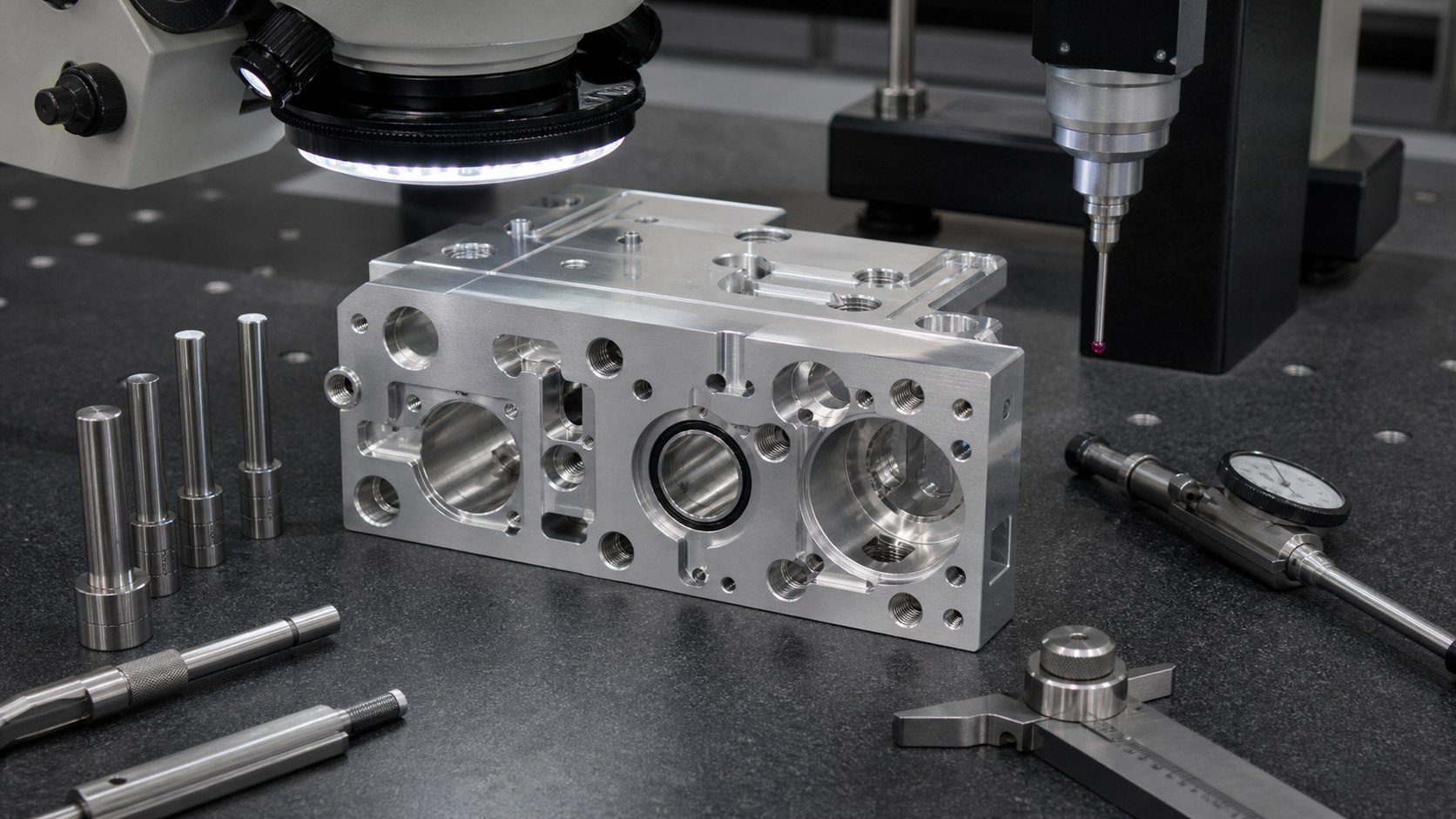
Respiratory valve blocks often use intersecting holes to connect ports inside a compact body. The risk is that burrs remain at intersections where they are hard to see. Loose burrs can affect flow, damage seals or move into downstream assemblies.
Process planning may use staged drilling, reaming, controlled chamfering, borescope inspection, flushing and air blow-off. Drawings should flag critical intersections and state no loose burrs in internal passages.
O-ring grooves and sealing faces require flatness
Leak performance depends on groove width, depth, corner radius, sealing-face flatness and surface finish. If a face is warped or a groove corner is rough, pressure decay tests may fail even when the port locations are correct.
Inspection should include groove depth, surface finish, flatness, port location and trial assembly with the actual seal when available. Finishing processes such as anodizing or polishing must not reduce groove function or thread fit.
Threaded ports must match fittings
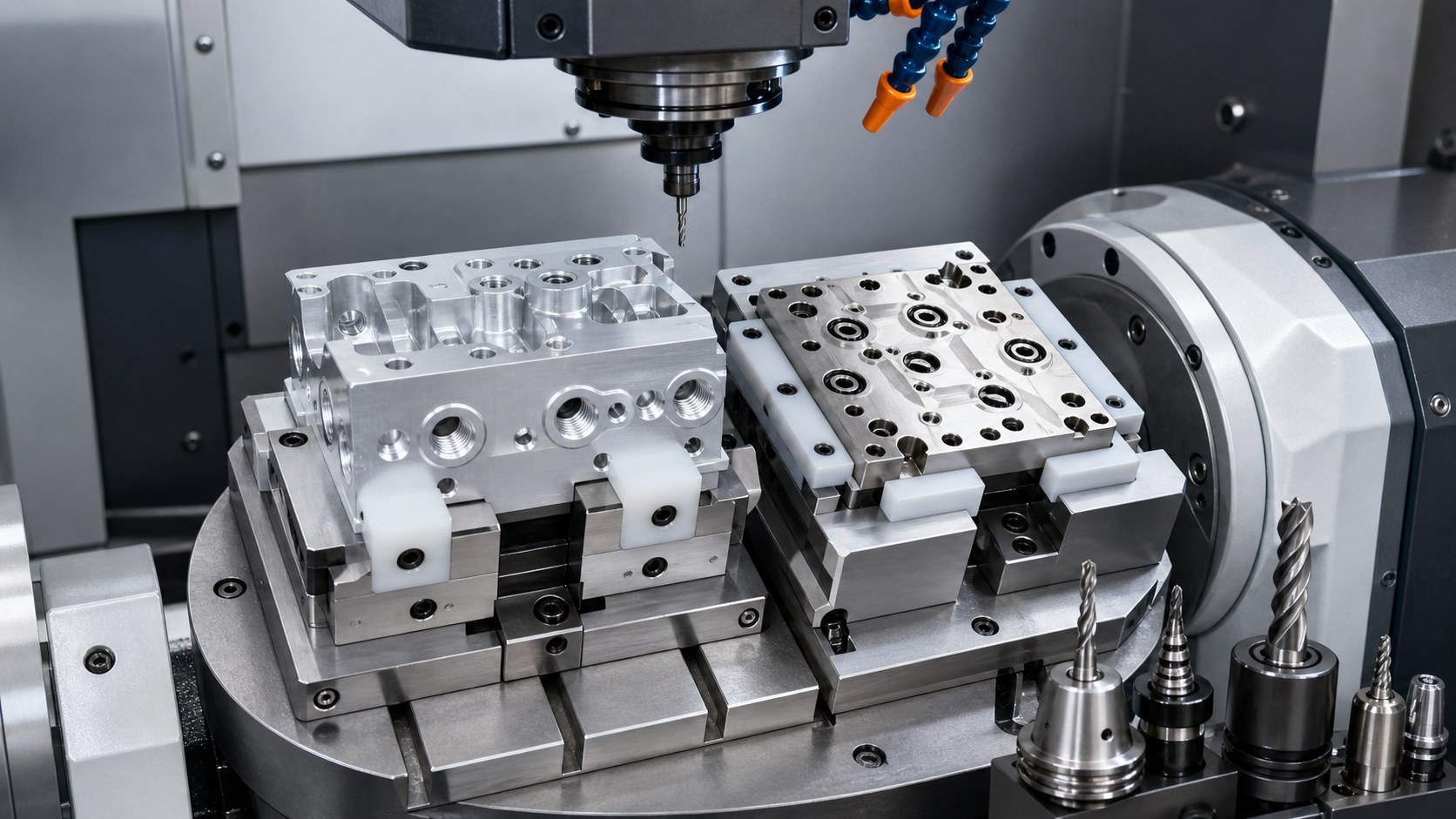
NPT, BSPP, metric and custom straight threads can appear in medical pneumatic components. The drawing should clearly state thread standard, depth, chamfer, sealing method and whether inserts, plugs or fittings will be installed before shipment.
Go/no-go gauges, fitting trial checks and torque-controlled assembly tests help detect errors early. For side ports, fixture repeatability matters because thread axes must align with the valve body and nearby sealing features.
Inspection should include pneumatic risk checks
A dimensional report should cover port centerlines, thread gauges, O-ring grooves, flatness, parallelism, sensor pocket depth and valve interface positions. For respiratory pneumatic parts, functional checks such as leak testing, pressure decay or airflow verification can be more meaningful than dimensions alone.
Supplier photos of borescope checks, gauge use and cleaned passages help engineering teams review internal risks. The same report format can then be reused for pilot batches.
Clean packaging protects internal passages
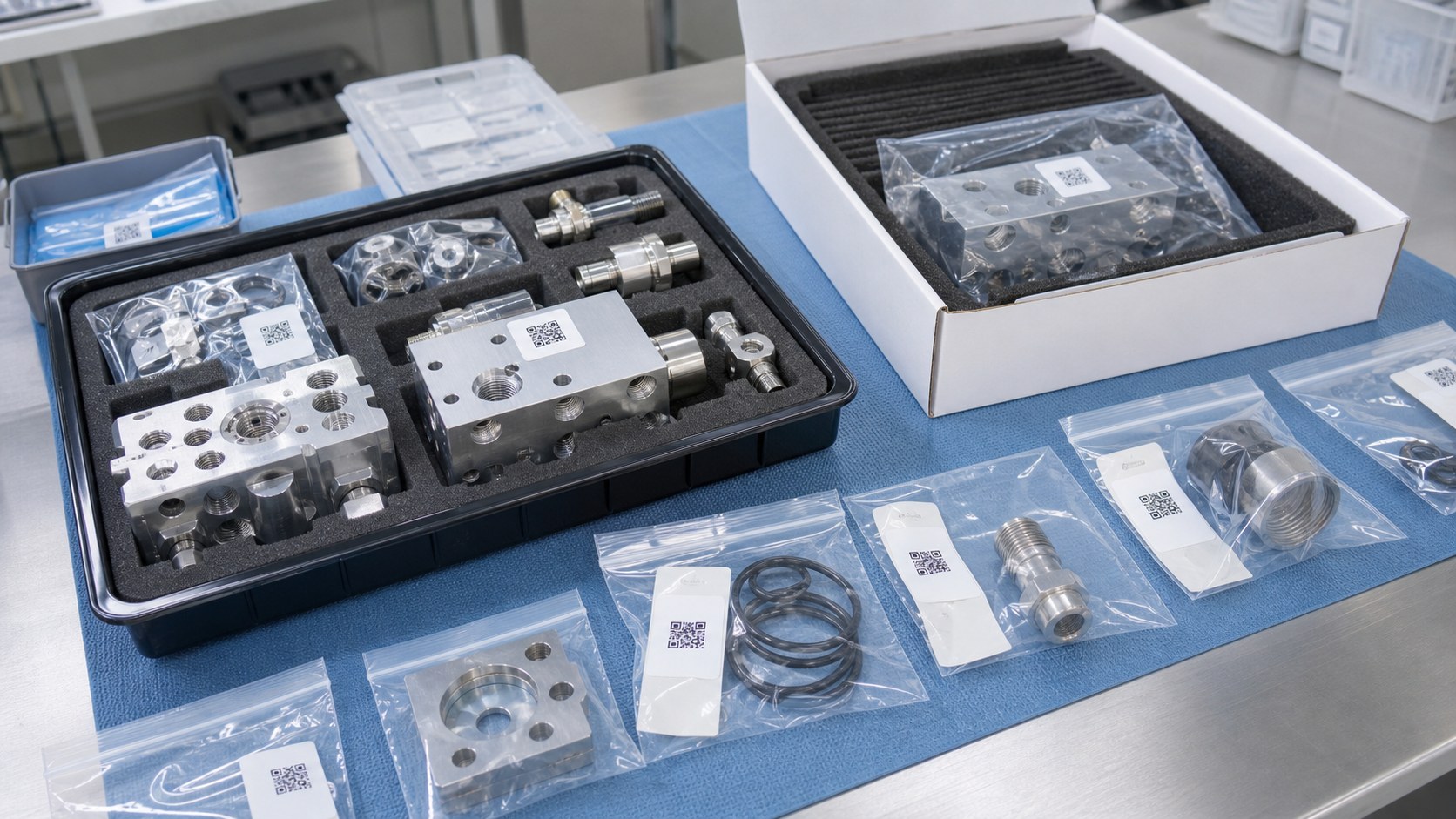
Machined valve blocks include small passages, O-rings, plugs and fittings that can trap chips or dust. Clean bags, separated fittings, foam trays and labels protect sealing faces and keep lots traceable during shipping.
Packaging notes should include part number, revision, material, quantity, lot reference and inspection status. Internal passages should be cleaned and capped or bagged to reduce contamination before assembly.
FAQ: Respiratory Valve Block CNC Machining
What files should I send for a ventilator valve block quote?
Send STEP files, 2D drawings, port standards, fitting or plug details, O-ring data, material grade, finish requirements, test pressure and expected quantity.
Which materials are common for medical pneumatic manifolds?
Aluminum is common for lightweight valve blocks, stainless steel for fittings and wear areas, and PEEK or engineering plastics for insulating or fixture components.
How are internal passage burrs controlled?
Controlled drilling, reaming, chamfering, flushing, borescope inspection and critical-intersection notes help reduce burr risk in cross-drilled passages.
How are O-ring grooves inspected?
Typical checks include groove width, depth, corner radius, sealing-face flatness, surface finish and trial assembly with the actual O-ring when available.
Why are threaded ports risky?
Wrong thread standards, insufficient depth, burrs, coating buildup or misaligned side ports can cause leaks or assembly problems. Gauges and fitting trials are important.
What quality documents can be supplied?
Common documents include material certificates, dimensional reports, thread gauge records, CMM data, surface finish data, leak-test notes, bore inspection photos and packaging labels.
Email: tanghangyun@oemach.com