
Fast robot part prototyping and stable delivery are not the same capability. Prototyping asks whether the first part can be made quickly enough for assembly and testing. Stable delivery asks whether the next batch can be supplied with the same dimensions, material condition, surface finish and inspection basis.
Many robot projects fail at the transition point. The first sample fits, but the low-volume order later shows hole-position drift, thin-wall deformation, anodizing variation, PEEK spring-back or rough threads. This does not always mean the supplier suddenly became careless. It often means the first-article stage did not freeze the process record and acceptance standard.
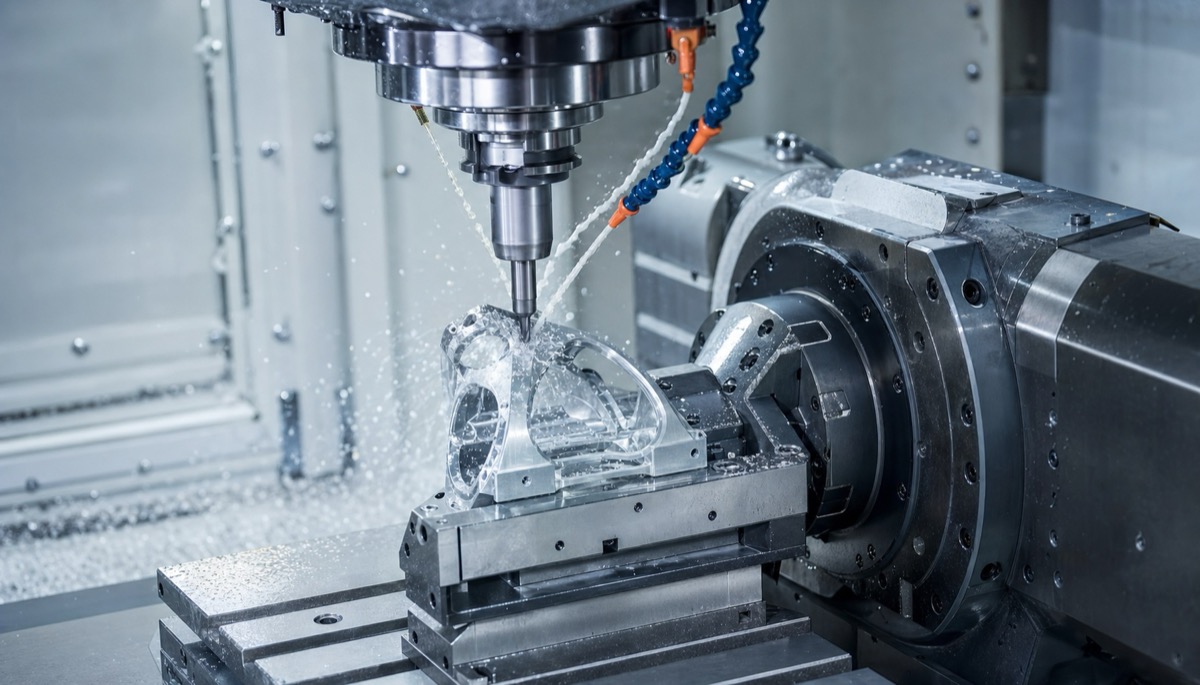
Fast Prototype vs Stable Delivery
| Item | Fast prototyping focus | Stable delivery focus |
|---|---|---|
| Main goal | Make the first usable part quickly | Repeat qualified parts across batches |
| Success criterion | The sample can assemble and support testing | Dimensions, material, finish and inspection remain consistent |
| Typical driver | Engineering urgency and communication speed | Process control, records and review discipline |
| Inspection | First article checks on critical features | CMM reports, datum consistency and batch sampling |
| Risk if ignored | Development delay | Repeated rework, assembly instability and supplier disputes |
Problems That Appear in Low-Volume Production
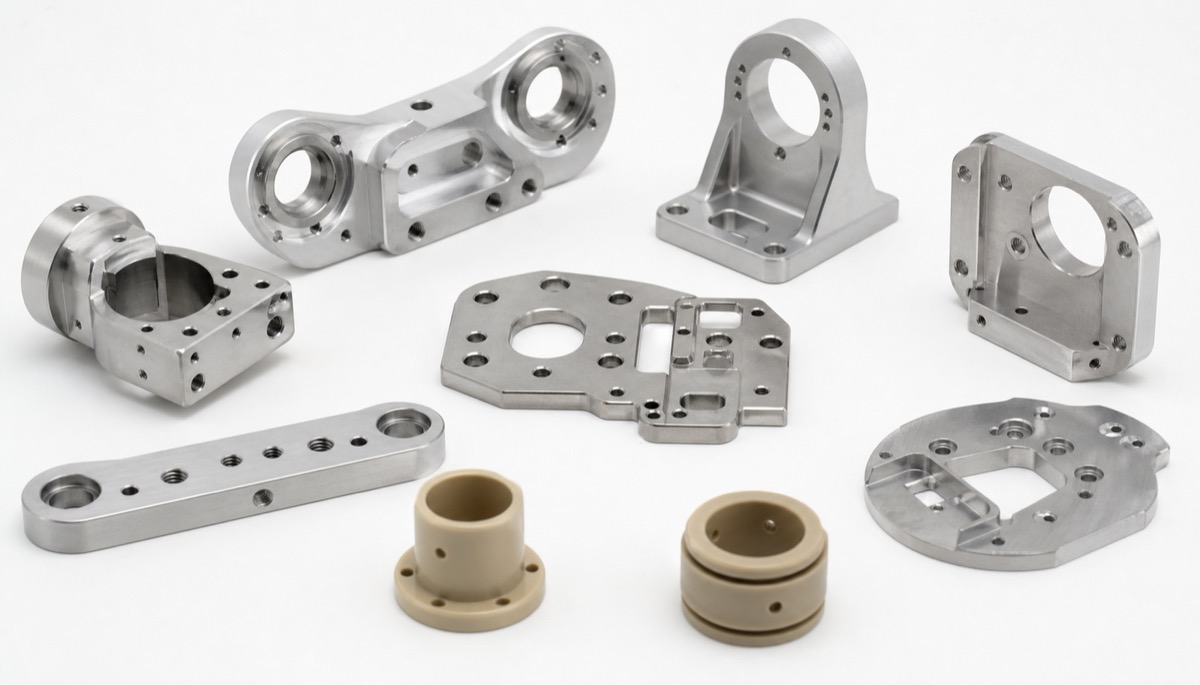
Robot precision parts are difficult not only because of tight tolerances, but because they must remain consistent after design changes, repeat orders and surface treatment. Joint brackets, sensor mounts, lightweight frames, gripper jaws and PEEK insulation parts may all pass first assembly while still carrying hidden repeatability risks.
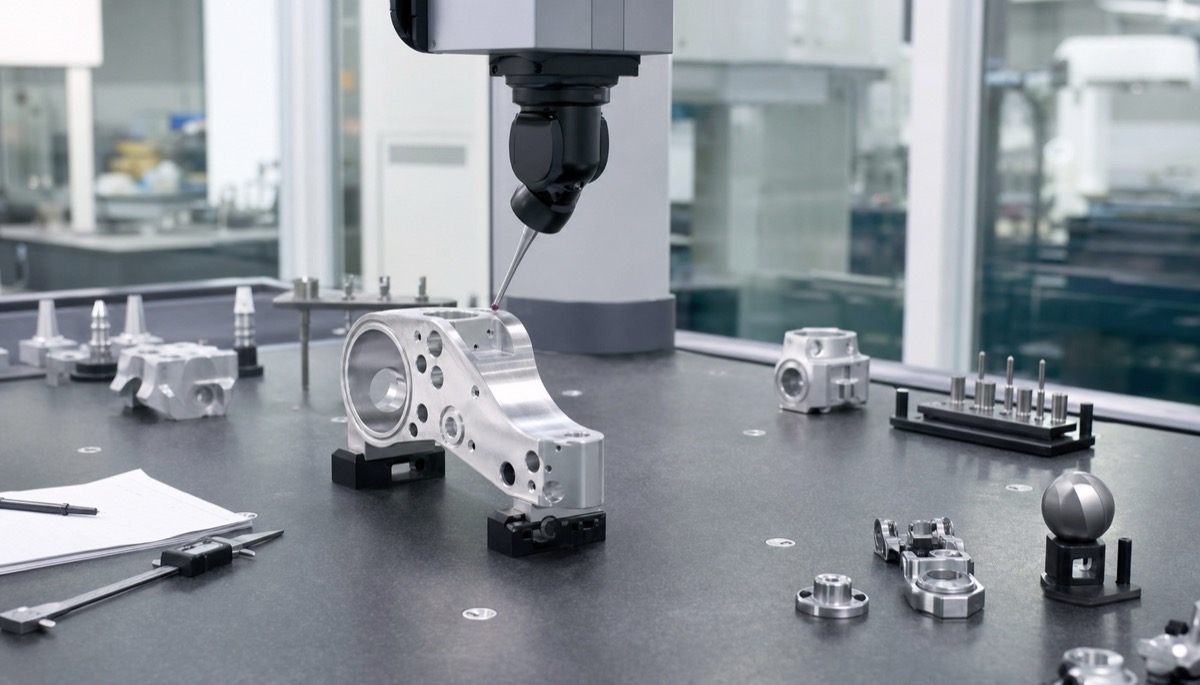
| Risk | Typical cause | What to freeze early |
|---|---|---|
| Hole position drift | Different datum setup or fixture variation | Datum A/B/C, fixture plan and CMM method |
| Thin-wall deformation | Clamping force, uneven stock removal or stress release | Toolpath sequence, support method and final inspection point |
| Anodizing variation | Film thickness, masking and hanger location not defined | Finish specification, mask areas and visual surfaces |
| PEEK spring-back | Material stress, cutting heat or inspection timing | Material batch, tool condition and post-machining check |
| Thread roughness | Burrs, coating buildup or poor tapping control | Thread gauge, depth, entrance chamfer and post-finish verification |
| Repeat order mismatch | First sample data was not archived | Revision, process route, tool list and inspection report |
What Must Be Fixed Before Stable Delivery
| Control point | How to manage it | Why it helps |
|---|---|---|
| DFM review | Record risky features before cutting the first sample | Prevents late surprises around fixtures, tools and tolerances |
| Critical dimension grading | Separate ±0.005 mm, ±0.02 mm and general dimensions | Controls cost while protecting functional features |
| First article data | Keep actual CMM values, not only pass/fail comments | Creates a repeatable reference for later batches |
| Material record | Track grade, supplier, heat or batch where relevant | Reduces unexplained machining and finish variation |
| Surface treatment plan | Confirm film thickness, masking and appearance faces | Avoids fit changes after anodizing or plating |
| Repeat-order process card | Archive setup, toolpath, fixture and inspection method | Makes the next order a controlled repeat instead of a new prototype |
How OEMach Approaches Robot Parts
For robot precision parts, OEMach treats first-article approval as the starting point of stable low-volume delivery, not the end of the job. DFM review, critical feature classification, CMM inspection and repeat-order process records are connected into one workflow.
When a lightweight robot bracket has bearing bores, locating holes, relief pockets and anodized appearance faces, each group is controlled differently. Functional bores and datums receive tighter inspection, while non-functional clearance areas are kept practical. The goal is to make the process repeatable without applying unnecessary high precision to every surface.
RFQ Checklist
| Question | Why it matters |
|---|---|
| Which dimensions control assembly, motion or sensing? | They should be graded and inspected more carefully |
| Do you need one sample or repeat low-volume supply? | The supplier can plan records and batch control from the start |
| Which datums should the inspection report use? | Prevents a report passing while the part fails in assembly |
| Will surface treatment be done before final inspection? | Coating may change fits and threads |
| Can the supplier keep revision and process records? | This is essential for repeat orders |
| Who approves exceptions during prototyping? | Keeps fast sampling from becoming uncontrolled deviation |
FAQ
Why is fast prototyping not equal to stable delivery?
Fast prototyping solves the first-part speed problem. Stable delivery also controls material batches, process route, inspection datum, surface treatment and repeat-order consistency.
Do we still need a CMM report after the first sample fits?
For critical bores, locating faces and assembly datums, keeping CMM data is recommended. It gives later batches the same inspection basis.
What problems are common in low-volume robot parts?
Hole-position drift, thin-wall deformation, rough threads, surface-treatment differences and material-batch variation are common.
Is a fast-response supplier always suitable for long-term work?
Not necessarily. Response speed is useful, but stable collaboration also needs DFM ability, inspection discipline, abnormal feedback and process records.
What should I send before quoting?
Send STEP files, 2D drawings, critical dimensions, material and finish requirements, expected quantity and whether repeat production is expected.
Summary
Fast prototyping helps a robot team move quickly; stable delivery keeps that speed from turning into repeated rework. The bridge between the two is process memory: DFM decisions, first-article data, inspection datums, material records and surface-treatment controls. When these are fixed early, low-volume delivery becomes a controlled repeat instead of a fresh gamble each time.
Ready to get a quote for your CNC machined parts?
Submit your engineering drawings to qiancj@oemach.com. We support prototype sampling and small-batch production with strict tolerance control.