
Practical CNC machining guidance for endoscope and laparoscope components, covering stainless tubes, lens housings, sealing grooves, thin-wall roundness, burr control, inspection and clean packaging.
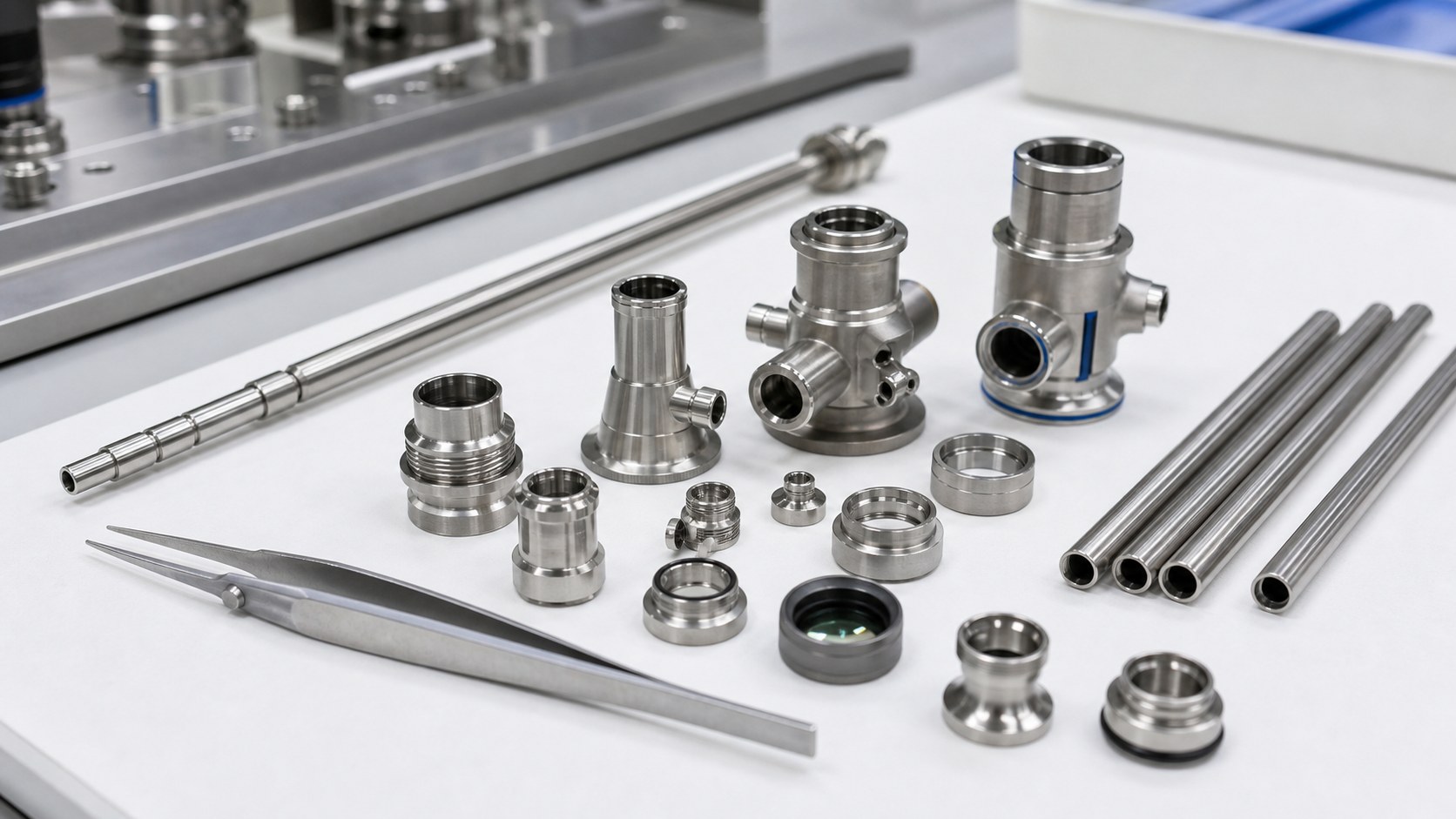
Endoscope parts combine small size with functional precision
Endoscope and laparoscope assemblies contain thin tubes, lens housings, light guide sleeves, threaded rings and sealing interfaces in a very compact space. These parts must support optical alignment, fluid sealing, torque transfer and repeated assembly without damaging delicate components. A supplier needs more than a 3D model. The RFQ should explain which bores align lenses, which surfaces seal, which tubes require roundness control and which edges contact cables, seals or operators.
Stainless steel is common, but the grade matters
Many endoscope-related components use stainless steel because it provides strength, corrosion resistance and a polished surface. Depending on the project, 304, 316 or other stainless grades may be requested. Titanium, aluminum or engineering plastics may be used for brackets, prototype fixtures or non-wetted support parts. Material certificates, cleaning exposure and surface finish expectations should be stated before quotation, especially when parts will be evaluated in wet or repeated cleaning environments.
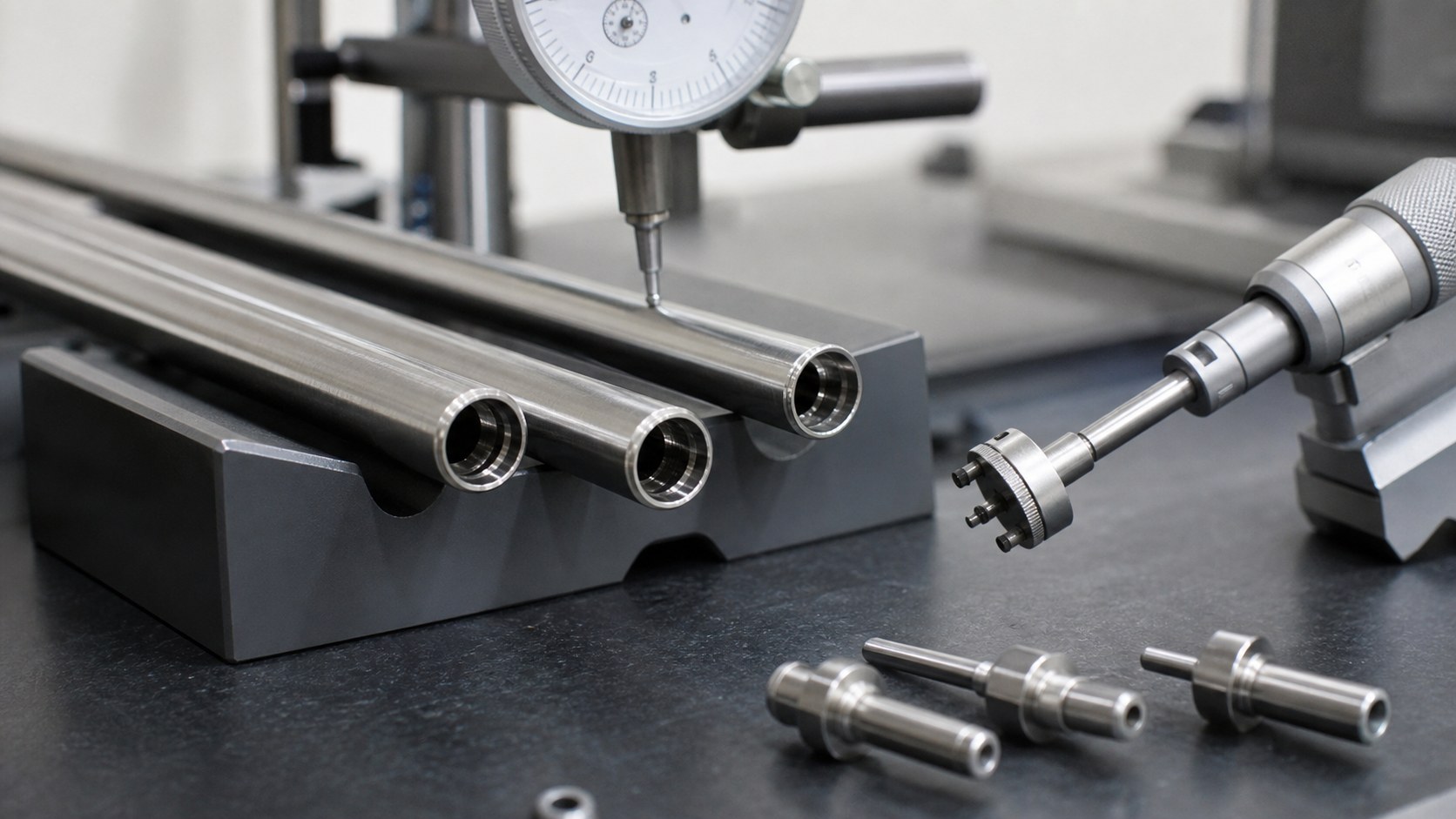
Thin-wall tubes need roundness and bore control
Long stainless tubes and sleeves can deform during cutting, clamping, turning or polishing. Roundness, concentricity, straightness and inner bore finish may be more important than a general outside diameter tolerance. Designers should mark critical tube ends, mating diameters, internal clearance and acceptable runout. For prototypes, soft jaws, mandrels, steady support and dedicated V-block inspection can reduce distortion and make the tube easier to assemble.
Lens housings require alignment datums and clean grooves
Lens housings and optical sleeves often include small bores, fine threads, O-ring grooves and shoulders that set lens spacing. Tool marks, coating thickness or burrs can affect both sealing and optical alignment. Drawings should define lens bore tolerance, shoulder location, groove geometry, thread fit and surfaces that must stay clean. If black coating, passivation or polishing is needed, masking and dimensional impact should be discussed early.
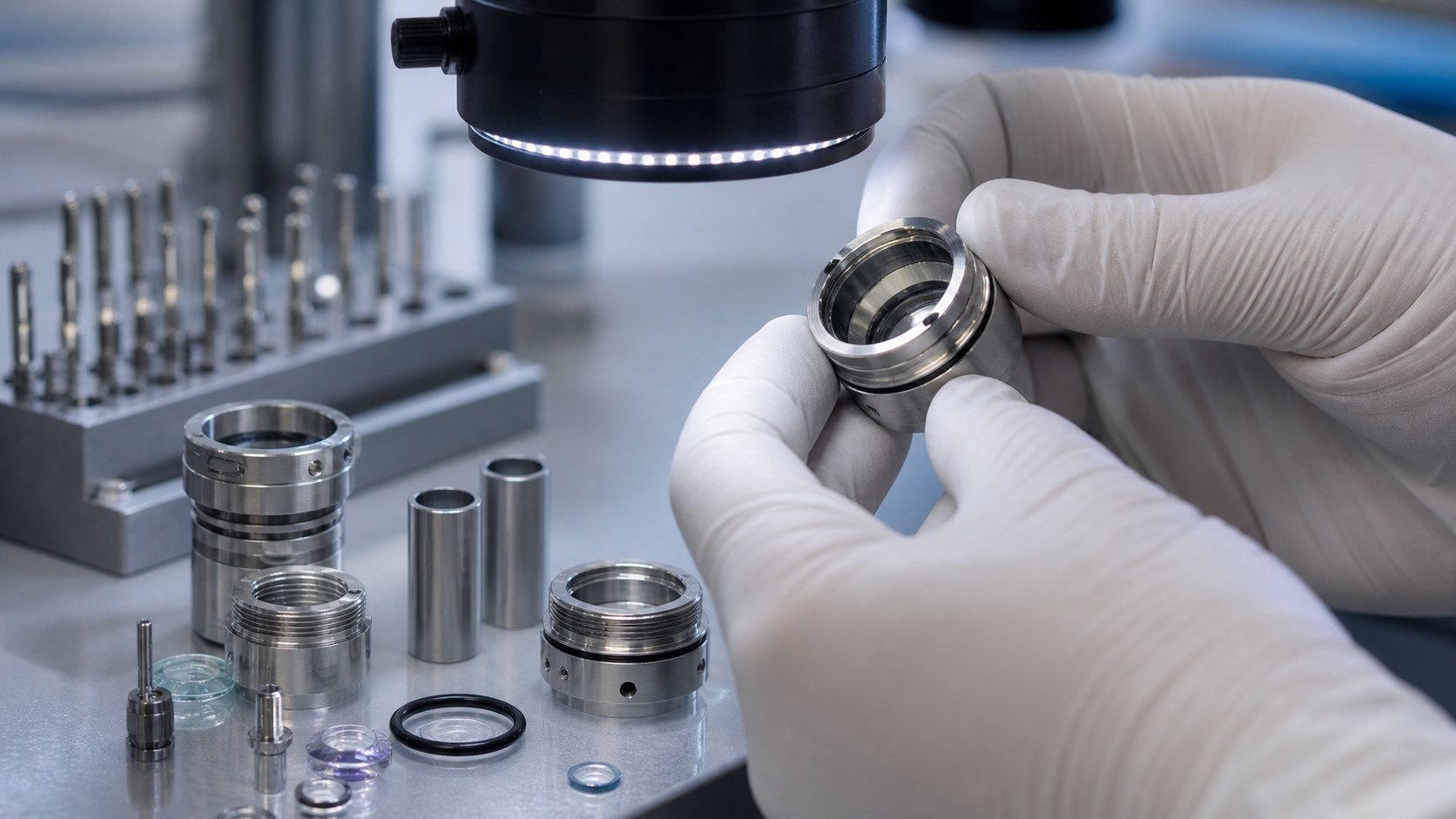
Burr control protects optics, seals and patient-facing assemblies
Tiny burrs around slots, cross holes, threads and tube ends can scratch lenses, cut O-rings or release particles during assembly. The drawing should call out no loose burrs, safe edge breaks and inspection for optical or sealing openings. Internal burrs are especially important because they can be difficult to see after machining. Microscope checks, borescope inspection and controlled cleaning may be needed for sensitive features.
Inspection should focus on optical and sealing functions
A practical inspection report should cover the features that influence performance: lens bore diameter, shoulder height, tube roundness, concentricity, groove dimensions, sealing flatness, thread quality and datum alignment. CMM inspection, bore gauges, pin gauges, optical comparator checks and microscope photos may be combined. This gives engineering teams useful evidence instead of a report that only measures easy external dimensions.
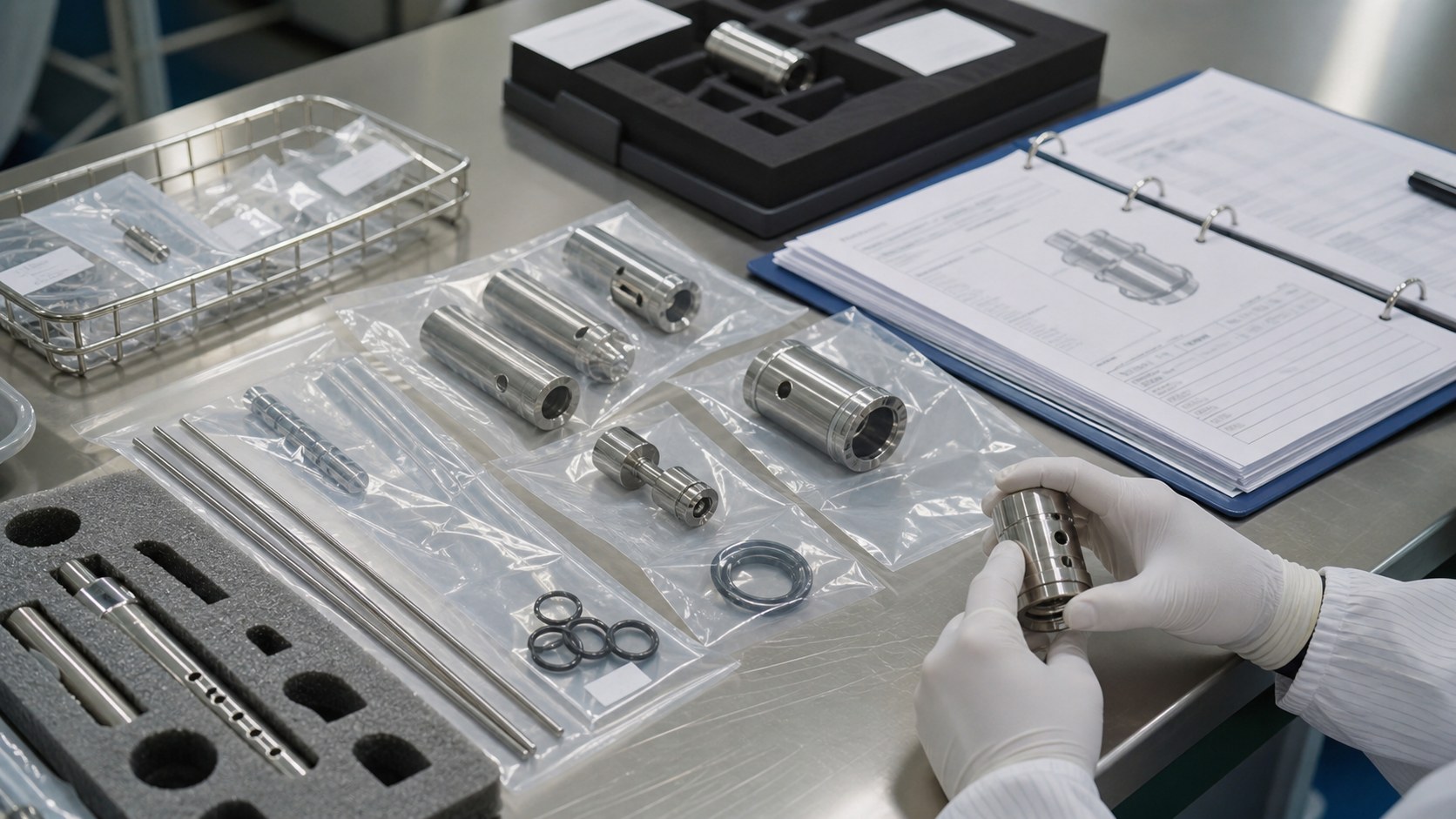
Clean packaging keeps small precision parts organized
Endoscope components are often small, shiny and similar across revisions. Individual bags, foam trays, capped tube ends, separated O-rings and revision labels prevent scratches and mix-ups. If parts are delivered with lenses, seals or mating screws, each item should be labeled separately. Clean packaging and inspection records help buyers move from prototype review to pilot build with fewer assembly surprises.
FAQ: Endoscope Component CNC Machining
What files should I send for endoscope component machining?
Send STEP or STP files, 2D drawings, material grade, quantity, tube roundness or bore requirements, sealing grooves, thread details, finish, inspection reports and packaging requirements.
Which materials are common for endoscope CNC parts?
Stainless steel 304 or 316 is common for tubes, sleeves and housings. Titanium, aluminum and engineering plastics may be used for brackets, prototype fixtures or non-wetted components.
How can thin stainless tubes be kept round during machining?
Soft jaws, mandrels, steady support, balanced machining, careful cutting parameters and V-block or bore gauge inspection can help control roundness and runout.
How should lens housings and O-ring grooves be specified?
Define lens bore tolerance, shoulder height, thread fit, groove width, depth, radius, surface finish, sealing faces and any coating or masking requirements.
Can internal burrs in tiny features be inspected?
Yes. Microscope checks, borescope inspection, pin gauges, flushing and controlled cleaning can be used depending on feature size and access.
What documents can be supplied with endoscope CNC parts?
Typical documents include dimensional reports, CMM data, material certificates, passivation or coating certificates, inspection photos, cleaning notes, packaging records and lot or revision labels.
有零件加工需求请扫码,唐经理:17706216422(微信同号)