
Practical CNC machining guidance for medical fluid control valve bodies and microfluidic manifolds, covering material selection, micro ports, sealing faces, burr control, inspection and clean packaging.
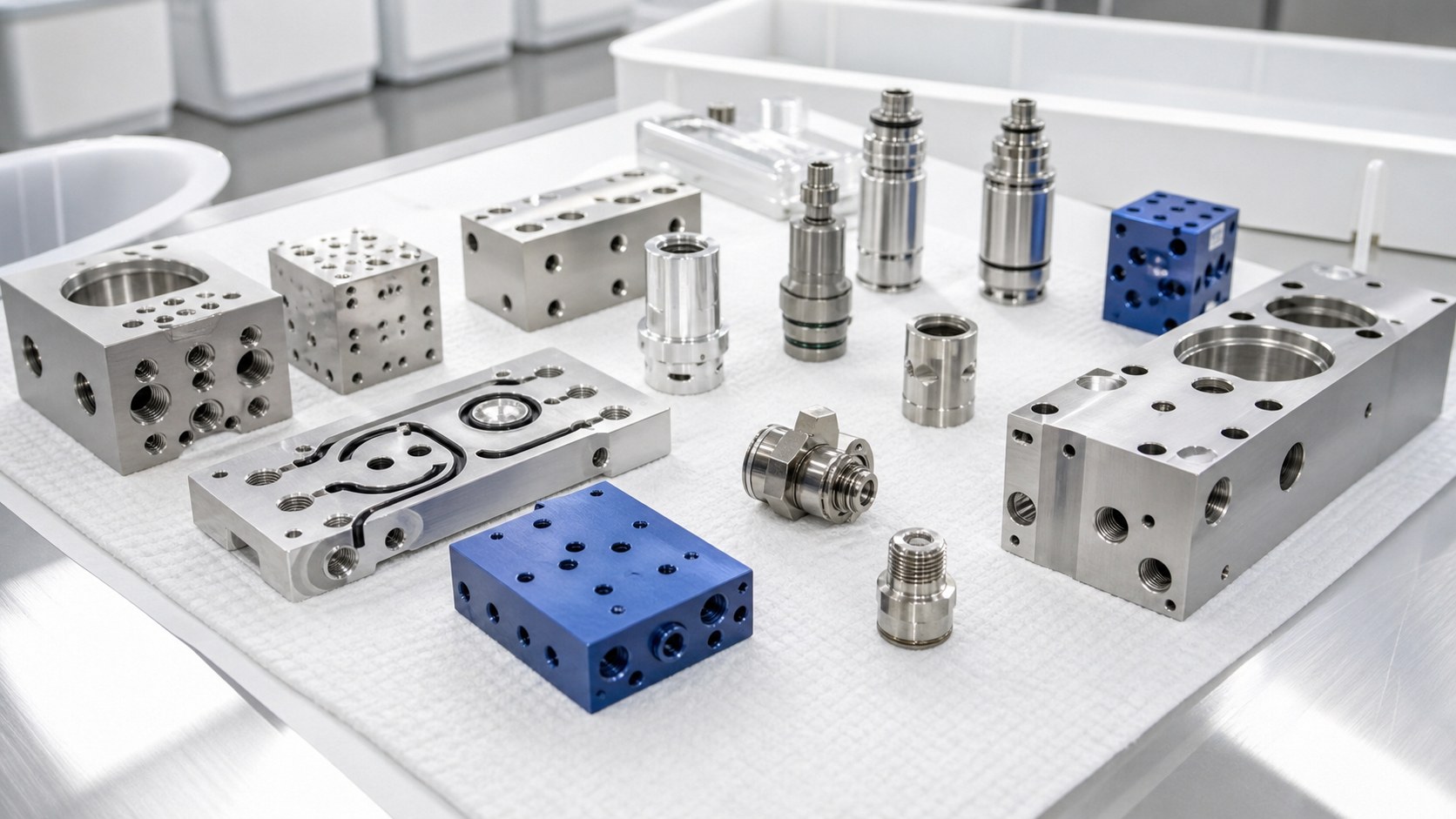
Medical fluid parts need predictable flow and sealing
Fluid control components used in medical devices often combine small channels, threaded ports, valve seats, O-ring grooves and sealing faces in one compact block. A good CNC part must do more than match the outside shape. It must avoid internal burrs, protect flow paths and seal reliably after assembly. When the RFQ explains the fluid path, pressure level, seal type and cleanliness expectations, the supplier can plan machining, deburring and inspection around the real function of the manifold or valve body.
Material choice depends on fluid exposure and cleaning
Stainless steel is common for fluid valve bodies because it offers corrosion resistance, strength and repeat cleaning capability. Aluminum can be used for prototype manifolds or non-wetted support blocks, often with anodizing. PEEK, PTFE and other engineering plastics may be selected for chemical resistance or low friction contact. The drawing should state whether each surface is wetted, whether certificates are required, and whether passivation, anodizing or special cleaning is needed before delivery.
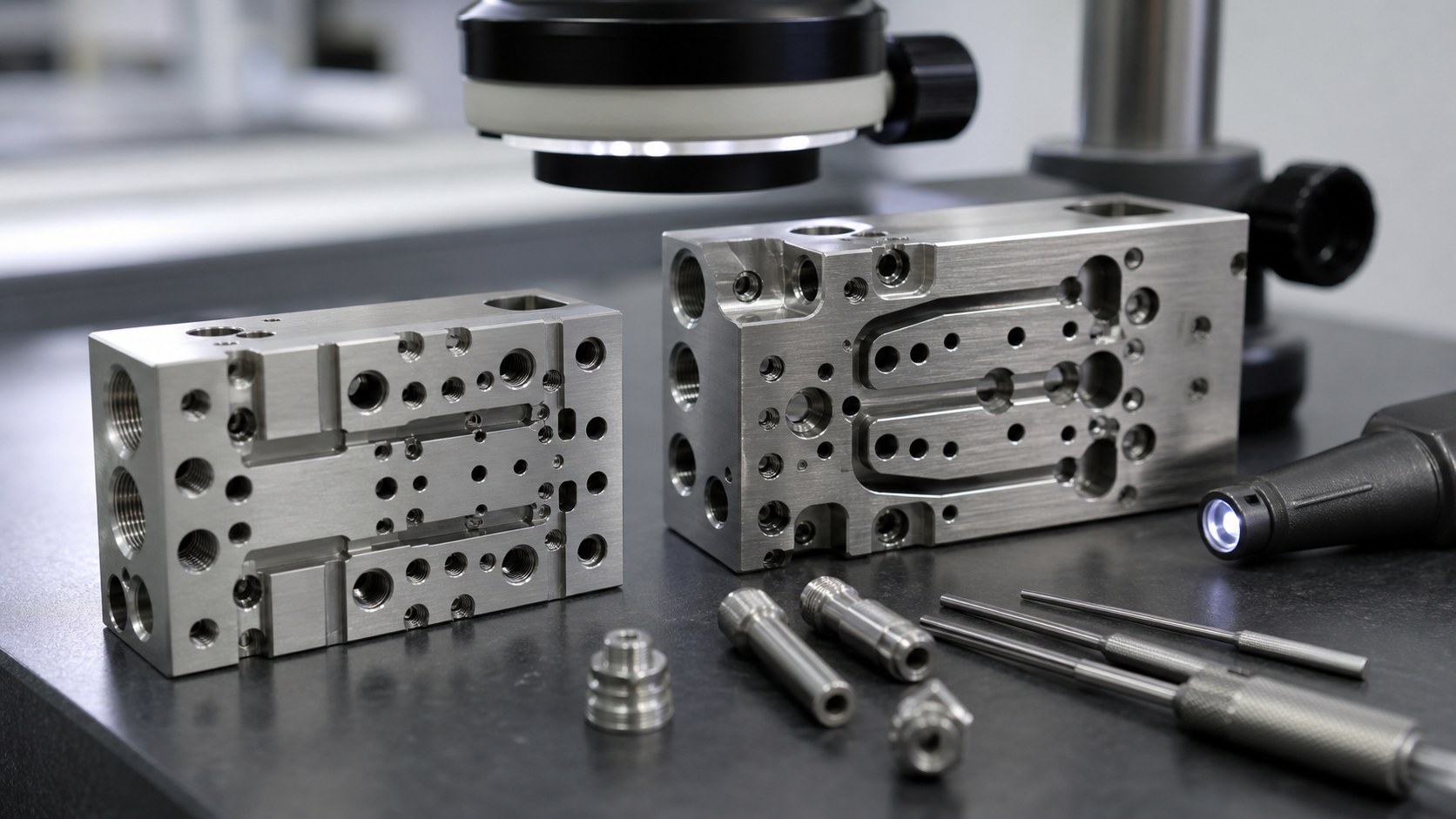
Micro ports and cross holes require process planning
Small holes and intersecting channels are the heart of many medical fluid parts. They can also be the hardest features to inspect and deburr. Deep micro holes, angled ports and cross drilling should be marked clearly on the 2D drawing with diameter, depth, tolerance and inspection method. If a channel must remain particle-free, include no internal chips and no loose burrs as explicit requirements. For tight bores, reaming, honing or dedicated pin inspection may be needed.
Sealing faces and O-ring grooves control leakage
An O-ring groove is not only a rectangular pocket. Width, depth, radius, surface finish and flatness influence compression and leak risk. Valve seats and lapped sealing faces need similar attention. The RFQ should identify critical sealing faces, acceptable tool marks, surface roughness targets and whether a leak test is required. For prototypes, even a simple functional pressure check can reveal whether groove geometry and surface finish are ready for the next build.
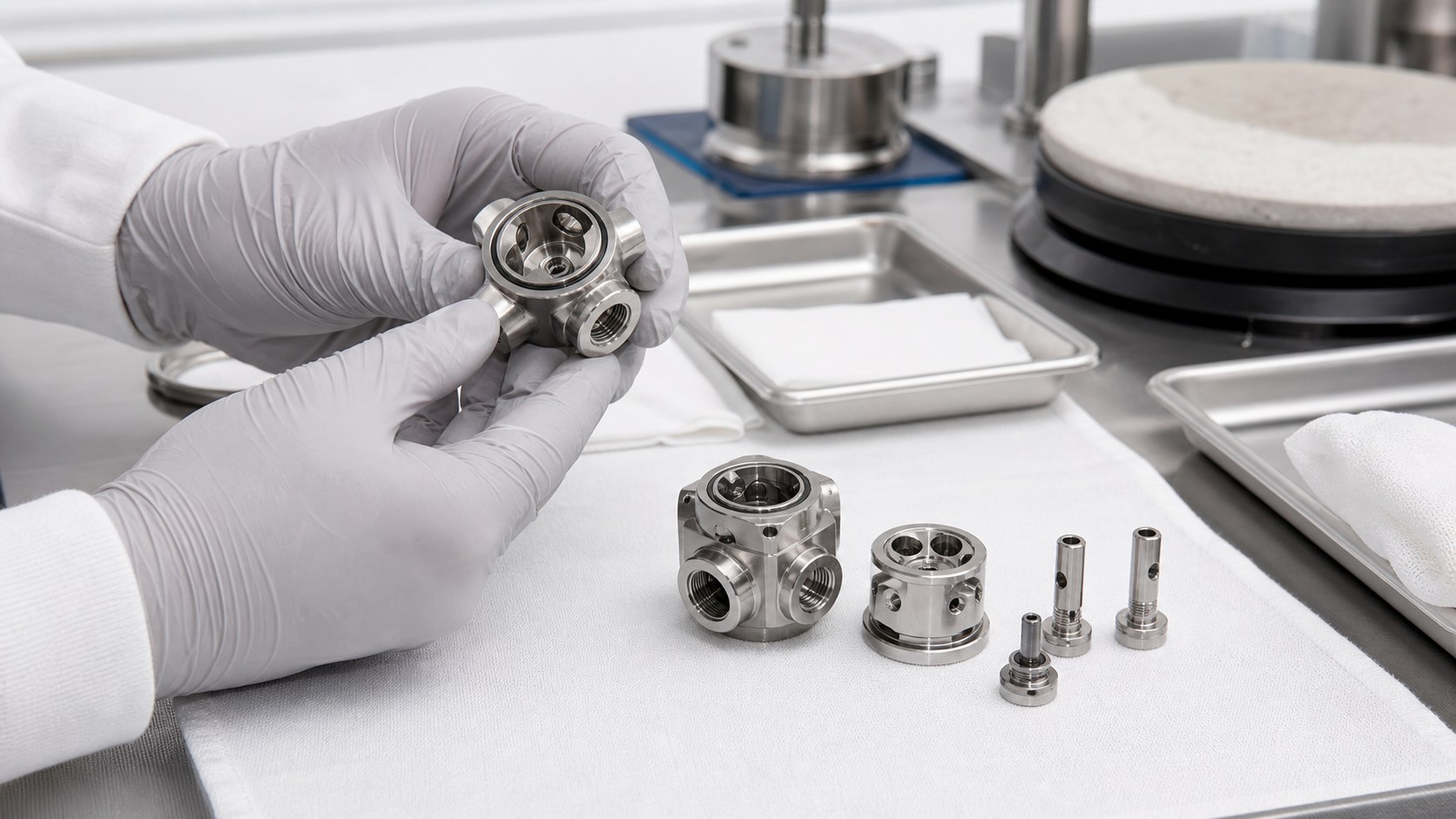
Burr control is critical inside fluid paths
External burrs are easy to see, but internal burrs in cross holes, threaded ports and valve chambers are more dangerous. They can break loose, block a tiny passage or damage a seal. CNC planning should include tool access, edge break strategy, flushing, ultrasonic cleaning if required and visual or borescope inspection. If the part includes blind channels, the buyer should provide section drawings or inspection notes so the supplier knows where hidden burrs may remain.
Inspection should match the fluid function
A useful inspection plan focuses on the features that affect flow, sealing and assembly: port diameter, thread quality, channel location, O-ring groove dimensions, sealing flatness, surface finish and datum alignment. CMM reports may be combined with thread gauges, pin gauges, microscope photos and pressure or leak-test records. This gives engineering teams better evidence than a generic report that only checks easy external dimensions.
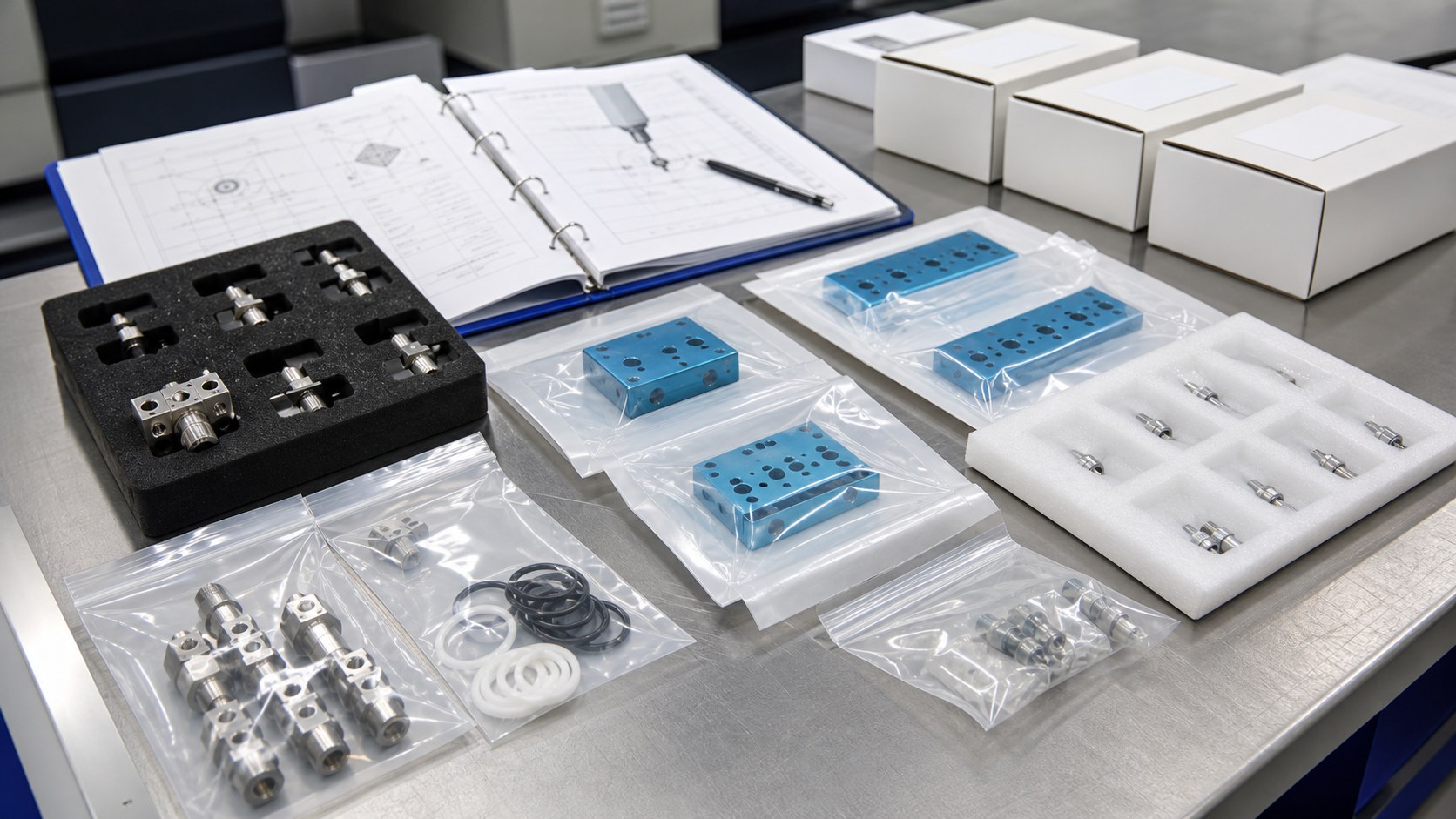
Clean packaging protects the work after machining
Fluid control parts can be damaged by scratches, dust, loose chips or mixed seals. Clean handling, separated packaging, capped ports, bagged fittings and lot labels help parts arrive ready for assembly or lab review. If O-rings, fittings or mating screws are shipped together, they should be separated and labeled. Packaging records and revision labels are especially useful when several prototype manifold versions look similar.
FAQ: Medical Fluid Control CNC Machining
What should I send for a medical fluid manifold quote?
Send STEP or STP files, 2D drawings, material grade, wetted surfaces, pressure or flow purpose, port details, seal type, burr control notes, inspection needs and packaging requirements.
Which materials are common for medical fluid valve bodies?
Stainless steel, anodized aluminum, PEEK, PTFE and other engineering plastics are common. The best choice depends on fluid exposure, cleaning, strength, weight, corrosion and certificate needs.
How can internal burrs in cross holes be controlled?
They should be planned from the start with suitable tool paths, edge breaks, flushing, ultrasonic cleaning when required, microscope or borescope checks and clear no-loose-burr requirements.
How should O-ring grooves be specified?
Define groove width, depth, corner radius, surface finish, flatness, seal type, compression target if known and any leak-test requirement.
Can micro ports be inspected reliably?
Yes. Pin gauges, microscope checks, CMM, borescope inspection, flow checks or dedicated fixtures can be used depending on hole size and function.
What documents can be supplied with fluid control CNC parts?
Typical documents include dimensional reports, CMM data, material certificates, passivation or anodizing certificates, inspection photos, leak-test records, cleaning notes and lot labels.
有零件加工需求请扫码,唐经理:17706216422(微信同号)