
Practical guidance for CNC machining medical robot end effectors and positioning fixtures, covering datum strategy, material choice, gripper features, tolerance control, inspection and clean packaging.
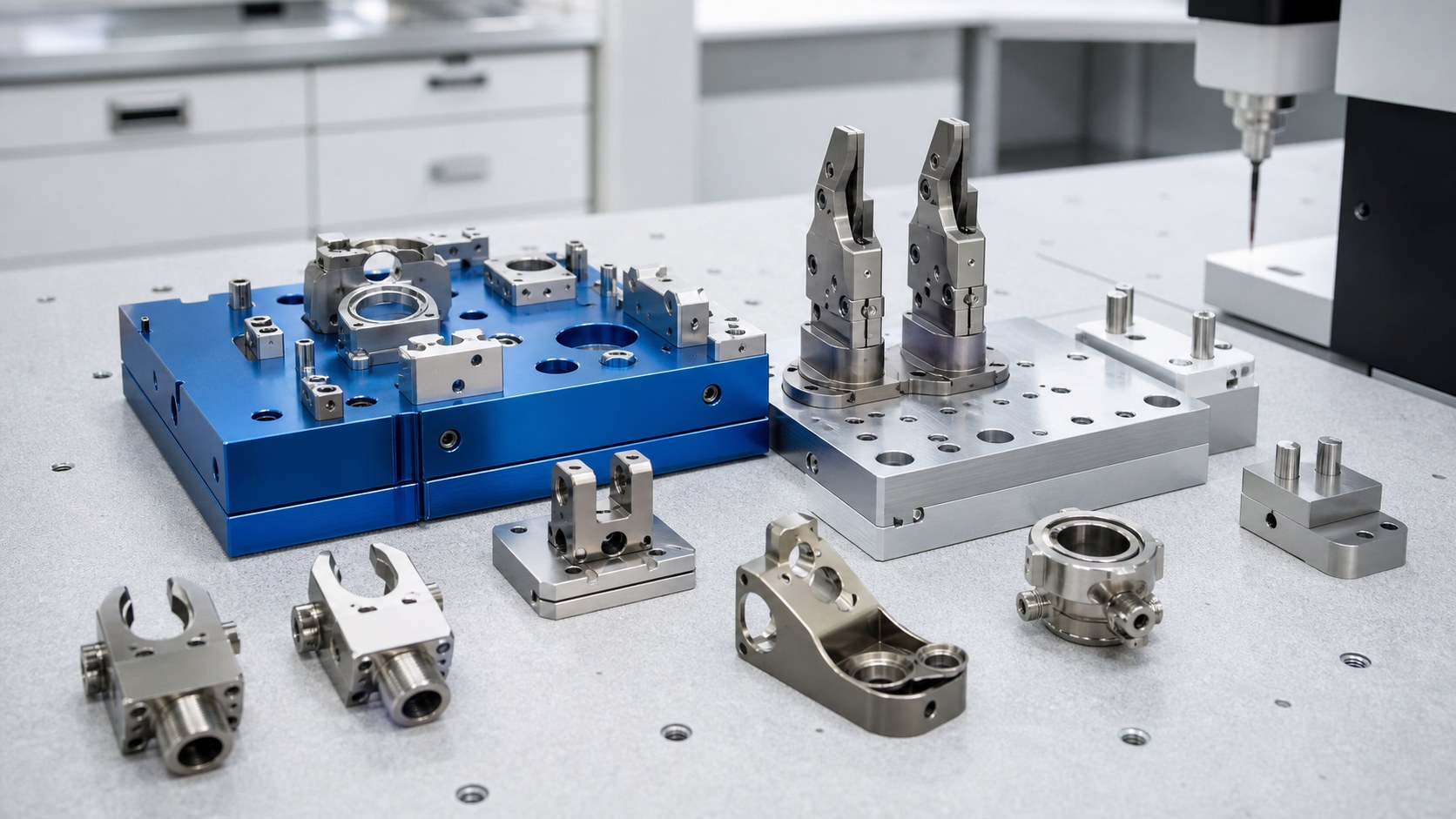
Medical automation parts need repeatable positioning first
Medical robotic systems depend on repeatability. A gripper jaw, fixture plate or end effector bracket may look like a simple machined part, but its real job is to locate a tube, cartridge, surgical tool, sample holder or disposable component in the same position again and again. For CNC suppliers, the most important information is not only the 3D shape. The RFQ should explain which faces are datums, which holes locate pins, which surfaces touch the device and which features only provide clearance. This lets the machining plan protect the functional geometry from the first setup.
Choose materials around stiffness, weight and cleaning exposure
Aluminum is often used for positioning plates and prototype fixtures because it machines quickly and can be anodized for wear and identification. Stainless steel is useful for gripper jaws, pins and contact features that need higher hardness, corrosion resistance or repeated cleaning. Titanium may be selected when low weight and strength are important near a moving robot wrist. Engineering plastics such as PEEK, PPSU or PTFE may support insulation, chemical resistance or gentle contact with sensitive parts. Material grade, certificate needs and surface finish should be listed before quotation.
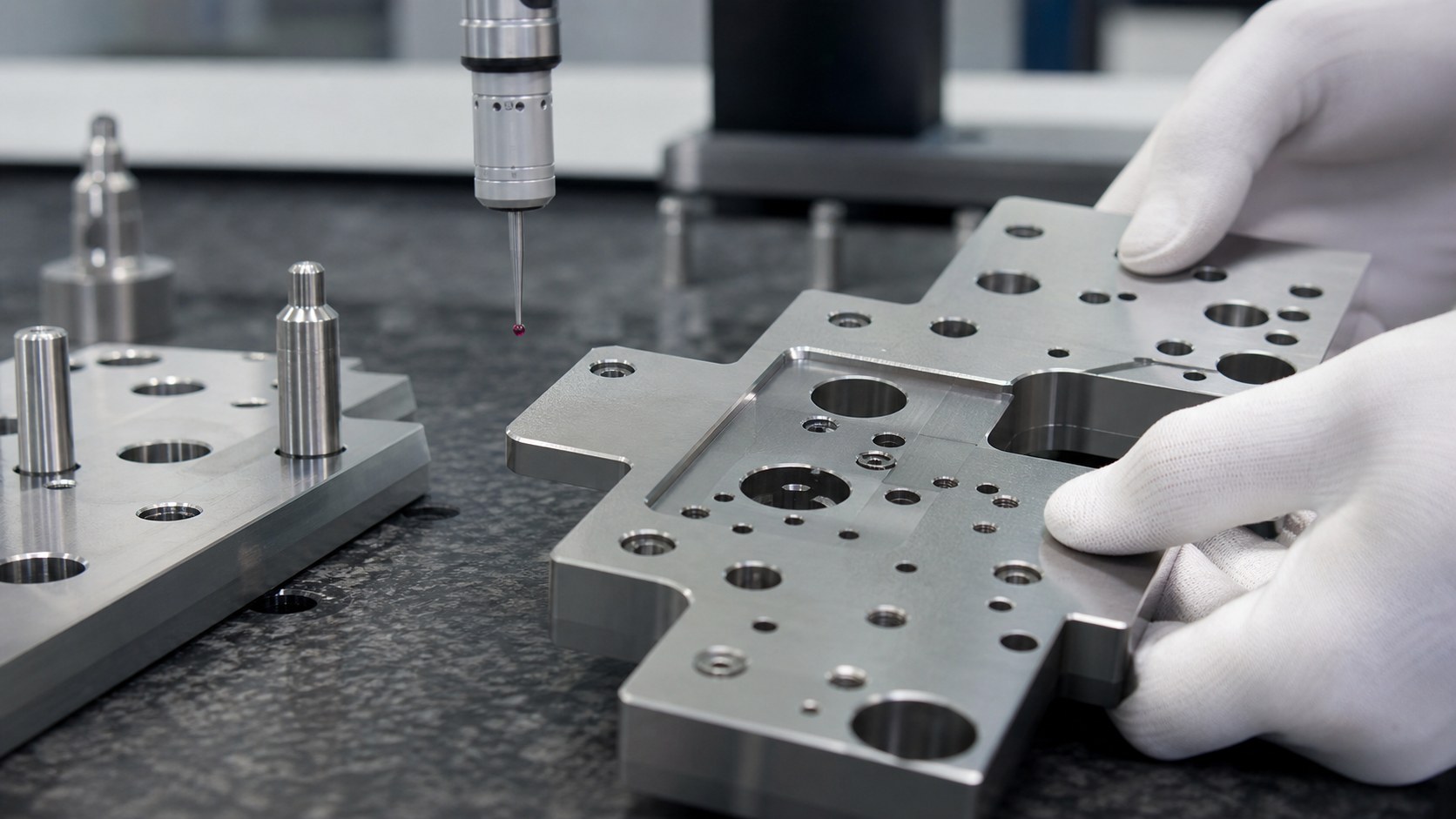
Datum faces and dowel holes control the assembly result
Medical automation fixtures usually contain many holes, pockets and threaded features, but only a few of them control the final position. Those datum faces, dowel holes and locating shoulders deserve the tightest tolerances and the most careful inspection. If every hole receives the same tight tolerance, cost rises without improving the system. A good drawing separates functional location features from cable clearance, cover screws and lightening pockets. For complex plates, it is helpful to mark primary, secondary and tertiary datum references clearly.
Gripper jaws combine small features with surface sensitivity
End effector jaws may include serrations, soft contact pads, wire EDM slots, small screw holes and fine radii. These details are often close together, so tool access and burr removal should be discussed early. A jaw that grips a medical disposable may need smooth edges and consistent contact pressure rather than aggressive teeth. A jaw used for a metal instrument may need a harder material, coating or replaceable insert. The supplier should understand whether the jaw is for prototype validation, life-cycle testing or repeat production.
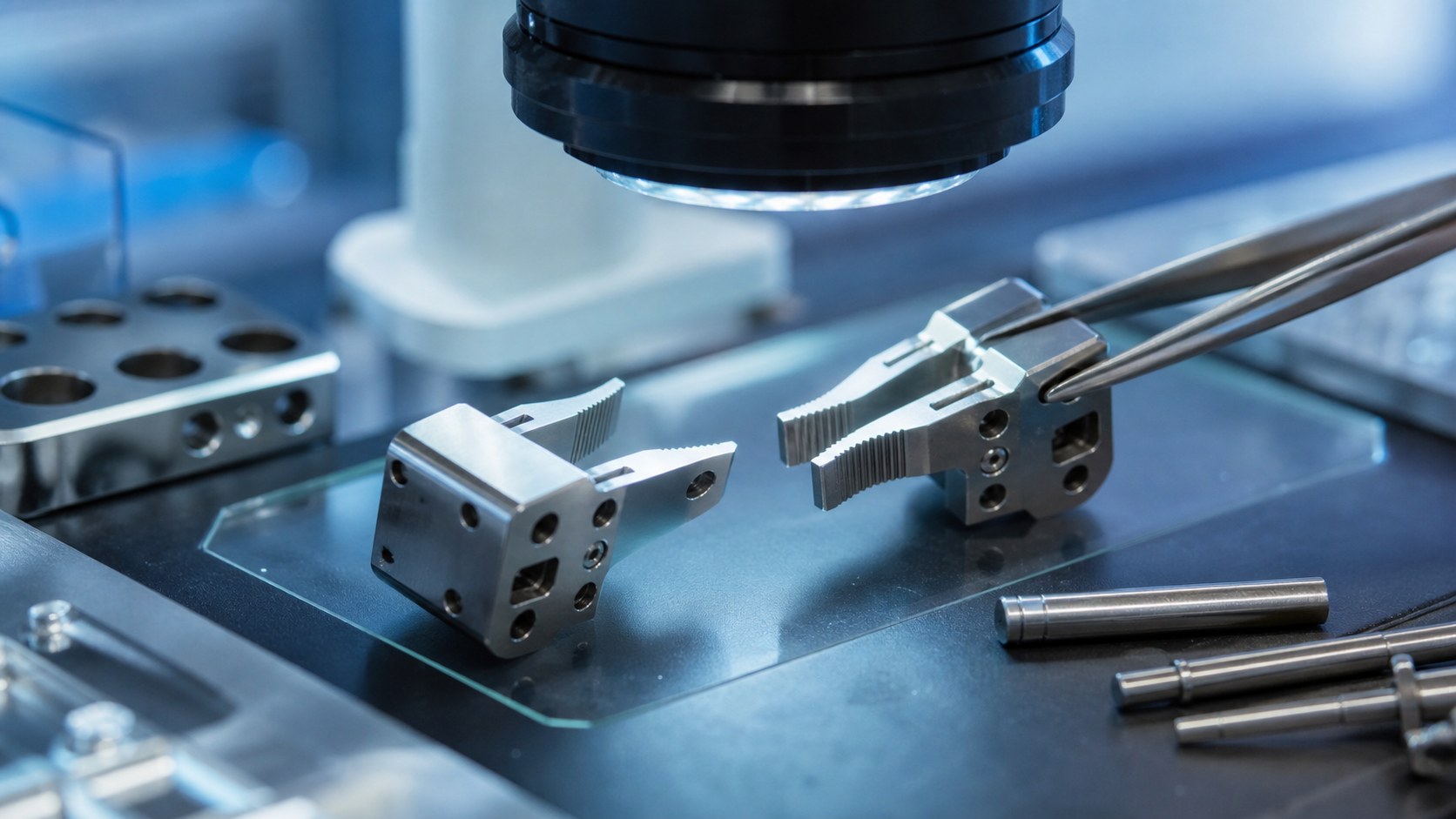
Tolerances should reflect stack-up, not habit
Medical robot assemblies can fail because several normal tolerances stack in the same direction. A fixture plate, spacer, bracket and jaw may each be within drawing tolerance, but the final tool center point can still shift. Before machining, engineers should identify the critical stack: base plate flatness, perpendicularity, dowel position, jaw symmetry, pin fit and interface height. CNC inspection can then focus on what influences robot calibration. For small batches, a targeted CMM report is usually more valuable than measuring every easy feature.
Finish, edge break and cleanliness affect reliability
Sharp edges can cut gloves, damage cables or create particles near medical automation equipment. Burrs inside holes can block dowel pins or make assemblies sit high. For anodized aluminum plates, edge breaks and masking requirements should be clear before finishing. For stainless gripper jaws, passivation, polishing or bead blasting may be needed depending on cleaning exposure. Clean handling, separated packaging and revision labels make it easier for engineering teams to install the parts without mix-ups.
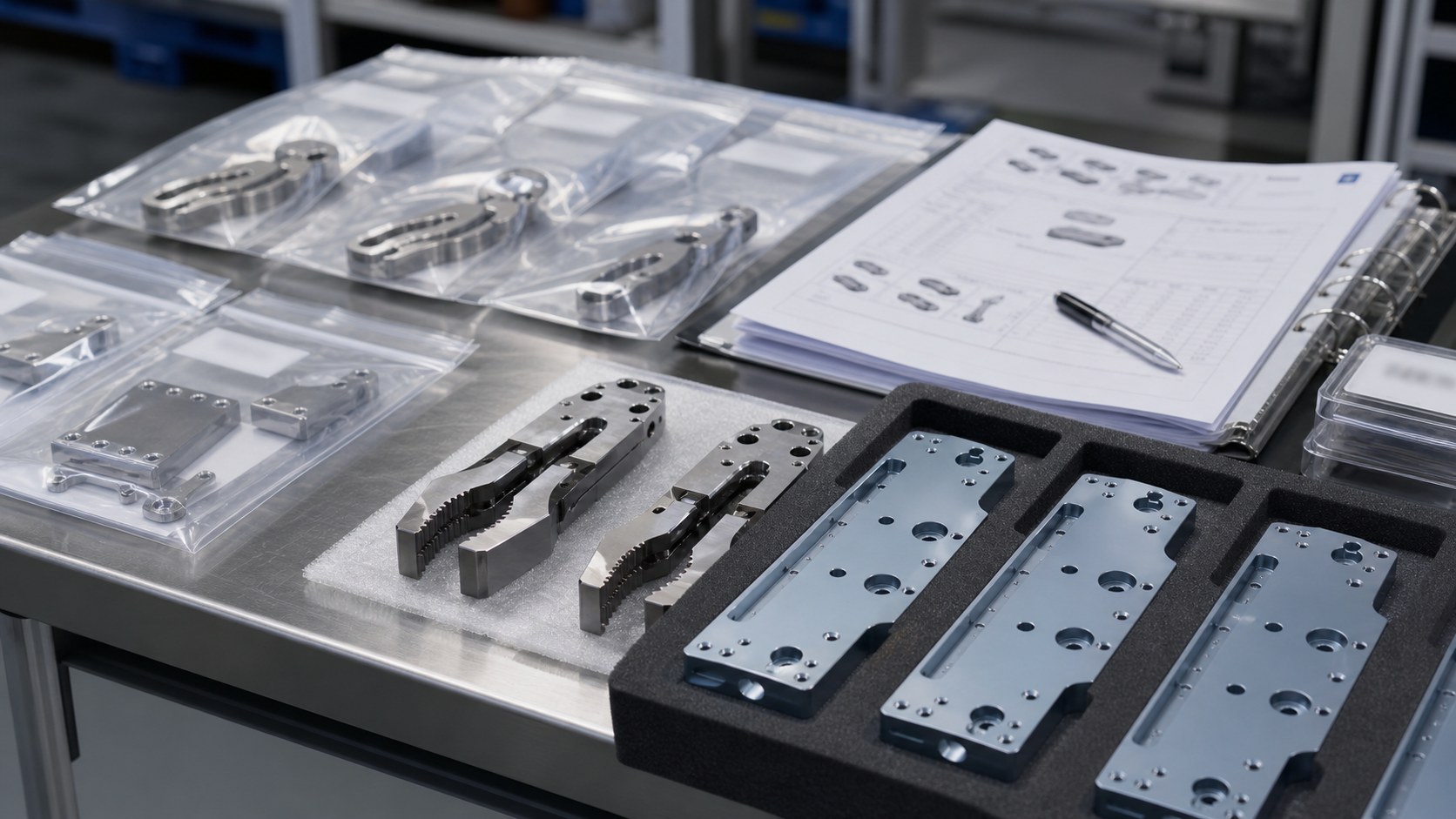
Documentation helps move from prototype to repeat build
Many medical automation projects start with prototypes and move quickly into pilot builds. Keeping records from the first CNC order saves time later. Useful documents include material certificates, dimensional reports, CMM data for datum features, inspection photos of contact areas, finish certificates and packaging records. If the RFQ includes revision level, lot labeling and required reports, the supplier can prepare a repeatable process instead of treating each order as a one-off sample.
FAQ: Medical Robot End Effector CNC Machining
What files are needed for a medical robot fixture quote?
Send STEP or STP files, 2D drawings, material grade, quantity, surface finish, critical datum features, tolerance requirements, inspection report needs and packaging notes.
Which materials are common for medical robotic end effectors?
Aluminum, stainless steel, titanium and engineering plastics are common. The choice depends on stiffness, weight, corrosion resistance, wear, cleaning exposure and contact with the handled component.
How should datum holes and locating faces be specified?
Mark primary datums, dowel pin holes, locating shoulders and interface heights clearly on the drawing. Separate them from noncritical clearance holes so inspection effort supports the assembly result.
Can small gripper jaw features be machined accurately?
Yes, if tool access, burr control and inspection are planned early. Fine slots, serrations, pin holes and contact radii may require small tools, EDM, microscope checks, pin gauges or CMM inspection.
Do anodized or passivated medical automation parts need special notes?
Yes. Specify anodizing type, color if needed, masking areas, passivation requirements, coating thickness concerns and surfaces that must remain conductive, grounded or dimensionally critical.
What documents can be supplied with these CNC parts?
Typical documents include dimensional reports, CMM reports for datum features, material certificates, finish or passivation certificates, inspection photos, packaging records and lot or revision labels.
有零件加工需求请扫码,唐经理:17706216422(微信同号)