A practical guide to CNC machining surgical instrument prototypes, covering ergonomic geometry, material selection, hinge details, burr control, passivation, inspection reports and clean packaging.
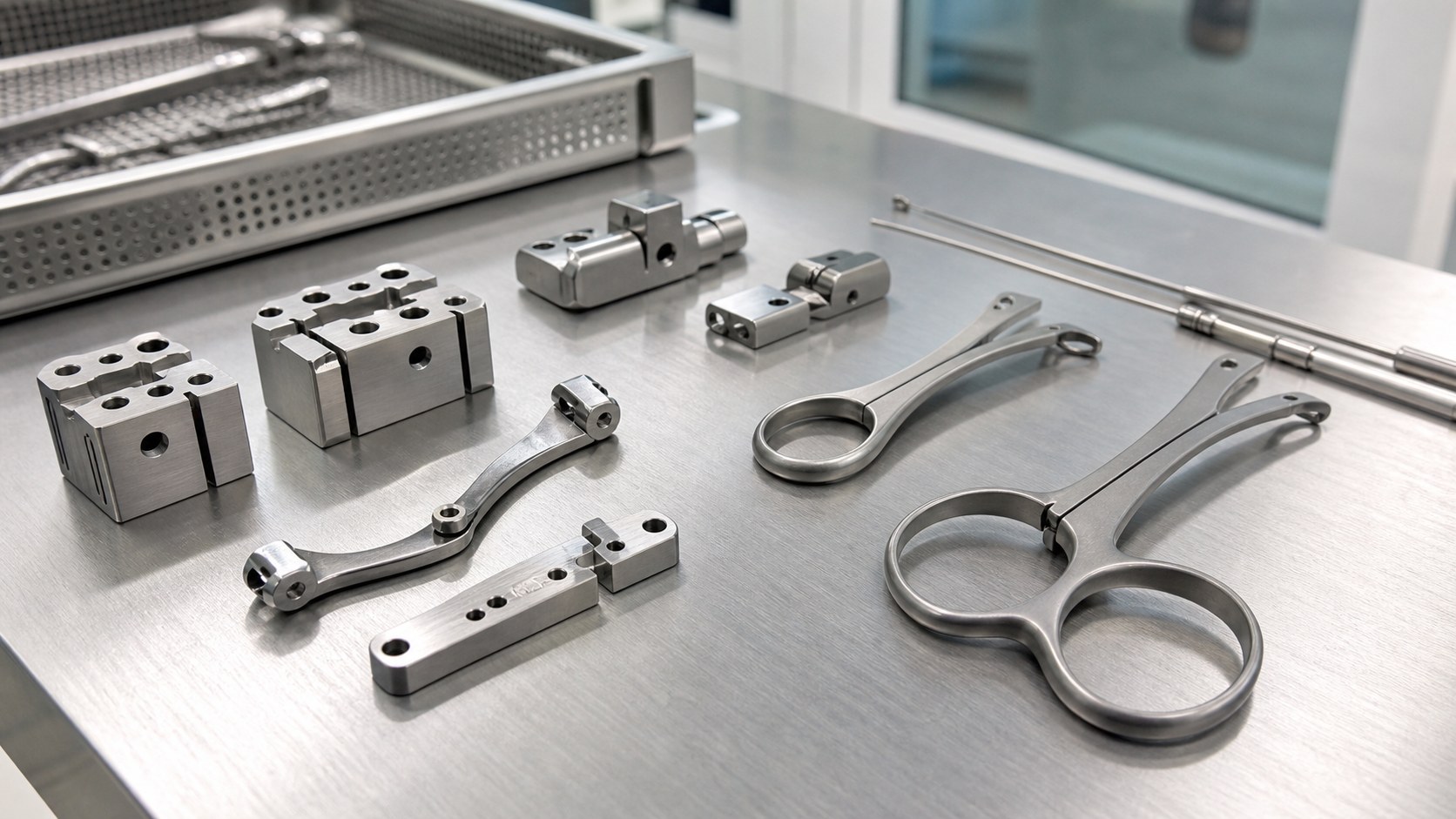
Prototype intent should be clear before machining
Surgical instrument prototypes are not only shaped metal parts. They are physical tests of grip comfort, working angle, hinge feel, tip alignment, cleaning access and assembly logic. A buyer may need one prototype to confirm hand feel, another to check jaw movement, and a third to validate a sterilization tray or test fixture. When the RFQ explains the prototype purpose, the CNC supplier can choose a machining sequence, tolerance plan and inspection method that supports the real decision instead of only matching a 3D model.
Materials: stainless steel, titanium and engineering plastics
Stainless steel 304 and 316 are common for medical-related prototypes because they machine cleanly, resist corrosion and can receive passivation. For higher strength or lower weight, titanium may be selected for handles, bone-contact guides, instrument bodies or trial components. PEEK, PPSU, PTFE and other engineering plastics may be used for insulating features, disposable aids, handles or parts that need chemical resistance. The drawing should state the exact grade, heat treatment condition if relevant, certificate requirement and whether the part is for evaluation, laboratory use or later regulated production.
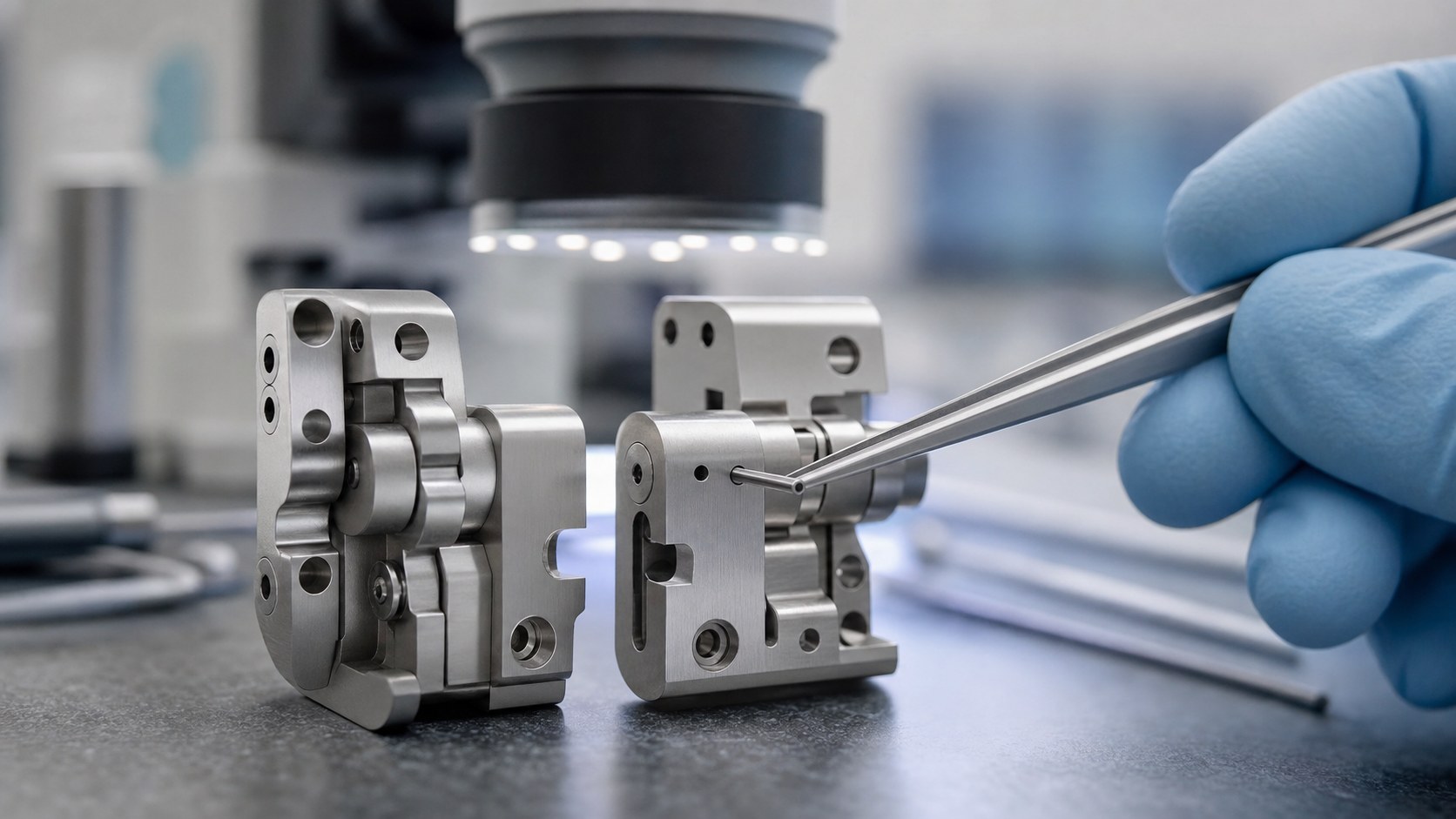
Ergonomics and grip geometry need manufacturable details
Handles, finger rings and curved profiles often look simple in CAD, but they can drive machining cost. Deep pockets, long blended radii and undercuts may require 3+2 positioning, ball-end finishing or custom soft jaws. For prototypes, it is often better to define functional surfaces first: where the finger contacts the part, where the hinge needs alignment, where an edge must be smooth, and where cosmetic tool marks are acceptable. This helps the supplier spend time on the surfaces that matter most to the user test.
Hinges, pins and micro features require early tolerance planning
Instrument prototypes often include small holes, hinge bores, slots, serrations, pin seats or thin flexible arms. These features should be called out clearly on the 2D drawing with datum references and inspection requirements. If a small hole is only a clearance hole, the tolerance can be relaxed. If it controls jaw alignment or rotational feel, it may need reaming, boring, pin-gauge inspection or CMM verification. Early tolerance planning prevents a beautiful prototype from feeling loose, tight or inconsistent during assembly.
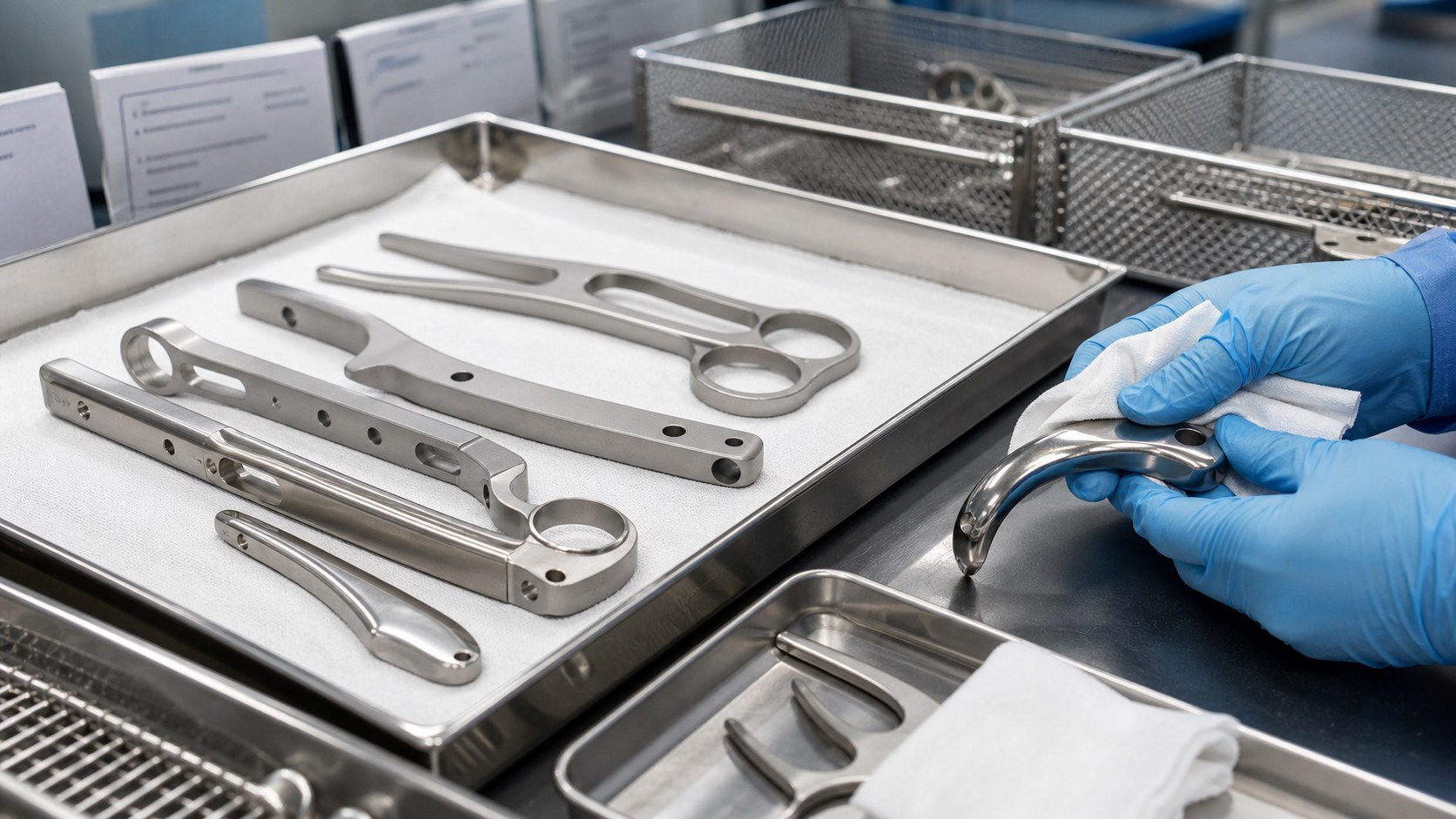
Burr control is a medical design requirement, not a finishing note
Burrs around intersecting holes, slots and gripping teeth can damage test samples, trap residue or change the feel of an instrument. For surgical instrument prototypes, burr control should be written into the drawing, especially for jaw edges, hinge features, internal passages, finger contact areas and cleaning-critical pockets. Requirements such as no loose burrs, edge break range, microscope check or no internal chips are much easier to quote and inspect when they are stated before production.
Surface finish, passivation and cleaning should match the test stage
A prototype for ergonomic review may only need a consistent machined finish and safe edges. A prototype for handling, cleaning or corrosion evaluation may need bead blasting, polishing, passivation or controlled cleaning. If the part will be touched by evaluators, assembled repeatedly or placed in a wet lab, surface finish and packaging should be part of the RFQ. For stainless steel parts, passivation requirements and certificates should be clarified before machining because process planning, masking and documentation may affect lead time.
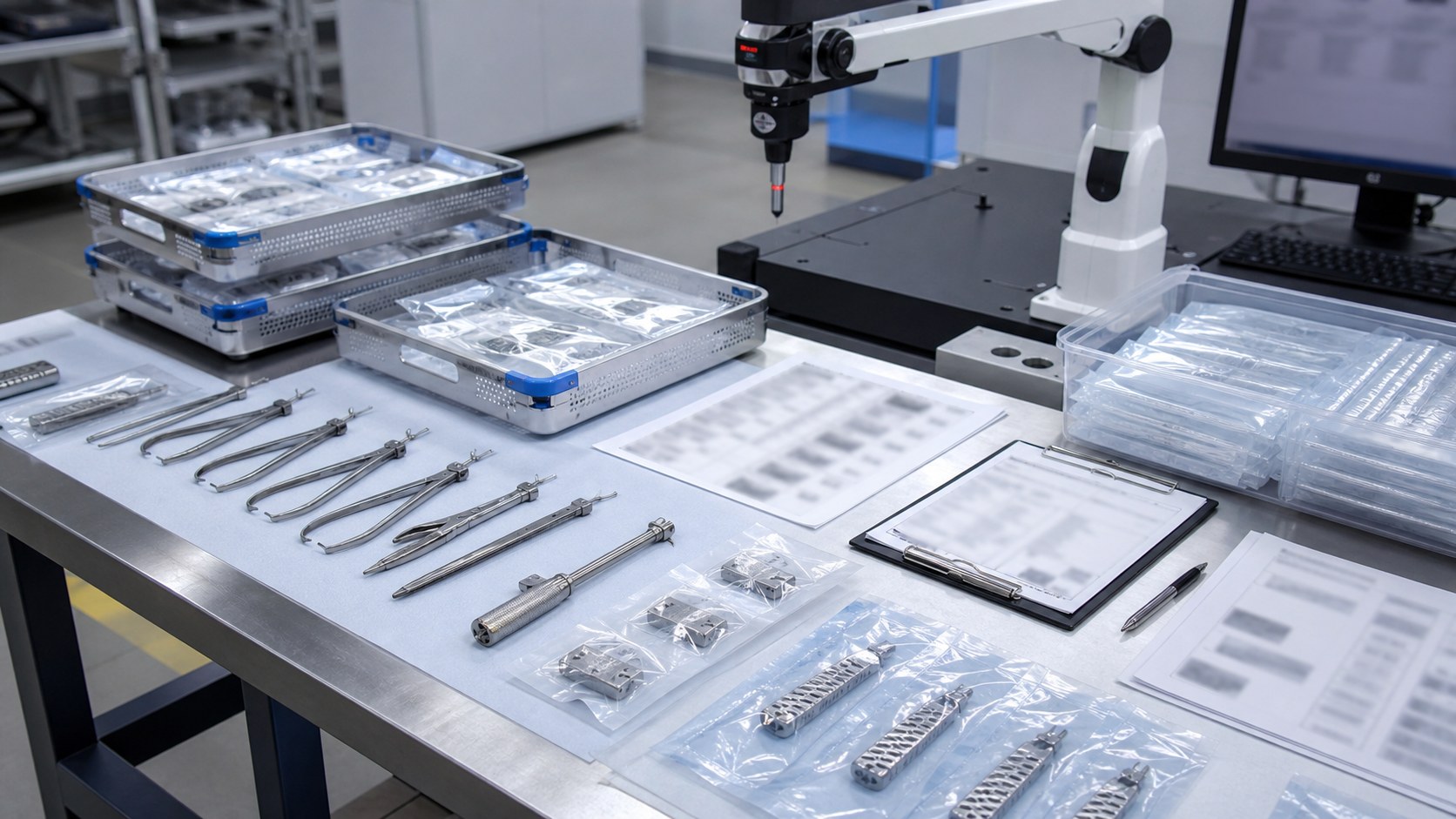
Inspection documents make prototypes easier to approve
Prototype inspection does not always need a full production PPAP package, but it should be useful. Common documents include dimensional reports for critical features, first article inspection, material certificates, surface finish notes, photos of deburring-sensitive areas and packaging records. For small-batch medical instrument parts, lot labeling and revision control help engineering teams compare prototype versions without confusion. A clear inspection plan also gives purchasing teams confidence before they move from one-off samples to repeat orders.
FAQ: CNC Machining Surgical Instrument Prototypes
What should a surgical instrument prototype RFQ include?
Send STEP or STP files, 2D drawings, material grade, quantity, finish, target use, critical features, burr control notes, inspection needs and packaging requirements. If the prototype is for ergonomic testing, assembly testing or cleaning evaluation, mention that purpose.
Which materials are common for surgical instrument prototypes?
Stainless steel 304 or 316, titanium and selected engineering plastics are common. The final choice depends on strength, corrosion resistance, weight, sterilization or cleaning exposure, insulation needs and certificate requirements.
Can CNC machining produce hinge bores and small alignment holes?
Yes. Hinge bores, pin holes and fine slots can be machined and inspected reliably when their function and tolerance are defined. Tight fit features may need reaming, boring, pin gauges, CMM checks or dedicated fixtures.
How should ergonomic surfaces be specified?
Mark the surfaces that contact the hand, fingers, jaw or assembly interface. Define safe edge breaks, smooth blended radii and acceptable tool marks so the supplier knows which areas need extra finishing time.
Do prototype surgical instruments need passivation?
Not every prototype needs passivation. If the part is stainless steel and will be used for corrosion review, repeated handling, cleaning evaluation or customer demonstration, passivation should be specified with the required standard or certificate.
What inspection documents can be supplied?
Typical documents include dimensional inspection reports, first article inspection, material certificates, passivation certificates, surface finish notes, inspection photos and lot or revision labels for traceability.
有零件加工需求请扫码,唐经理:17706216422(微信同号)