
CNC machined heat sinks and liquid cooling plates are common in EV systems, power electronics, automation equipment, robotics and compact industrial devices. These parts look like ordinary aluminum blocks in a CAD file, but their real function depends on thermal contact, flatness, channel geometry, sealing details and surface finish. If these requirements are not clear before RFQ, a supplier may quote the shape but miss the quality controls that make the part work in the assembly.
The first decision is whether the part is an air-cooled heat sink, a cold plate with internal channels or a hybrid component with both fins and fluid paths. Air-cooled heat sinks rely on fin height, fin spacing and base thickness. Liquid cooling plates rely on channel depth, sealing groove accuracy, port threads, cover interface and leak-tight assembly. Each design needs a different machining route, fixture plan and inspection method.
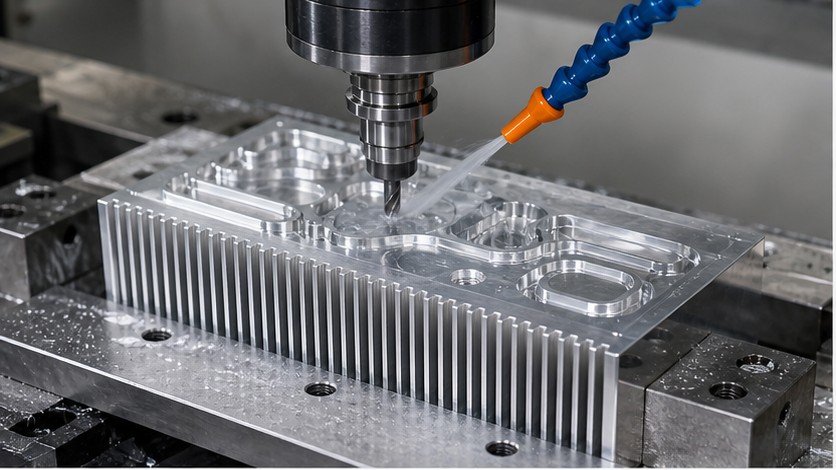
Material choice affects both thermal performance and manufacturing stability. Aluminum 6061 is often selected because it machines well, has good thermal conductivity for many industrial uses and supports anodizing. Aluminum 6063 may be used for some heat sink profiles, while 7075 offers higher strength but is not always the best thermal or corrosion option. Buyers should confirm whether the priority is heat transfer, weight, strength, corrosion resistance, cosmetic appearance or cost.
Fin design needs practical machining review. Very thin fins can bend, vibrate or leave burrs during milling. Deep narrow slots require small tools with limited rigidity, which can increase cycle time and cost. If a heat sink does not require extremely dense fins, slightly wider spacing and stronger fin roots can improve manufacturability. Designers should also check whether sharp inside corners can be changed to tool-friendly radii without affecting airflow.
Liquid cooling channels have their own risks. Channel depth, width, corner radius and surface roughness affect flow behavior and pressure drop. A channel that is too narrow may be difficult to clean or inspect. A channel that is too deep can weaken the plate or create flatness issues after material removal. If a cover plate, gasket or O-ring is used, the sealing surface and groove dimensions must be defined clearly on the drawing.
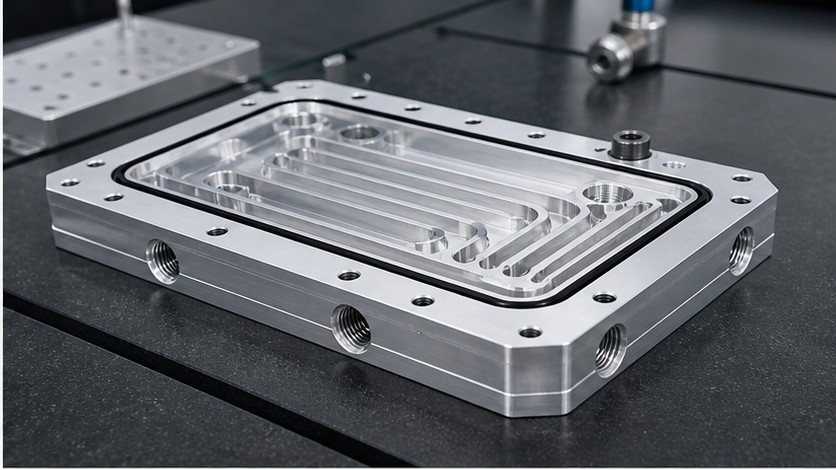
Flatness is often the most important inspection item. A cooling plate may need good contact with a battery module, power device, laser module or electronic housing. If the mounting face is not flat enough, thermal interface material may not compensate. Buyers should specify the flatness requirement, which face it applies to and whether the value is required before or after surface finish. For larger plates, stress relief and balanced machining may be needed to control deformation.
Port threads and fittings should be reviewed together with the channel layout. Inlet and outlet ports may use metric threads, pipe threads or custom fittings. The drawing should define thread type, depth, sealing method and whether any ports require spotface or counterbore details. If the port intersects an internal channel, burr control and cleaning become critical. A thread can pass a gauge but still leave chips or burrs inside the fluid path if cleaning is not planned.
Surface finish affects both appearance and function. Anodizing can improve corrosion resistance and identification, but it may affect sealing surfaces, threaded ports or electrical contact areas. Hard anodizing can change dimensions more significantly. Some cooling plates require bare aluminum on contact faces and coated surfaces elsewhere. These areas should be marked before quotation, not decided after machining.
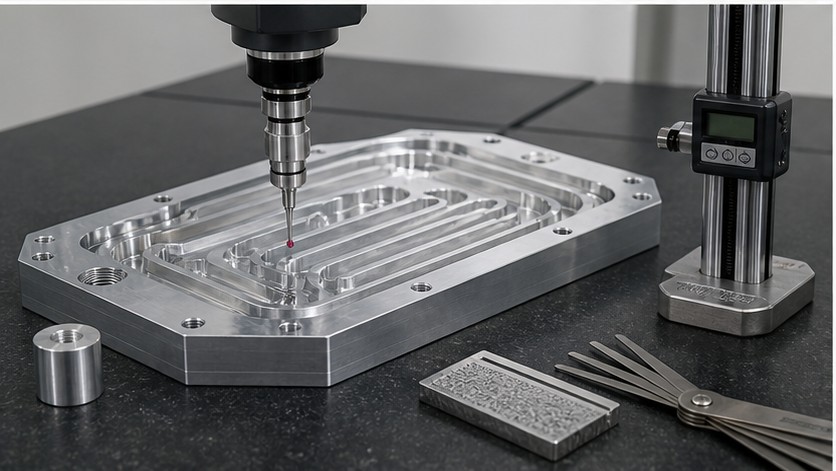
Inspection should include more than outside dimensions. For heat sinks, fin thickness, fin spacing, base flatness and key mounting holes may be checked. For liquid cooling plates, channel depth, sealing groove width, flatness, port thread fit and surface roughness may matter. If the part must be leak-tested after assembly, that requirement should be stated. If the supplier only machines the plate and does not assemble or test it, the buyer should know that before production.
Cleanliness is another practical requirement. Fluid channels and fine fins can trap chips, coolant residue or abrasive particles from finishing. Parts used in electronics, medical equipment or fluid systems may need special cleaning and protective packaging. If no chips, loose burrs or visible residue are allowed, the RFQ should say so. Otherwise, the supplier may apply standard cleaning that is acceptable for mechanical parts but not enough for cooling applications.
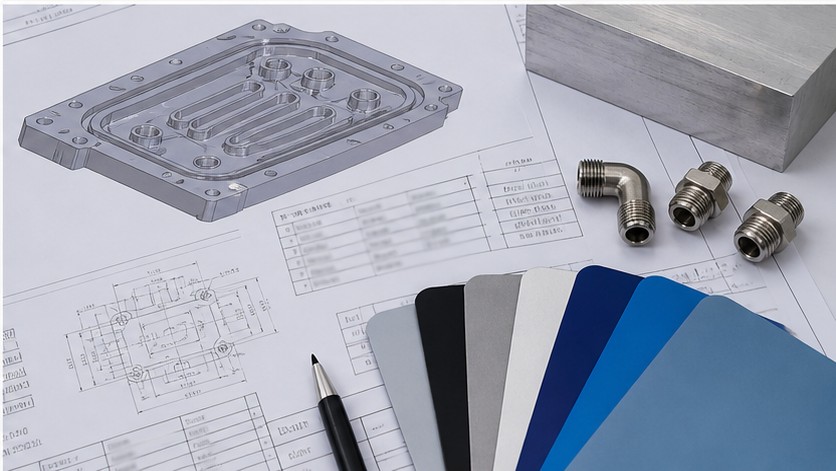
A complete RFQ for a CNC cooling plate or heat sink should include STEP or STP files, 2D drawings, material grade, quantity, surface finish, flatness requirements, sealing groove details, port thread notes, channel inspection needs, leak-test requirements and packaging instructions. Mark the thermal contact faces and fluid sealing areas clearly. This helps the machining team quote the real process instead of only the external shape.
OEMach supports custom CNC machining, CNC milling, 5-axis machining, prototype builds and low-volume production for overseas engineering buyers. When cooling plate requirements are defined early, the manufacturing route becomes clearer and the final part is easier to validate. The best result is a machined component that controls heat, seals reliably, assembles cleanly and arrives with the inspection evidence needed for approval.