
5-axis CNC machining is useful when a part has complex geometry, angled features, deep pockets, tight relationships between multiple faces, or surfaces that are difficult to reach with normal 3-axis machining. But 5-axis is not automatically the best answer for every precision part.
For buyers, the real question is whether 5-axis machining reduces setups, improves feature alignment, gives better tool access, protects thin walls or shortens the manufacturing route. A simple plate, spacer or bracket may be cheaper on a 3-axis machine. A robot joint housing, impeller-like feature, curved medical component or multi-side fixture may justify 5-axis review.
This guide explains when 5-axis CNC machining is worth using and what information should be included in an RFQ.
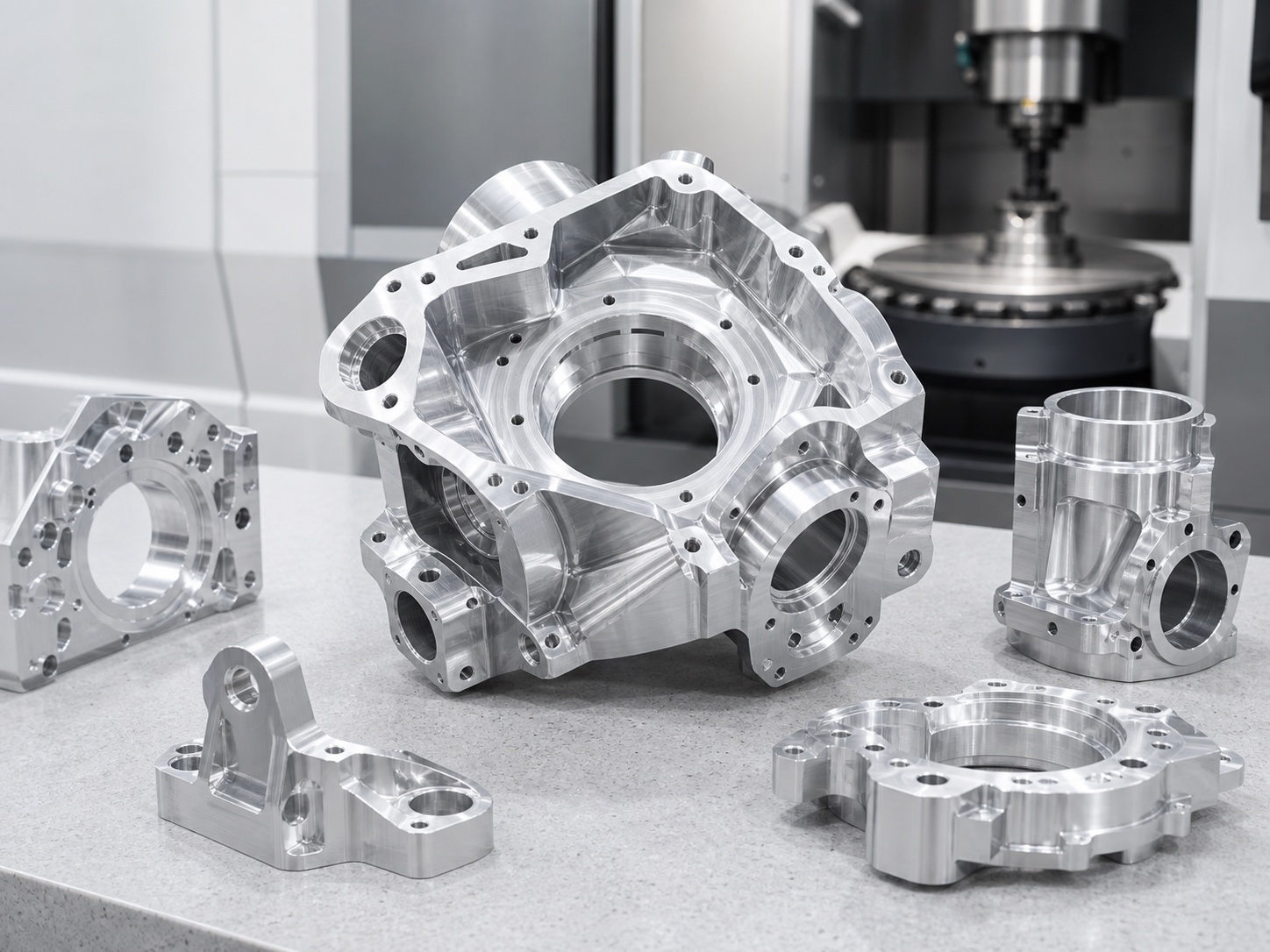
What 5-Axis CNC Machining Means
In 3-axis CNC milling, the cutting tool moves along X, Y and Z. In 5-axis CNC machining, the tool or workpiece can also tilt or rotate through two additional axes. This allows the tool to approach the part from more directions.
The practical value is not only making complex shapes. It is often about reducing re-clamping, keeping critical features in one setup, using shorter cutting tools and reaching angled surfaces more reliably.
| Process | Best for | Main limitation |
|---|---|---|
| 3-axis CNC milling | Flat faces, pockets, plates, simple housings and brackets | Multiple side features may require repeated setups |
| 4-axis CNC machining | Indexed side features, rotary access, repeated holes around a cylinder | Less flexible than full 5-axis movement |
| 5-axis indexed machining | Multi-side features held in fewer setups | Programming and setup need careful planning |
| 5-axis simultaneous machining | Curved surfaces, complex contours and continuous tool angle control | Higher cost and more advanced programming |
When 5-Axis Machining Is Worth Considering
A part should be reviewed for 5-axis machining when its geometry creates too many setups, poor tool access or high alignment risk on a 3-axis route. The more faces, angles and datum relationships a part has, the more valuable a 5-axis review becomes.
The goal is not to use an advanced machine for its own sake. The goal is to make the process more stable, reduce error accumulation and machine features in the orientation that protects function.
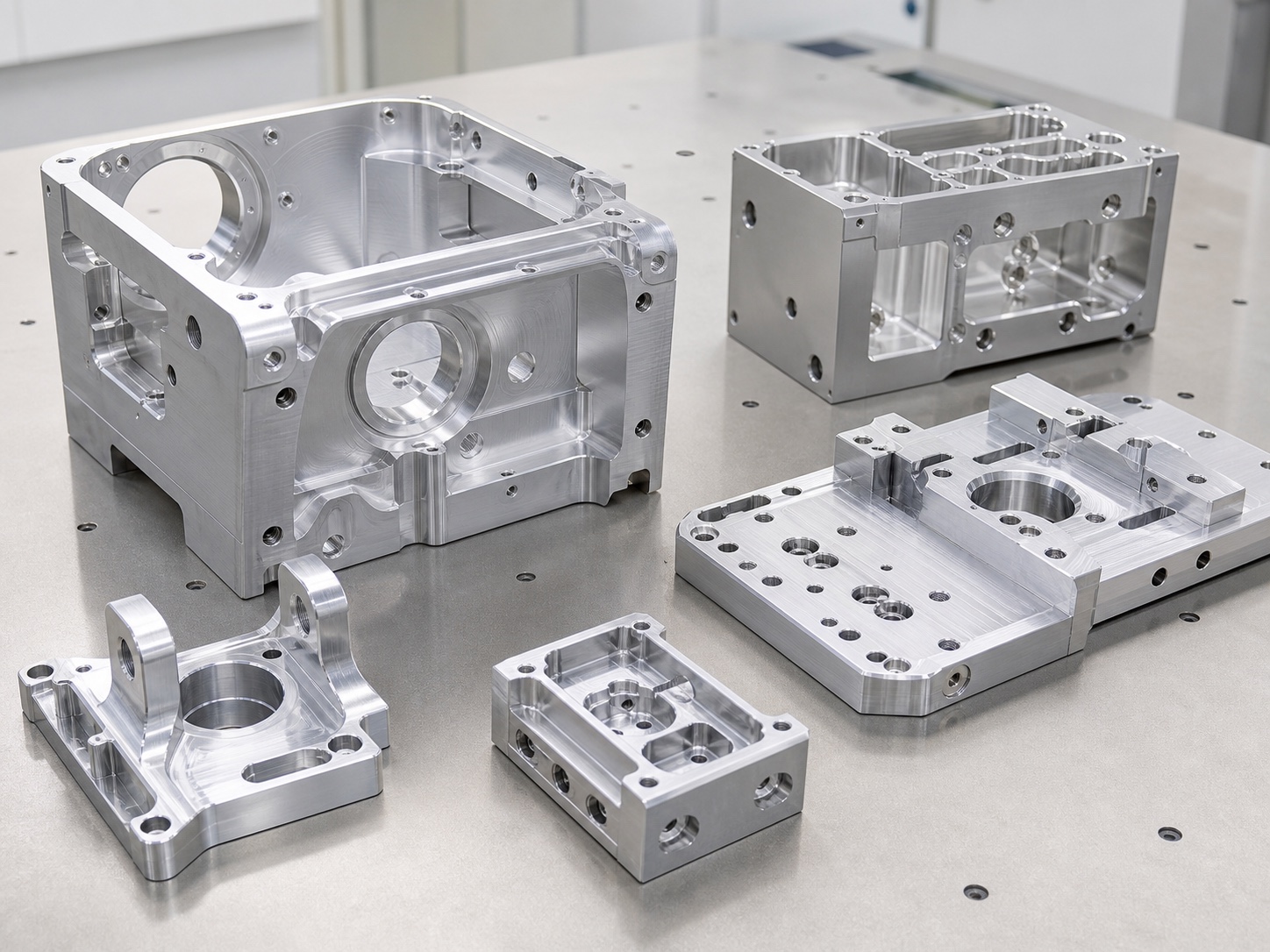
| Part condition | Why 5-axis may help | Buyer note |
|---|---|---|
| Features on five or more sides | Reduces repeated clamping and re-alignment | Useful for housings, fixtures and robotic structures |
| Angled holes or angled faces | Tool can approach the surface at the correct angle | Define hole angle and datum relationship clearly |
| Deep pockets or long-reach features | Shorter tools can reduce chatter and deflection | Review corner radius and depth |
| Complex curved surfaces | Tool angle can follow the surface more smoothly | Needed for some medical, aerospace and design surfaces |
| Tight feature-to-feature relationship | Machining in fewer setups can protect position accuracy | Mark critical datums and inspection requirement |
| Thin walls or distortion risk | Better tool access can reduce cutting force and rework | State wall thickness and acceptable deformation |
3-Axis vs 5-Axis: What Changes in Cost
5-axis machining can be more expensive per machine hour, but it may reduce total cost when it removes several setups, avoids special fixtures, improves quality consistency or prevents rework. The lowest hourly rate is not always the lowest finished part cost.
For simple parts, 3-axis milling remains the most cost-effective route. For complex parts, 5-axis can shorten the process and reduce risk. A practical supplier should compare the route instead of quoting only by machine label.
| Cost factor | 3-axis route | 5-axis route |
|---|---|---|
| Programming | Usually simpler | More advanced toolpath planning |
| Setup count | May need several clampings | Can machine more faces in one setup |
| Fixture cost | May need custom fixtures for angled features | May reduce fixture complexity |
| Cycle time | Efficient for simple flat features | Can reduce repositioning and long-tool cutting |
| Inspection risk | More setup changes can add tolerance stack-up | Fewer setups can improve feature relationship |
Tolerance, Datum Control and Inspection
Many 5-axis projects are driven by tolerance relationships rather than shape alone. If a bore, angled face, bolt pattern and sealing surface all relate to the same datum structure, machining them in fewer setups can reduce alignment error.
However, 5-axis machining does not remove the need for good drawings. Datums, critical dimensions, GD&T, surface roughness and inspection notes should still be clear. Without this information, the supplier cannot know which features must be protected most.
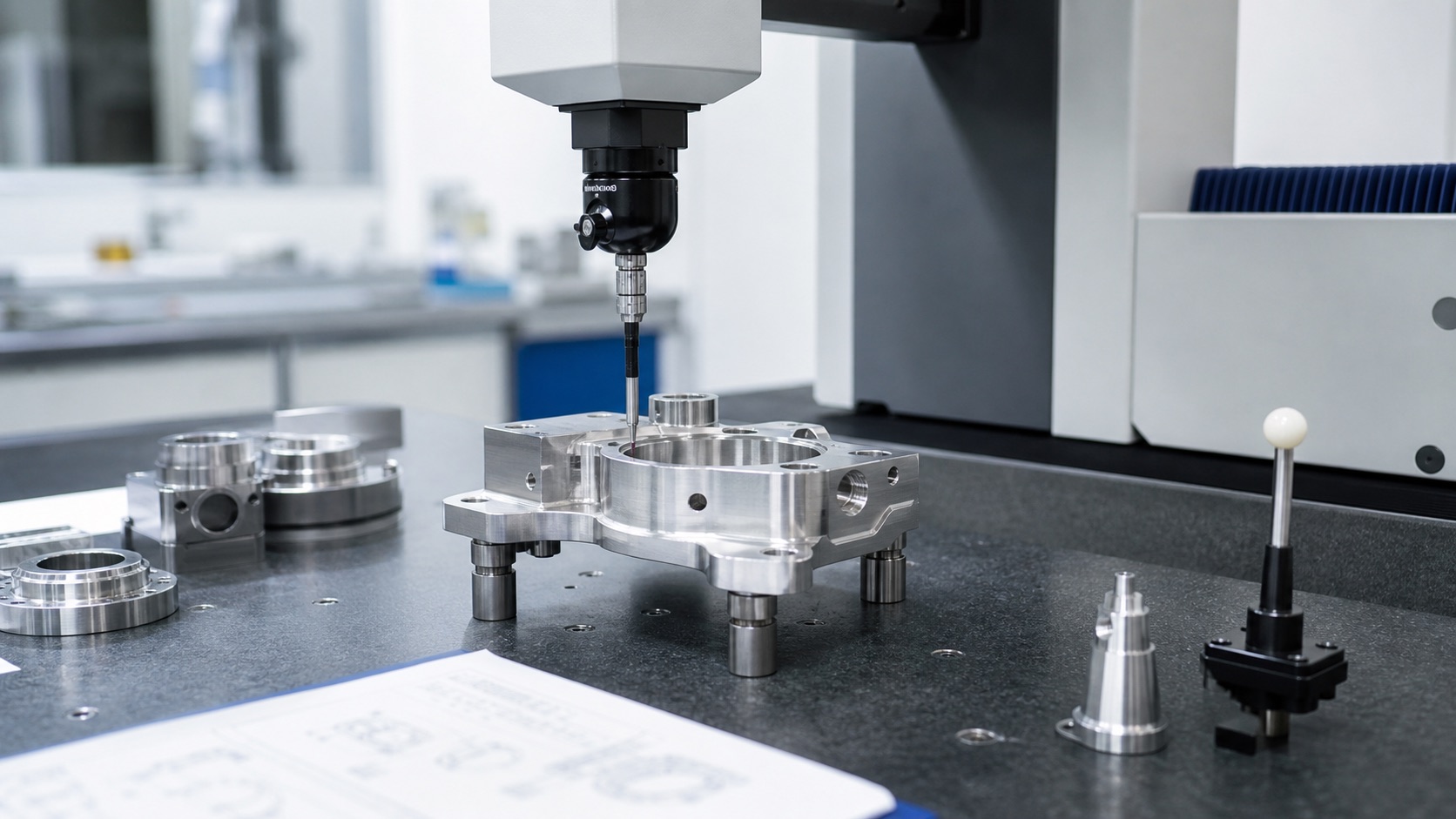
| Requirement | 5-axis benefit | Inspection note |
|---|---|---|
| Position of angled holes | Tool orientation can match the design angle | Define datums and hole axis clearly |
| Concentric multi-face features | Fewer setups can reduce offset error | CMM or fixture-based inspection may be needed |
| Thin-wall housings | Better access can reduce cutting force | Inspect after unclamping if deformation matters |
| Sealing surfaces | Can machine related faces in a controlled setup | Specify flatness and Ra only where needed |
| Cosmetic curved surfaces | Tool angle control can improve finish | Define visible surfaces and acceptable tool marks |
Common Parts That Use 5-Axis CNC
5-axis machining is common for parts where geometry and function cannot be separated. Robotics, automation, medical devices, aerospace fixtures, energy equipment and high-end product hardware often include multi-side features and tight assembly relationships.
It is also useful for prototype parts when the design is still changing and a flexible process route can reduce fixture development time.
| Part type | Why 5-axis may fit | Critical review area |
|---|---|---|
| Robot joint housings | Multi-face bores, lightening pockets and angled mounting faces | Datum structure and bore alignment |
| Aerospace or test fixtures | Complex pockets, angled holes and high repeatability needs | Fixture strategy and inspection report |
| Medical device components | Curved surfaces, tight fits and clean transitions | Surface finish and burr control |
| Optical or sensor mounts | Precise angular relationships and stable mounting faces | Flatness, angle and hole position |
| Prototype housings | Frequent geometry changes and complex access | Revision control and functional features |
When You May Not Need 5-Axis
Not every custom CNC part should be moved to 5-axis machining. A flat plate with holes, a simple bracket, a spacer, a basic cover or a turned shaft can often be made faster and cheaper with 3-axis milling or CNC turning.
If the part has simple access, broad tolerances and no critical multi-face relationship, 5-axis may add cost without improving function. A good DFM review should identify whether the part truly benefits from 5-axis or whether standard machining is enough.
| Part situation | Likely better route | Reason |
|---|---|---|
| Flat plate with through holes | 3-axis milling | Simple access and low setup risk |
| Round spacer or shaft | CNC turning | Rotational geometry fits turning |
| Simple block with top pockets | 3-axis milling | No angled access required |
| Loose tolerance prototype | 3-axis milling or 3D printing review | 5-axis may not add value |
| High-volume simple part | Dedicated fixture or turning route | Cycle time and automation may matter more |
What to Send for a 5-Axis RFQ
A 5-axis quote needs enough information to choose the right route, not just a STEP file. The supplier needs to understand which features are critical, which surfaces are cosmetic, how the part is assembled and what inspection evidence is required.
If you are unsure whether the part needs 5-axis, send the normal RFQ package and ask for a process recommendation. A supplier can compare 3-axis, 4-axis, 5-axis and combined routes when the design intent is clear.
| RFQ item | Why it matters |
|---|---|
| STEP/STP model | Allows access, toolpath and setup review |
| 2D drawing | Defines tolerances, datums, threads, surface finish and notes |
| Critical features | Shows what must be protected in setup planning |
| Material and quantity | Affects stock, cutting strategy and fixture decision |
| Surface finish | Changes final dimension and process sequence |
| Inspection requirement | Clarifies whether CMM report, gauge check or first article inspection is needed |
| Application context | Explains why angles, bores, thin walls or faces are critical |
How OEMach Reviews 5-Axis Projects
OEMach reviews 5-axis CNC machining requests by checking geometry, material, tolerance, wall thickness, datum structure, surface finish and quantity. If 5-axis improves stability or reduces setup risk, we can recommend it. If a 3-axis or turning route is more practical, we will keep the process simpler.
For precision parts, we also review inspection planning early. Critical bores, angled holes, sealing faces and multi-side datum relationships should be visible in both machining strategy and final inspection.
FAQ
Is 5-axis CNC machining always more accurate?
Not always. It can improve accuracy by reducing setups and improving tool access, but accuracy still depends on programming, fixturing, material behavior and inspection control.
Is 5-axis machining more expensive than 3-axis machining?
The hourly rate may be higher, but the total part cost can be lower if 5-axis reduces setups, fixtures, long-tool cutting or rework.
What parts need 5-axis CNC machining?
Parts with angled features, complex surfaces, multi-side bores, tight datum relationships, thin walls or difficult tool access are good candidates for review.
Can 5-axis machining replace EDM or turning?
Sometimes it can reduce secondary operations, but it does not replace every process. Deep sharp internal corners, fine slots or round shaft geometry may still need EDM, turning or other routes.
What files should I send for a 5-axis CNC quote?
Send STEP/STP files, 2D drawings, material, quantity, finish, critical dimensions, datum notes and inspection requirements.
Summary
5-axis CNC machining is most valuable when it reduces setup risk, improves tool access and protects relationships between features on several faces. It is not necessary for every part, but it can be the right choice for complex housings, robot joints, fixtures, angled holes, curved surfaces and tight multi-face tolerances. A clear RFQ helps the supplier choose between 3-axis, 4-axis, 5-axis and combined process routes.