
CNC milling vs turning is one of the first process questions buyers face when requesting custom machined parts. The answer is not only about machine type. It depends on part shape, rotational symmetry, holes, pockets, threads, tolerances, surface finish, quantity and whether the part needs features from more than one side.
In simple terms, CNC turning is usually best for round parts made from bar stock, while CNC milling is usually best for prismatic parts with flats, pockets, slots and complex surfaces. Many real parts need both processes, especially shafts with flats, bushings with cross holes, housings with circular bores, and fittings with threaded features.
This guide helps buyers and engineers choose the right CNC machining process before sending an RFQ, so the supplier can quote the correct route and avoid unnecessary cost or rework.
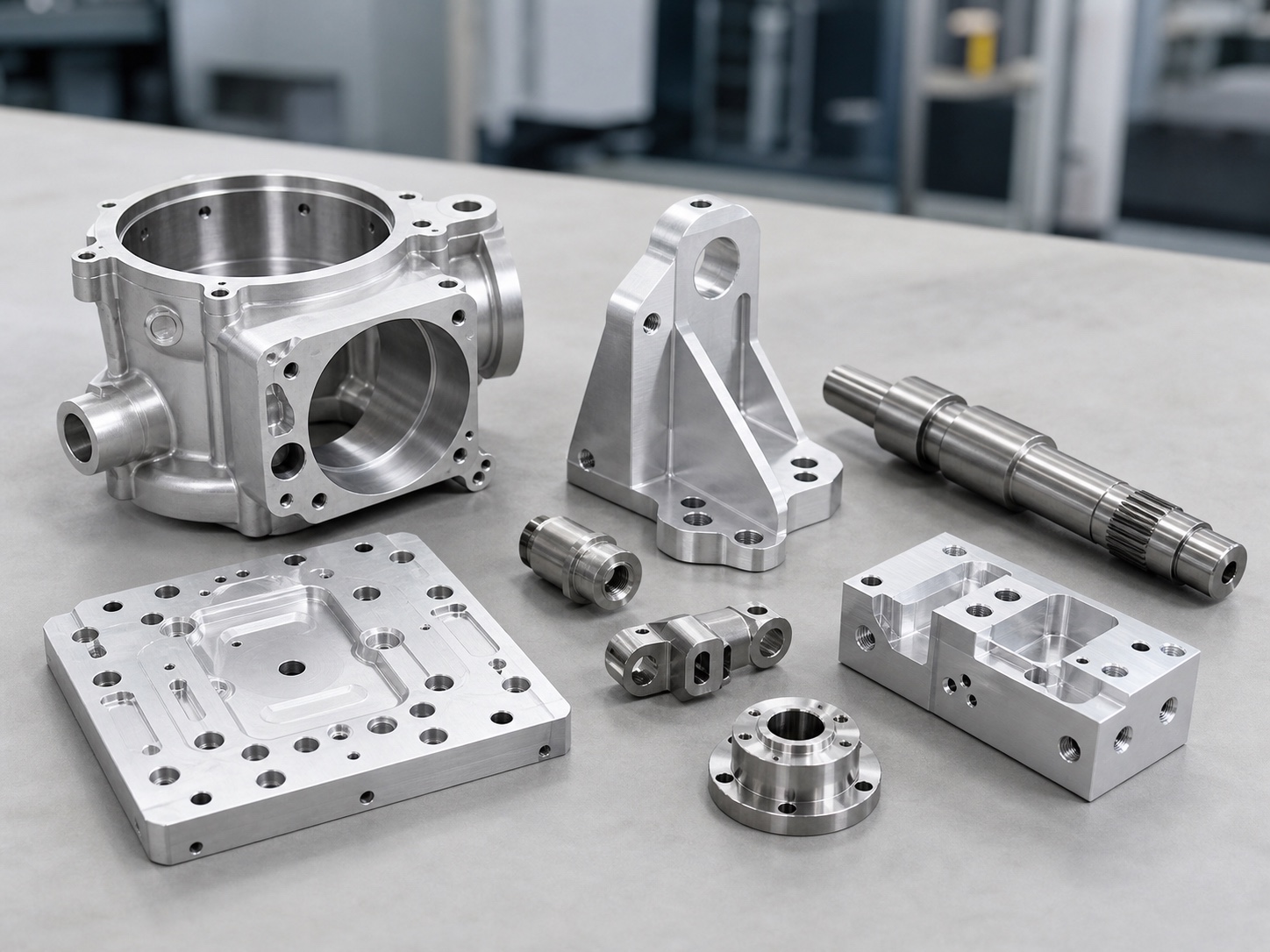
The Quick Difference
CNC turning rotates the workpiece while a cutting tool removes material. CNC milling usually holds the workpiece and moves a rotating cutting tool around it. This basic difference changes which shapes are efficient to produce.
A part that is mostly cylindrical can often be turned faster and more consistently. A part with square faces, pockets, multiple side holes or irregular profiles usually needs milling.
| Question | Choose CNC turning when | Choose CNC milling when |
|---|---|---|
| What is the main shape? | Round, cylindrical, conical or sleeve-like | Block, plate, bracket, housing or irregular shape |
| How is material removed? | Around the diameter as the part rotates | From flat faces, pockets, slots and contours |
| Typical features | OD, ID, grooves, shoulders, threads, tapers | Pockets, planes, holes, slots, bosses, 3D contours |
| Best stock form | Round bar, tube or near-net cylindrical blank | Plate, block, extrusion or custom billet |
| Common parts | Shafts, pins, bushings, spacers, fittings | Housings, brackets, plates, manifolds, fixtures |
When CNC Milling Is the Better Choice
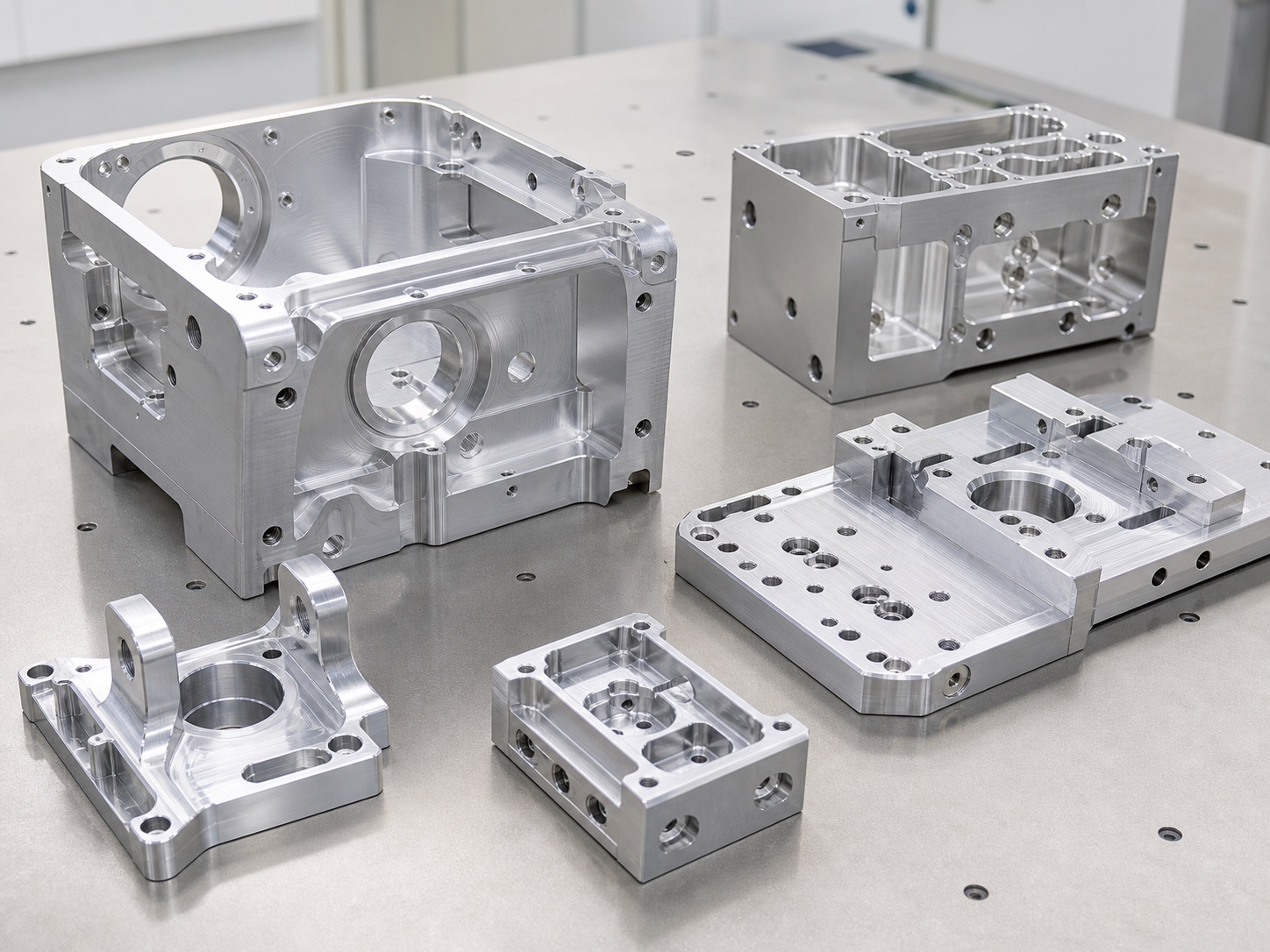
CNC milling is suitable when the part has flat faces, rectangular geometry, pockets, slots, ribs, mounting holes, side features or non-rotational contours. Milling is also the standard route for many housings, covers, fixture plates, robot brackets and aluminum structural parts.
Milling can machine several faces of a part using 3-axis, 4-axis or 5-axis setups. If the part needs deep pockets, thin walls or holes from multiple directions, the supplier should review setup strategy, tool access and deformation risk before quoting.
| Milling feature | Why milling fits | RFQ note |
|---|---|---|
| Flat mounting faces | Milling controls planes, steps and datums well | Define datum faces and flatness needs |
| Pockets and cavities | End mills can open internal spaces | State corner radius and depth requirements |
| Slots and windows | Toolpaths can create open or closed profiles | Avoid very narrow deep slots unless required |
| Multiple side holes | Indexing or 5-axis access can reduce re-clamping | Show hole function and critical alignment |
| Lightweight brackets | Milling can remove weight while keeping ribs | Mark critical load and mounting areas |
When CNC Turning Is the Better Choice
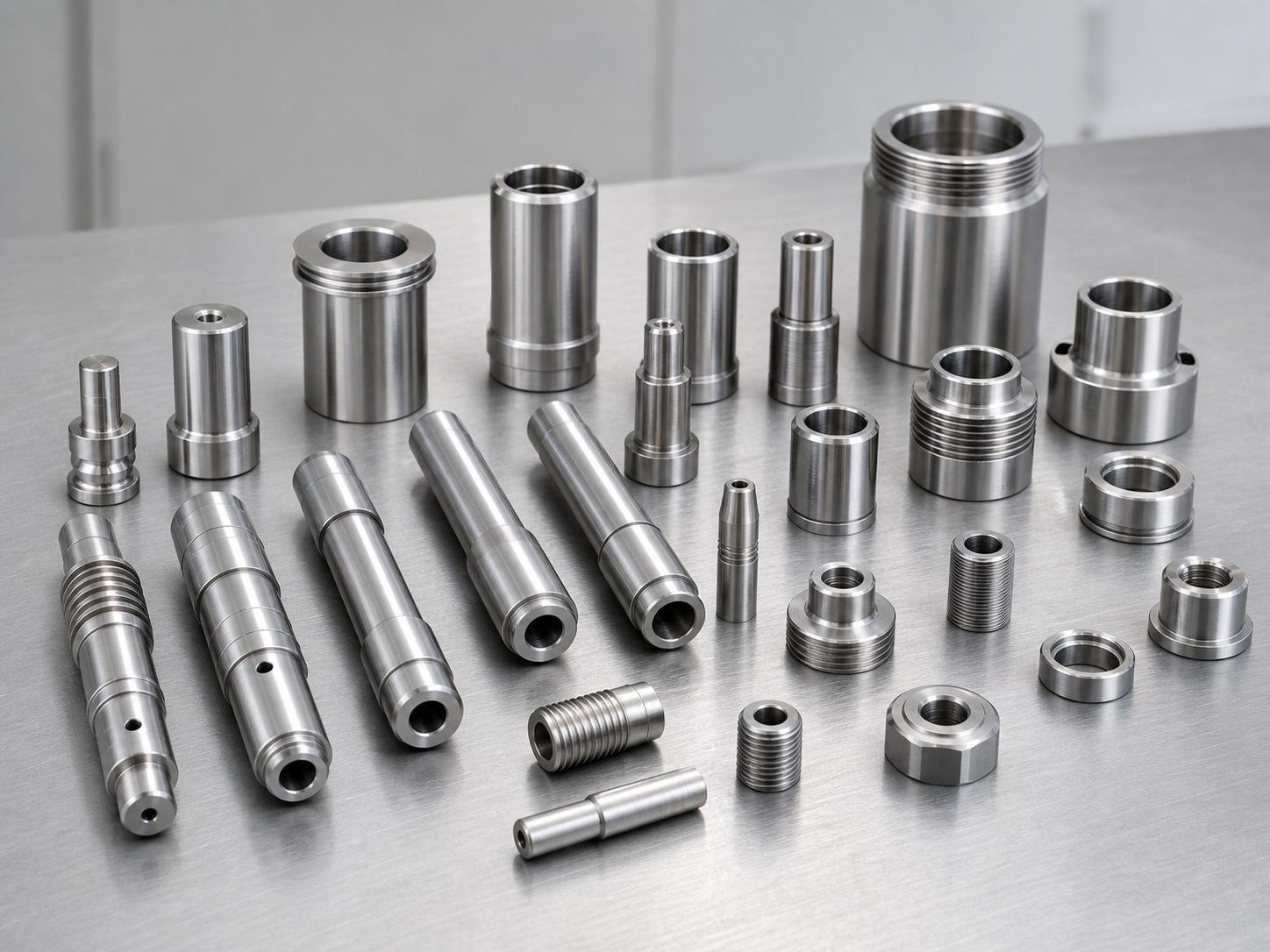
CNC turning is usually the most efficient route for parts with a clear center axis: shafts, pins, sleeves, spacers, bushings, threaded fittings, nozzles and round connectors. Turning can produce good concentricity and smooth cylindrical surfaces with efficient cycle time.
If the part is made from round bar and most features are on the outside diameter or inside diameter, turning is often more cost-effective than milling. Live-tool turning or secondary milling can add flats, cross holes or slots when needed.
| Turning feature | Why turning fits | RFQ note |
|---|---|---|
| Shaft diameter | Turning controls roundness and concentricity | Define bearing seats and critical diameters |
| Internal bore | Boring and reaming can control ID features | State fit, surface roughness and depth |
| External or internal thread | Turning is efficient for many threaded parts | Define thread standard and gauge needs |
| Grooves and shoulders | Lathe tools produce repeatable axial features | Mark groove width, radius and functional edges |
| High-volume small parts | Bar-fed turning can reduce handling | Confirm quantity and material bar size |
Parts That Need Both Milling and Turning
Many custom CNC parts are not purely milled or purely turned. A shaft may need a flat for a set screw. A bushing may need cross holes. A round housing may need mounting ears. A fitting may need hex flats, wrench slots or angled holes.
For these parts, the best route may be turning first and milling second, milling first and boring later, or using a mill-turn machine. The decision depends on which features control the datum structure and which dimensions are most critical after all operations.
| Part example | Likely route | Process risk to review |
|---|---|---|
| Shaft with flat and cross hole | Turn OD first, then mill flat and drill hole | Concentricity between turned diameter and cross feature |
| Bushing with bolt pattern | Turn bore and OD, then mill/drill face pattern | Datum setup and hole position |
| Round flange with side port | Turn circular features, then mill side port | Port alignment and sealing surface |
| Manifold with threaded bosses | Mill body, then turn or thread selected features | Thread access and sealing face control |
| Complex robotics joint part | 5-axis milling plus turning or boring as needed | Setup sequence, deformation and inspection plan |
Cost and Lead Time Considerations
Choosing the wrong process can increase cost. Milling a simple round spacer from a block wastes material and machine time. Turning a part that really needs many milled pockets and side holes creates extra setups. The most efficient process follows the natural shape of the part.
Cost also depends on quantity. For one prototype, setup simplicity may matter more than cycle time. For repeat batches, bar-fed turning, soft jaws, fixtures or 5-axis access may reduce repeated handling and improve consistency.
| Cost factor | Milling impact | Turning impact |
|---|---|---|
| Material waste | Higher if a round part is cut from block | Efficient for cylindrical bar-stock parts |
| Setup count | Multiple sides may need multiple setups unless 4/5-axis is used | Secondary milling may be needed for side features |
| Tool access | Deep pockets and small internal radii add time | Long bores, thin walls and tight grooves add time |
| Quantity | Fixtures help repeat milled parts | Bar feed and collets help repeat turned parts |
| Inspection | Datums and hole positions often drive inspection | Concentricity, runout and thread gauges often drive inspection |
Tolerance and Surface Finish
Milling and turning can both produce precision parts, but they control different features naturally. Turning is strong for roundness, concentricity, runout and cylindrical surface finish. Milling is strong for flatness, profile, hole position and pocket geometry.
Buyers should avoid assigning the same tight tolerance to every feature. Instead, mark the features that control fit, sealing, bearing support, alignment or assembly. This helps the supplier choose the correct process route and inspection method.
| Requirement | Process note | Inspection note |
|---|---|---|
| Concentricity or runout | Usually starts with turning or boring | CMM, dial indicator or roundness check may be needed |
| Flatness | Usually controlled by milling strategy and fixturing | State inspection state and datum surface |
| Hole position | Milling setup and datum scheme matter | Use clear datums and critical hole callouts |
| Bearing fit | Turning, boring or reaming may be reviewed | Define fit tolerance and surface roughness |
| Cosmetic surface | Both processes may show tool marks | Define visible faces and finish only where needed |
What to Send for an Accurate RFQ
A clear RFQ helps the supplier decide between milling, turning and combined processing. STEP/STP files show geometry, but 2D drawings are still important for tolerances, threads, datums, surface finish and inspection notes.
If you are unsure which process fits, describe how the part is used. A supplier can often suggest a lower-risk route when they understand the functional surfaces and assembly context.
| RFQ item | Why it matters |
|---|---|
| STEP/STP model | Allows geometry, stock and tool access review |
| 2D drawing | Defines tolerances, threads, datums and finish requirements |
| Material and quantity | Affects stock form, bar size, setup and fixture strategy |
| Critical dimensions | Shows which process features must control the part |
| Surface finish | Changes final dimension and cost |
| Application context | Explains whether roundness, flatness, sealing or appearance is most important |
How OEMach Reviews the Process Route
OEMach reviews custom CNC parts by comparing geometry, material, tolerance, quantity, surface finish and inspection requirements before selecting the machining route. For simple cylindrical parts, we may recommend turning. For housings and brackets, milling is usually the starting point. For mixed geometry, we review a combined process or mill-turn route.
The goal is not to force a part into one process. The goal is to protect the critical dimensions while reducing unnecessary setups, material waste and rework risk.
FAQ
Is CNC milling or turning cheaper?
Turning is often cheaper for simple round parts made from bar stock. Milling is more suitable for blocks, plates, pockets and complex non-round features. The cheaper process depends on part geometry and quantity.
Can a turned part have milled features?
Yes. Flats, slots, cross holes and bolt patterns can be added with secondary milling or live tooling on a turning center.
Can a milled part include precise round bores?
Yes. Milled parts can include bored, reamed or interpolated holes, but tight roundness or concentricity may require special process and inspection planning.
What is mill-turn machining?
Mill-turn machining combines turning and milling operations in one machine setup or process route, which can reduce handling for parts with both round and prismatic features.
How should I choose between milling and turning for an RFQ?
Start with the main shape. If it is mostly round and axisymmetric, review turning. If it has flat faces, pockets, slots and side features, review milling. If it has both, ask for a combined process review.
Summary
CNC milling and turning are both essential for custom machining, but they are efficient for different shapes. Turning fits shafts, bushings, spacers and round fittings. Milling fits housings, brackets, plates and complex prismatic parts. Many real parts require both. A clear RFQ with STEP files, drawings, tolerances, material, quantity and function helps the supplier choose the right route and quote accurately.