
Surface finish is not only a cosmetic choice for CNC machined parts. It can affect corrosion resistance, wear behavior, friction, electrical contact, sealing performance, cleaning, appearance, dimensional fit and final inspection. A part that is acceptable as-machined may fail visually after anodizing, while a beautiful polished surface may be unnecessary for a hidden bracket.
For buyers, the most useful question is not simply which finish looks best. The better question is which surfaces need protection, which surfaces need a controlled roughness, which surfaces are visible after assembly and which dimensions must remain stable after the finishing process.
This guide compares common CNC machining surface finishes and explains how to specify them clearly before sending an RFQ.
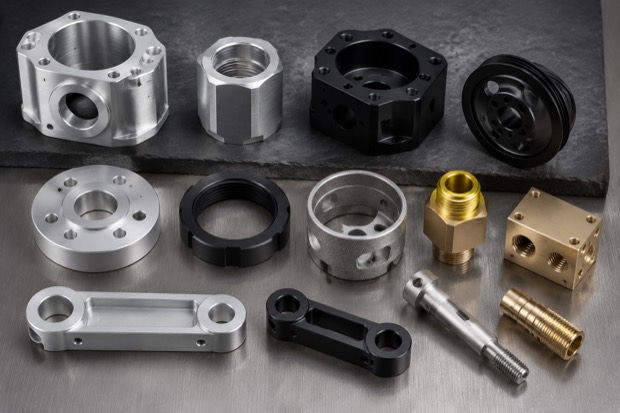
Start With the Function of the Surface
A finish should be selected according to the job each surface must perform. Some faces are cosmetic, some are sealing faces, some are sliding faces, some are electrical contact areas, and some only need basic protection against corrosion.
When the drawing treats every surface the same, the supplier may quote a more expensive process than needed. A better RFQ separates visible faces, mating faces, threaded areas, masking zones and non-critical surfaces.
| Surface function | Typical finish direction | RFQ note |
|---|---|---|
| Cosmetic appearance | Bead blasting, brushing, polishing or color anodizing | Define visible faces and acceptable color variation |
| Corrosion protection | Anodizing, passivation, plating or black oxide | State material, environment and salt spray or cleaning needs if relevant |
| Wear or sliding contact | Hard anodizing, polishing, suitable plating or material change | Define mating part, load and lubrication condition |
| Sealing or gasket face | Controlled Ra and flatness are more important than appearance | Call out roughness only on the sealing area |
| Electrical contact | Masking, conductive plating or no insulating finish | Identify contact faces and areas that must remain conductive |
| Hidden internal surface | As-machined or simple deburring may be enough | Avoid cosmetic requirements where they do not add value |
Common CNC Surface Finishes Compared
The best finish depends on material, tolerance, appearance requirement, use environment and cost target. The table below gives a practical comparison for custom CNC machined parts.
| Finish | Common materials | Main benefit | Watch points |
|---|---|---|---|
| As-machined | Aluminum, stainless steel, brass, plastics | Fastest and usually lowest cost | Tool marks are visible; Ra should be specified if surface function matters |
| Bead blasting | Aluminum and stainless steel | Uniform matte appearance | Can soften sharp edges and change cosmetic consistency |
| Anodizing | Aluminum | Corrosion protection, color and improved wear resistance | Adds oxide layer; color and thickness need definition |
| Hard anodizing | Aluminum | Higher wear resistance and thicker protective layer | More dimensional impact; masking may be needed |
| Polishing / brushing | Aluminum, stainless steel, brass | Improved appearance and smoother touch | Manual process can affect edges and flatness |
| Passivation | Stainless steel | Improves corrosion resistance by cleaning free iron | Does not hide scratches or machining marks |
| Plating | Steel, brass, copper, selected aluminum routes | Corrosion resistance, conductivity or appearance | Thickness affects dimensions; adhesion depends on material and pretreatment |
| Black oxide | Steel and some stainless steel routes | Dark appearance and mild corrosion resistance | Needs oil or seal for better protection; not the same as black anodizing |
As-Machined Finish and Surface Roughness Ra
As-machined finish keeps the tool marks created by CNC milling or turning. It is suitable for prototypes, internal parts, fixtures and components where appearance is less important. It is also useful when short lead time and lower cost matter more than a uniform cosmetic surface.
If the surface is functional, specify a roughness value such as Ra instead of only saying good finish. A sealing face, bearing contact or sliding surface may need a different roughness from the rest of the part. Over-specifying low Ra on every surface adds machining time and inspection work.
| Requirement | Practical use | Buyer note |
|---|---|---|
| General as-machined | Prototype parts, brackets, internal housings | Expect visible tool paths |
| Ra 3.2 um or similar | Common machined surfaces where normal finish is acceptable | Often practical for many custom metal parts |
| Ra 1.6 um or finer | Mating, sealing or visible machined surfaces | Apply only where function or appearance needs it |
| Very fine Ra | Sealing, sliding or optical-related contact areas | Confirm process route and inspection method before quoting |
Anodizing Aluminum CNC Parts
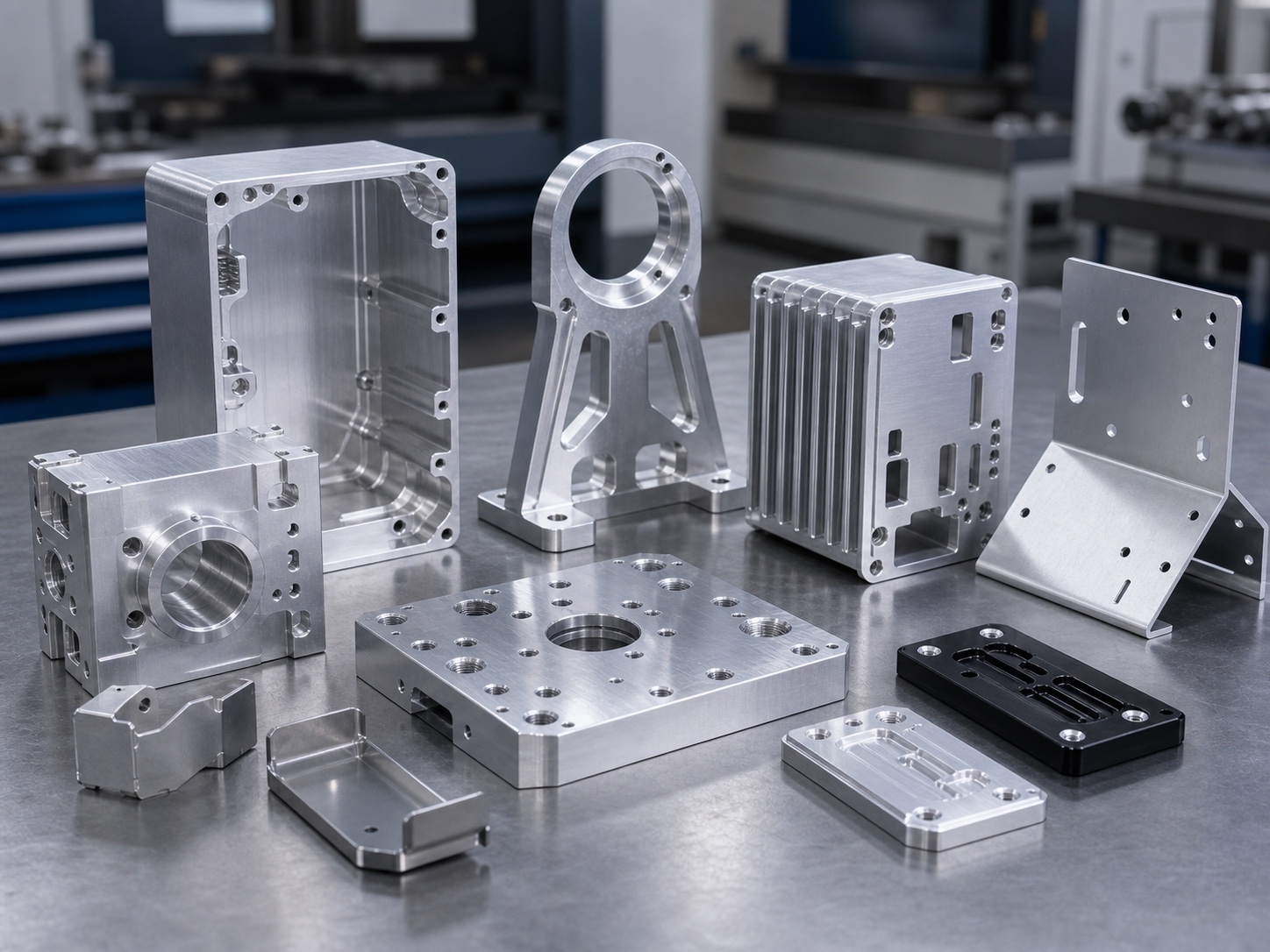
Anodizing is one of the most common finishes for aluminum CNC machined parts. It improves corrosion resistance, gives a cleaner appearance and allows color options such as black, clear, red or blue. It is widely used for housings, brackets, robotics parts, fixtures and product components.
The important point is that anodizing is not only color. The oxide layer has thickness, and that thickness can affect holes, threads, sliding fits and mating faces. For tight-tolerance aluminum parts, buyers should define whether the dimension is required before or after anodizing and whether any areas need masking.
| Anodizing decision | Use when | Specification tip |
|---|---|---|
| Clear anodizing | Need corrosion protection with natural aluminum look | Confirm acceptable shade variation |
| Black anodizing | Need cosmetic black appearance and protection | Define visible faces and color consistency expectation |
| Hard anodizing | Need stronger wear resistance | Review thickness, masking and critical fits |
| Masked anodizing | Some threads, bores or contact faces must stay untreated | Mark masked areas clearly on drawing |
Bead Blasting, Brushing and Polishing
Bead blasting creates a uniform matte texture and is often combined with anodizing on aluminum parts. Brushing gives a directional grain. Polishing reduces visible machining marks and can improve touch feel or appearance.
These finishes are useful for visible product parts, but they add handling and can change edges. If a sharp edge, tight corner, sealing face or flat reference is critical, the drawing should separate that functional area from the cosmetic area.
| Finish | Best for | Risk to control |
|---|---|---|
| Bead blasting | Matte cosmetic aluminum and stainless parts | Uneven blasting on deep pockets or hidden faces |
| Brushing | Visible panels, covers and plates | Direction of grain should be defined |
| Polishing | Decorative or low-friction surfaces | Manual variation, edge rounding and extra cost |
| Deburring only | Functional parts where edges must be safe but not cosmetic | Define burr limit for critical holes and slots |
Passivation, Plating and Black Oxide
Stainless steel often uses passivation when corrosion resistance is important. Passivation removes surface contamination and supports the stainless material's natural corrosion resistance, but it does not make machining marks disappear.
Plating is selected for corrosion protection, conductivity, solderability, wear resistance or appearance. Zinc, nickel, chrome, tin and other plating routes all have different thickness and performance. Black oxide is often used for steel parts where dark appearance and mild protection are needed, but it is not a substitute for heavy corrosion protection.
| Process | Typical use | Specification point |
|---|---|---|
| Passivation | Stainless steel medical, industrial and corrosion-resistant parts | State standard or corrosion expectation when needed |
| Nickel plating | Wear, corrosion resistance and appearance | Review thickness on holes and threads |
| Zinc plating | Cost-effective corrosion protection for steel | State color and chromate requirement if needed |
| Tin or silver plating | Electrical contact or soldering needs | Define contact faces and masking |
| Black oxide | Dark steel parts with mild protection | Oil or seal may be needed for better resistance |
How Surface Finish Affects Dimensions
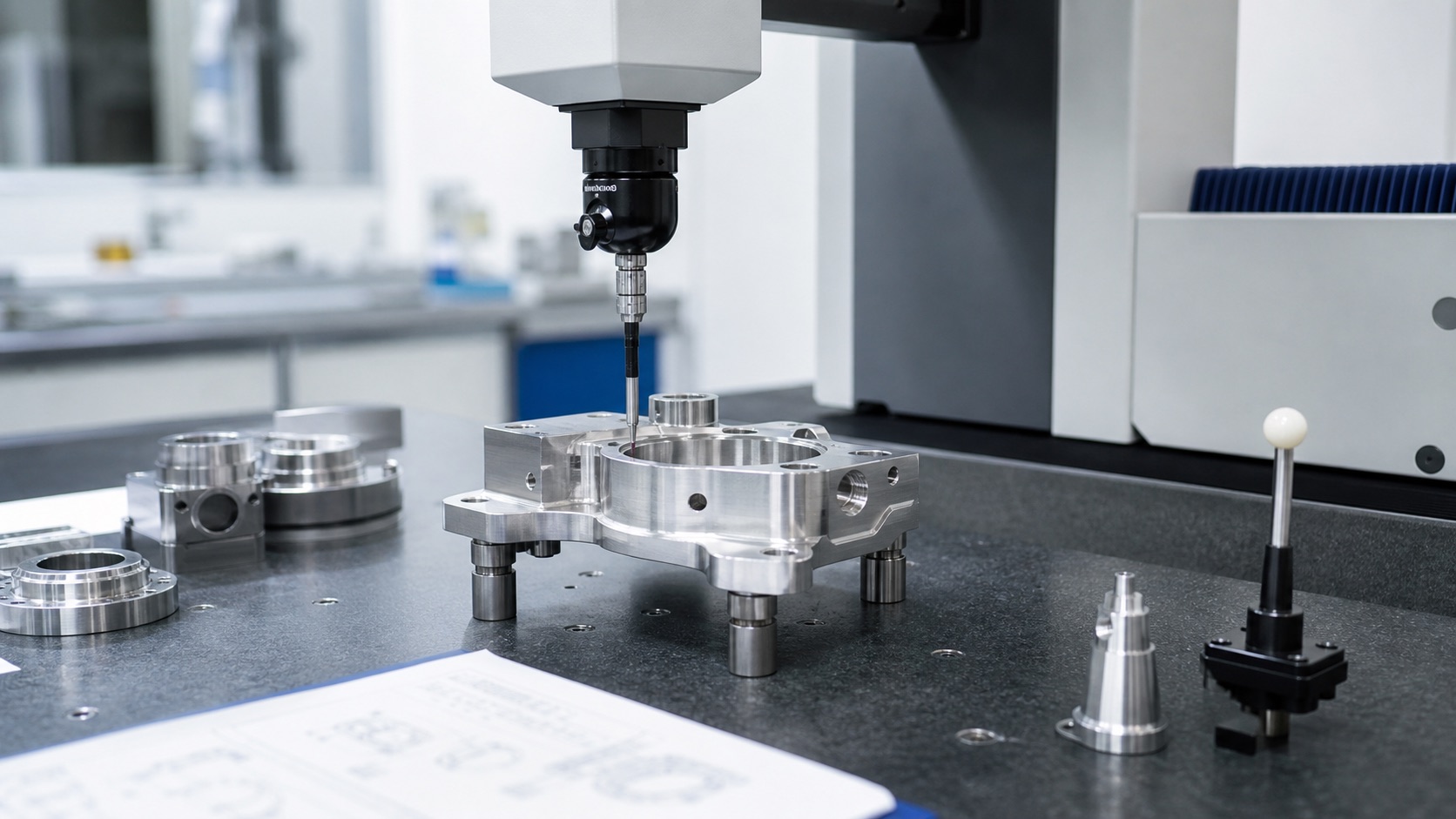
Surface finish can change dimensions in two ways. First, a coating or oxide layer adds thickness. Second, mechanical finishing such as blasting, polishing or deburring can remove or round small amounts of material. This matters most on bores, shafts, threads, grooves, bearing seats, sealing faces and precision fits.
For critical dimensions, the drawing should state whether tolerance applies before finish or after finish. If the finished surface must be inspected, the supplier needs to know that before machining so allowance, masking and inspection planning can be built into the process.
| Feature | Finish risk | How to specify |
|---|---|---|
| Precision bore | Anodizing or plating may reduce diameter | State finished diameter and masking if required |
| External shaft | Coating may increase diameter | State whether tolerance is before or after coating |
| Thread | Coating can tighten fit or affect gauge result | Mask critical threads or define finished thread requirement |
| Sealing groove | Blasting or polishing can change edge and surface texture | Define Ra, edge condition and inspection state |
| Cosmetic face | Manual finish can vary by batch | Define acceptable visible area and sample expectation |
What to Include in an RFQ
Clear finish information reduces re-quoting and avoids surprises after production. A supplier can quote more accurately when the RFQ shows material, finish type, color, thickness, roughness, masking, critical dimensions and visible surfaces.
If you are unsure which finish is best, send the part function and environment instead of only naming a process. Engineering can then suggest a practical finish route that balances cost, lead time and performance.
| RFQ item | Why it matters |
|---|---|
| Finish name and color | Avoids guessing between clear, black, matte, polished or plated appearance |
| Material grade | Finish compatibility depends on material |
| Thickness or standard | Controls dimensional impact and performance |
| Ra requirement | Keeps functional surfaces measurable |
| Masking areas | Protects threads, bores, contact faces and ground references |
| Visible surfaces | Prevents cosmetic cost on hidden areas |
| Operating environment | Helps choose corrosion, wear or cleaning resistance |
How OEMach Reviews Surface Finish
OEMach reviews surface finish together with material, tolerance, geometry, quantity and application environment. When a finish may affect a critical dimension, we review masking, allowance and inspection state before quoting. When a finish is mainly cosmetic, we help separate visible faces from non-critical areas so the part can meet appearance needs without unnecessary cost.
For custom CNC parts, the fastest review usually includes STEP/STP files, 2D drawings, material grade, finish requirement, color or roughness notes, quantity, critical dimensions and application environment.
FAQ
What is the best surface finish for CNC machined parts?
There is no single best finish. As-machined is fast and economical, anodizing is common for aluminum protection and color, passivation suits stainless steel, and plating is used for corrosion, conductivity or wear requirements.
Does anodizing affect dimensions?
Yes. Anodizing creates an oxide layer, and hard anodizing can have a more noticeable dimensional effect. Critical holes, threads and fits should be specified as before-finish or after-finish dimensions.
What is the difference between bead blasting and anodizing?
Bead blasting is a mechanical texture process that creates a matte surface. Anodizing is an electrochemical process for aluminum that improves corrosion resistance and can add color. They are often used together.
Should every surface have the same Ra requirement?
Usually no. Apply tight roughness only to sealing, sliding, mating or visible machined surfaces. General hidden areas can often remain standard as-machined.
What finish information should I send for a CNC quote?
Send finish type, color, thickness or standard, Ra requirement, masked areas, visible surfaces and whether critical dimensions apply before or after finishing.
Summary
The right CNC surface finish depends on function, material, environment, appearance and dimensional control. Start by deciding which surfaces are visible, which surfaces are functional and which dimensions must remain stable after finish. Clear RFQ notes for anodizing, bead blasting, polishing, plating, passivation, roughness and masking help reduce cost, prevent rework and protect the final performance of custom CNC machined parts.