
Choosing CNC machining materials is one of the first decisions that affects part cost, lead time, strength, weight, corrosion resistance, surface finish, tolerance stability and final inspection. A part that looks simple in a STEP file can become expensive or risky if the material does not match the function.
For custom CNC machined parts, the best material is not always the strongest material. It is the material that meets the real working condition with reasonable machining risk and cost. A lightweight robot bracket, a stainless shaft, a copper heat block and a PEEK insulator all need different selection logic.
This guide helps buyers and engineers compare common CNC materials before sending an RFQ, so the supplier can review the right grade, finish and inspection requirement from the start.
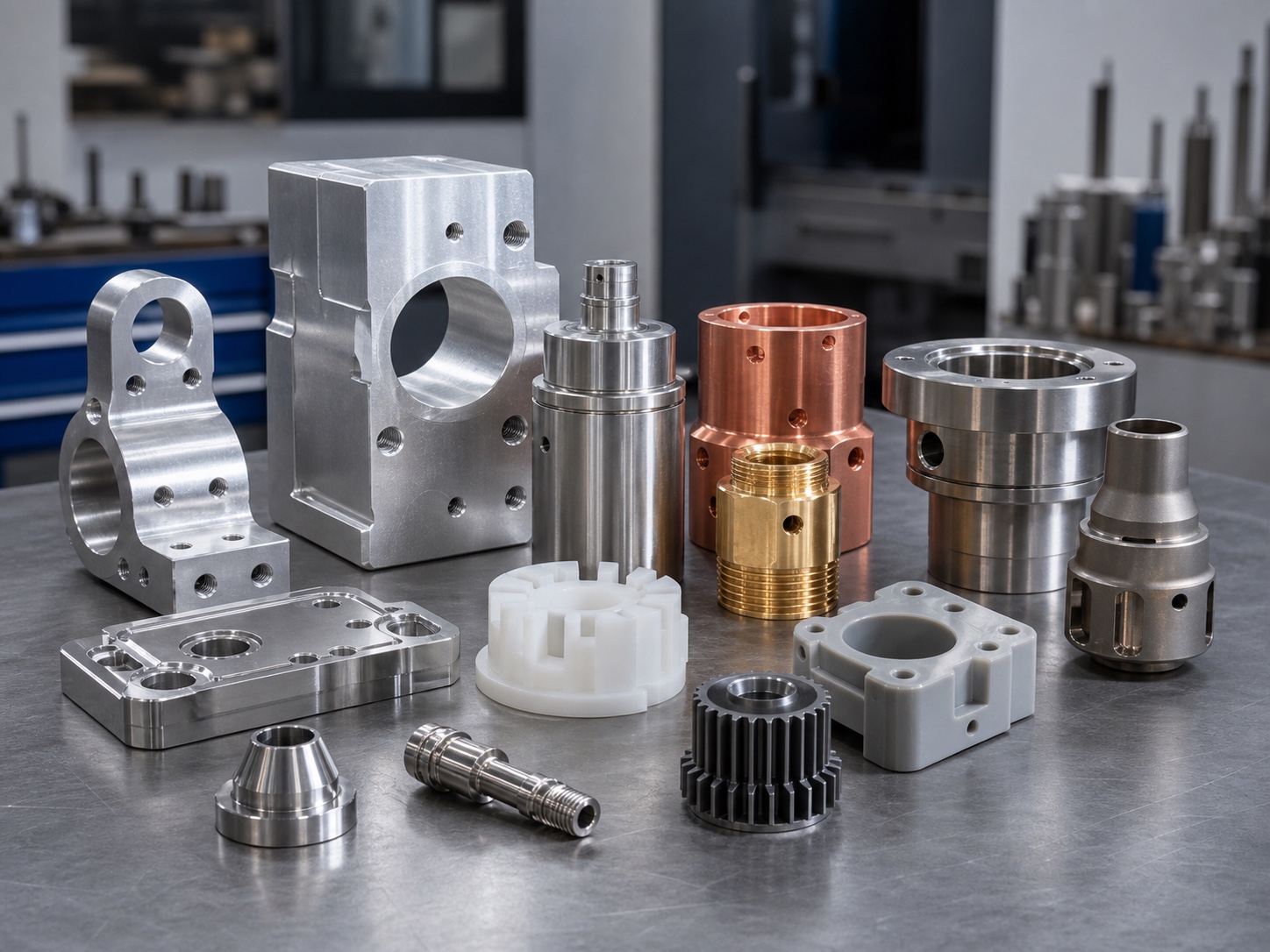
Start With the Function of the Part
Material selection should begin with what the part must do after assembly. A material that machines easily may still fail if it cannot carry the load, resist corrosion, stay stable at temperature or accept the required surface finish.
Before choosing a grade, define the environment, load, mating parts, expected wear, electrical or thermal requirement, surface finish and tolerance priority. This prevents over-specifying expensive materials and also prevents choosing a cheap material that later causes failure.
| Question | Why it matters | Material direction |
|---|---|---|
| Does the part need low weight? | Weight affects motion, robotics, fixtures and handheld devices | Aluminum or engineering plastics may be better than steel |
| Will the part see corrosion or cleaning chemicals? | Corrosion can change appearance, fit and service life | Stainless steel, titanium or suitable plastics may be needed |
| Does the part carry high load? | Strength and stiffness control deformation and safety | Steel, stainless steel, titanium or 7075 aluminum may be reviewed |
| Is thermal or electrical conductivity required? | Heat and current flow depend strongly on material | Copper, brass or aluminum may be suitable |
| Will it contact sliding or wear surfaces? | Friction and wear affect service life | POM, nylon, PTFE, PEEK, brass or treated metals may be considered |
| Is tight tolerance required? | Material stability changes machining and inspection risk | Avoid unstable materials or review process control carefully |
Common CNC Machining Materials Compared
The table below summarizes typical material families used for custom CNC parts. Exact grade selection depends on the drawing, operating environment, quantity, finish, certificate needs and local stock availability.
| Material family | Main advantages | Typical CNC parts | Watch points |
|---|---|---|---|
| Aluminum 6061 | Lightweight, easy to machine, good finish options | Housings, brackets, plates, prototypes | Lower strength than 7075; anodizing thickness may affect dimensions |
| Aluminum 7075 | High strength-to-weight ratio | Robotics parts, fixture plates, aerospace-related components | Higher cost and more careful machining/finish review |
| Stainless steel 304/316 | Corrosion resistance and durability | Shafts, bushings, medical and industrial parts | Harder to machine than aluminum; burr and heat control matter |
| Brass | Good machinability, clean threads, conductivity | Connectors, fittings, inserts, turned parts | Material cost and surface oxidation should be reviewed |
| Copper | High electrical and thermal conductivity | Heat blocks, contacts, bus bars, thermal parts | Soft, gummy machining behavior; surface protection may be needed |
| Titanium | High strength, low weight, corrosion resistance | Medical, aerospace, high-performance parts | Expensive and difficult to machine; needs experienced process control |
| Engineering plastics | Low weight, insulation, low friction | Guides, spacers, bushings, insulators, prototypes | Thermal expansion, creep and clamping deformation must be reviewed |
When to Choose Aluminum
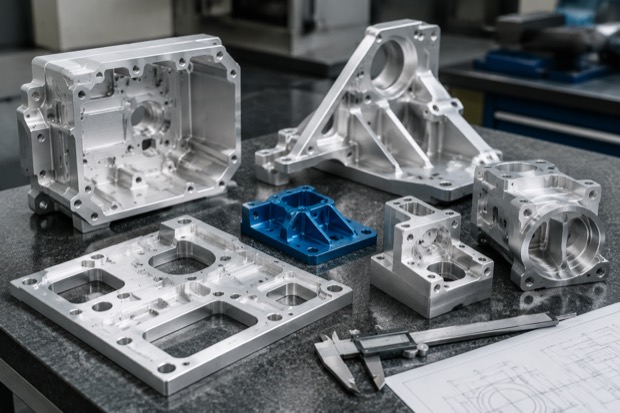
Aluminum is often the first material reviewed for custom CNC machining because it is lightweight, easy to machine and compatible with many surface finishes. Aluminum 6061 is widely used for housings, brackets, covers, plates and prototypes. It offers a practical balance of cost, machinability and availability.
Aluminum 7075 is used when strength-to-weight ratio is more important. It can be suitable for robotics, fixtures, aerospace-related components and high-load lightweight parts. However, buyers should confirm whether the extra strength is truly needed, because 7075 can cost more and may require more careful process and finish review.
| Aluminum choice | Best for | Buyer note |
|---|---|---|
| 6061 | General housings, brackets, fixture plates, prototypes | Good first option for many machined aluminum parts |
| 7075 | Higher-strength lightweight parts | Use when load or stiffness justifies higher material and process cost |
| Anodized aluminum | Appearance, corrosion resistance and wear improvement | Define color, thickness and critical masked areas |
| As-machined aluminum | Fast prototypes and internal parts | May show tool marks; suitable when cosmetic finish is not required |
When to Choose Stainless Steel, Steel, Brass, Copper or Titanium
Stainless steel is chosen when corrosion resistance, strength and long service life matter. 304 is common for general corrosion resistance, while 316 is often considered for more demanding corrosion environments. Compared with aluminum, stainless steel usually increases machining time and tool wear.
Brass is useful for connectors, fittings, inserts and small turned parts because it machines cleanly and produces good thread detail. Copper is selected for electrical and thermal conductivity, but it can be more difficult to machine cleanly because it is soft and sticky. Titanium is used only when its strength, low weight and corrosion resistance justify the cost and process difficulty.
| Material | Use when | Avoid when |
|---|---|---|
| Stainless steel 304 | General corrosion resistance and durable mechanical parts are needed | Low weight and low machining cost are the main priorities |
| Stainless steel 316 | Stronger corrosion resistance is needed | The environment does not justify higher material cost |
| Carbon or alloy steel | Strength, wear resistance or fixture durability matter | Corrosion resistance is required without coating or treatment |
| Brass | Machinability, threads and electrical contact are useful | High strength or low material cost is the priority |
| Copper | Heat transfer or electrical conductivity is the main function | Stiffness, wear resistance or low cost is more important |
| Titanium | High strength-to-weight ratio and corrosion resistance justify premium cost | The same function can be achieved with aluminum or stainless steel |
Engineering Plastics: POM, Nylon, PTFE and PEEK
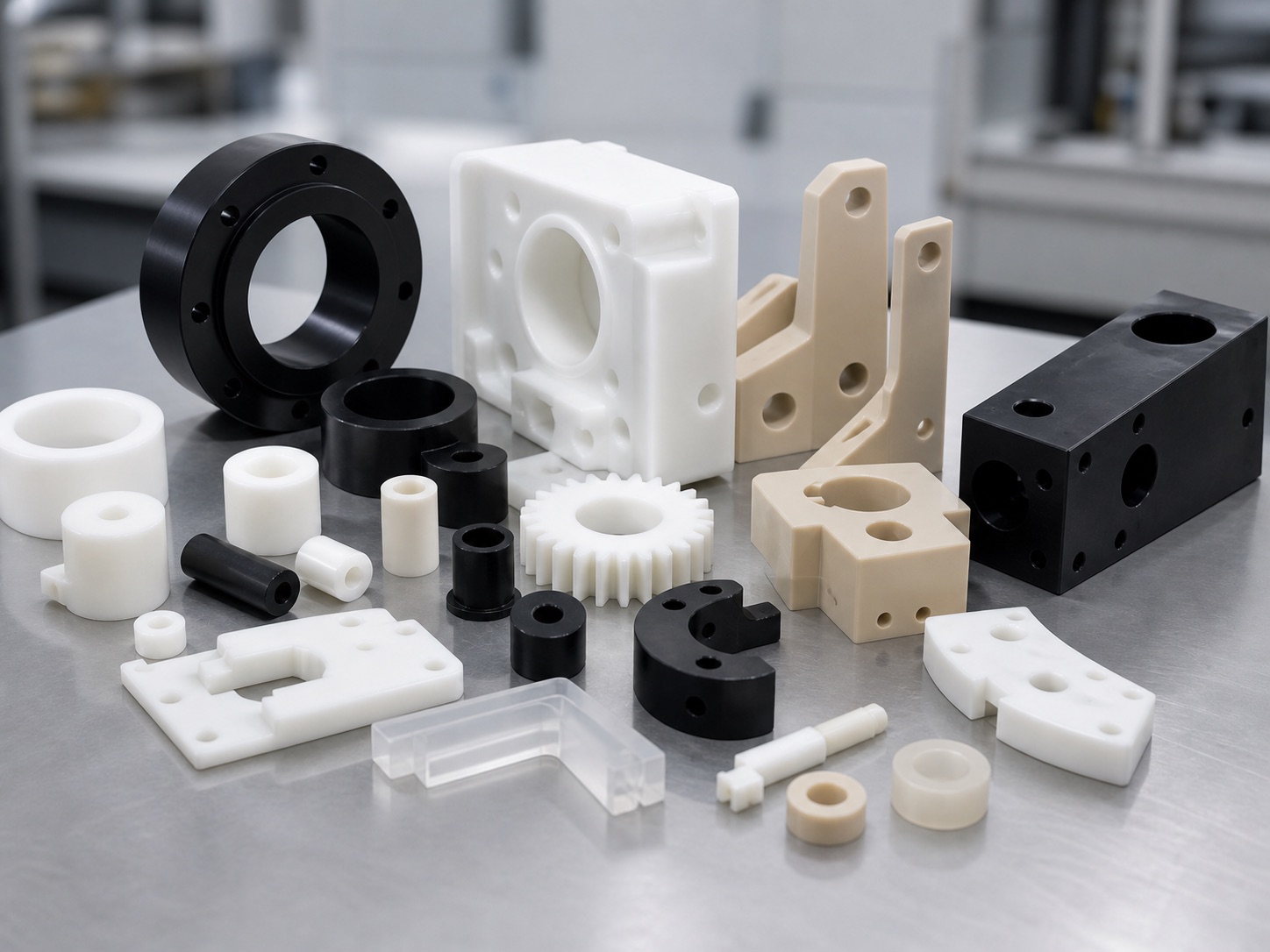
Engineering plastics are selected when low weight, electrical insulation, low friction or chemical resistance is more important than metal strength. They are often used for guides, spacers, rollers, bushings, insulators, housings and functional prototypes.
Plastic parts need a different review from metal parts. Thermal expansion, moisture absorption, creep, clamping pressure, burr control and tolerance stability can affect the final result. PEEK is a premium option for temperature, chemical resistance and dimensional stability, but it should be specified only when its performance is needed.
| Plastic | Main advantage | Watch point |
|---|---|---|
| POM / Acetal | Dimensional stability, low friction, good machinability | Temperature and load limits should be checked |
| Nylon | Toughness and wear resistance | Moisture absorption can affect dimensions |
| PTFE | Very low friction and chemical resistance | Soft material; tolerances and deformation need review |
| PEEK | High temperature resistance and strong performance | High cost; use when operating conditions justify it |
| ABS / PC | Useful for prototypes, housings and fit-check parts | May be better made by 3D printing for early validation |
Tolerance and Surface Finish Can Change Material Choice
A material may look suitable until tolerance and finish are reviewed. Tight tolerances on thin aluminum walls can create deformation risk. Stainless steel can form burrs and heat-affected edges. Plastics can move with temperature or clamping force. Copper can be difficult to hold cleanly on fine details.
Surface finish can also change the final dimension. Anodizing, plating, passivation, polishing and blasting all add process steps. If a surface finish has thickness or masking requirements, those notes should be included in the RFQ and drawing.
| Requirement | Material impact | RFQ note |
|---|---|---|
| Tight hole tolerance | May require reaming, boring or gauge inspection | Identify holes used for pins, bearings or clearance |
| Thin walls | Material stiffness and machining stress become important | Define acceptable deformation and inspection state |
| Cosmetic anodizing | Applies mainly to aluminum and affects appearance/thickness | Define color, type and masking zones |
| Conductive plating | Relevant for copper, brass and selected parts | Confirm plating thickness and contact surfaces |
| Chemical exposure | Can eliminate some metals or plastics | State cleaning fluid, coolant, solvent or operating environment |
| High temperature | Can affect plastics, coatings and fit | State operating temperature and duration |
Cost, Availability and Certificates
Material cost is not only the price per kilogram. It also includes stock availability, minimum order quantity, machining speed, tool wear, scrap risk, finishing route and inspection documentation. A cheaper raw material can become expensive if it machines slowly or creates rework.
For regulated or high-reliability applications, material certificates may be required. Buyers should state certificate needs before quoting. If certificates, traceability or specific standards are needed after production starts, lead time and cost can change.
| RFQ item | Why it matters |
|---|---|
| Exact grade | 6061, 7075, 304, 316, PEEK and other grades behave differently |
| Substitute allowance | Lets engineering suggest a lower-cost or easier-to-source option |
| Certificate requirement | Affects sourcing, traceability and documentation |
| Surface finish | Changes final dimension, appearance and outsourcing route |
| Quantity | Affects stock planning and whether fixture strategy is worthwhile |
| Critical dimensions | Helps confirm whether the material can hold the required tolerance |
How OEMach Reviews Material Choice
OEMach reviews CNC machining material choice together with geometry, tolerance, surface finish, quantity and inspection requirements. When a drawing specifies a material that may increase cost or risk, we can suggest alternatives for engineering review. When a material is critical to function, we keep that requirement visible in the machining and inspection plan.
For overseas RFQs, the fastest review usually includes STEP/STP files, 2D drawings, material grade, quantity, finish, tolerance notes, application environment and certificate requirements. This gives engineering enough context to confirm material suitability before quoting.
FAQ
What is the best material for CNC machining?
There is no single best material. Aluminum 6061 is a practical first choice for many lightweight parts, stainless steel is better for corrosion resistance and strength, copper or brass are useful for conductivity, and engineering plastics work for insulation or low friction.
Should I choose aluminum 6061 or 7075?
Choose 6061 for general housings, brackets and prototypes. Choose 7075 when higher strength-to-weight ratio is required and the added cost is justified.
When should I use stainless steel instead of aluminum?
Use stainless steel when corrosion resistance, strength, wear resistance or long service life is more important than low weight and low machining cost.
When is PEEK worth the cost?
PEEK is worth reviewing when temperature, chemical resistance, wear behavior or dimensional stability are demanding enough that common plastics cannot meet the requirement.
What material information should I send for a CNC quote?
Send the exact material grade, any acceptable substitutes, required certificates, finish, quantity, tolerance notes and application environment.
Summary
Good CNC material selection starts with the part function, not only with material strength. Compare load, weight, corrosion, conductivity, wear, temperature, tolerance, finish, availability and cost before sending an RFQ. Clear material notes help the supplier quote faster, reduce rework and protect the final performance of custom CNC machined parts.