
CNC machining cost is not controlled by one simple factor. A quote is shaped by part geometry, material removal time, setup count, tolerance level, surface finish, inspection requirements, quantity and how complete the RFQ information is. Two parts with the same outer size can have very different prices if one includes deep pockets, thin walls, tight position tolerances and multiple cosmetic faces.
For buyers and engineers, the goal is not to make every part cheap. The goal is to remove unnecessary manufacturing effort while protecting the dimensions, surfaces and functions that actually matter. A smart cost review should tell you where design flexibility is safe and where it would create assembly, sealing, strength or inspection risk.
This guide explains the main drivers behind CNC machining cost and gives practical ways to reduce cost before sending drawings for quotation.
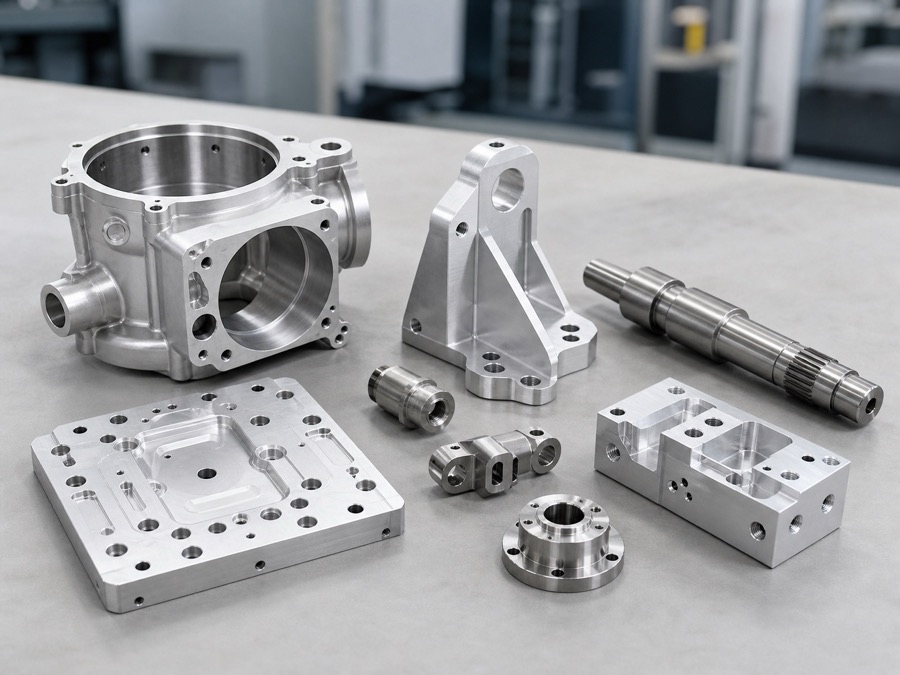
What Drives CNC Machining Cost?
Most CNC cost drivers are connected to machine time, tooling, setup and inspection. When a feature forces slower cutting, longer tools, extra re-clamping or special measurement, the quote usually increases.
| Cost driver | Why it increases cost | What buyers can check |
|---|---|---|
| Deep pockets and cavities | Require long tools, small step-downs and slower cutting | Can the pocket be shallower, opened, or split into simpler features? |
| Tight tolerances on many features | Increase machining care, inspection time and possible rework | Which dimensions are truly functional or assembly-critical? |
| Thin walls | Create chatter, vibration and deformation during machining | Can wall thickness be increased or supported by ribs? |
| Multiple setups | Each re-clamp adds alignment time and risk | Can features be grouped by machining side or made with 5-axis access? |
| Hard or difficult materials | Reduce tool life and cutting speed | Is the material grade required by function or only selected by habit? |
| Cosmetic or fine surface finishes | Add finishing, masking, polishing or extra quality checks | Which faces are cosmetic, mating or hidden after assembly? |
Design Changes That Often Reduce Cost
The strongest cost savings usually happen before machining starts. Small design changes can reduce tool changes, programming time and rework risk without changing the part's function.
Internal corners are a common example. A very small inside radius may require a small end mill, which removes material slowly and wears faster. If the design allows a larger internal radius, the machinist can use a larger tool and shorten cycle time. Deep pockets, narrow slots and long blind holes work the same way: the more difficult the tool access, the more expensive the feature becomes.
| Feature | Cost-friendly direction | Caution |
|---|---|---|
| Internal radii | Use larger radii where possible | Do not change mating geometry without checking assembly clearance |
| Pockets | Avoid very deep, narrow pockets | Keep functional pockets only where needed for weight or clearance |
| Tapped holes | Limit thread depth to the useful engagement length | Do not reduce thread engagement for load-bearing joints |
| Thin walls | Increase thickness or add support ribs | Check weight limits and adjacent fit requirements |
| Small holes | Avoid extremely small, deep holes unless required | Fine holes may need special tooling or EDM |
| Cosmetic edges | Use a standard break edge or chamfer callout | Keep controlled edges where sealing or safety requires it |
Use Tight Tolerances Only Where They Matter
Tight tolerances are one of the easiest ways to increase CNC machining cost. A part with one critical bearing bore is very different from a part where every hole, pocket, radius and outside dimension has a tight numerical tolerance.
A better approach is to separate functional features from non-critical geometry. Bearing bores, dowel pin holes, sealing faces, sensor mounting surfaces and sliding fits may deserve tight control. Cosmetic edges, clearance pockets and non-mating outside profiles often do not need the same tolerance level.
Good drawings also define datum references clearly. If every critical feature is dimensioned from a different edge, inspection becomes more difficult and disagreement becomes more likely. A clean datum scheme reduces confusion during both machining and quality review.
| Requirement | Useful when | Cost note |
|---|---|---|
| Standard model tolerance | General non-critical geometry | Usually the most cost-efficient option |
| +/-0.05 mm or similar | Normal machined interfaces | Often reasonable for many custom metal parts |
| +/-0.02 mm or tighter | Precision fits and controlled assembly features | Requires more planning, stable fixturing and inspection |
| GD&T position or flatness | Function depends on relationship between features | Helpful when applied to the right features only |
| CMM report | Critical dimensions must be documented | Adds inspection time but reduces acceptance ambiguity |
Material and Finish Choices Also Affect Price
Material selection changes machining speed, tool wear, scrap risk and finishing method. Aluminum 6061 is often easier to machine than stainless steel, titanium or high-performance plastics such as PEEK. Aluminum 7075 may be needed for strength, but it can also require more careful process control depending on geometry and finish.
Surface finish is another cost driver. Anodizing, plating, blasting, polishing and passivation can all be valuable, but they should match the actual use of the part. A hidden bracket may not need the same cosmetic finish as an exposed product housing. A sealing face may need controlled roughness, while the rest of the part can remain as-machined.
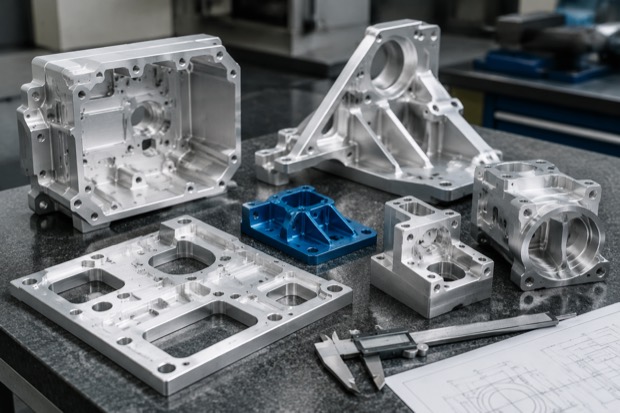
| Decision | Cost impact | Practical suggestion |
|---|---|---|
| Material grade | Harder or specialty materials usually increase machining time | Select grade by load, corrosion, temperature and weight needs |
| Stock size | Oversized stock increases material removal | Leave enough allowance, but avoid unnecessary billet size |
| Surface roughness | Fine roughness may require slower finishing passes | Apply roughness only to functional surfaces |
| Anodizing or plating | Adds outsourcing, masking and dimensional review | Define color, thickness and critical masked areas |
| Heat treatment | Can change dimensions and sequence | Confirm whether machining happens before or after treatment |
Quantity Changes the Quote Structure
Prototype and small-batch CNC machining carry setup and programming effort that cannot be fully avoided. When quantity increases, setup cost is spread across more parts, but material, cycle time, inspection and finishing still matter.
For early prototypes, it is often better to quote a small quantity with a clear functional goal instead of requesting production-level finishes too early. For bridge builds or repeat orders, it is worth asking whether fixtures, soft jaws, in-machine chamfering or inspection templates can reduce repeated cost.
| Stage | Good RFQ approach | Cost control focus |
|---|---|---|
| 1-3 prototypes | State fit-check or functional-test purpose | Avoid unnecessary cosmetic and documentation requirements |
| 5-20 engineering samples | Define critical dimensions and expected changes | Balance inspection scope and lead time |
| 50+ small-batch parts | Discuss repeat setup and fixture strategy | Reduce cycle time and stabilize quality |
| Repeat production | Keep revision, material and finish consistent | Use stable process route and inspection records |
Prepare a Better RFQ to Avoid Re-quoting
Incomplete RFQ information often creates conservative quotes. If a supplier does not know the material grade, finish, tolerance priority or quantity, they must either ask questions or assume higher risk. Better input helps the engineering team quote the real requirement instead of the worst-case version.
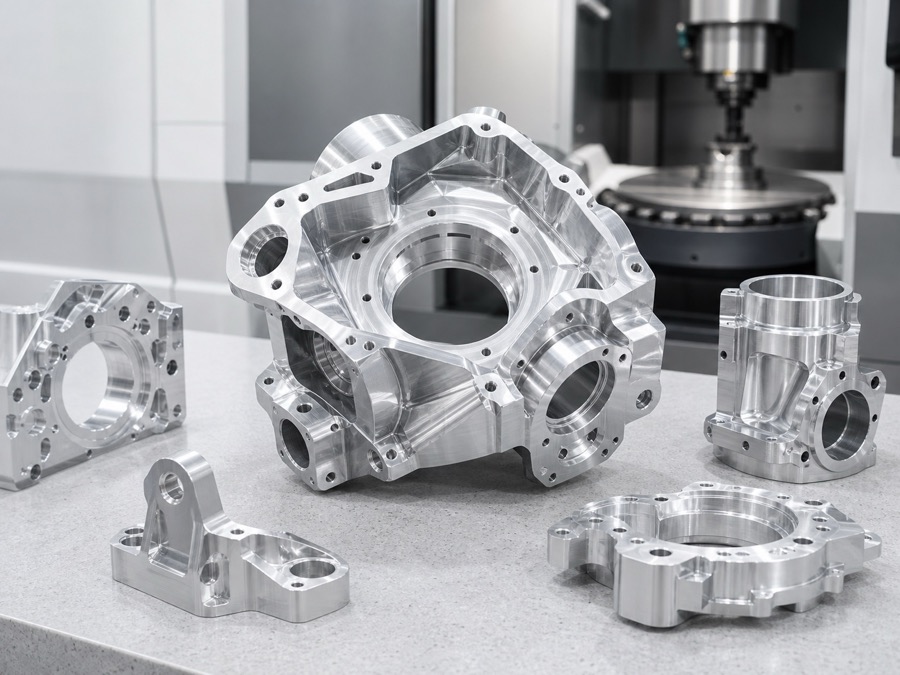
| RFQ item | Why it matters |
|---|---|
| STEP or STP file | Allows toolpath, setup and material removal review |
| 2D drawing | Shows tolerances, threads, datums, surface roughness and notes |
| Material and finish | Defines machining behavior and secondary process route |
| Quantity and target lead time | Changes setup, fixture and scheduling assumptions |
| Critical dimensions | Helps the supplier focus inspection where it matters |
| Application context | Explains why a tolerance, surface or material is required |
Where You Should Not Cut Cost
Cost reduction should never remove the function of the part. Bearing seats, sealing grooves, locating holes, medical contact surfaces, aerospace fixture datums, high-load threads and safety-related features should be reviewed carefully before changing material, tolerance or finish.
The safest method is to ask the supplier which features drive cost and why. A good engineering review should propose options, but it should also explain the risk of each option. If a lower-cost design creates assembly failure, leakage, vibration or repeat inspection problems, it is not a real saving.
How OEMach Reviews CNC Cost
OEMach reviews CNC machining cost by checking geometry, material, tolerance, surface finish, setup route and inspection needs before quoting. For custom parts, we may suggest larger internal radii, clearer tolerance priority, material alternatives, simplified finishes or better drawing notes when those changes can reduce cost without hurting function.
For precision parts, the review also protects critical features. If a hole, flatness callout, sealing surface or thin-wall area needs special control, we keep that requirement visible in the machining and inspection plan instead of treating cost reduction as a blanket simplification.
FAQ
Why is my CNC machining quote higher than expected?
Common reasons include deep pockets, thin walls, tight tolerances, difficult materials, multiple setups, fine finishes, low quantity or unclear RFQ information.
Do tighter tolerances always increase cost?
Usually yes, especially when many features are tightly controlled. Apply tight tolerances only to functional dimensions such as fits, datums, sealing surfaces and precision holes.
Can changing material reduce machining cost?
Yes, if the alternate material still meets strength, corrosion, temperature and wear requirements. Aluminum 6061, for example, is often easier to machine than stainless steel or titanium.
Does higher quantity always make each part cheaper?
Higher quantity can reduce the setup cost per part, but material, cycle time, finishing and inspection still affect unit price.
What should I send for a more accurate CNC quote?
Send STEP/STP files, 2D drawings, material, quantity, finish, tolerance notes, critical dimensions and application context.
Summary
The best way to reduce CNC machining cost is to remove unnecessary manufacturing difficulty while protecting critical function. Review deep pockets, internal radii, thin walls, small holes, tolerance strategy, material choice, surface finish and RFQ completeness before quoting. A clear drawing package and a practical DFM review can lower cost, shorten lead time and reduce rework without sacrificing quality.