
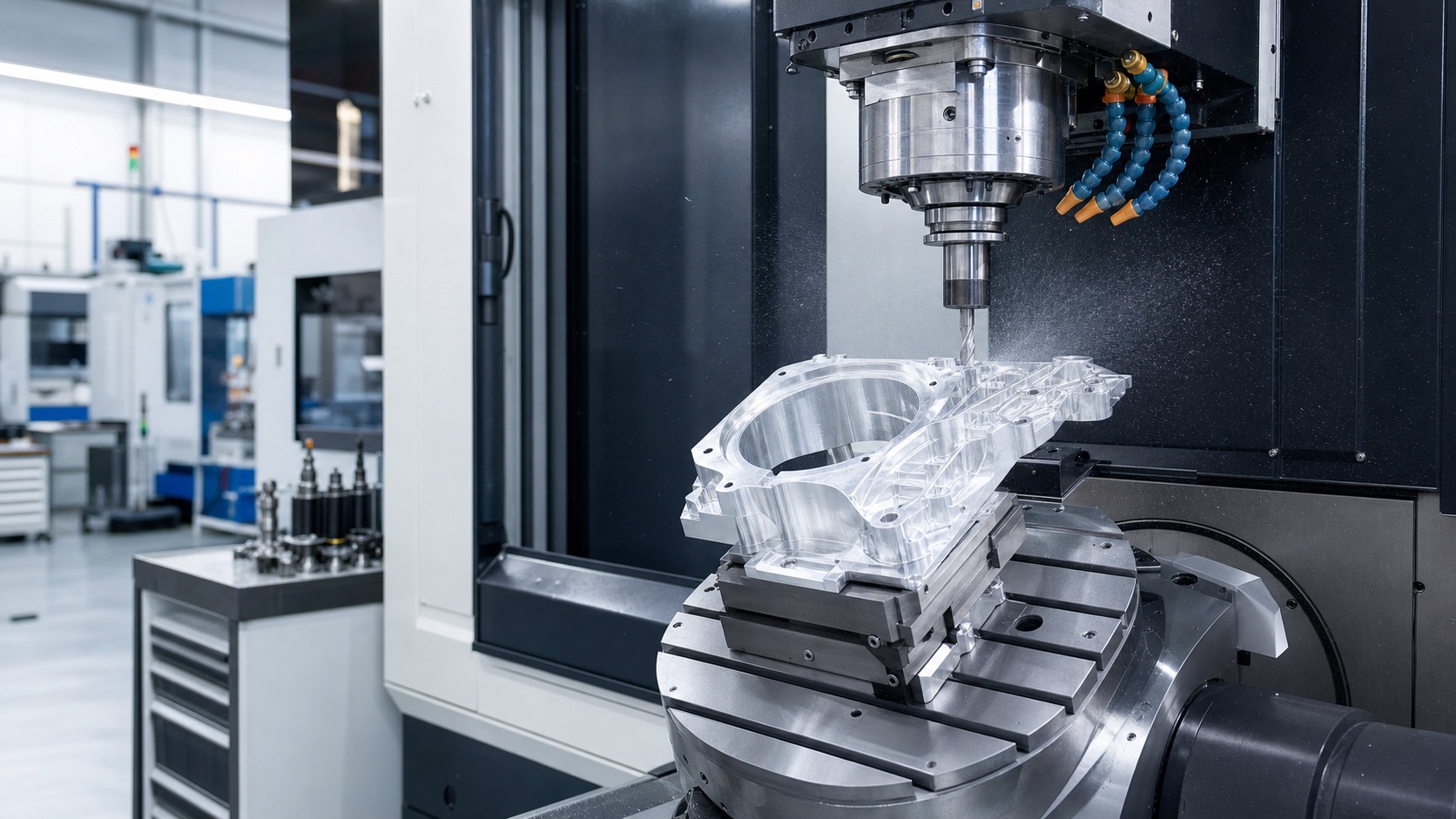
When engineers and purchasing teams search for CNC machining suppliers in China, price is usually only one part of the decision. For custom precision parts, the real question is whether the supplier can understand your drawings, control tolerances, machine the right material, inspect critical dimensions and deliver stable quality across prototypes, small batches and repeat orders.
A reliable CNC machining supplier in China should not simply quote the lowest price. It should help you reduce technical risk before production starts. This is especially important for custom parts used in robotics, semiconductor equipment, medical devices, automation systems, aerospace components and other precision assemblies.
1. Start With Your Part Requirements
Before comparing suppliers, define what your part actually needs. A simple bracket, a thin-wall housing, a high-speed shaft and a vacuum sealing component all require different machining experience.
Prepare 2D drawings with tolerances, 3D CAD files, material grades, surface finish requirements, quantity, inspection requirements, target lead time and the application environment. The more complete your RFQ package is, the easier it is to identify which suppliers are technically suitable.
2. Check Custom Precision Machining Experience
Not every CNC shop is built for custom precision work. Some factories focus on high-volume simple parts, while others specialize in low-volume CNC machining, prototypes and non-standard components.
For custom precision parts, look for CNC milling, CNC turning, turn-mill machining, multi-axis or 5-axis machining, EDM, wire cutting, grinding and secondary finishing experience. If your design includes deep pockets, thin walls, tight hole positions or complex datum structures, the supplier should be able to explain how it will control machining accuracy.
3. Evaluate Tolerance Capability
Many suppliers claim to provide high precision machining, but the real question is whether they can hold the required tolerance on your specific part, material and batch size.
A flat aluminum plate with a +/- 0.02 mm tolerance is different from a thin-wall stainless steel housing with the same tolerance. Material stress, tool wear, clamping deformation, thermal expansion and inspection methods all affect final accuracy.
Ask what tolerance range the supplier can normally hold, which dimensions require special process control, how the part will be clamped, whether stress relief is needed and what inspection equipment will be used.
4. Confirm Inspection and Quality Documentation
For precision CNC machined parts, inspection is not a formality. It is part of the manufacturing process. Useful inspection capabilities include CMM inspection, height gauges, micrometers, calipers, bore gauges, surface roughness testing, thread gauges, first article inspection and final dimensional reports.
If the parts will be used in regulated or high-risk assemblies, inspection reports are especially important. They help your engineering team confirm that the parts meet drawing requirements before assembly.
5. Review Material Experience
Custom CNC parts may use aluminum, stainless steel, titanium, copper, brass, PEEK, PTFE and other engineering plastics. Each material brings different machining challenges.
Aluminum is widely used for lightweight structures, housings, fixtures and prototypes. Stainless steel is common for strength and corrosion resistance. Titanium requires careful heat control. Copper and brass are useful for conductivity and wear resistance. Engineering plastics require attention to deformation, burrs and dimensional stability.
6. Understand Low-Volume and Prototype Workflow
Many overseas buyers look for CNC machining suppliers in China because they need small batches, prototypes or one-off parts without high minimum order quantities. For low-volume CNC machining, speed and communication matter as much as machine capacity.
Ask whether the supplier accepts one-off or low-volume orders, how long simple and complex parts usually take, whether design changes can be supported between prototype batches and whether machining notes are kept for repeat orders.
7. Look for Engineering Communication
A reliable precision machining supplier should communicate like a manufacturing partner. Strong suppliers ask which dimensions are function-critical, whether a sharp internal corner can be changed to a small radius, whether surface finish is required on all surfaces and whether non-critical tolerances can be relaxed to reduce cost.
These questions show that the supplier is thinking about manufacturing risk, not just filling out a quotation sheet.
8. Compare Factory-Direct CNC Machining With Marketplaces
Online CNC machining marketplaces can be convenient for quick quotes. However, for custom precision parts, a factory-direct CNC machining supplier may offer better communication, process control and long-term collaboration.
Factory-direct communication is useful when drawings have tight tolerances, parts require multiple machining processes, material substitution must be discussed, inspection reports are required or the part will be reordered after validation.
9. Use a Practical Supplier Checklist
Before choosing a CNC machining supplier in China, confirm whether the supplier understands custom precision parts, supports your required material and finish, has suitable milling, turning, EDM or 5-axis capability, can explain tolerance control, provides inspection reports, accepts low-volume orders and gives useful DFM feedback.
10. Why OEMach Fits Custom Precision Machining Projects
OEMach supports custom CNC machining, precision turning, milling, wire cutting, EDM, grinding, sheet metal fabrication and related manufacturing processes for overseas engineering and procurement teams.
For projects that require low-volume production, prototype machining, non-standard parts, tight tolerances, inspection reports or fast turnaround, OEMach can help review drawings, evaluate manufacturability and produce custom precision components from a wide range of metals and engineering plastics.
If you are looking for a reliable CNC machining supplier in China for custom precision parts, send your drawing, 3D model, material requirement, quantity and target lead time for a technical review.