
One groove creates several different measurement tasks
Precision turning of a grooved polymer cylinder needs more than a narrow tool and a width reading. The outer reference lands, groove root, shoulders and axial position answer different questions. This guide uses a solid natural unfilled POM-C plug for an inert offline microplate-reader service fixture. It is not an O-ring plug, retaining-ring specification or rotating roller. No sealing, load, wear or equipment result is claimed. The aim is a clear drawing-led machining and inspection scope that does not confuse access to the groove with evidence that its complete geometry has been accepted.

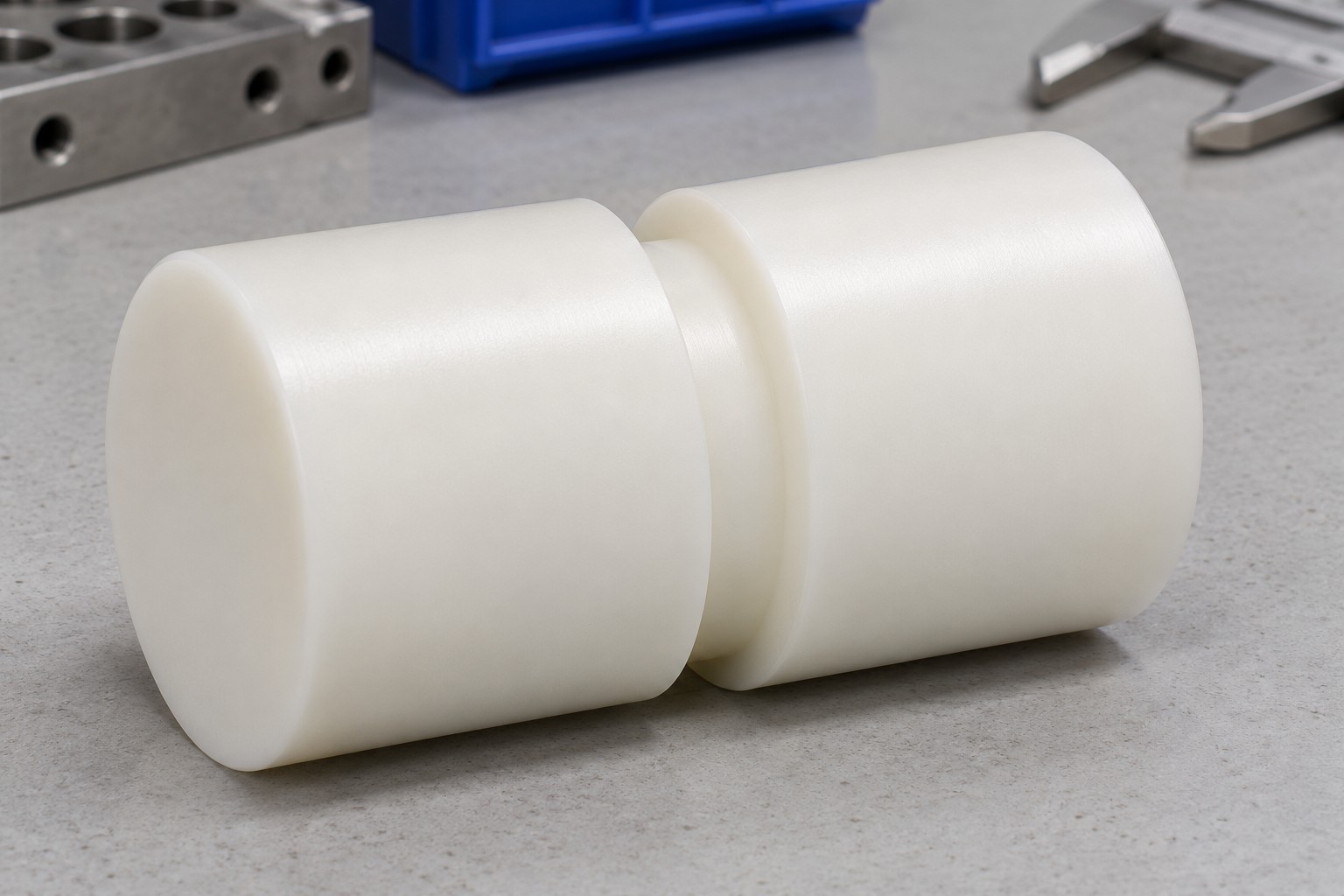
A solid cylinder with one external annular groove
This natural unfilled POM-C component is a solid cylindrical plug with flat unbroken circular ends and exactly one external circumferential groove centered along its length. The nominal groove has a rectangular axial section: a smaller cylindrical root band and two annular shoulder faces, with agreed small transitions. Full-diameter cylindrical lands remain on both sides and are substantial rather than thin flanges. There is no axial bore, thread, longitudinal slot, separate ring or fitted seal. The example concerns an inert offline microplate-reader service fixture. It is not a sealing plug or a rotating roller, and no operating equipment interface is claimed.
Define the groove before selecting a measuring tool
The actual width region, permitted transitions and root surface determine what a tool must reach. A jaw that bridges the outer lands measures something different from a contact placed correctly at the root. Likewise, a contact on a rounded transition may not represent the nominal shoulder separation. Specify the axial reference and any required relationship between the lands before choosing an evaluation method. The design may allow ordinary manufacturing variation on nonfunctional regions, but the chosen tool cannot silently redefine a functional dimension merely because it cannot reach the intended surface.
Turn the groove without treating it as a seal design
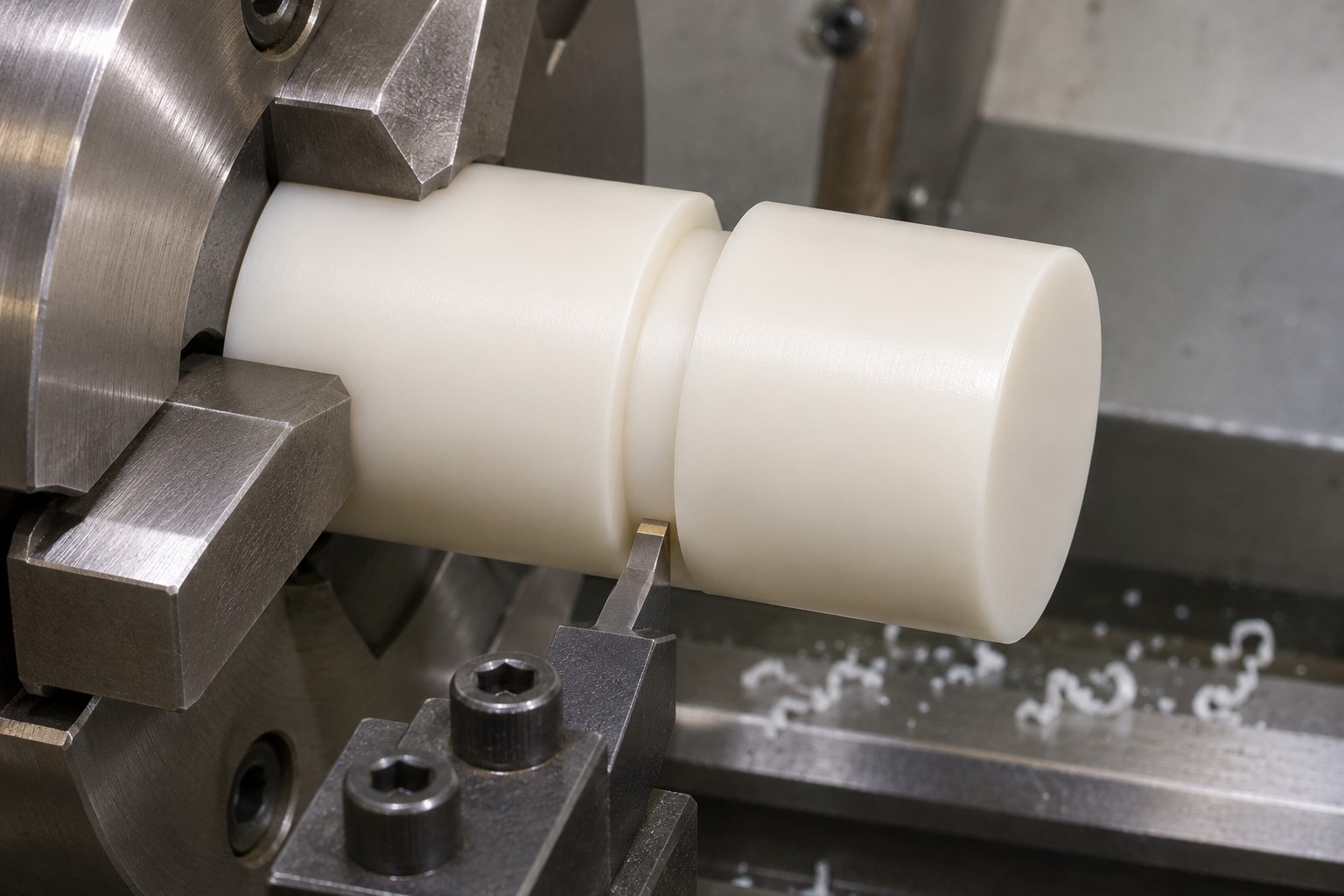
A possible CNC turning route establishes the cylindrical surfaces and axial references, then machines the groove using tooling suited to its real width, depth and permitted transitions. Plan chip evacuation and restraint so the polymer is not distorted into an apparently acceptable state. Tool radius and access at the two shoulders need review with the defined geometry. The POM-C designation, stock identity and any approved secondary operation remain controlled. No generic cutting speed, thermal treatment or polishing recipe is implied. The groove is not automatically an O-ring seat, retention-ring seat or belt profile; those functions would need different complete interface requirements and separate appropriate evaluation.
Material identity and controlled changes
Specify the complete material designation, stock form and required supporting documents before machining. A familiar alloy or polymer name is not a certificate for a particular blank. Maintain a link between the incoming material, work order, drawing revision and finished component. If direct marking would affect a contact face, preserve identity through a controlled container and accompanying records. A substitution in grade, condition, additive package or stock supplier requires review where those details are specified. Any subsequent treatment must be included in the approved route rather than added because it is customary. These requirements establish traceability for an actual order; they do not imply that the representative part has already been manufactured, certified or delivered.
Width, root diameter and axial position need definitions
Define the cylindrical reference region and the axial reference face before measuring the groove. Groove width describes the shoulder separation at the specified region; root diameter describes a different feature. Neither alone establishes axial location relative to the selected end. The shoulder transitions must not be treated as full-width planar faces or ideal cylinder unless deliberately specified. State whether the two outside lands require a common reference construction and how that construction is established. A visually centered groove is not a location result. The drawing must resolve any conflict between total length, land lengths and groove position rather than leaving the shop to average incompatible values.
Review polymer restraint and the final condition
Workholding contact, heat and measurement force should be considered with the real section and tolerance requirements. This does not imply a particular amount of deformation or prescribe an unsupported process capability. It means that acceptance must refer to the agreed released condition with a suitable method. The stock designation distinguishes POM-C from POM-H and other modifications. Similar appearance does not establish equivalence. Any thermal or finishing operation must be part of the approved route. If it changes a relevant surface after inspection, affected characteristics need reassessment before the component is released.
Inspect the root and shoulders with suitable access
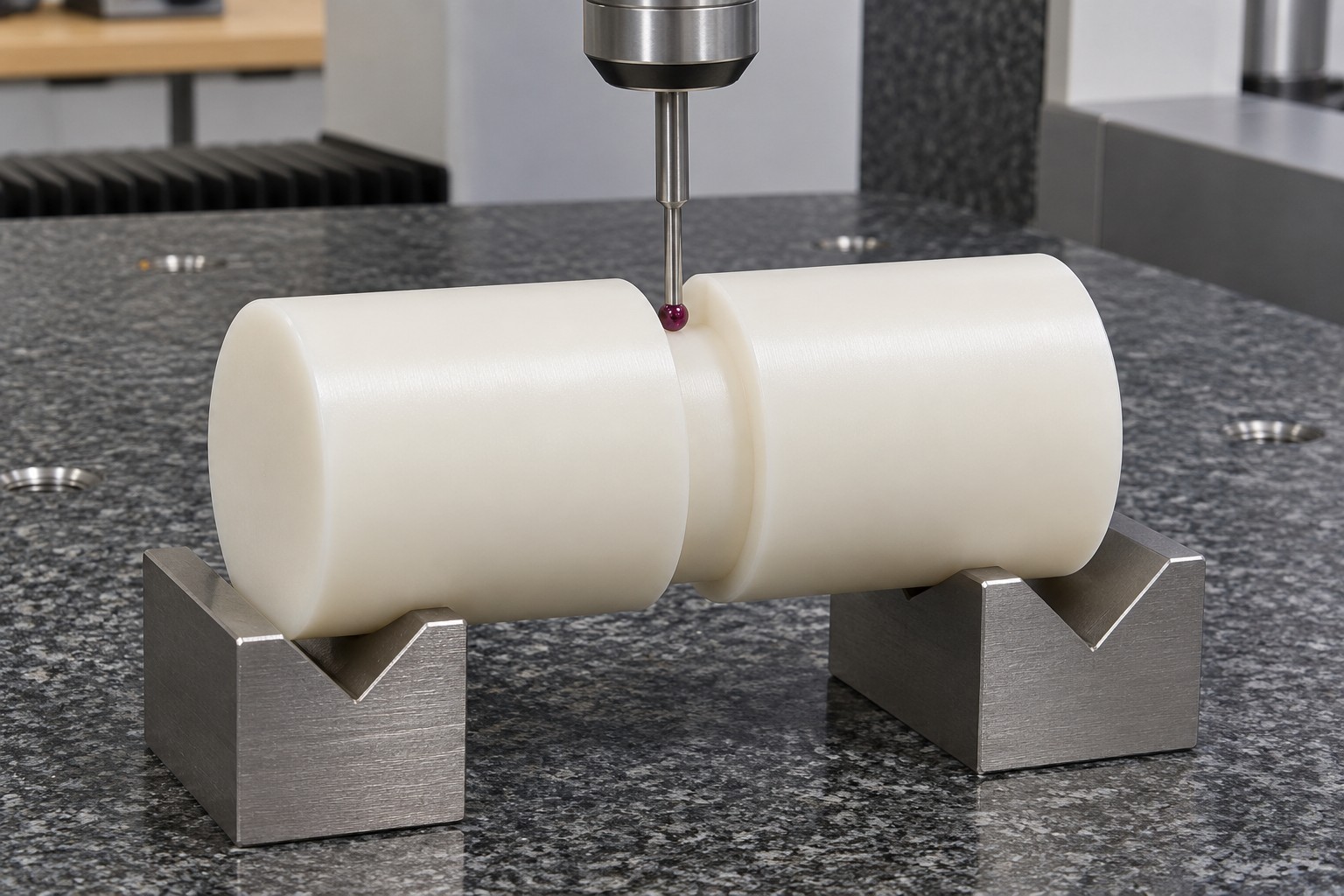
Measure the relevant outer lands, groove width, root region and axial position using methods capable of reaching the defined surfaces. A standard outside jaw spanning the lands cannot measure the smaller root diameter. A single width reading does not prove shoulder form or orientation. Consider contact force, temperature condition and the released state appropriate to the actual polymer component. Check for loose chips and surface damage without treating visual cleanliness as a validated result. An inert mating observation may be recorded within its agreed limit, but does not establish sealing, retention load, wear life or microplate-reader performance. The proposed images cannot replace actual first-article data.
First article evidence and final condition
Define acceptance against the approved drawing, not against a photograph or the appearance of the machine setup. A useful first article record identifies each characteristic, its reference system, the inspection method, the actual result and the disposition. Measurement equipment must suit the feature, access and required uncertainty. A result after roughing is not automatically valid after finishing, deburring, treatment or unclamping. Agree the relevant final condition and repeat affected checks when that condition changes. Nonconformities need an explicit disposition; averaging readings or describing a component as a good fit cannot replace it. The proposed inspection route here explains what evidence to request, without reporting measured values, capability indices or an achieved tolerance.
State what the first article must demonstrate
The inspection plan should identify outer lands, root region, shoulder separation and groove position, along with the defined references and actual methods. A limited inert mating observation may be useful but cannot prove sealing or retention capacity. Ask for actual results rather than a general statement that the groove was checked. Repeat orders should retain the accepted geometry and stock identity unless changed through review. This keeps small-batch polymer machining focused on measurable features and the intended scope. No generic tolerance, material certificate, cleaning validation or microplate-reader performance is invented for the example.
Drawing-led quotation and small-batch planning
For a custom precision CNC quotation, provide a controlled drawing, a usable solid model when available, material and condition, quantity, critical contacts, surface requirements and the expected inspection documents. Identify which dimensions determine the interface and which are general manufacturing limits. Discuss tool access and proposed corner transitions before ordering. A prototype, an inspection sample and a production lot may require different preparation and reporting. State packing needs and any prohibited residues or contact materials. Prices, minimum order quantities and delivery dates require a separate commercial agreement. A manufacturing proposal is not permission to relax a specified feature. Written decisions should remain attached to the same revision used to program, inspect and release the part.
Cleaning, separation and protective packing
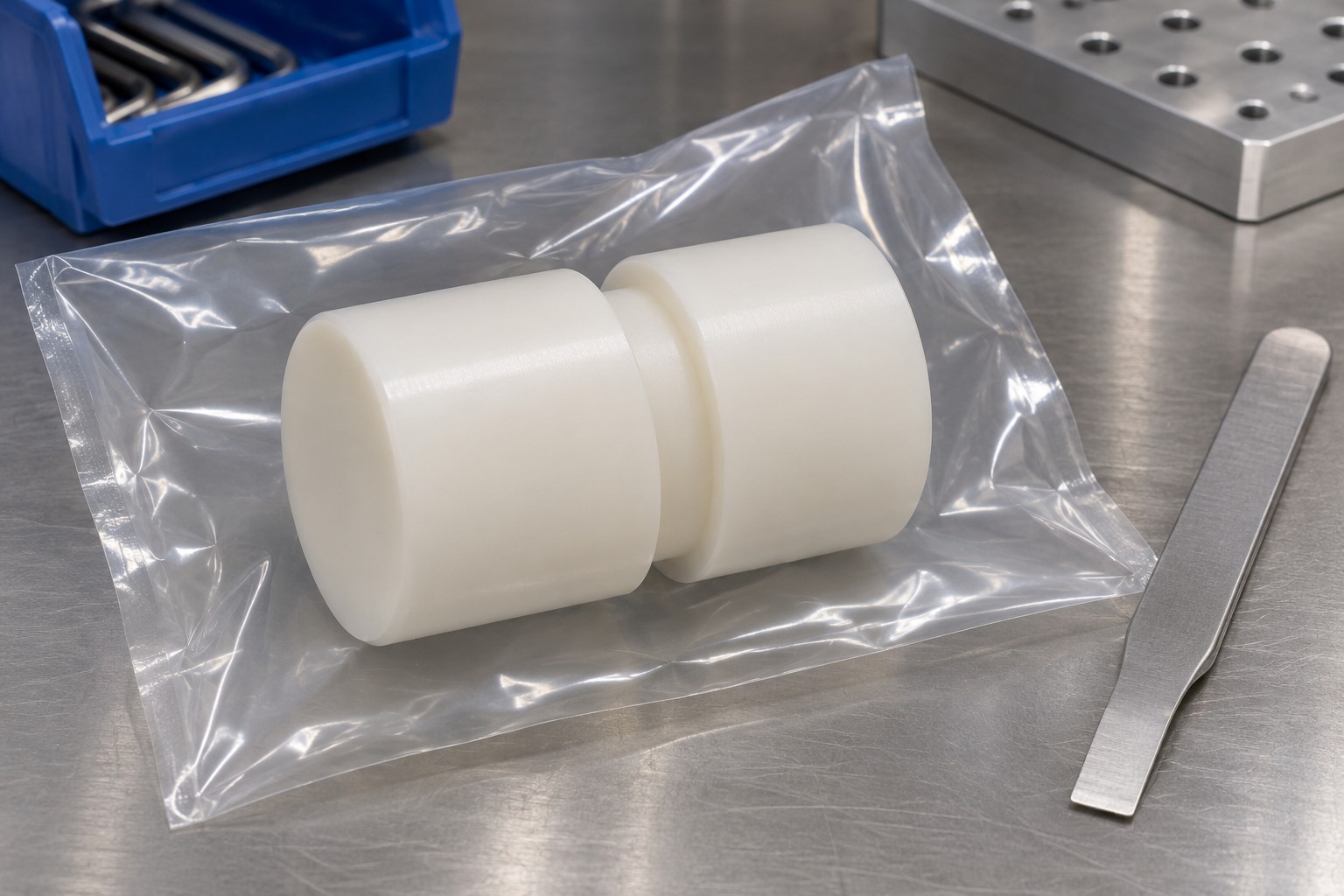
Remove loose chips and machining residues using a process agreed for the specified material and finish. Check sheltered corners, contact surfaces and packaging materials for retained debris. Support the component so the bag or separator does not cause edge damage, rubbing or permanent deformation during handling. Keep loose reference pieces, tools and fasteners away from the finished surfaces. Match identification and inspection records to the packed item, and distinguish an uninspected sample from a released part. Protective packaging does not itself demonstrate a validated cleaning process, sterile supply or suitability for clinical contact. Where cleanliness limits are important, the order needs a defined method, acceptance criterion and evidence. An ordinary clean-looking bag must not be presented as a sterile barrier.
FAQ
Does groove width determine root diameter?
No. Shoulder separation and cylindrical root size describe different features. Their measurement regions and requirements need separate definitions in the drawing and inspection plan.
Can outside jaws spanning the lands measure the root?
No. They contact the outer lands rather than the recessed cylindrical root. Select a method with suitable access to the intended region and required uncertainty.
Is this automatically an O-ring groove?
No. This example has no seal or sealing claim. A genuine sealing design requires complete interface, material and operating requirements with appropriate independent evaluation.
Does a centered appearance prove axial position?
No. Position is measured from the agreed axial reference. Define the relationship between the end face, groove shoulders and any controlling land lengths.
May POM-H replace POM-C without review?
Not where POM-C is specified. Confirm the required type and modification. Color, machinability or a familiar trade name is not approval for a substitution.
Does an inert fit prove retention or wear life?
No. It records only the stated geometric observation. Retention load, wear, sealing and equipment operation require separate requirements and suitable actual evidence.

tanghangyun@oemach.com