
The difference in quotations for outsourcing small batches of precision parts is often not due to arbitrary pricing by the machining factory, but because the drawings, materials, inspection and delivery boundaries were not fully specified in the early stage. OEMach identifies key inputs that will change process, procurement or inspection costs before quoting.
The most fearful thing about small batch outsourcing quotations is not that the price is high, but that a seemingly acceptable total price is given first. After starting work, it is discovered that the specified materials are not in stock, key dimensions need to be fully inspected, threads need to be verified with go/no-go gauges, surface treatment has masking requirements, or delivery requires dimensional reports and independent packaging. What is added at this time is not "additional charges", but real work that was not recognized in the early stage.
Key project confirmation items
| Quotation input | Information to provide | Risk if omitted |
|---|---|---|
| Drawings and models | Version, unit, 2D drawing, 3D model and quantity | Programming repeatedly confirms or makes the wrong version |
| Materials and blanks | Grade, status, certification, allowed substitution range | Procurement cycle or cost changes |
| inspection requirements | Critical dimensions, full inspection scope, reporting and gage requirements | Additional inspection hours or delivery date |
| Surface and packaging | Handling, masking, protection and individual packaging | Finished product secondary machining or handling damage |
Make drawings ready for production, not just quotation
The two-dimensional drawing should clarify the version, unit, quantity, material, key dimensions, tolerances, threads and surface treatment; it is best to provide a three-dimensional model of complex parts at the same time. For dimensions related to fit, sealing, assembly or movement, it is best to indicate datums and functional descriptions. If the structure is still iterating, it should also be clear which dimensions of this batch have been frozen and which non-critical features may be adjusted.
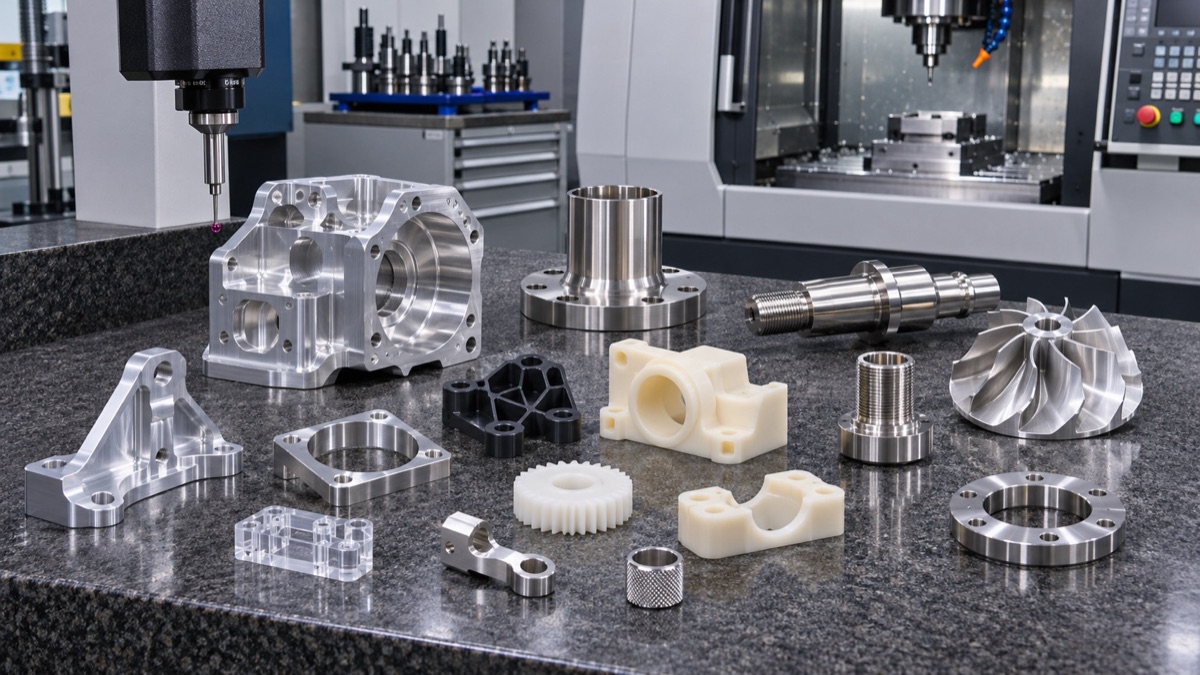
Suitable for small batch outsourcing of multi-material precision parts prototypes.
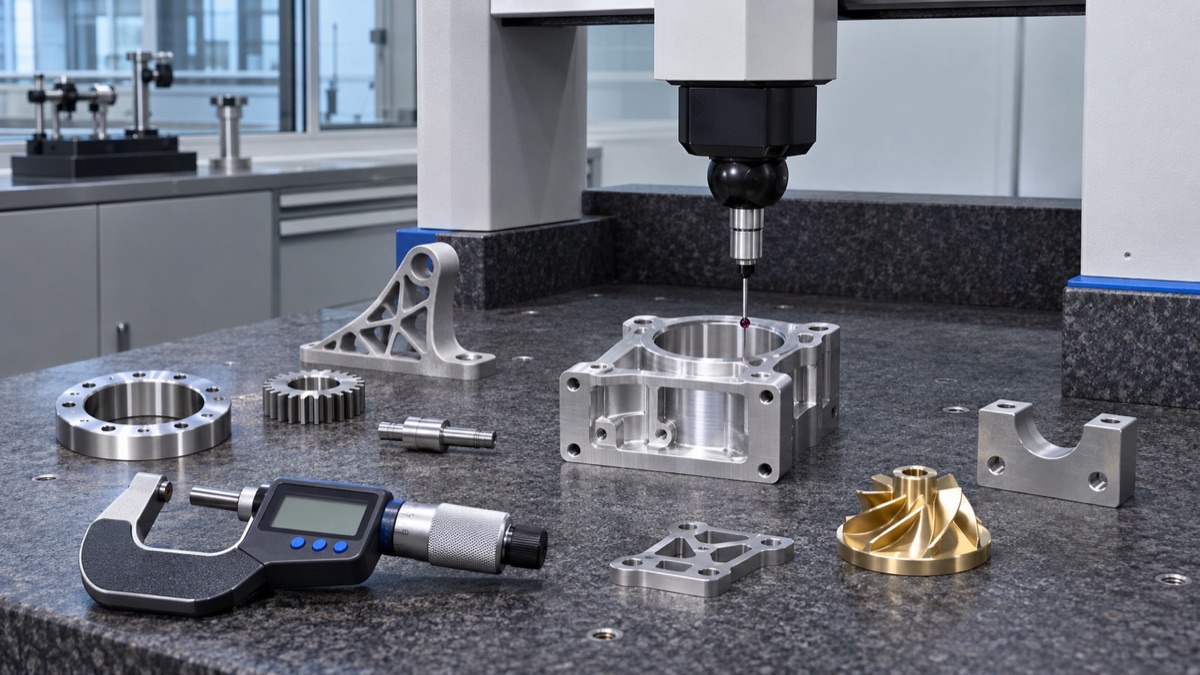
CMM and measuring tools detect key dimensions of small batches of precision parts.
Do not apply one general tolerance to every feature
In the same drawing, there are often only some dimensions that really affect the function. clamping all dimensions to high precision not only increases costs, but also makes process and inspection lose focus. A better approach is to identify assembly datums, mating holes, sealing surfaces, motion interfaces and appearance-sensitive areas, and provide corresponding tolerance, roughness or geometric-tolerance requirements for different areas.
Specify delivery and acceptance documents up front
When requesting a quotation, you should also state the expected delivery date, whether batches are allowed, whether first-article confirmation is required, and whether material certification and dimensional reports are required. For multi-material, multi-process parts, the rhythm of material arrival, heat treatment, surface treatment and inspection will all affect the delivery time. OEMach recommends providing complete information at once so that the quotation can correspond to the actual process, instead of first quoting based on the lowest assumption and then adding item by item at a later stage.
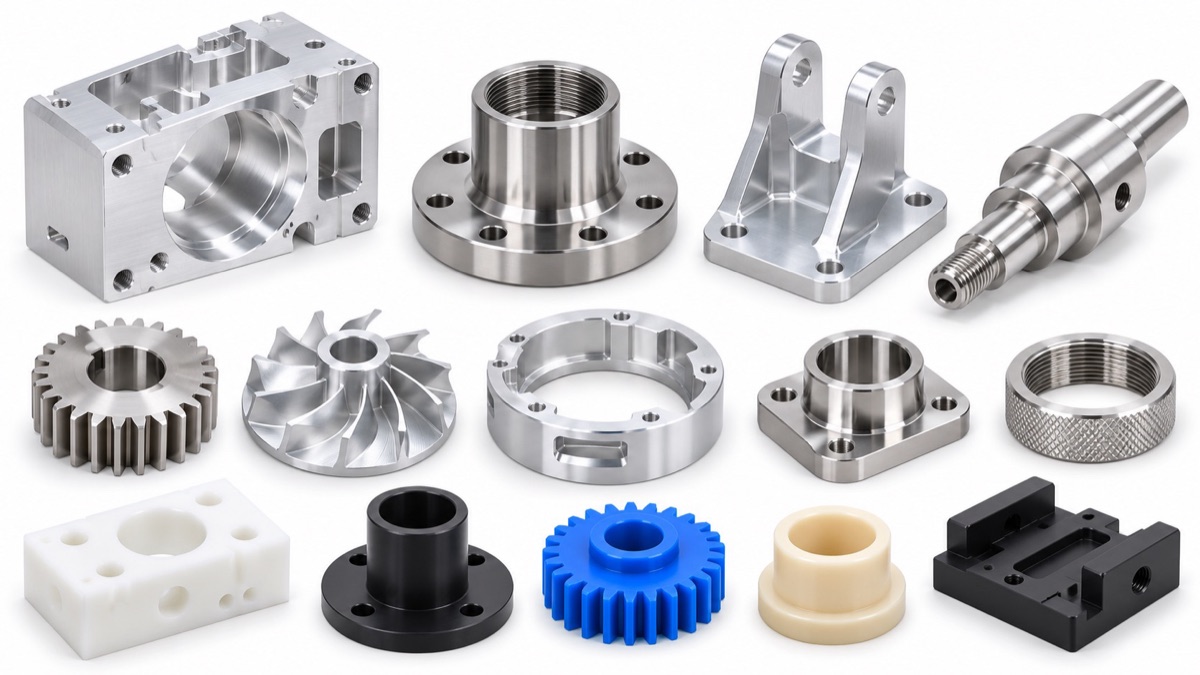
Complete inspection of aluminum alloy, stainless steel and engineering plastic parts.
Summary
What really needs to be compared in small batch outsourcing quotations is whether the process boundaries are fully understood. The clearer the information, the more controllable the quotation, delivery and acceptance. OEMach can assist in completing DFM review and confirmation of small batch machining plans for precision parts based on drawings and coordination information.
FAQ
Can a quotation be prepared without a 3D model?
The initial evaluation can be based on two-dimensional drawings, but providing three-dimensional models for complex deep cavity, multi-curved or multi-face parts can reduce understanding deviations.
Does a one-off or small batch need an inspection report?
Depends on project requirements. For critical assembly dimensions or R&D verification parts, reports often help identify the source of the problem.
Can the machining supplier purchase the material?
Usually yes, but the grade, status, certification and whether substitution is allowed should be clearly stated to avoid changes after purchase.
Why does surface treatment affect the quotation?
Anodizing, plating, blasting, and masking introduce outsourcing, dimensional control, turnaround, and inspection requirements.
How can repeated price increases be avoided?
When enquiring, please provide all drawings, models, materials, quantities, key dimensions, inspection, surface, packaging and delivery requirements at once.
Ready to get a quote for your CNC machined parts?
Submit your engineering drawings to qiancj@oemach.com. We support prototype sampling and small-batch production with strict tolerance control.