
The pressing surface, positioning block and insulator interface of the lithium battery module assembly fixture will jointly affect the loading cycle, product protection and model change efficiency. When OEMach evaluates new energy tooling machining, it will first distinguish the functional boundaries of positioning, clamping, insulation and quick replacement.
The structure of the module assembly jig often undertakes the tasks of positioning, pressing, protection and mold change at the same time. The pressing surface directly affects the force distribution, the positioning block determines the module placement, and the insulating piece isolates sensitive areas. If they are only regarded as independent aluminum parts and plastic parts, problems such as pressure plate interference, positioning deviation, insulation parts crushing, or more operating steps may easily occur after changing models.
Key project confirmation items
| functional area | Confirmation before machining and design | Risks when changing models |
|---|---|---|
| pressing surface | Force point, pressing direction, stroke and contact material | The local pressure is too high or the compression is unstable |
| positioning block | Reference, rib height, insertion direction and adjustment allowance | Module placement offset |
| Insulation interface | Materials, fixing methods, avoidance and convenience of replacement | Insulation parts are damaged or installed backwards |
| Quick change module | Shared datums, positioning pins and error-proofing structures | repeat positioning fails after model change |
Locating and clamping must have clearly separated functions
The positioning block and positioning pin are responsible for controlling the position of the workpiece, and the pressing surface and clamping mechanism are responsible for applying force. The two should not be mixed. Before machining, confirm the module's entry and exit direction, support position, pressing stroke, allowable stress area and operating space. For the replacement of multiple models on the same platform, it is also necessary to clarify which modules are fixed and which positioning blocks, pressure plates or insulation parts need to be quickly replaced.
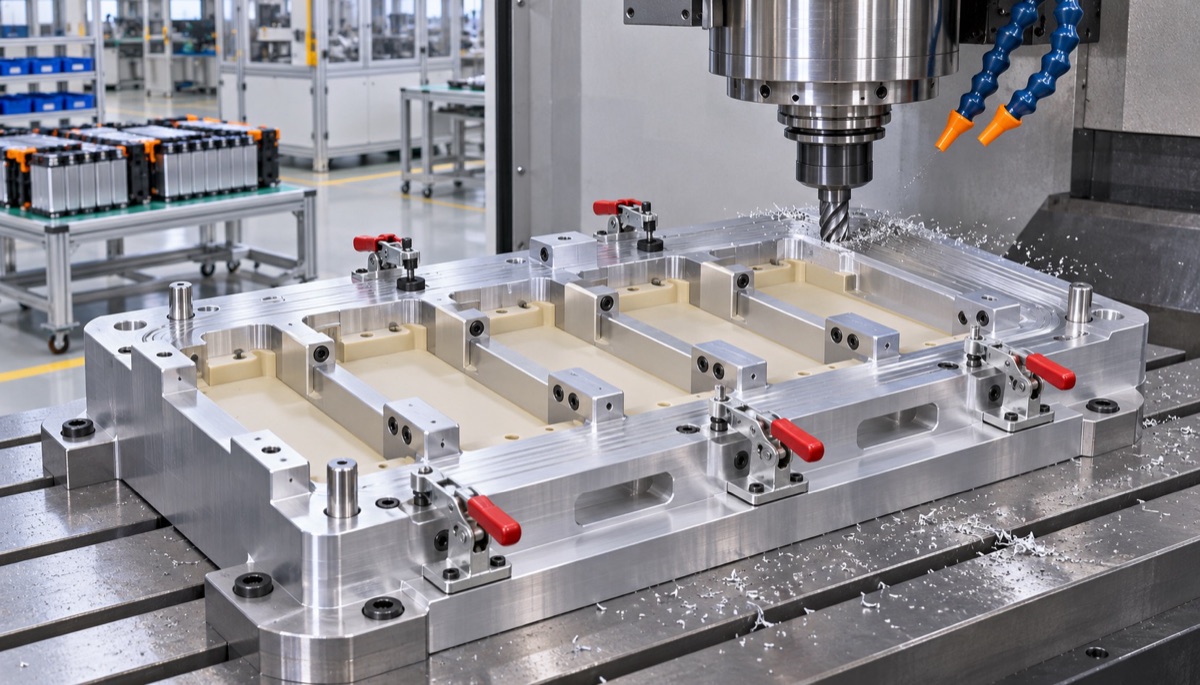
CNC machining of lithium battery module assembly jig containing compression structure and insulating slots.
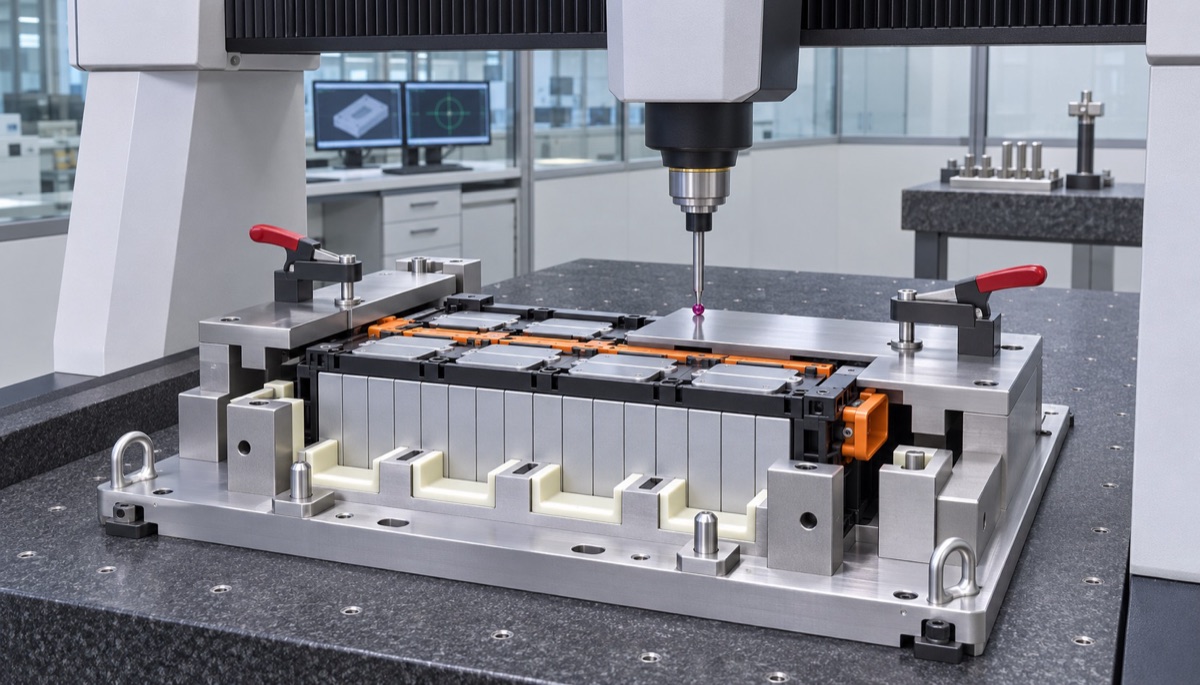
The pressing surface, positioning block and insulating interface of the three-coordinate inspection module assembly jig.
The interface of insulating parts needs to look at the assembly and not just the appearance.
Insulation parts are usually made of engineering plastics or composite materials, and their thermal expansion, compression rebound and assembly methods are different from metal parts. The interface design needs to reserve a reasonable gap to avoid directly applying the tight fit logic of metal parts. If the insulation is located in the pressing area, the contact area, edge chamfering and replacement cycle of the pressing plate should also be specified.
Verify the common datum before adding changeover modules
For small batch tooling, it is recommended to first verify the basic base plate, main positioning block, pressing mechanism and a set of insulation parts, and then expand more replacement modules. The first article should use real modules or equivalent parts to check the placement, compression, plugging and unplugging and error-proofing actions. OEMach recommends providing the changeover frequency, target cycle time and outsourced fixture model in advance to make the process and delivery plan closer to the site.
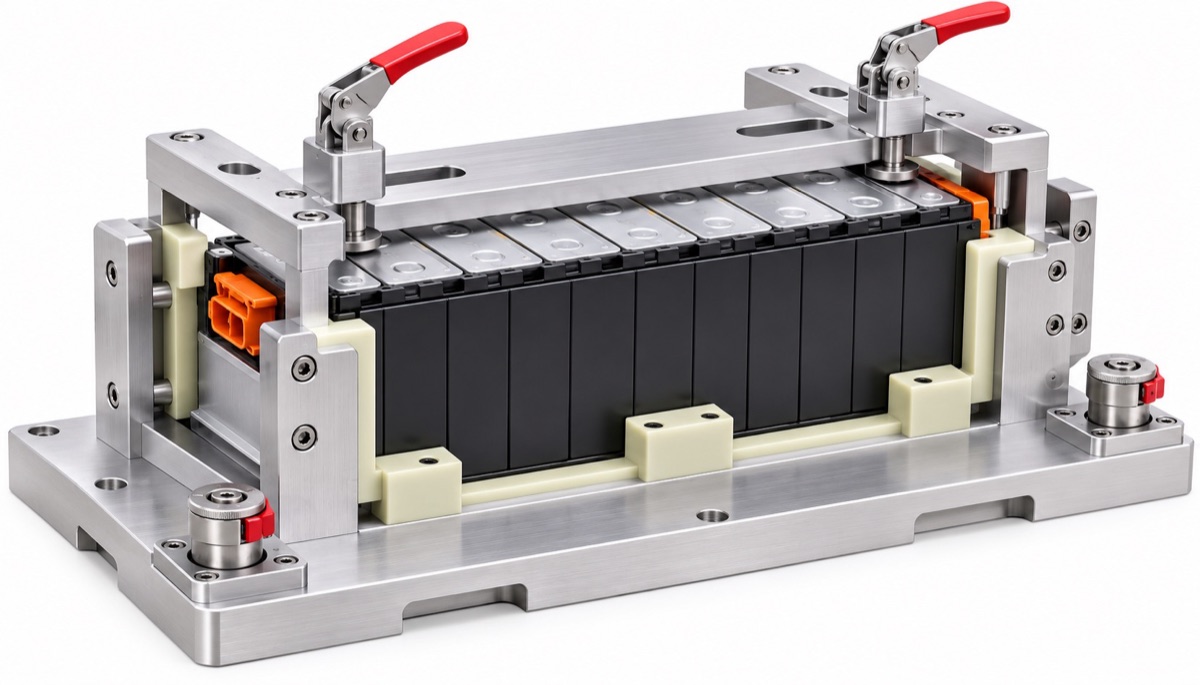
The assembled lithium battery module clamping jig and quick-change positioning structure are completed.
Summary
The efficiency of changing the lithium battery module assembly fixture comes from the clear division of labor in positioning, pressing and insulating interfaces. Verifying the common benchmarks and real actions first before expanding the module can reduce subsequent modifications.
FAQ
Why do lithium battery module fixtures need to be insulated?
Insulating parts are used to isolate sensitive contact areas and protect surfaces. Their materials and interface forms should be confirmed based on the use environment.
Is the bigger the pressing surface the better?
Not necessarily. It needs to be designed around the actual stress area, workpiece rigidity and operating space. Excessive size may increase interference.
Can different models share a set of fixtures?
A shared base plate can be used to speed up module replacement, but the shared benchmark and error-proofing and positioning methods for each model must be clearly defined.
Are the positioning blocks made of aluminum or plastic?
Depends on force, wear resistance, insulation and contact protection requirements, selection cannot be based on cost alone.
What should be checked in first article verification?
The module placement, compression state, insulation fitting, plug-in and plug-in replacement, and the error-proofing effect of key interfaces should be verified.
Ready to get a quote for your CNC machined parts?
Submit your engineering drawings to qiancj@oemach.com. We support prototype sampling and small-batch production with strict tolerance control.