
It is not uncommon for large price differences to appear on the same drawing, because the quotation is not a geometric volume calculation, but the supplier's comprehensive estimate of materials, processes, production capacity, testing, outsourcing, delivery and quality risks.
Before comparing prices, unify input and delivery boundaries, and then compare process routes and evidence; the lowest price may miss items, and the highest price does not automatically equal the best capability, which must ultimately be verified by trial orders and delivery data. The specific process still needs to be combined with controlled drawings and 3D models, materials and quantities, blanks and procurement, programming tooling, machine tool routes, tool hours, inspection and data, outsourcing, packaging delivery, quality risks and confirmation of quotation assumptions.
Process Control Checklist
| FAQ | main reason | control action | Evidence of acceptance |
|---|---|---|---|
| Quotations are only based on volume and machine hours. | Tooling, turning, testing, outsourcing and quality risks are not identified | Request description of process route, key assumptions and delivery scope | Itemized quotation, DFM list and technical clarification record |
| Low price with subsequent additional fees | Drawing versions, material status, inspection data, or surface treatment boundaries are not frozen | A unified version of the inquiry package with inclusions, exclusions and change pricing rules listed | Controlled inputs, quote terms, change recording and final settlement |
| Does high price mean greater ability? | The price may include equipment routing, capacity occupancy, risk preparation, or it may just be the efficiency difference | Validate process, first article, batch reproduction and delivery with representative test orders | First article reports, process evidence, delivery performance and exception closure |
Quotes are first affected by input completeness
When there are only drawings but no three-dimensional model, material status, quantity, key functions, surface treatment, inspection data, packaging and delivery date, the supplier will make additional assumptions on its own. Some quotes are based on conventional unindicated tolerances, some are based on the strictest dimensions; some include material certificates and full CMM inspections, and some only do routine random inspections. Inconsistent versions or conflicts between 2D and 3D are also considered risks. To make quotes comparable, RFQ packages must have unified documentation, versions, and Q&A cutoff points.
Material costs are more than just finished product weight
Material cost includes grade, status, specifications, minimum purchase quantity, sawing loss, surplus, certificates, transportation and inventory risks. Small batches of non-standard parts often need to be cut from a whole bar or a whole plate, and the weight of the finished product only accounts for a part of the blank. The procurement channels and traceability requirements for titanium alloy, Invar alloy, aviation aluminum, PEEK and other materials are also different. If one company uses off-the-shelf materials and another company needs to purchase new whole materials, the quotation basis will be obviously different, but the material substitution must be approved by the customer.
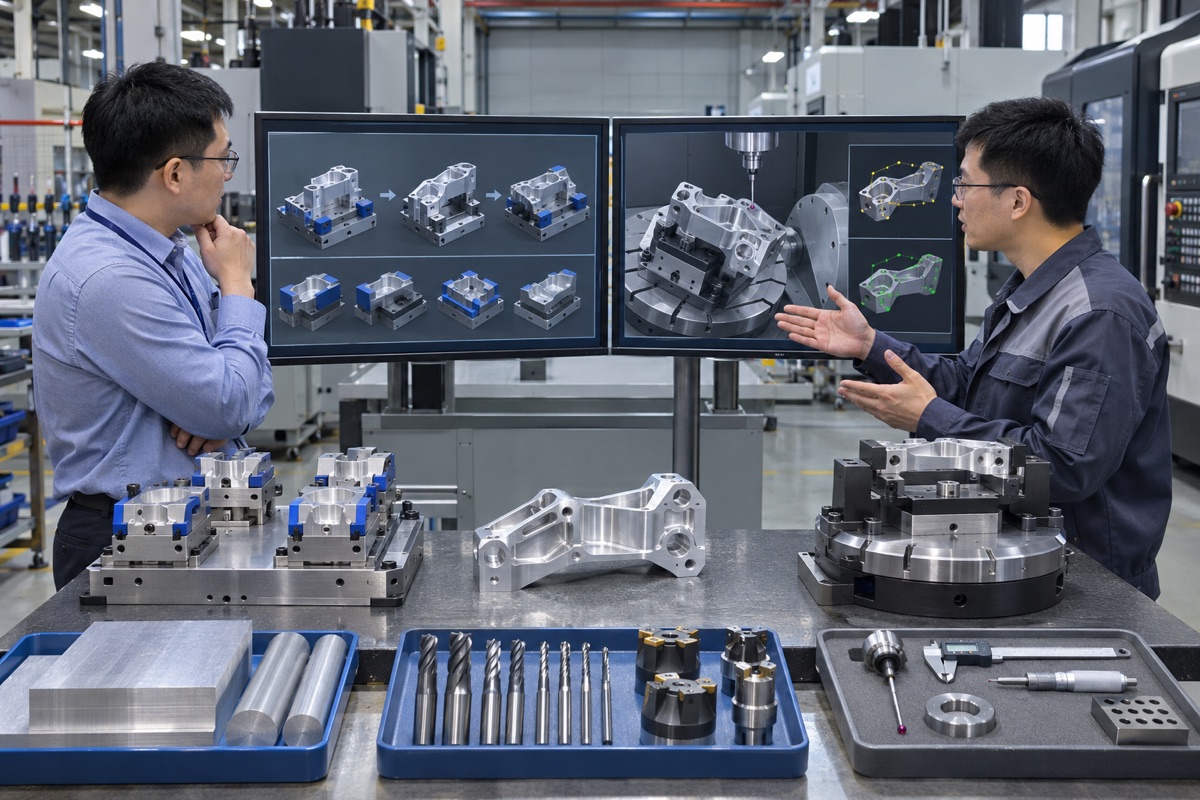
The machining quotation is a comprehensive estimate of the process route and delivery responsibilities.
The process route determines the main manufacturing cost
The same part may use three-axis multiple clamping, four-axis or five-axis, turning and milling, grinding, wire cutting or special tooling. Equipment rates vary, as do programming, alignment, turning and on-machine time. High-end equipment may reduce clamping and reduce the risk of benchmark conversion, and may also result in higher rates due to tight production capacity; the ordinary equipment route may seem cheap, but may increase tooling, man-hours and retesting. NIST manufacturing research points out that cost estimates are closely related to process planning, and quotation differences should be explained back to the specific route.
Inspection, outsourcing and documentation are often underestimated
Critical geometries, tolerance boundaries, and complex surfaces may require CMM programs, specialized gages, constant temperature stabilization, repeated measurements, or outside laboratories. Heat treatment, anodizing, electroplating, passivation, grinding and clean packaging also involve outsourcing minimum charges, logistics, protection and return to factory re-inspection. If the customer requires material certification, machining certificates, full-scale reports, FAI or process traceability, these should be included in the quotation. When not specified, different vendors will use different default ranges.
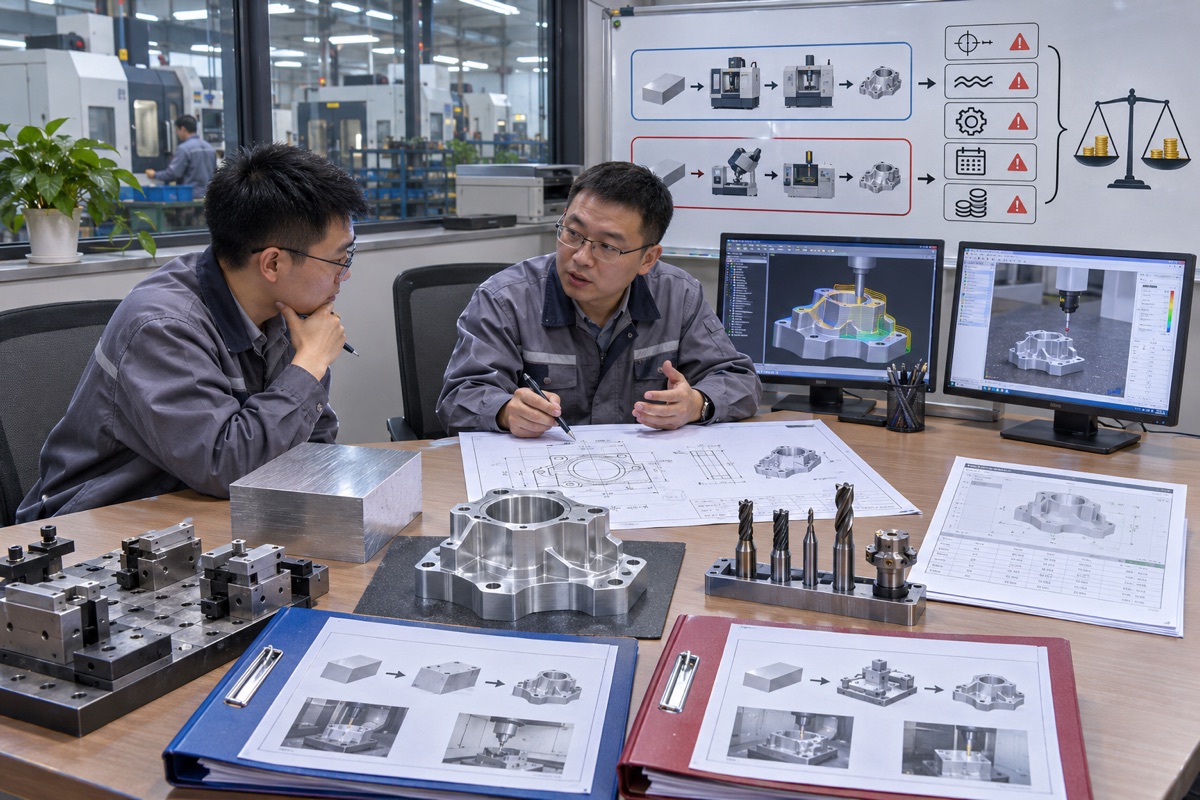
Equipment rates are judged along with clamping quantities, risk and total labor hours.
Production capacity, delivery time and quality risks also have prices
Urgent order placement interrupts the original production schedule and takes up programming, equipment, inspection, and project management resources; ultra-tight tolerances, thin walls, deep cavities, or new materials increase trial cutting, tooling, rework, and scrap risks. Some factories include risk preparation into the quotation, some quote a low price first and then add it through changes, and some are more efficient due to similar experience and mature tooling. System certificates, equipment quantities, and sales commitments alone cannot justify the price, and project-level workmanship and evidence still have to be looked at.
Establish comparable quotes and responsibility boundaries
OEMach recommends using a unified inquiry list and requires the quotation to indicate materials, quantity, process assumptions, testing, outsourcing, delivery date, tax, validity period and exclusions. When the price difference is large, technical clarification should be done first, and then representative first articles or small batches should be used for verification. This article does not provide a unified unit price, machine-time rate or "reasonable spread" ratio; the real price will change with the market, production capacity, structure and quality responsibility.
OEMach project recommendations
OEMach recommends asking suppliers to submit comparable quotation boundaries: material status, quantity, process route, key tooling, inspection items, outsourcing, delivery time, tax and transportation, and pending conditions. Only when the input and delivery scopes are the same, the unit price will be meaningful for comparison; when the quotations are significantly different, assumptions and evidence should be compared first, rather than directly determining who is more expensive. When drawing process evaluation is required, materials, tolerances, quantities and delivery plans can be provided to OEMach.
Summary
Before comparing prices, unify input and delivery boundaries, and then compare process routes and evidence; the lowest price may miss items, and the highest price does not automatically equal the best capability, which must ultimately be verified by trial orders and delivery data. If drawing process evaluation is required, it is recommended to provide material grade, heat treatment and surface treatment requirements, key tolerances, sample quantity and planned batch size in order to determine the clamping, machining and inspection plan.
FAQ
Is the supplier with the lowest price the most risky?
Not necessarily. The other party may have ready goods, mature tooling or higher efficiency; it may also miss the scope and needs to be judged through sub-items and technical clarification.
Will the more advanced the equipment, the higher the price?
Not necessarily. The rate may be higher, but the overall cost may go down with less setup, labor hours, and rework.
How to quickly determine whether two quotes are comparable?
First check the material status, quantity, version, inspection, surface treatment, information, tax and delivery, and then compare the process route and exclusions.
Ready to get a quote for your CNC machined parts?
Submit your engineering drawings to qiancj@oemach.com. We support prototype sampling and small-batch production with strict tolerance control.