
Continuous 24-hour production for urgent custom parts requires a predefined shift and quality-control system. It does not mean that the same batch of people work continuously, nor does it make a 24-hour delivery commitment for all drawings.
The real guarantee comes from freezing input and resources before start-up, maintaining handover, first article, independent review and shutdown conditions during production, and incorporating outsourcing, re-inspection, packaging and logistics into the same time plan. The specific process still needs to be confirmed by combining frozen drawings, material spot, equipment and personnel, procedures and tooling, tool measuring tools, first article release, outsourcing and logistics, shift handover, fatigue risk and shutdown conditions.
Process Control Checklist
| FAQ | main reason | control action | Evidence of acceptance |
|---|---|---|---|
| After turning on the device, I found that the input was incomplete. | The drawings have not been frozen, the materials or tools have not arrived, and the inspection methods have not been confirmed. | Set up an expedited feasibility gate, and unsatisfied items are not allowed to enter continuous production. | Freeze versions, complete lists, risk approvals and scheduling records |
| Night shift output increases but errors are concentrated | Unclear handovers, fatigue, changes in procedures or compensation not reviewed | Shift configuration, standard handover, double review of critical changes and first article/shift quality gate | Handover records, program versions, inspection and personnel time records |
| Promised to be 24 hours a day but stuck in outsourcing or logistics | Mistaking machining time for total lead time and ignoring handling, re-inspection and transportation | Split internal machining, outsourcing, inspection, packaging and logistics clocks and confirm each item | Node planning, outsourcing confirmation, release time and logistics receipt |
First distinguish between continuous production and 24-hour delivery
"24-hour continuous work" usually means that equipment and positions are continuously advanced in shifts. The delivery of the entire order still depends on materials, programming, tooling, machining time, inspection, surface treatment, packaging and logistics. Complex thin-walled, multi-process, heat treated or outsourced parts cannot be promised based on machine tool cutting time alone. The project party should make it clear whether it is the first article within 24 hours, completion of a certain process, parts ready for trial assembly, or final full-document delivery. Different goals correspond to different production schedules and risks.
Rush orders must go through the feasibility gate
Before accepting an order, check whether the controlled drawings and 3D are frozen, whether the material grade and specifications are in stock, whether the machine tool stroke matches the spindle, whether the tools, fixtures, programs, measuring tools and inspection personnel are all available, and whether outsourcing and logistics have been confirmed. Also identify design questions, special processes, long-run tooling, and customer approval nodes. Unsatisfied items should be listed as conditions, alternatives or blocked items, and cannot be turned on first and then entered again.
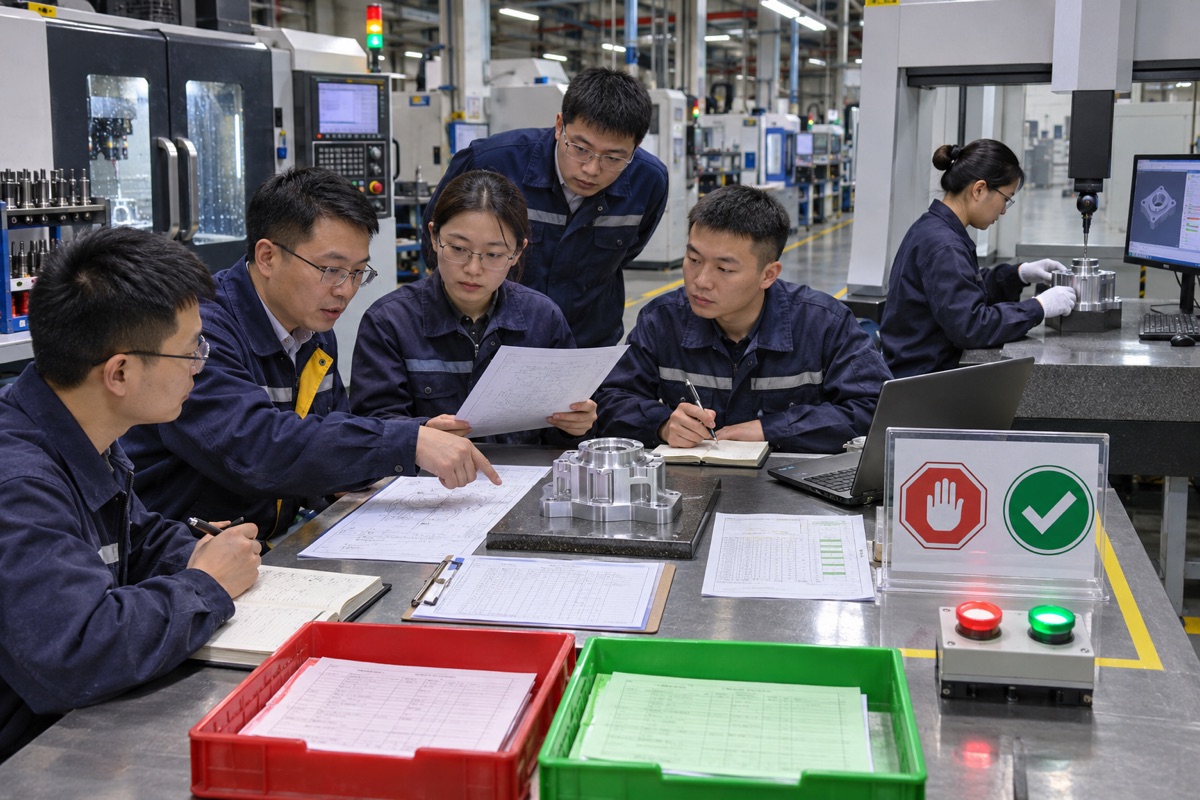
Continuous rush production relies on personnel rotation, resource allocation and on-site coordination.
Change serial preparation to controlled parallelism
After the version is frozen, material preparation, CAM, tooling preparation, tool presetting, inspection procedures and packaging planning can be carried out in parallel, but each task must use the same version. High-risk tool paths should be simulated or trial-cut, tooling and measuring tools should be verified in advance, and the inspection plan should determine the first article and release person. Parallelism is not about skipping steps, but about exposing interfaces in advance and setting up convergence quality gates to prevent errors from spreading simultaneously.
Shift handover and quality gate cannot be omitted
Continuous production should be rotated by different teams. The handover content includes drawings and program versions, machine tool coordinates, tool life, compensation, completed quantity, work-in-progress status, exceptions and the next inspection point. After the first article, shift change, tool change, re-clamping or program change, the risk setting should be reviewed. Key procedures and deviation handling should be confirmed by independent personnel. The night shift must also have process and inspection support that matches the day shift, and cannot just leave operating positions.
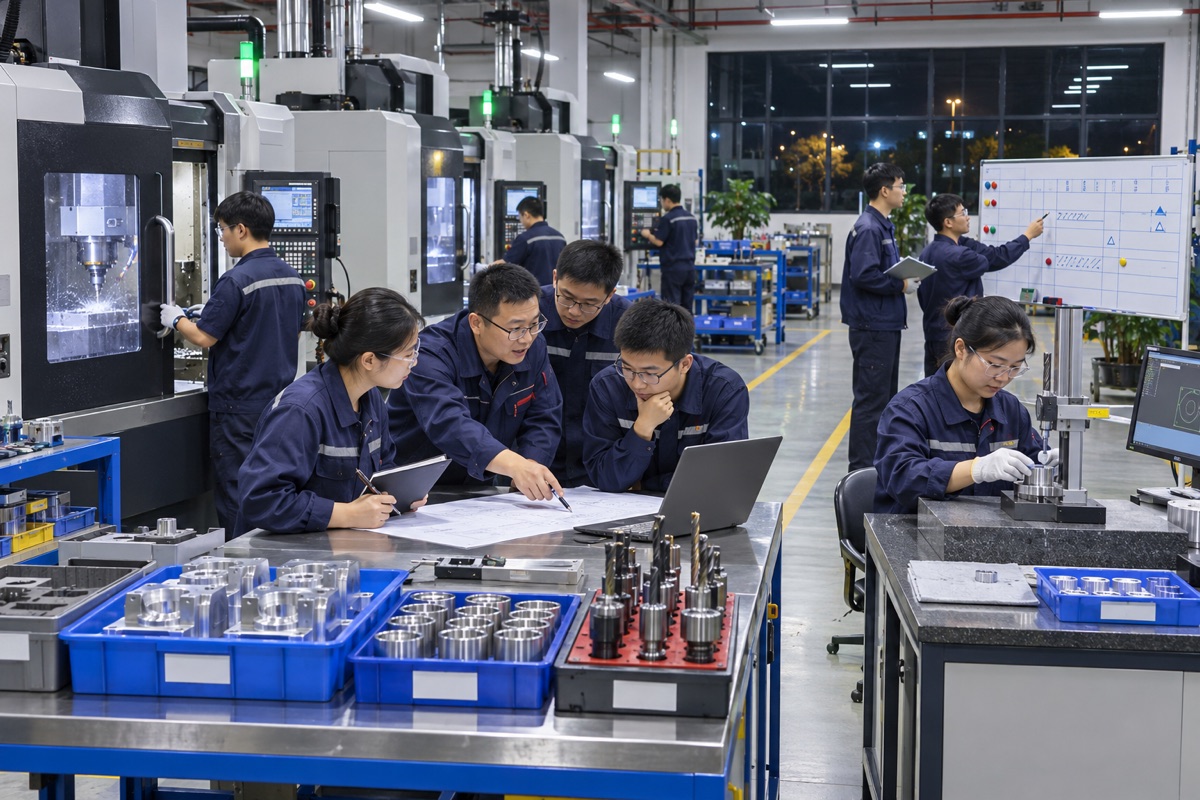
Standard handover and quality gate are the core guarantees for expedited delivery.
Fatigue and anomalies must trigger shutdown conditions
OSHA and NIOSH data indicate that night shifts, long hours and fatigue increase the risk of attention deficit, errors and injuries. Rush plans should use legal shifts, breaks, and staffing, and adhere to local labor, safety, and equipment requirements. When drawings conflict, the first article is not passed, equipment alarms, measuring tools fail, tool abnormalities, personnel are unwell or traceability is interrupted, the process should be suspended and upgraded. Rather than slowing down delivery, quality gates prevent entire batches from being scrapped.
Write down final delivery and delivery commitments clearly
The node plan should be broken down into materials, first article, batch size, outsourcing, return to factory for re-inspection, packaging, shipping and receipt, and the input conditions for each commitment should be marked. OEMach can evaluate emergency machining based on specific drawings and current resources, but will not express "24-hour continuous production" as an unconditional delivery guarantee for all projects. The final accuracy, quantity, information and time are subject to the confirmed order and release records.
OEMach project recommendations
OEMach recommends defining "24-hour continuous rush work" as a shift production mechanism after feasibility gate review, rather than the same group of personnel working continuously, nor unconditional 24-hour delivery. Only when the drawings, materials, equipment, tooling, testing and outsourcing are all met will the expedited production schedule be entered; when any version, first article, equipment or personnel risks trigger shutdown conditions, they should be dealt with first and then restored. When drawing process evaluation is required, materials, tolerances, quantities and delivery plans can be provided to OEMach.
Summary
The real guarantee comes from freezing input and resources before start-up, maintaining handover, first article, independent review and shutdown conditions during production, and incorporating outsourcing, re-inspection, packaging and logistics into the same time plan. If drawing process evaluation is required, it is recommended to provide material grade, heat treatment and surface treatment requirements, key tolerances, sample quantity and planned batch size in order to determine the clamping, machining and inspection plan.
FAQ
Does 24-hour continuous rush work mean delivery within 24 hours?
Not equal to. Continuous production is a production scheduling method, and the total delivery time also includes preparation, inspection, outsourcing, packaging and logistics.
When urgent, can we produce first and then confirm the drawings?
High risk. Manufacturing inputs should be frozen first, and pending issues must be conditionalized or approved, otherwise errors will quickly amplify in continuous production.
Can night shift inspection items be reduced to speed up the process?
It should not be reduced without authorization. First article, inspection and release should be set up according to the approved inspection plan, and the availability of corresponding personnel and measuring tools should be ensured.
Ready to get a quote for your CNC machined parts?
Submit your engineering drawings to qiancj@oemach.com. We support prototype sampling and small-batch production with strict tolerance control.