
Surface treatment is not a one-size-fits-all menu for all materials. Anodizing, electroplating, passivation and sandblasting each serve different substrates and targets, and will change appearance, size, friction, corrosion resistance and subsequent assembly.
The core of the one-stop solution is a window of responsibility and a traceable process chain: from the base material, pre-treatment, machining allowance, masking hanging points to post-machining re-inspection, everything must be defined in advance. The specific process still needs to be combined with the base material grade, use environment, appearance objectives, film layer or coating system, size increment, masking and hanging points, cleaning requirements, outsourcing transfer and post-machining re-inspection and confirmation.
Process Control Checklist
| FAQ | main reason | control action | Evidence of acceptance |
|---|---|---|---|
| Fit or thread abnormalities after machining | Does not take into account film/coating increments, masking, pre-treatment or hanging points | Define pre-process dimensions, protection zones, plug gauges or fit-out requirements in drawings and routings | Size, thickness, masking and trial fitting records before and after treatment |
| Inconsistent color or gloss within the same batch | Differences in substrate status, sand blasting, pre-treatment, hanger position or bath fluid batch | Unify materials and pre-machining, use limited samples and batch control and record the number of reworks | Color difference/gloss, appearance judgment, batch and process certificate |
| Risk of corrosion or embrittlement after outsourcing | Mismatch in cleaning, passivation, plating system, baking or shipping protection | Specifications are selected based on materials and usage environment, and hydrogen embrittlement control is individually evaluated for high-strength steel projects. | Specification compliance, workmanship certificates, required testing and final release |
First select the process according to the base material and usage environment
Aluminum and aluminum alloys are often anodized to obtain oxide films and appearance; steel parts can choose electroplating systems such as zinc according to environment and function; stainless steel passivation is used to remove free iron contamination and promote corrosion-resistant surface conditions; sandblasting mainly changes texture, cleans or provides surface conditions for subsequent coatings. Before choosing, you need to confirm the base material grade, heat treatment, indoor and outdoor environment, chemical media, temperature, friction, conductivity, cleanliness and appearance requirements. Different processes cannot be substituted for each other based solely on color.
Anodizing needs to deal with the linkage between size and appearance
The type, thickness, seal and color of anodization affect corrosion resistance, wear resistance, insulation and appearance. The drawings should clearly define applicable specifications, color or limit samples, hole surfaces that need to be covered, hanging point allowance areas and key coordination. Holes, threads, nipples and sealing surfaces should be considered during the machining stage. ISO 7599 gives general specifications for decoration and protective anodizing of aluminum and aluminum alloys, but projects still need to be formulated and accepted based on alloy, use and supplier capabilities.
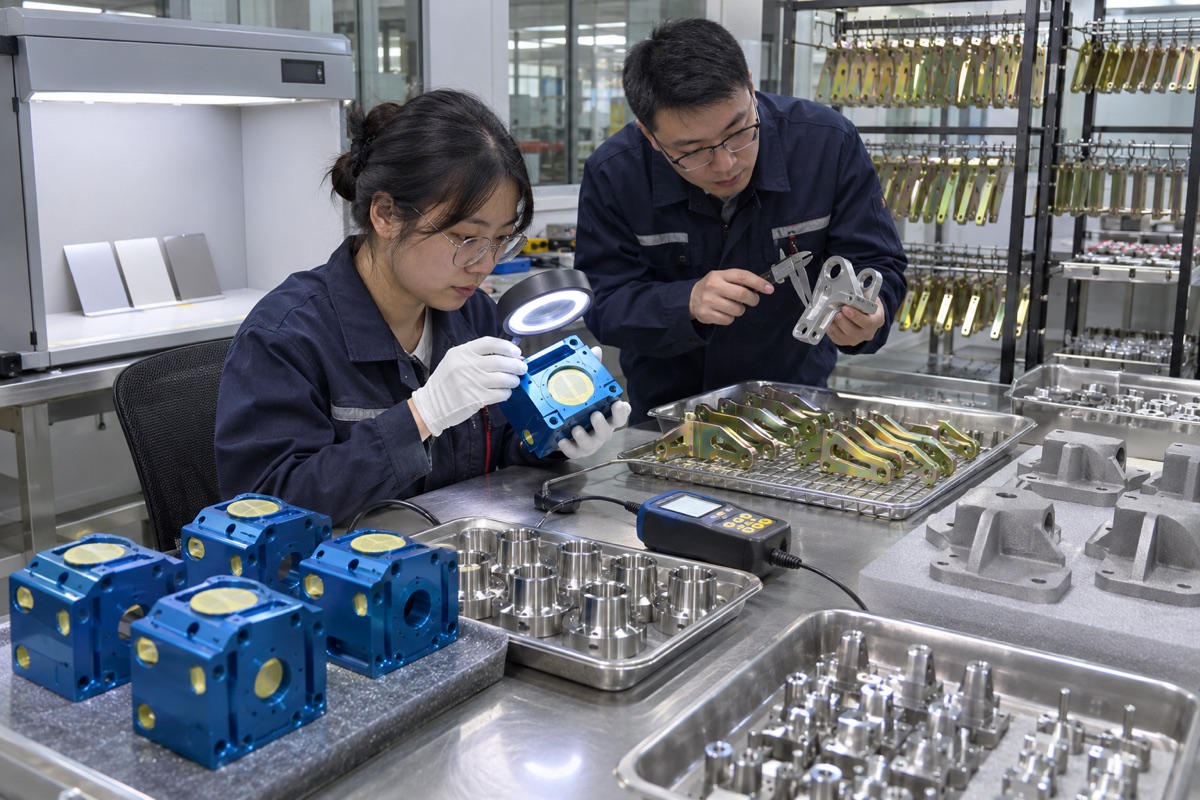
Surface treatment should be selected based on substrate, function, environment and appearance.
Pay attention to material risks in electroplating and passivation
Plating pre-treatment, plating system, thickness, post-treatment and contact points will all affect size and corrosion resistance. High-strength steel parts also need to be individually assessed for hydrogen embrittlement risks related to pickling and electroplating and prescribed control measures, and the ordinary carbon steel process cannot be directly copied. ASTM B633 involves requirements for electrodeposited zinc coatings on steel parts. Stainless steel passivation should control cleaning, iron contamination, chemicals and rinsing, and be verified according to applicable standards and customer requirements; it does not add a layer of visible paint.
Sandblasting changes the texture and exposes differences
Blasting media, particle size, pressure, distance, angle, time and repeated treatments can affect roughness, gloss and edge condition. Different batches of materials, tool lines, welding or reworked areas may show color differences after anodizing or coating. Appearance parts should first determine the sandblasting direction, acceptable limit samples, non-blastable areas and the number of reworks. Sealing surfaces, precision holes, threads and cleaning-sensitive cavities require reliable protection and protection against the ingress of residual media.
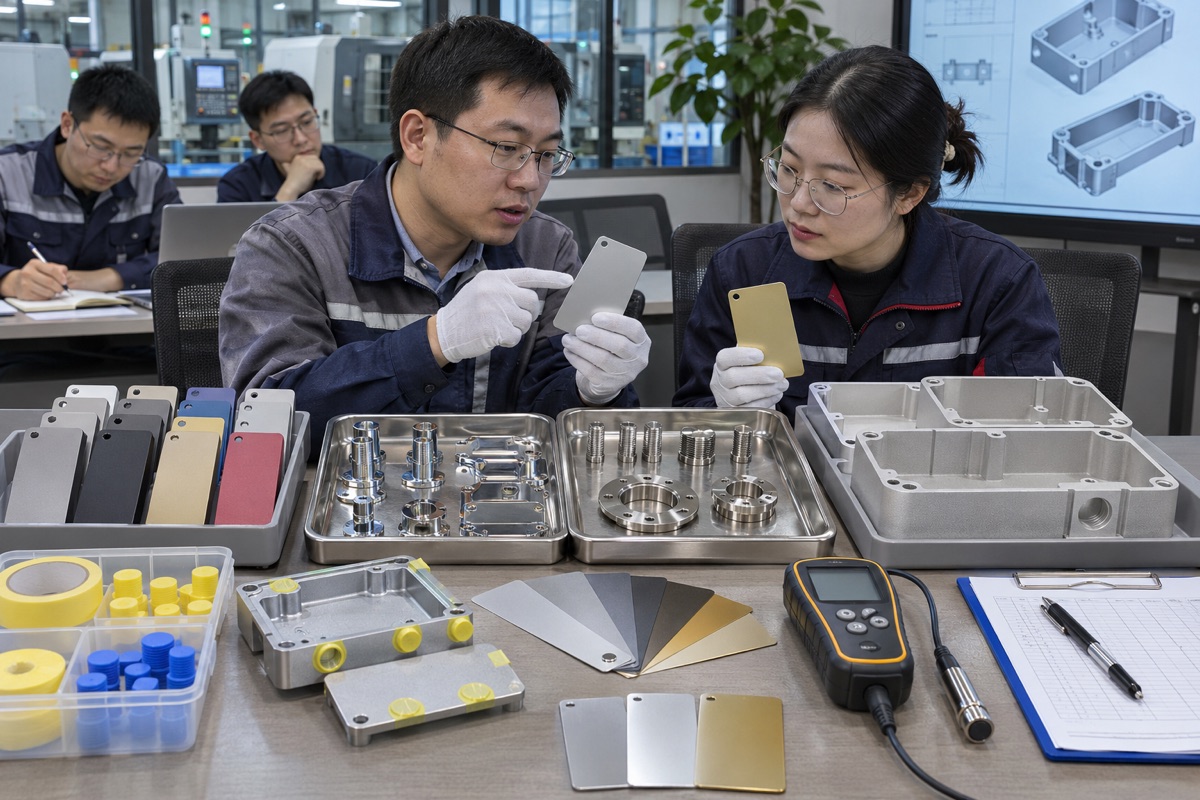
Dimensions, masking and appearance all require controlled re-inspection before and after treatment.
One-stop service requires clear in-factory and outsourcing responsibilities
The so-called one-stop shop can manage machining, deburring, cleaning, sandblasting, anodizing, electroplating, passivation, re-inspection and packaging from one project window, but it does not mean that each process must be in the same factory. The reliable model should disclose the boundaries between the factory and outsourcing, deliver the same drawing version and technical agreement, maintain part numbers and batch identification, record the quantity and status before and after machining, and have a clear responsible party complete the final release. Transparency in outsourcing is more important than verbal "all-inclusive" policies.
Process methods and quality boundaries
OEMach can coordinate the machining and post-machining routes in non-standard parts projects, and confirm the margin, masking, hanging points, appearance samples and return to the factory for re-inspection according to the drawings. Processability, color, salt spray or corrosion resistance results must be based on specific specifications, samples and supplier evidence. Disclosure should not promise uniform film thickness, color difference or durability without verification.
OEMach project recommendations
OEMach recommends that surface treatment be written into the route as a controlled process, rather than an additional action after the finished product. Drawings and procurement requirements should clarify the base material, machining specifications, color or appearance, thickness or grade, masking areas, contact points, fit and thread protection, inspection methods and rework restrictions; the boundaries between the factory and outsourcing must also be transparent. When drawing process evaluation is required, materials, tolerances, quantities and delivery plans can be provided to OEMach.
Summary
The core of the one-stop solution is a window of responsibility and a traceable process chain: from the base material, pre-treatment, machining allowance, masking hanging points to post-machining re-inspection, everything must be defined in advance. If drawing process evaluation is required, it is recommended to provide material grade, heat treatment and surface treatment requirements, key tolerances, sample quantity and planned batch size in order to determine the clamping, machining and inspection plan.
FAQ
Does the size have to increase by one film thickness after anodizing?
They cannot be simply equated. Film growth, substrate consumption, and differences between surfaces and pores all need to be verified according to specific processes, and key coordination should be managed based on post-machining requirements.
Does stainless steel need passivation?
Not necessarily. Decisions should be made based on materials, machining contamination, use environment, cleaning requirements and applicable specifications.
Does one-stop mean that all processes must be completed in the factory?
No. The key is to be clear and transparent about responsibilities, technical requirements, batch traceability, outsourcing control and final release.
Ready to get a quote for your CNC machined parts?
Submit your engineering drawings to qiancj@oemach.com. We support prototype sampling and small-batch production with strict tolerance control.