
Inquiries for automated fixtures often start with incomplete drawings, but what really determines quotation and delivery is whether the logic of positioning, clamping, inspection and changeover is clearly explained. When OEMach reviews non-standard parts machining projects, it will convert missing information into a confirmable interface and risk list.
It is a common reality in the iterative stage of R&D that the drawings of automated production line fixtures are incomplete: they may only have part sketches, old 3D models, or only indicate "clamp the product to facilitate model change". This does not mean that it is impossible to quote, but if the positioning, clamping, inspection and rhythm requirements have not been disassembled and confirmed, the supplier can only provide a plan based on assumptions. Once the interface changes later, the price, delivery date and machining route may be repeatedly adjusted.
Key project confirmation items
| missing information | Alternative confirmation methods | Impact on quotation and delivery time |
|---|---|---|
| product positioning benchmark | Provide product samples, datum plane description or assembly screenshots | Determine the positioning surface, pin hole and inspection tool plan |
| clamping logic | Explain the pneumatic, manual or electric mode and direction of action | Influence institutional space and material selection |
| Rhythm and changeover | Provides a single beat, frequency of use and number of model changes | Affects structural rigidity and easy maintenance design |
| Interface standards | Lists gas line, electrical, sensor and mounting hole information | Affects hole system, thread and purchased parts reservation |
First split the fuzzy requirements into four types of functional information
The key to a jig part is not how complete the drawing is, but whether the functional definition is executable. It is necessary to first distinguish which surfaces are responsible for product positioning, which mechanisms are responsible for clamping, which holes are used for inspection or sensor installation, and whether manual quick change or automatic type change is required in the future. Even if the size is still being adjusted, this information can be used to establish the boundaries of the machining review to avoid treating the positioning holes as ordinary mounting holes.
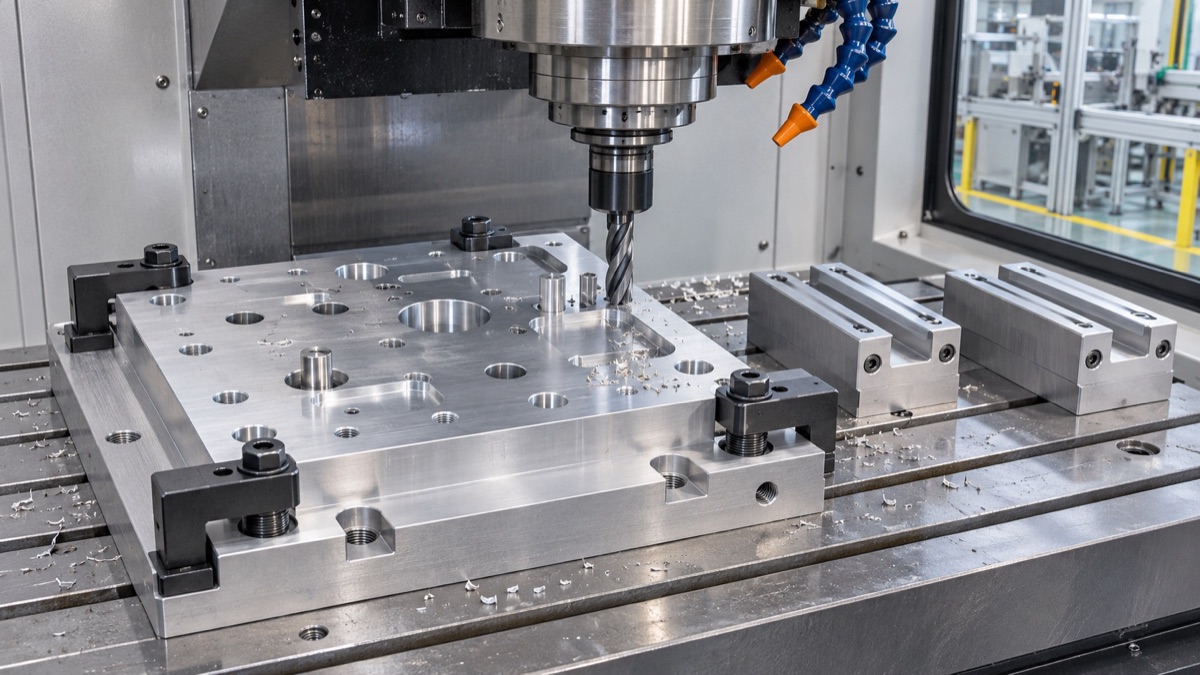
CNC machining of positioning plates, clamping seats and guide parts for automated production line fixtures.
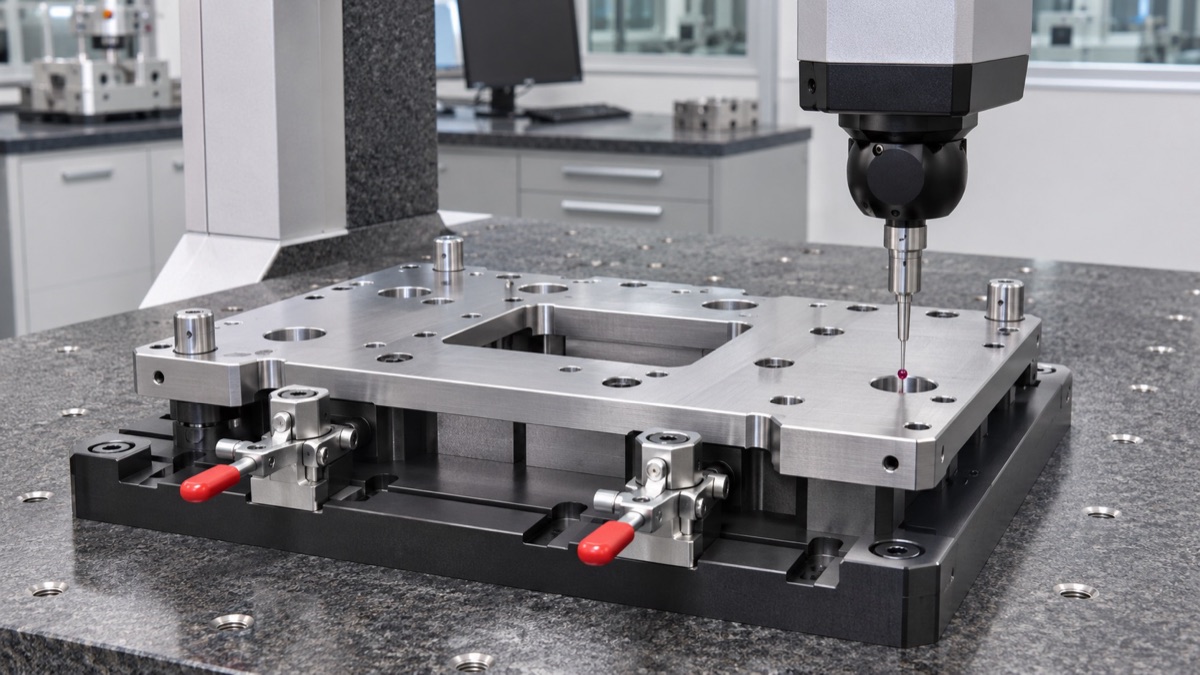
Use three-dimensional coordinates to detect the relative positions of the fixture's positioning holes, guide surfaces and clamping interfaces.
The quotation should clearly state the assumptions
When drawings are not finalized, an accurate quote does not mean giving a fixed total price. A more controllable approach is to list materials, quantities, surface treatments, critical tolerances, purchased parts, first article verification and possible changed interfaces separately, and indicate which items are based on current version assumptions. In this way, R&D can clearly see where the price difference comes from, and it is also easier to determine the scope of impact when subsequent changes are made.
first article confirmation is more important than doing it all at once
It is often found after the first round of assembly that the product placement, clamping sequence or sensor position need fine-tuning. For complex projects, the first key parts such as positioning plates, clamping seats, guides, etc. can be arranged first, and the positioning and movement verification can be carried out based on the sample parts, and then other parts or small batch machining can be carried out. OEMach recommends writing the first article acceptance point into the delivery plan to reduce the risk of intensive modifications after all parts are completed.
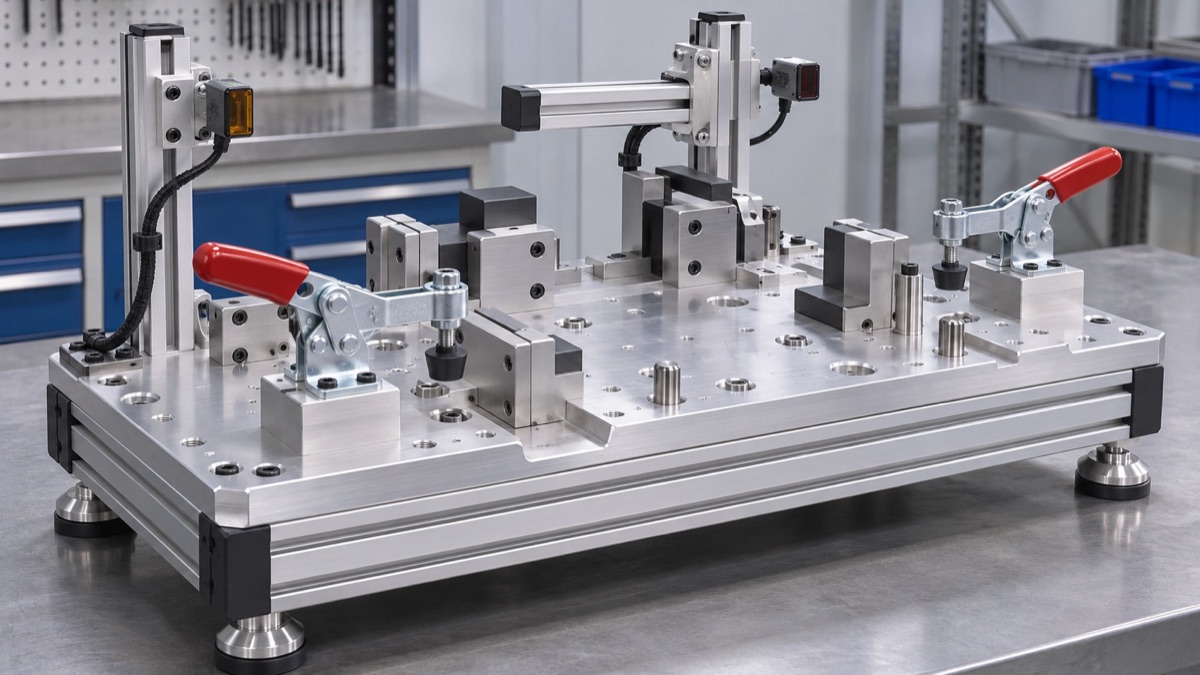
Schematic diagram of the automated production line fixture and product positioning interface after assembly is completed.
Summary
When the drawings are not completely frozen, it is more valuable to clearly explain the functions, interfaces and change boundaries than to rush to get a total price. Taking first-piece verification as the node to advance can make the machining of non-standard parts closer to the needs of the real production line.
FAQ
Can I quote first if the drawings are incomplete?
Yes, but the basis for the quotation and the items to be confirmed should be clearly stated. Providing samples, assembly screenshots, functional descriptions or old models can improve the reliability of the review.
What is the difference between fixture positioning holes and mounting holes?
Positioning holes are responsible for repeated position control, and mounting holes are mostly used for fastening; the size, fit and machining standards of the two should not be mixed.
Can key parts be made first for small batch jigs?
Yes. Verifying key interfaces such as positioning, clamping and guiding first is usually more conducive to controlling subsequent changes than doing it all at once.
What does the price difference mainly come from?
Common factors include materials, quantities, machining procedures, inspection requirements, surface treatment, purchased parts and first-piece trial assembly arrangements.
What information is needed for the acceptance of the first article of fixture?
It is recommended to prepare product samples, assembly sequence, key dimensions, action requirements, interface list and allowable adjustment range.
Ready to get a quote for your CNC machined parts?
Submit your engineering drawings to qiancj@oemach.com. We support prototype sampling and small-batch production with strict tolerance control.