
Small-batch parts for surgical robots often include structural parts, guide parts, mounting seats and positioning parts. Qualifying a single part does not mean that the assembly can be installed. When OEMach handles this type of robot parts machining needs, it will first arrange small batch machining around assembly benchmarks, interface chains and first-piece trial assembly.
The difficulty in machining surgical robot parts often lies not in whether a certain part can be produced, but in whether multiple parts can be assembled together in the order expected in the design. The joint mounting base, guides, cable fixings, and positioning plates may come from different drawings; if the datums they reference are inconsistent, even if the inspection report of each piece shows that it is qualified, the assembly may still have misaligned holes, limited travel, or unstable repeated positioning.
Key project confirmation items
| Part type | Features that need to be associated | First suggestion check |
|---|---|---|
| joint mount | Bearing bore, mounting face and stop | Fitting relationship with bearing or joint module |
| guide | Guide rail surface, hole spacing, straightness | Slider movement direction and travel space |
| Positioning plate | Pin holes, tabs and mounting surfaces | Repeatable placement with tooling or end modules |
| Cable fixings | Hole location, relief groove and fastening direction | Does the wiring harness direction interfere with moving parts? |
When assembling multiple parts, first confirm who is responsible for the main positioning
Multi-piece assembly does not mean putting parts in the same order, but allows related dimensions to be controlled around the same set of coordinates and interface logic. The R&D end should clarify the main positioning surface, main positioning hole or reference axis of the assembly, and distinguish the respective functions of the positioning pin hole, fastening hole and adjustment hole. For mechanisms that undergo swing or linear motion, the critical stroke and interference boundaries should also be given.
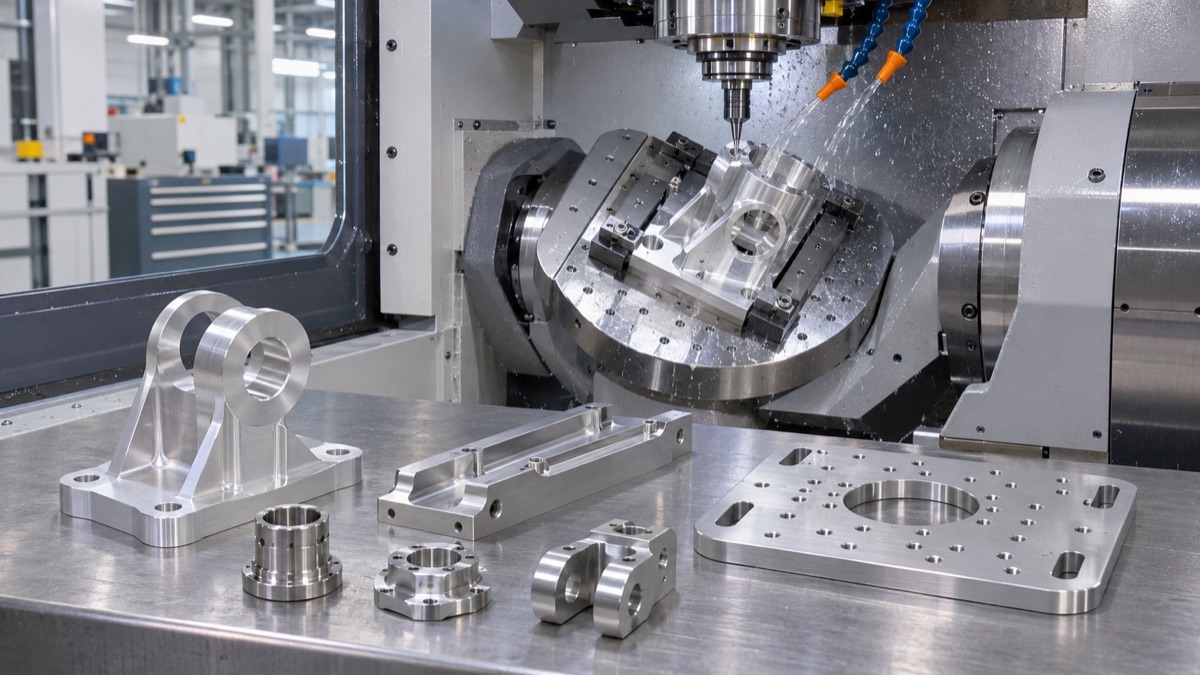
machining of small batch precision parts such as surgical robot joint mounting seats, guides and positioning plates.
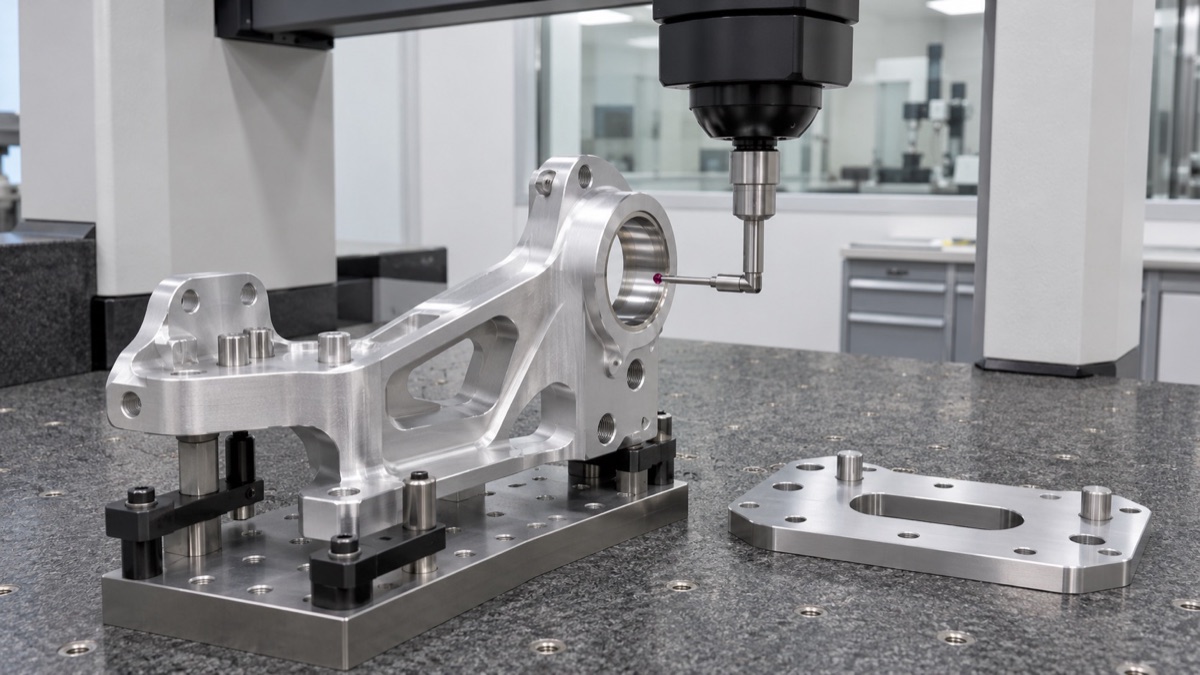
Carry out three-coordinate inspection on the hole spacing, guide rail surface and locating datum of the robot's multiple parts.
Assembly verification window must be retained for small batch delivery
The structure changes frequently during the R&D stage, and the cost of troubleshooting is usually very high if all parts are completely assembled before trial assembly. A more practical way is to prioritize key mating parts as the first item, and first verify pin hole insertion and extraction, stop fit and screw accessibility using physical parts, equivalent inspection tools or assembly models. This allows design changes to be concentrated in a small area rather than bringing the problem to the whole machine debugging stage.
Material and surface conditions also affect interface repeatability
Aluminum alloys, stainless steel, titanium alloys and engineering plastics have different rigidity, thermal expansion and surface conditions. If the positioning or guide surface still needs to bear precision fit after surface treatment, the size reservation, masking area and assembly sequence should be confirmed before machining. OEMach recommends that the material status, surface treatment range and mating parts information be stated in drawings or technical presentations at the same time, so that the machining route corresponds to the actual use conditions.
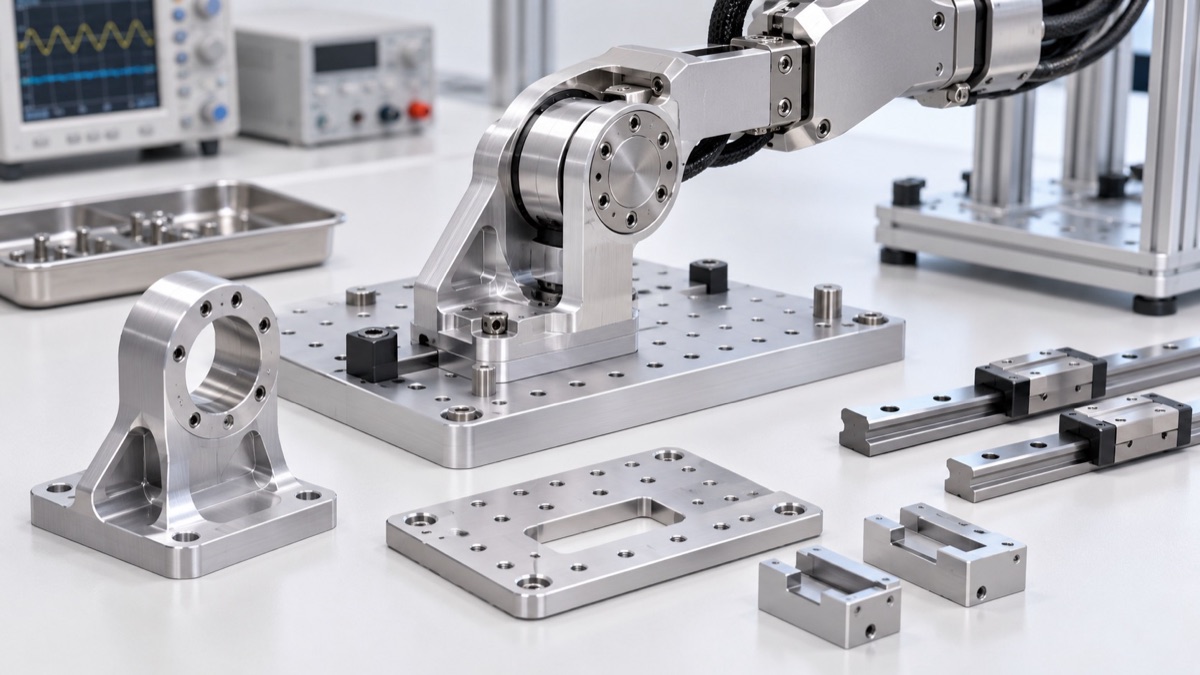
Small batch trial assembly and interface verification of surgical robot end structural parts.
Summary
For robot projects involving motion, positioning and multi-piece interfaces, the inquiry materials should also provide part drawings, final assembly relationships, critical strokes and first article verification requirements. Only by presetting this information can small batch machining truly serve subsequent assembly.
FAQ
Does the assembly of multiple pieces have to be completed by the same factory?
Not necessarily, but when it comes to shared benchmarks and motion coordination, it is usually easier to trace and coordinate by having the same party coordinate the review, inspection, or first-piece test assembly.
Do I need to provide assembly parts for the first robot parts?
When possible, it is recommended to provide physical mating parts, key interface dimensions or reliable models, so that the true assembly relationship can be verified earlier.
Can dowel holes and bolt holes replace each other?
Not recommended. The positioning pin is mainly responsible for repeated positioning, and the bolt hole is mainly responsible for tightening or adjustment. The function and tolerance logic are different.
Can the fit size still be guaranteed after surface treatment?
The treatment scope, film layer impact and areas to be masked need to be clarified in advance and included in the size chain assessment.
How to avoid batch-to-batch assembly differences for small batches of parts?
Maintaining master datums, first article records, critical dimension inspection plans and assembly verification conditions is more effective than simply expanding individual tolerances.
Ready to get a quote for your CNC machined parts?
Submit your engineering drawings to qiancj@oemach.com. We support prototype sampling and small-batch production with strict tolerance control.