
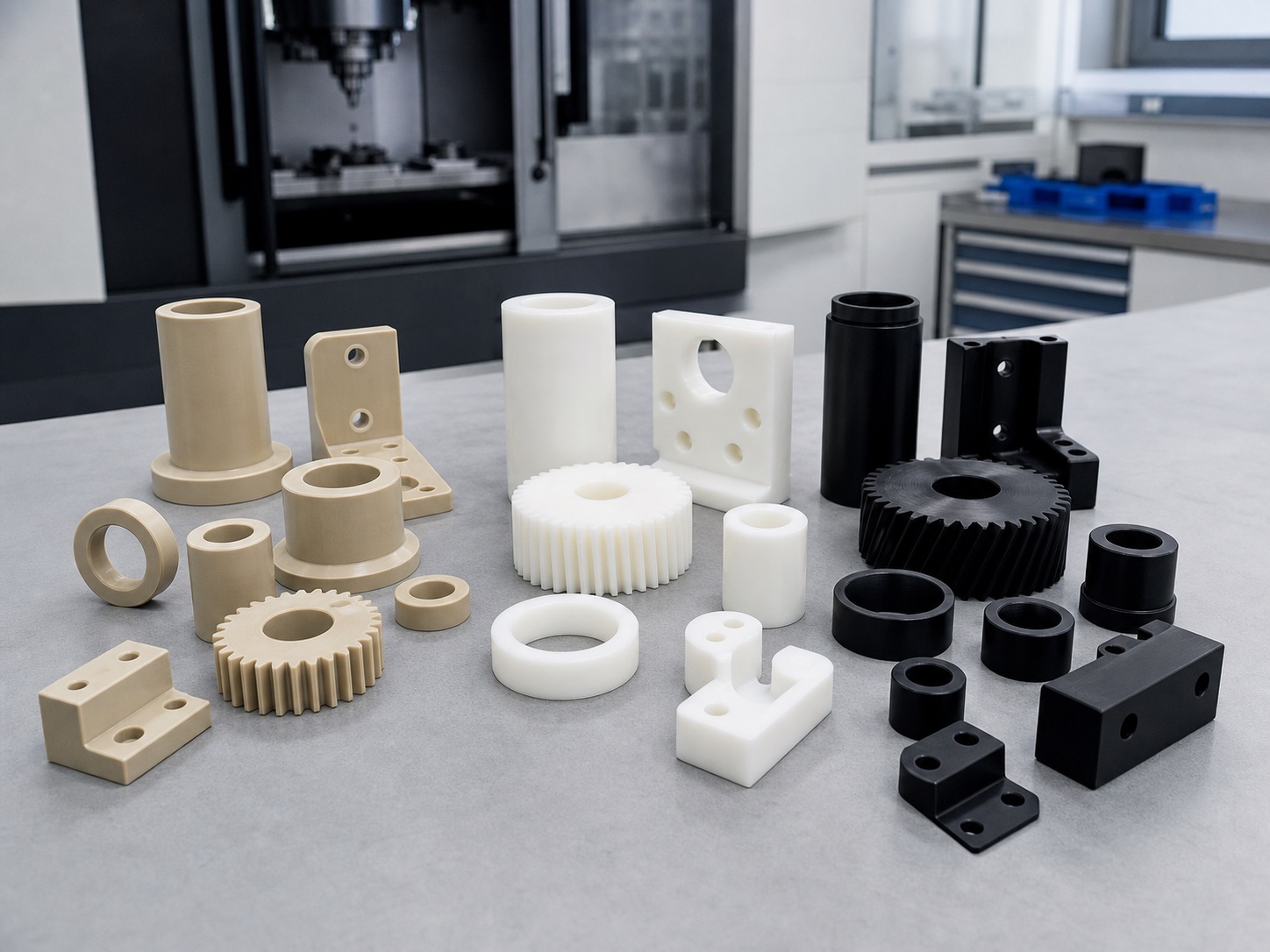
PEEK, POM and Nylon are common engineering plastics for CNC machined parts. They can reduce weight, provide electrical insulation, improve wear behavior and replace metal in selected applications.
The best plastic is not always the strongest or most expensive one. POM is often the practical choice for stable, low-friction parts. Nylon is useful for tough wear parts, but moisture absorption must be reviewed. PEEK is a premium material for high temperature, chemical resistance and demanding performance.
This guide helps buyers and engineers compare PEEK, POM and Nylon before sending a CNC machining RFQ.
Quick Answer: Choose PEEK, POM or Nylon?
Choose POM when you need good dimensional stability, low friction, good machinability and reasonable cost. It is a strong first choice for gears, bushings, rollers, spacers and precision plastic components.
Choose Nylon when toughness, impact resistance and wear behavior matter more than tight dimensional stability. Choose PEEK when temperature, chemical resistance, strength and long-term reliability justify the higher material cost.
| Decision point | POM / Acetal | Nylon | PEEK |
|---|---|---|---|
| Best overall use | Stable low-friction precision plastic parts | Tough wear parts and impact-loaded components | High-performance parts for heat, chemicals and demanding service |
| Cost priority | Usually cost-effective | Usually cost-effective | High material cost |
| Dimensional stability | Good | Affected by moisture absorption | Good in demanding conditions |
| Wear and friction | Low friction and good sliding behavior | Good wear resistance and toughness | Strong wear and high-temperature performance |
| Moisture concern | Low moisture absorption | High moisture absorption; review environment | Low concern compared with Nylon |
| Temperature priority | Moderate | Moderate | Best of the three |
Main Differences Between PEEK, POM and Nylon
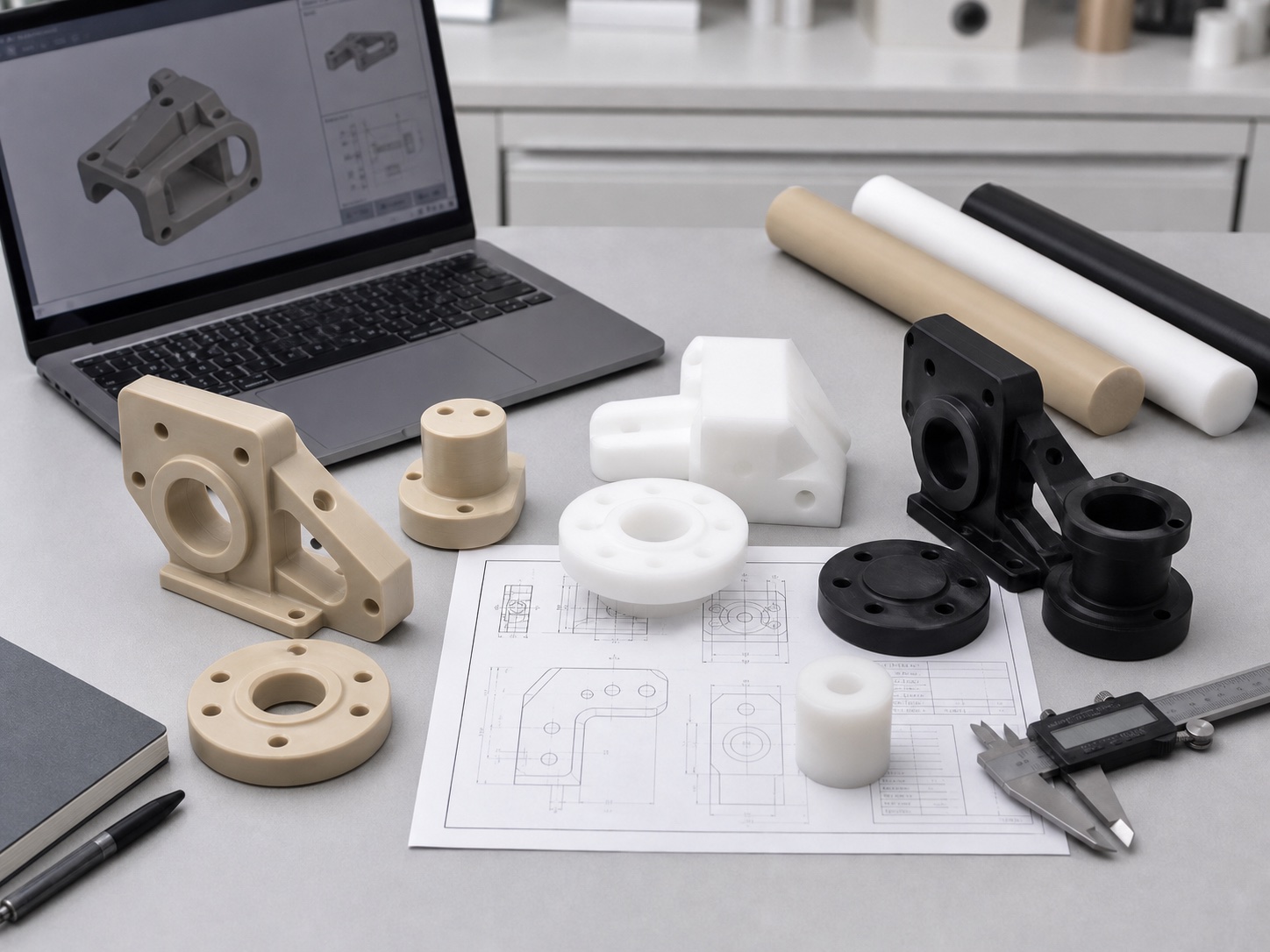
POM, also called acetal, is often chosen for precision plastic parts because it machines cleanly and holds dimensions well. Nylon is tougher and can perform well in wear applications, but it absorbs moisture, which can change dimensions. PEEK is used when the part must keep performance under heat, chemicals or higher mechanical demand.
For CNC machining, the material decision should consider both part function and inspection. Plastic parts can move with temperature, clamping pressure and humidity, so the drawing should identify which dimensions are truly critical.
| Property | POM / Acetal | Nylon | PEEK |
|---|---|---|---|
| Machinability | Very good | Good, but burr and moisture behavior need review | Good with proper process, but material is expensive |
| Moisture absorption | Low | High compared with POM and PEEK | Low |
| Dimensional control | Good for precision plastic parts | Can change with humidity | Good for high-performance use |
| Wear behavior | Good low-friction sliding | Good toughness and wear resistance | Excellent in demanding conditions |
| Temperature resistance | Moderate | Moderate | High |
| Chemical resistance | Good in many cases | Application-dependent | Strong in many demanding environments |
| Typical cost | Low to medium | Low to medium | High |
When POM Is the Better Choice
POM is often the most practical engineering plastic for CNC machined parts that need dimensional stability, low friction and clean machining. It is widely used for bushings, guides, rollers, gears, spacers, fixtures and precision plastic blocks.
It is usually a better choice than Nylon when moisture absorption could affect fit, hole position or sliding clearance. It is usually more cost-effective than PEEK when high temperature or extreme chemical resistance is not required.
| Use POM for | Why it works |
|---|---|
| Bushings and rollers | Low friction and good machinability |
| Precision plastic spacers | Good dimensional stability |
| Gears and sliding parts | Good wear behavior for many mechanical assemblies |
| Fixture components | Stable, easy to machine and cost-effective |
| Prototype plastic parts | Good first option before reviewing premium plastics |
When Nylon Is Worth Reviewing
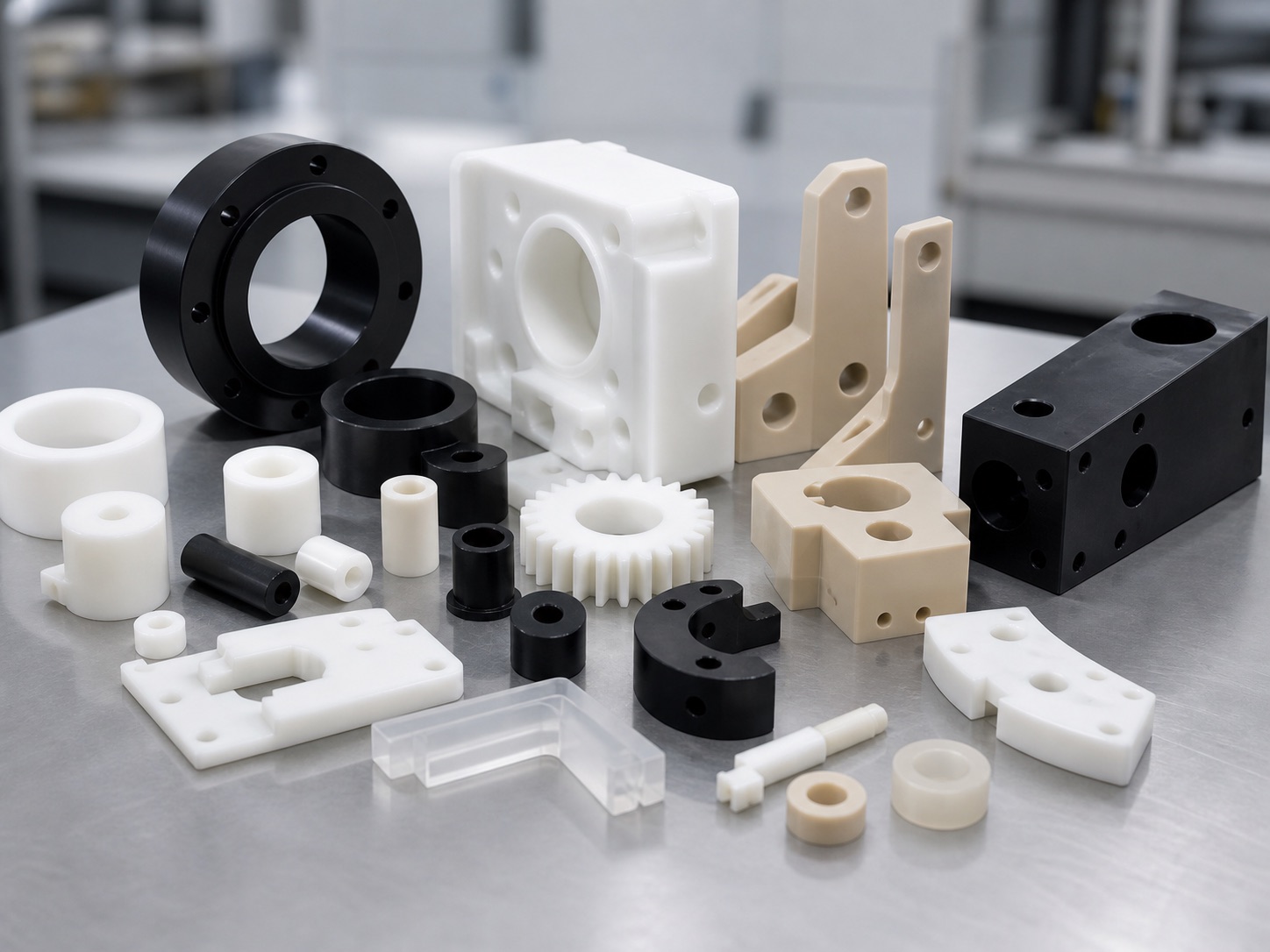
Nylon is useful when toughness, impact resistance and wear resistance are important. It can work well for rollers, pads, wear blocks, guides and mechanical parts that see repeated contact.
The main issue is moisture absorption. Nylon can absorb water from the environment, which may change dimensions and mechanical behavior. If the part needs tight tolerances, stable hole positions or consistent sliding clearance, this must be reviewed before quoting.
| Use Nylon for | Reason | Review before quoting |
|---|---|---|
| Wear pads and guides | Good toughness and wear behavior | Humidity and swelling risk |
| Impact-loaded parts | Good toughness | Confirm load and environment |
| Rollers and wheels | Wear resistance and damping | Check tolerance and roundness needs |
| Large non-critical plastic parts | Cost-effective and tough | Confirm moisture exposure |
| Replacement for some metal parts | Lower weight and lower friction | Check stiffness and creep |
When PEEK Justifies the Cost
PEEK is a premium engineering plastic. It is selected when the part needs high temperature resistance, chemical resistance, dimensional stability and strong mechanical performance. It is common in medical, semiconductor, aerospace, laboratory, chemical and high-performance mechanical applications.
Because PEEK raw material is expensive, it should be specified for a real performance reason. If the part only needs a general spacer, cover or low-friction component, POM or Nylon may be more practical.
| Use PEEK for | Why it may be needed | Cost note |
|---|---|---|
| High-temperature fixtures | Maintains performance better than common plastics | Raw material cost is high |
| Chemical-resistant parts | Strong resistance in many demanding environments | State chemical, concentration and temperature |
| Medical or laboratory components | Good stability and performance for selected applications | State cleanliness and documentation needs |
| Precision insulating parts | Good electrical insulation and dimensional stability | Avoid over-specifying non-critical features |
| High-performance wear parts | Useful when POM or Nylon cannot meet service conditions | Review quantity and stock size carefully |
Tolerance and Machining Notes for Plastic CNC Parts
Plastic CNC machining is different from metal machining. Engineering plastics can deform under clamping force, move with temperature, form burrs or change dimensions after stress is released. Thin walls, long parts and deep pockets need special process review.
For tight tolerances, define functional dimensions only. A 2D drawing should mark critical fits, bearing surfaces, hole positions, flatness and inspection requirements. Non-critical areas can usually use general tolerances.
| Machining factor | Buyer impact | Practical note |
|---|---|---|
| Clamping deformation | Can affect hole position and flatness | Use stable datums and avoid very thin unsupported walls |
| Temperature | Can change dimensions during inspection | State operating temperature if relevant |
| Moisture | Especially important for Nylon | State working environment and storage condition |
| Burrs | Small holes and edges may need controlled deburring | Mark no-burr edges clearly |
| Surface finish | Very fine finish may add machining time | Specify roughness only where functional |
RFQ Checklist for PEEK, POM and Nylon Parts
If you are not sure which engineering plastic to choose, send application context with the RFQ. The supplier can review material, geometry, tolerance and inspection risk before quoting.
| Send this information | Why it helps |
|---|---|
| STEP/STP file | Allows machining access, wall thickness and material removal review |
| 2D drawing | Shows tolerances, datums, threads, finish and inspection notes |
| Working temperature | Critical for PEEK and for plastic dimensional stability |
| Moisture or chemical exposure | Important for Nylon and chemical-resistant material selection |
| Load and wear condition | Helps compare POM, Nylon and PEEK realistically |
| Quantity and lead time | Affects stock choice, setup strategy and cost |
How OEMach Helps Select Engineering Plastics
OEMach reviews engineering plastic selection together with geometry, tolerances, finish, quantity and working environment. If POM is enough, we can help avoid unnecessary PEEK cost. If Nylon is risky because of moisture or tolerance, we flag it before machining. If PEEK is required, we keep material cost, machining risk and inspection requirements visible in the plan.
For a faster RFQ review, send STEP files, 2D drawings, material preference, quantity, critical dimensions and application environment.
FAQ
Is PEEK always better than POM or Nylon?
No. PEEK performs better in demanding heat and chemical environments, but it is much more expensive. POM or Nylon may be more practical for many parts.
Which plastic is best for tight tolerance CNC parts?
POM is often a practical choice for stable precision plastic parts. PEEK can also work well when high-performance requirements justify the cost. Nylon needs moisture review.
When should I avoid Nylon?
Avoid or review Nylon carefully when moisture absorption could affect dimensions, hole positions or sliding clearance.
Which plastic is best for wear parts?
POM, Nylon and PEEK can all be used for wear parts. The best choice depends on load, speed, temperature, moisture and cost target.
Can OEMach help choose the plastic before quoting?
Yes. Send the drawing, STEP file, quantity, tolerance notes and working environment, and we can review the practical material choice.
Summary
POM is often the practical first choice for stable, low-friction CNC plastic parts. Nylon is useful for tough wear parts, but moisture absorption must be reviewed. PEEK is the premium choice for high temperature, chemical resistance and demanding performance. The right material depends on function, environment, tolerance and cost target.