
Representative case rather than an operating simulator result
This case proposes a 6061 aluminum counterbored seating washer for an inert ECG simulator fixture study. It is a representative manufacturing example, not a record of a customer shipment, completed equipment project or validated electrical component. No achieved tolerance, certification, load capacity, signal result or electrical compatibility is asserted. The case explains what would need approval before a real turning and inspection order. Its scope is the individual washer geometry and proposed handling. Qualification of the complete fixture and any use with a functioning simulator remain separate from the machining evidence discussed here.

Proposed circular component and its two bore levels
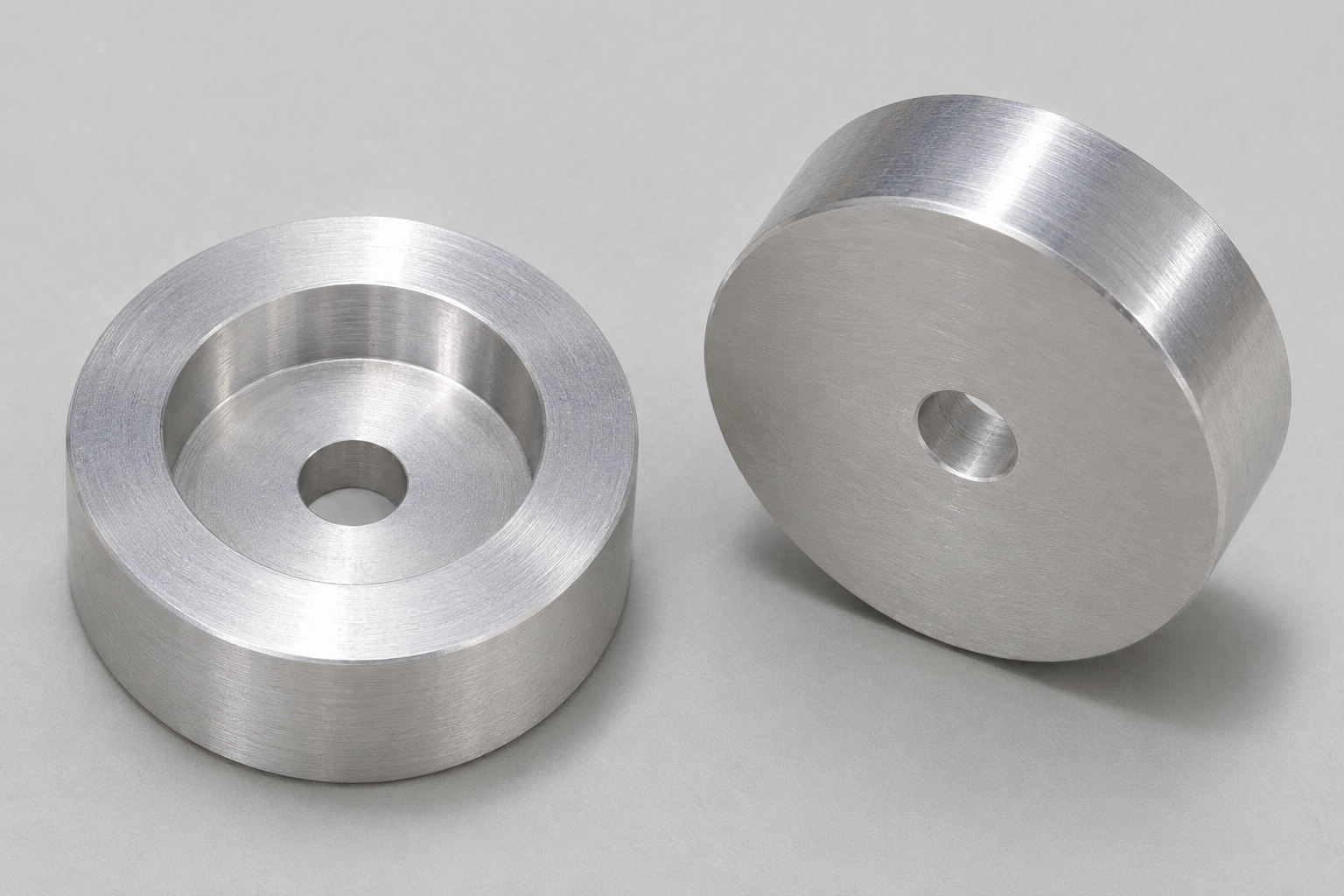
The proposed component is a thick circular disc with a small centered axial through-hole and a larger shallow concentric cylindrical counterbore in one face. The bottom of the recess forms a flat annular shoulder around the through-hole. The reverse face is flat and has only the smaller opening. There are no threads, radial holes, slots, inserts or assembled fasteners. The recess is not a conical countersink. This feature list keeps quotation and programming aligned with the intended part; dimensions and transitions would be taken from an approved drawing rather than scaled from the images.
Define the inert mating reference and intended seat
The designer would identify the mating reference envelope and state which face contacts it. The recessed shoulder, upper rim and underside would not be treated as interchangeable seating surfaces. Through-hole clearance and required location would be defined alongside the recess and its relationship to the reference axis. A reference that enters the opening does not prove correct annular contact. Any supplementary observation would identify revisions, insertion direction and assembly condition. It would remain separate from electrical isolation, continuity, signal accuracy or mechanical qualification of a working fixture, none of which can be inferred from round geometry.
RFQ requirements and unresolved design questions
A real inquiry would include drawing revision, model, quantity, alloy condition, final treatment and inspection scope. It would specify diameters, total thickness, counterbore depth, annular seating region and relevant datum relationships. If remaining shoulder thickness is required, state it and agree coverage. The quotation would identify open issues such as tool radius, reverse-face finishing and probe contact. Missing tolerances would not be replaced with a broad workshop accuracy claim. The buyer would define any additional mating-reference check and its responsibility separately from drawing acceptance and from the qualification of operational medical equipment.
Material control and proposed blank preparation
The route would begin with identified 6061 stock in the specified condition and with the required documentation. Blank size would allow the disc, bore steps, gripping region and reverse-face work without assigning a sacrificial surface an unintended datum role. Material identity would remain linked to the workpiece through separation, transfer, cleaning and any approved treatment. Aluminum appearance is not a certificate, and a certificate does not establish every finished dimension. The example supplies no treatment or corrosion result. It describes the material and process records a real order would need to preserve before release.
Proposed CNC turning and reference recovery
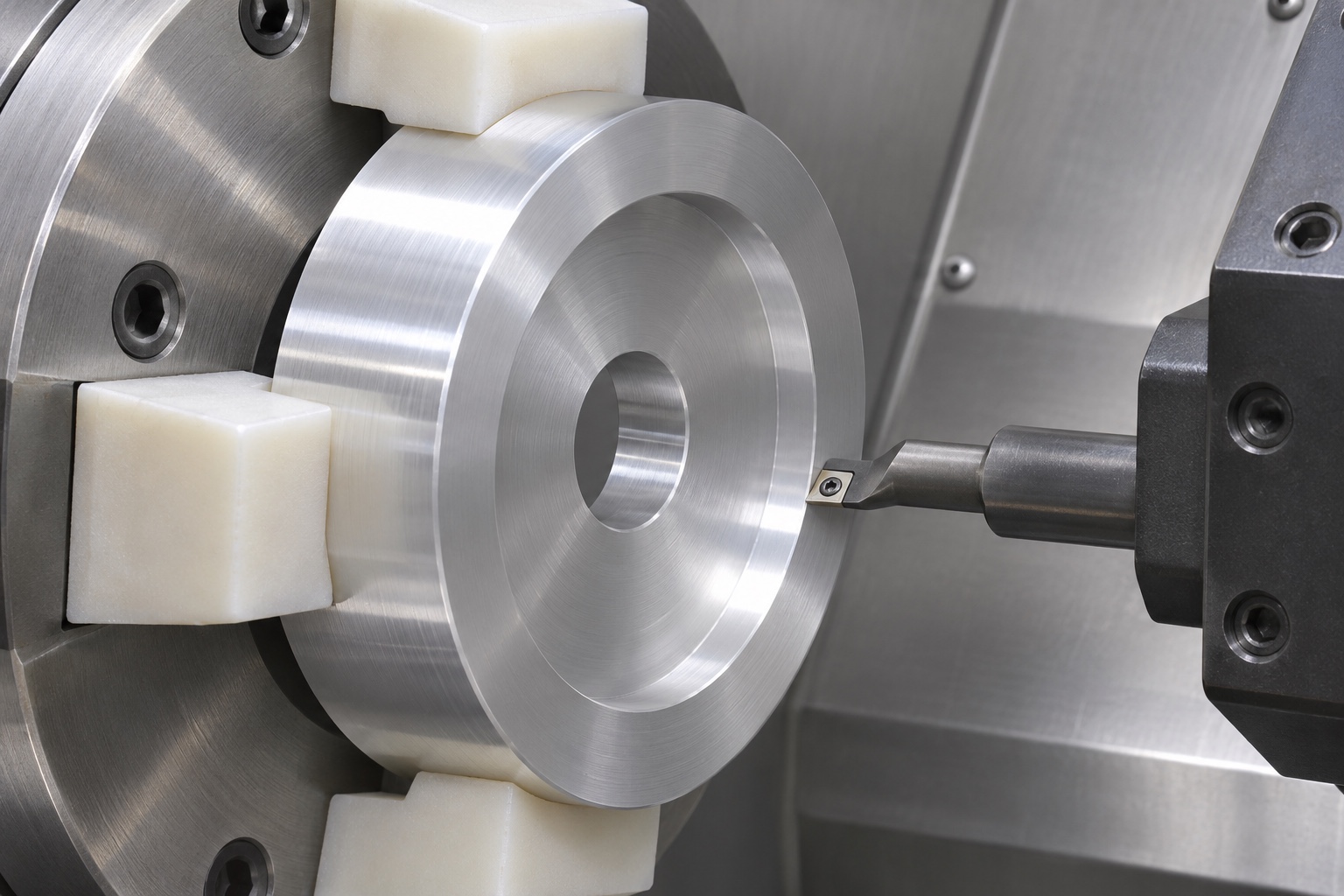
The proposed turning sequence would coordinate outside diameter, through-bore, counterbore and accessible face. A common setup may support the required relationships, but final compliance would still need inspection. The reverse face and total thickness could require a controlled transfer after separation from stock. Review how the part is located, which surfaces are protected and how references are recovered. The internal tool would need room to produce the specified shoulder without an unapproved radius or undercut. No actual machine capability, cycle time, cutting parameter set or achieved coaxial relationship is claimed in this proposal.
Counterbore shoulder and remaining-material control
The drawing would distinguish counterbore depth from material remaining beneath the annular shoulder. The route would preserve the smaller through-hole while leaving the specified solid seating region around it. Tool-tip geometry would be checked against the permitted corner transition rather than accepted automatically. A depth dimension alone would not prove the remaining thickness everywhere. Any change to the shoulder, recess diameter or transition would require design approval. The proposed plan provides questions to resolve before machining; a plausible internal-tool position in an image does not establish that a real component has achieved the required geometry.
Bore mouths and annular edge finishing
The counterbore rim, shoulder transition, both through-hole mouths and exterior edges would need controlled finishing. Burr removal would not erase the flat seating annulus, enlarge the small hole or create a conical seat not present on the drawing. The underside would be reviewed separately from the more visible recessed face. Relevant dimensions would be rechecked after final edge work. If the approved geometry limits access, the limitation would be resolved before acceptance. A polished part is not proof of burr-free functional contact, correct depth or complete dimensional conformity, so inspection coverage would remain explicit.
Proposed first-article dimensional record
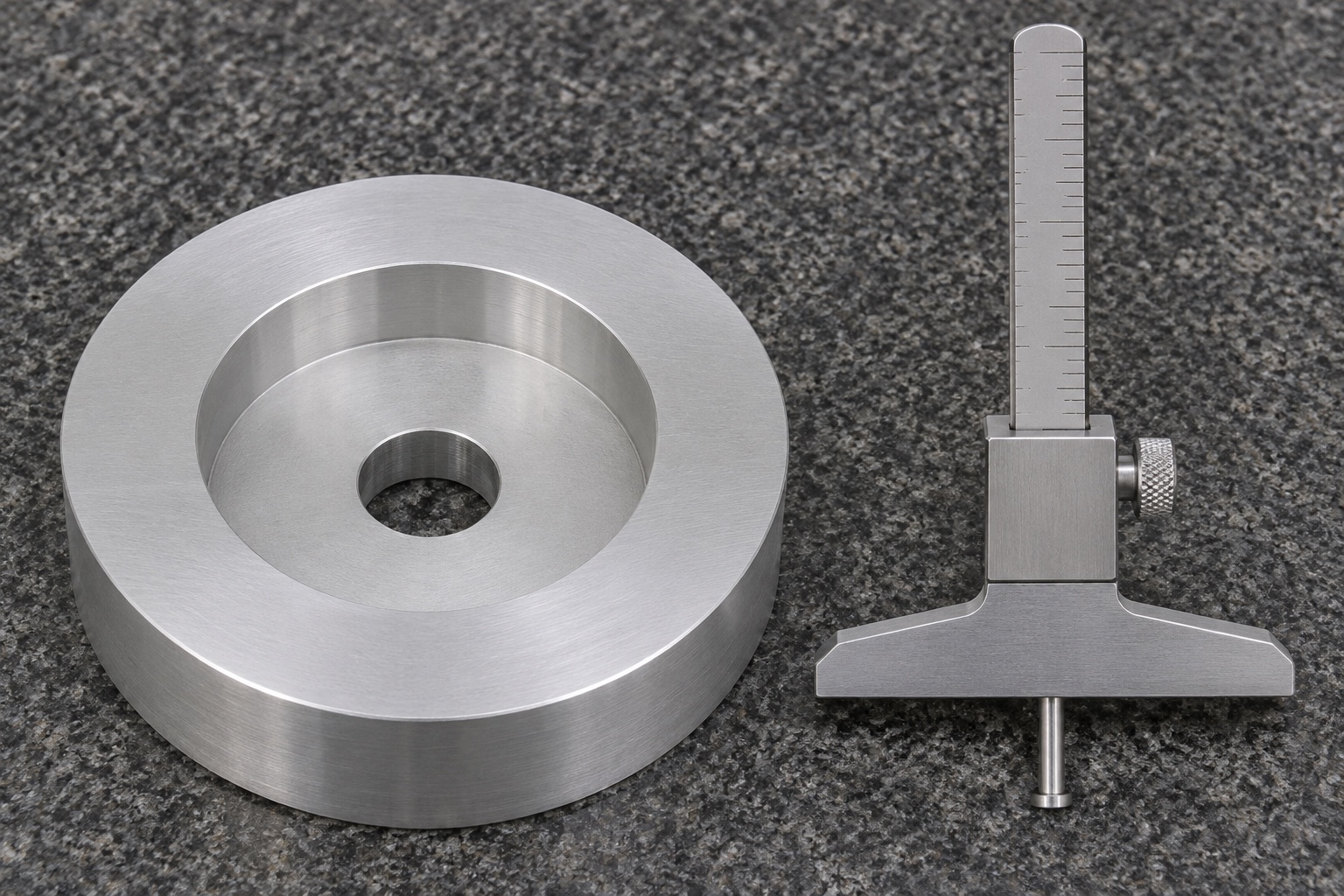
A first-article record would identify revision, material, final condition, references, methods and actual results. It would assign checks to the outside, thickness, small bore, recess diameter, depth, annular seat and specified relationships. Instrument alignment and contact position would be reviewed so a probe does not report a transition radius as the flat shoulder. A single depth reading would not cover all remaining-thickness or bore-location questions. Instrument photographs and CAD nominal values would not be reported as measurements. Any feature outside the selected method's reach would be declared before a release decision is made.
Supplementary seating observation and scope limits
An approved inert reference could help observe insertion, contact and clearance. The observation would document the reference and assembly condition, not claim an electrical test. It would not demonstrate clamping capacity, resistance to loosening, isolation, continuity or ECG signal accuracy. Those outcomes depend on the full design and require separately defined assessments. A favorable fit would not override a failed dimensional requirement, and a poor fit could originate in either component. This representative case proposes a limited observation; it does not report that any real assembly or simulator has already passed such an evaluation.
Outgoing cleaning and packaging proposal
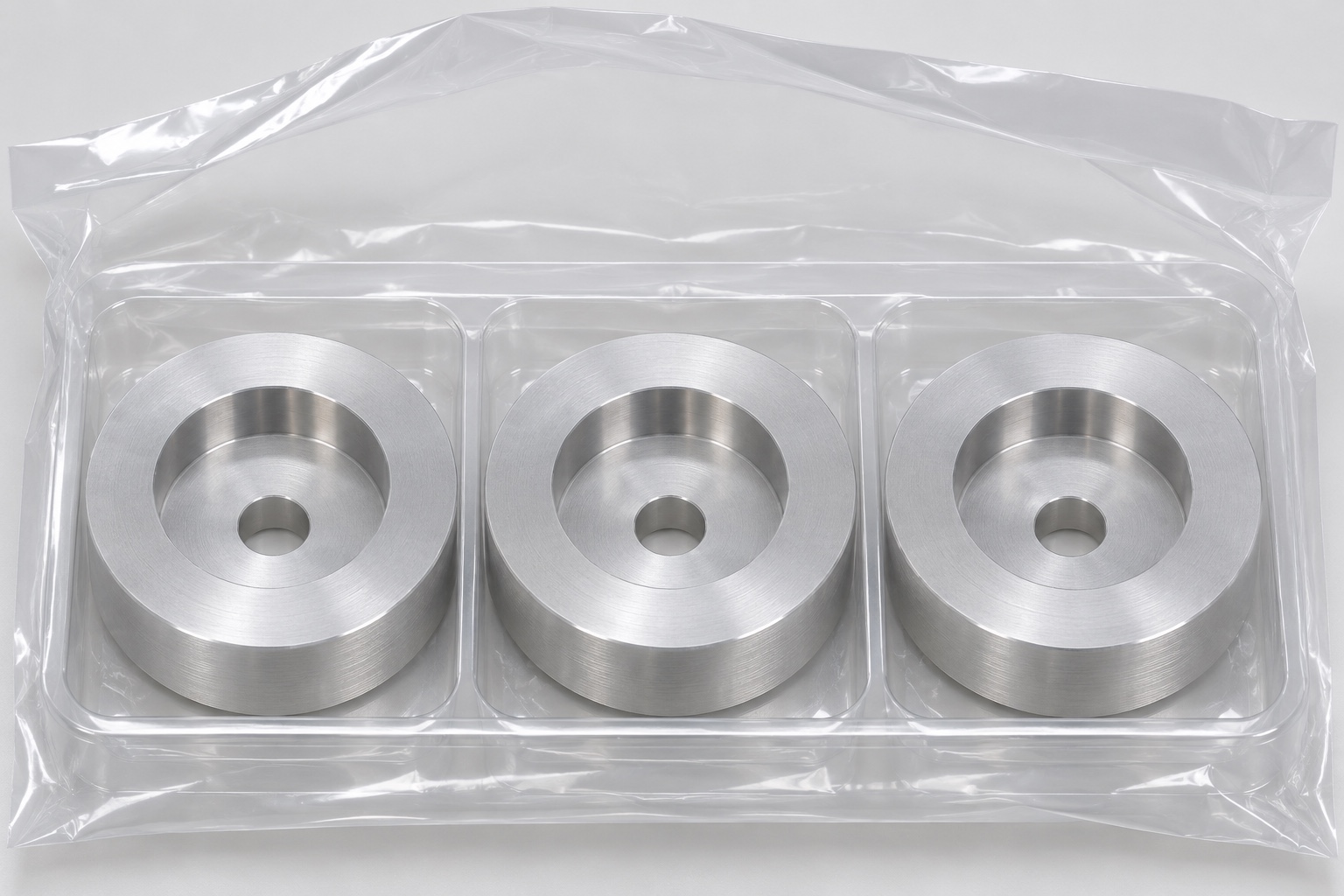
The outgoing condition would define debris removal from the recess, annular shoulder and through-hole. Any particle or residue limit would need an agreed verification method. Washers would be separated to prevent nesting, edge impacts and scratches to the seating region. Identification would remain outside sensitive surfaces and link the package to the drawing and material record. A tray and open protective bag would not be a sterile barrier or validated shipping system. No shipment or cleanliness result is claimed. Receiving checks would distinguish package damage from dimensional acceptance and identify any required review before assembly.
Approval path for a real aluminum small batch
Before production, the parties would approve drawing, model, material, quantity, treatment, inspection and packaging. DFM items would include internal-tool clearance, shoulder transition, remaining material, reverse-face work and measurement coverage. Real first-article evidence would then document the manufactured component, with accepted changes retained for repeat orders. The inert reference and any complete-fixture or electrical qualification would remain separately controlled. This proposal supports a specific inquiry for custom medical aluminum parts without inventing a customer delivery, attained precision or simulator performance result absent from the actual machining and inspection evidence.
FAQ
Is this a documented ECG simulator customer project?
No. It is a representative proposal for an inert fixture component. It does not document a customer, shipment, measured conformity, certification or successful operation with a functioning ECG simulator.
What distinguishes the proposed recess from a countersink?
The recess has a cylindrical wall and flat annular shoulder around the smaller through-hole. It is not a conical seat. The drawing would define its diameter, depth and permitted transitions.
Does the proposal include fasteners or additional holes?
No. It includes a plain stepped washer with one central through-hole and one concentric counterbore. No radial hole, thread, slot, insert or assembled fastener is part of the proposed component.
What would a depth gauge result cover?
Only the depth question defined by its alignment and contact position. Bore location, shoulder form, remaining material and other required relationships may need separate methods and broader measurement coverage.
Can the washer be called an electrical isolator?
Not from this machining proposal. Any electrical role requires the actual materials, treatment, interface and equipment requirements to be evaluated separately. No isolation, continuity or ECG signal test is asserted here.
What is needed before a real repeat order?
Approve revision, alloy condition, geometry, finishing, inspection and packaging. Preserve actual first-article evidence and accepted changes. Do not treat this proposed route or nominal model as achieved production results.

tanghangyun@oemach.com