
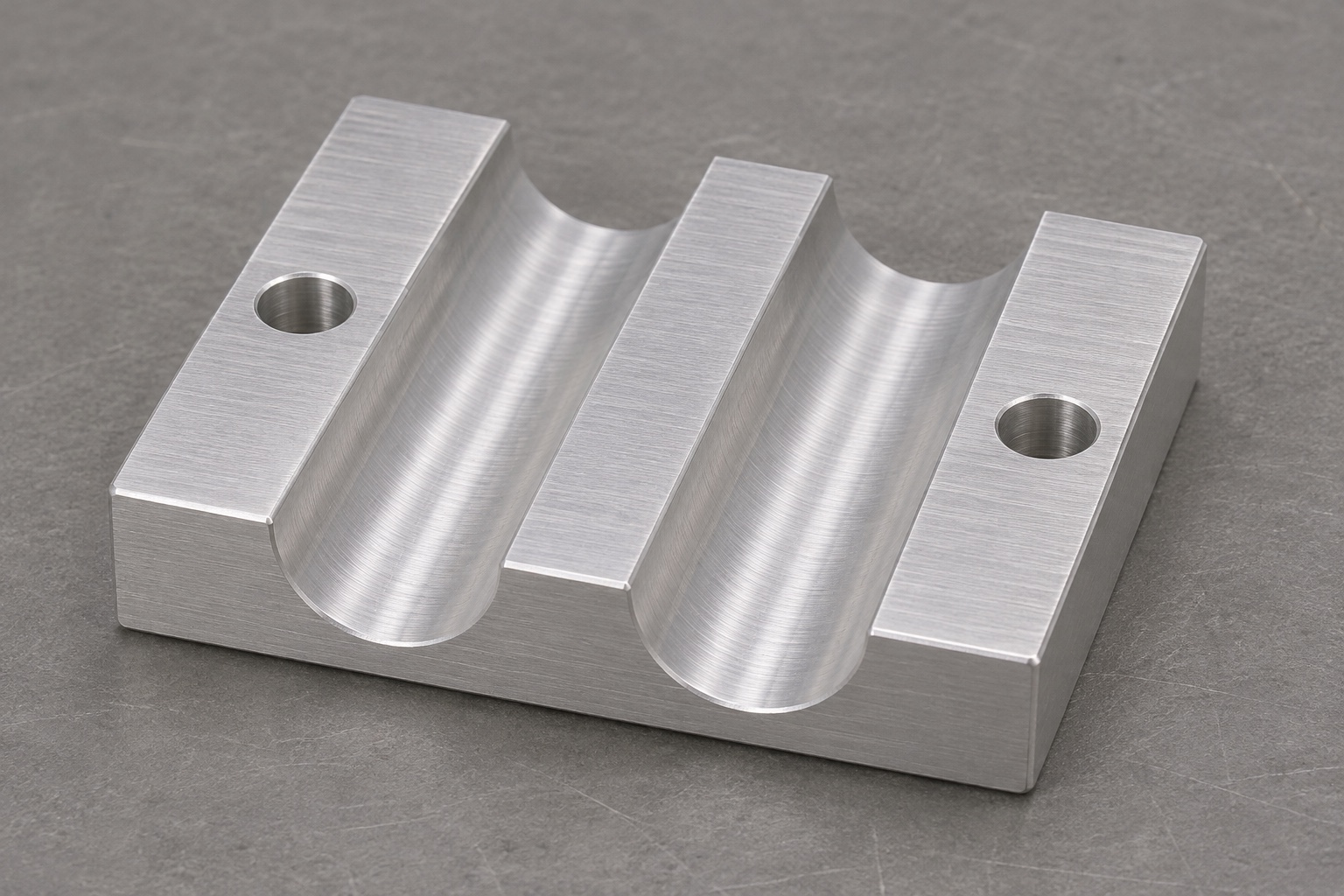
Identify the representative part and its limits
This representative manufacturing example considers a 6061 aluminum lower cable clamp base for portable EEG amplifier equipment. It is not a report of an actual customer delivery, measured production result or validated medical device. The proposed component has a rectangular footprint, two parallel open channels, flat upper mating lands and two mounting holes in the outer lands. The cover, cables and electronics are not part of the example. The purpose is to show how custom aluminum component machining can be planned and accepted without inventing electrical, signal, retention-force or clinical performance evidence.

Establish a controlled enquiry package
The proposed enquiry would include the drawing and model revision, specified material condition, quantity range and required inspection record. The design owner would identify the mounting underside, mating lands and channel relationships. A mechanical envelope for the cover and intended cable region could resolve access and clearance questions without transferring system design to the machine shop. Unspecified geometry remains an open question, not an invitation to guess. The supplier's quotation should identify assumptions about surface treatment, packing and assembly checking so the buyer can compare equivalent scopes before making a commercial commitment.
Review channels and lands before selecting a route
The first feasibility review would examine the two channel profiles, useful contact length, entrance edges and adjacent lands. Tool reach and workholding access should be assessed together. A change that makes milling easier may also alter a controlled interface, so it requires approval rather than silent substitution. The review would also check whether the proposed mounting holes leave adequate access for the chosen process, without inventing a strength conclusion. This example discusses planning questions only. It does not claim that a physical prototype has already been machined, tested with a cable or approved for installation.
Control the aluminum blank and revision identity
The proposed job starts with an identified 6061 stock form in the specified condition. Material documents and lot identification would follow the order's requirements. The blank allowance should support the base during channel machining and leave material for the planned reference surfaces. Another alloy or temper would require an approved change rather than an informal shop substitution. The traveller would link material identity, drawing revision and operation status. This traceability supports component acceptance within its scope; it does not certify the completed EEG amplifier, prove electrical behavior or establish a regulatory status for the lower clamp half.
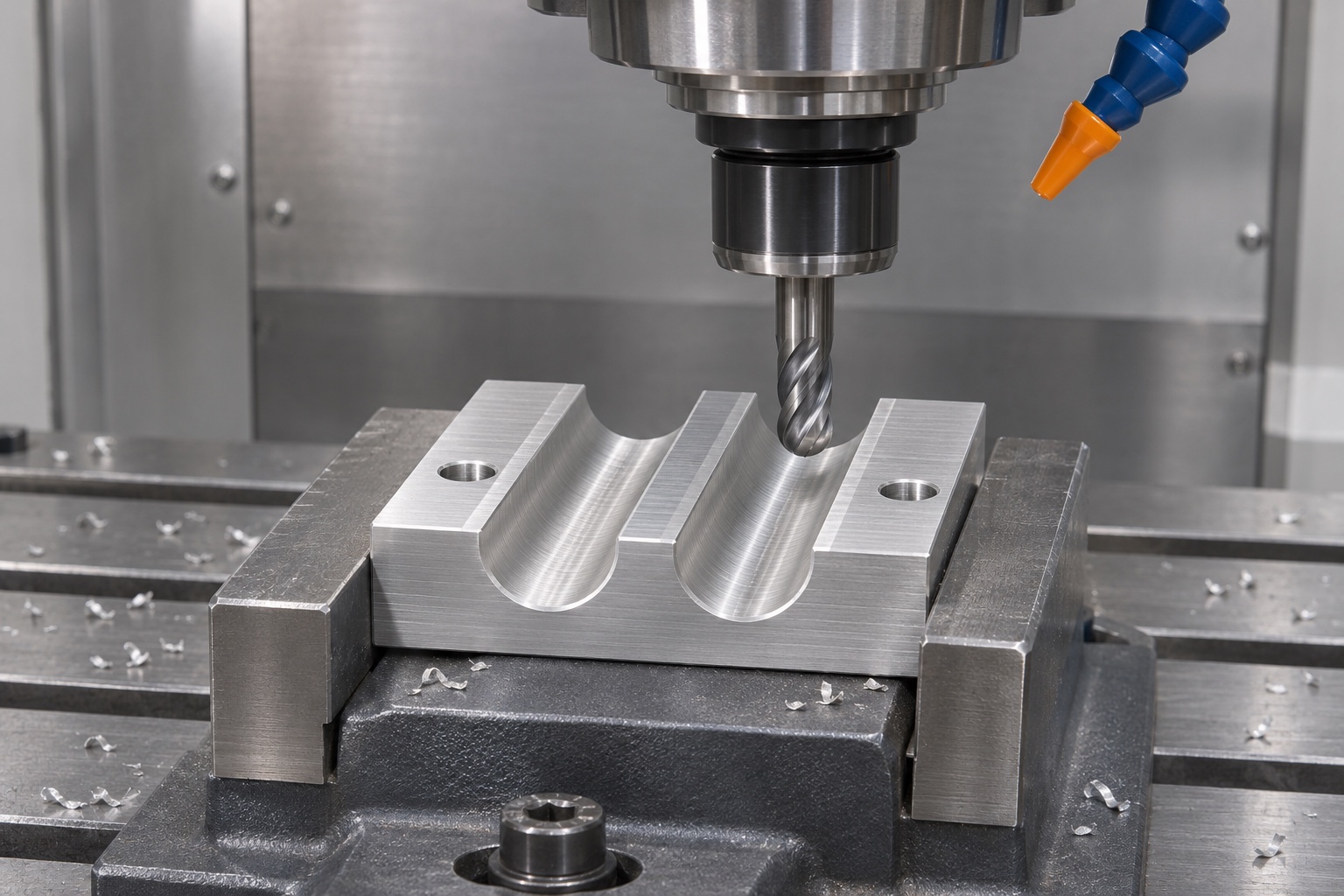
Establish references with supported workholding
A proposed first setup prepares the mounting underside and suitable locating surfaces while supporting the rectangular blank. Subsequent workholding would reference the approved geometry and protect surfaces already finished. The process plan should explain where the base is supported and how clamping avoids distorting or marking the channel region. A setup that merely grips the easiest available edge may not preserve the intended land-to-channel relationship. Intermediate checks can confirm that finishing allowance remains, but no measured result is invented here. The actual shop record would need real observations against the controlled requirements before production could be released.
Rough and finish the open channel geometry
The proposed milling sequence separates material removal from final profile generation where that is useful for access and control. Tool choice would suit the specified channel shape and useful length rather than redefine them. The two parallel channels would be inspected against common approved references so their relationship is not lost between operations. Entrance edges and transitions would receive only the finishing permitted by the drawing. This plan does not prescribe an unsupported universal cutting parameter or tolerance. A real route must be developed for the actual geometry, stock condition, equipment, tooling and acceptance requirements.
Finish mating lands and mounting holes coherently
The flat upper lands and two outer mounting holes would be produced in a sequence that maintains their intended relationship to the base. The drawing determines whether hole details include a clearance, recess or thread; the example does not add features not specified. Inspection access should remain available after any secondary operation. The cover's closure condition and cable compression are separate assembly decisions, not assumptions to be made while finishing the lands. The route should preserve controlled surfaces during deburring and handling, and record any change that could affect their level, orientation or available contact region.
Define a response to a possible profile discrepancy
A hypothetical review might find that a sampled channel section differs from the approved profile even though the surface looks smooth. This is a planning scenario, not a reported machining failure. The proposed response is to verify the measurement setup, compare the result with the controlled requirement and isolate any affected part for an authorized decision. Unrecorded polishing is not an acceptable substitute for understanding the discrepancy. If a process or design revision is approved, the route and inspection plan should be updated together. Previously prepared parts would need their own disposition against that decision.
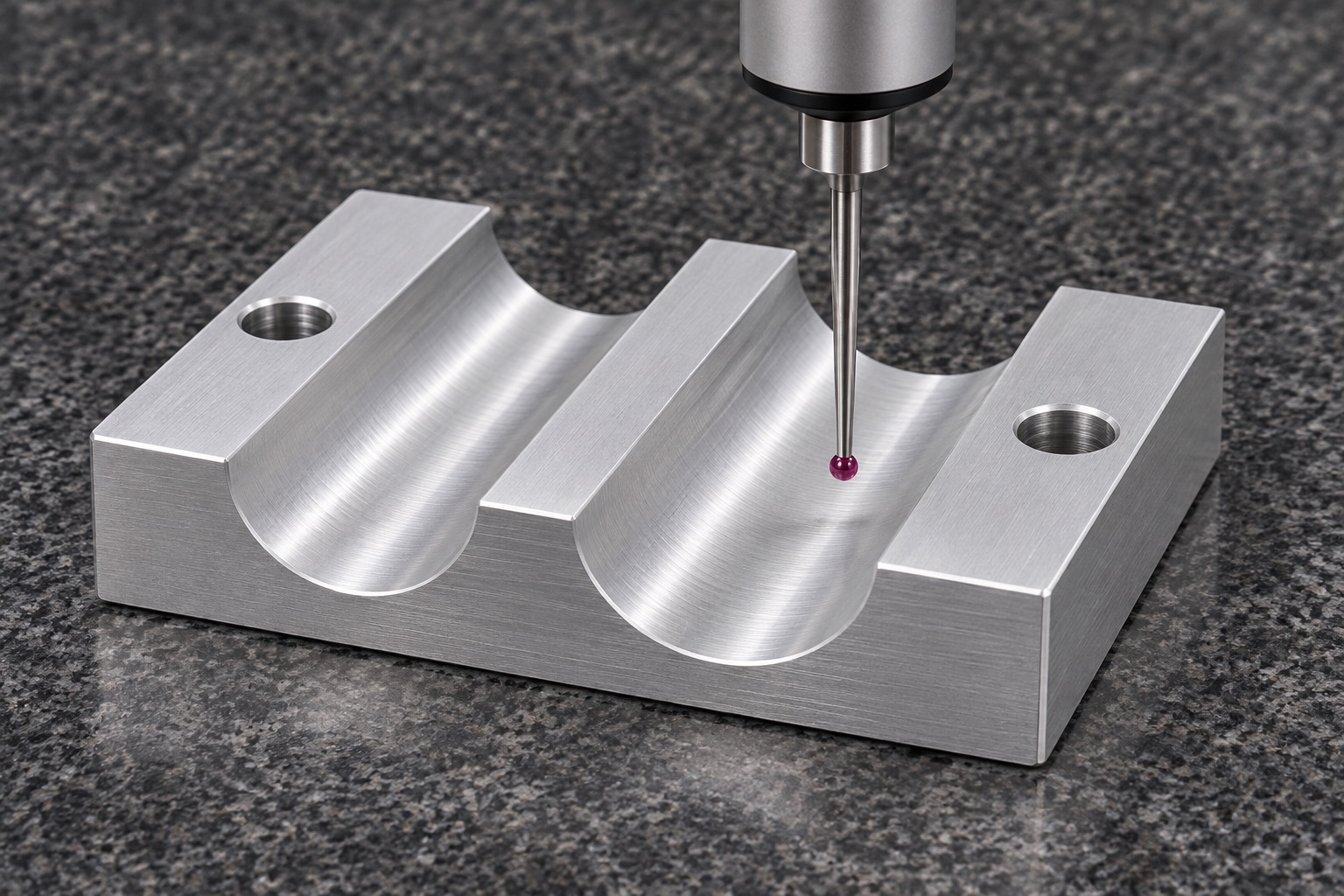
Agree inspection evidence before manufacturing
The proposed inspection record maps the mounting plane, mating-land relationship, channel locations, specified profile sections and mounting-hole characteristics to suitable methods. Probe access, optical visibility and reference alignment should be reviewed before promising a particular report format. A method that samples selected channel sections should state that limitation rather than imply complete surface verification. No dimensional values or pass rates are supplied because this example has no measured production lot. An actual first-article submission must report real observations and acceptance decisions, with traceability to the relevant drawing revision and any approved deviations.
Review treatment and preparation within their scope
If the purchase requirements include anodizing or another treatment, the proposed route would define its timing and any post-treatment acceptance checks. If no treatment is specified, the example does not invent one or describe bare aluminum as an approved electrical interface. Final preparation would remove loose machining residues within the agreed component scope. Electrical insulation, shielding, system cleanliness and clinical suitability require separate evidence and responsible review. The delivery record should identify only work actually performed and documented. A supplier should not turn an ordinary finishing operation into an unsupported medical or electrical performance statement.
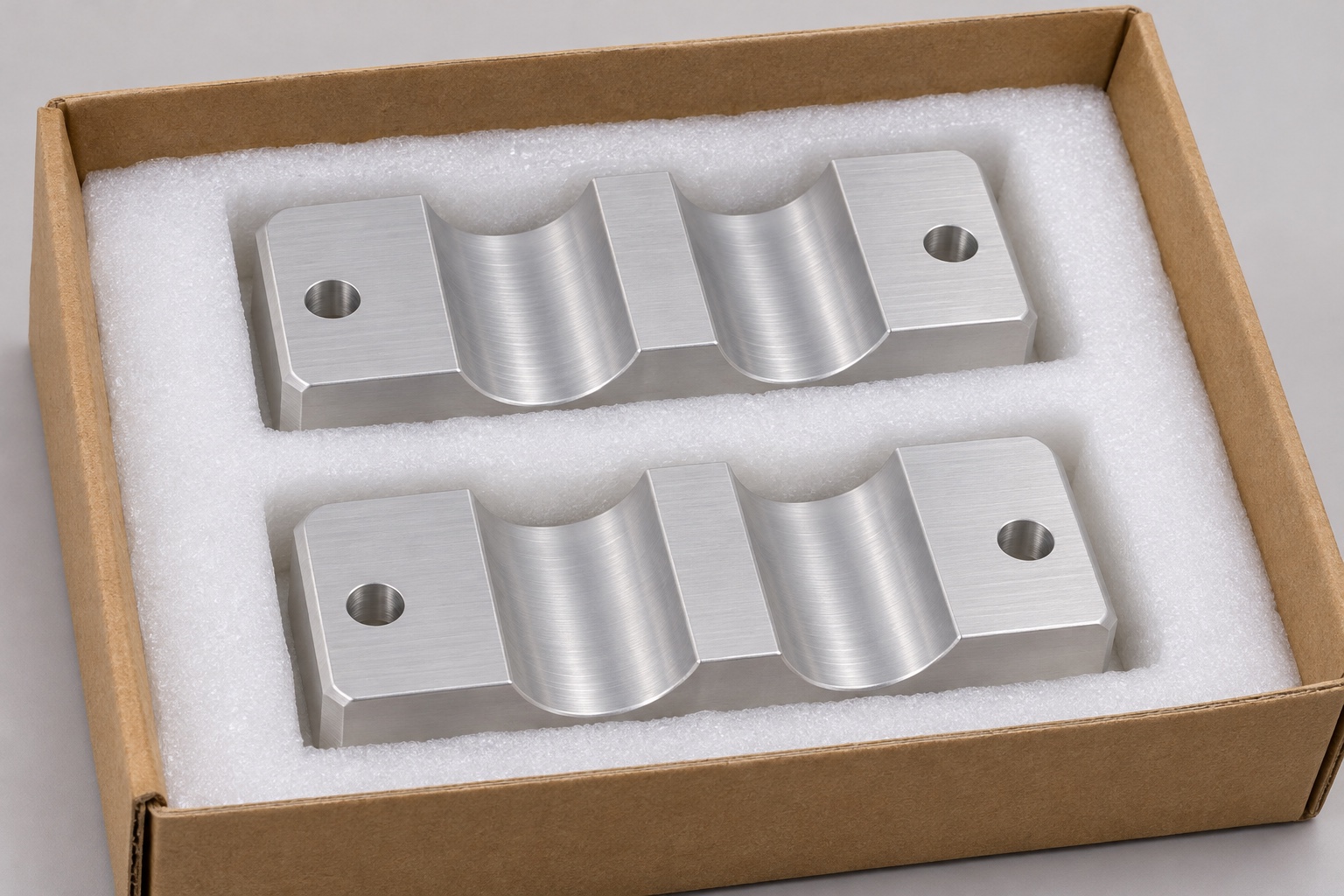
Pack the lower halves without damaging lands
The proposed packing arrangement separates the components and supports them without placing loose hardware in the open channels. Mating lands should remain free of adhesive labels and protected from impacts or rubbing. The packing material and individual wrapping requirements would be agreed with the buyer before shipment. A lot identifier can remain associated with the protected parts without covering functional surfaces. This is a physical protection plan rather than a sterile barrier claim. A real packing confirmation should document the arrangement and materials actually used, not treat a planning photograph as evidence that a shipment occurred.
Use the example to structure a real sourcing review
For a real RFQ, compare suppliers against the same revision, material condition, channel requirements, surface treatment and inspection deliverables. Ask who will evaluate the cover and cable assembly, and keep that responsibility distinct from manufacturing the lower half. Prototype feedback should become controlled changes before repeat production. A machining proposal can explain access, references and acceptance methods without claiming that the finished EEG system has been validated. This representative example provides that discussion structure, while final feasibility, pricing, schedule and any qualification decisions remain dependent on review of the actual technical package by the responsible organizations.
FAQ
Is this an actual EEG equipment customer case?
No. It is a representative machining example with proposed operations and a hypothetical inspection scenario. It contains no invented delivery quantity, measured result, customer approval or claim of medical-device validation.
Is the upper clamp cover included?
No. The example covers only the lower base with two open channels, mating lands and two mounting holes. The separate cover and cable envelope must be defined by the responsible design team for a real enquiry.
Can this plan establish electrical insulation or shielding?
No. It addresses mechanical component manufacturing and acceptance. Electrical performance, shielding, insulation and system safety require their own approved design scope and evidence rather than an inference from aluminum machining or surface treatment.
What happens if a channel looks smooth but measures incorrectly?
The proposed response is to verify the measurement, document the discrepancy and obtain an authorized decision. A cosmetic improvement cannot replace conformity to the controlled profile, and unrecorded polishing may change functional geometry.
Which inspection limitation should be disclosed?
If the method checks only selected channel sections or locations, state that coverage clearly. The report should not imply complete surface verification when the agreed measurement plan samples only part of the useful contact region.
What is required before repeat production?
Review actual prototype evidence and record approved changes to the drawing, route and inspection plan. Confirm material, treatment, packing and assembly responsibilities so repeat orders do not rely on undocumented assumptions from an earlier discussion.

tanghangyun@oemach.com