
Describe the sample without implying delivery
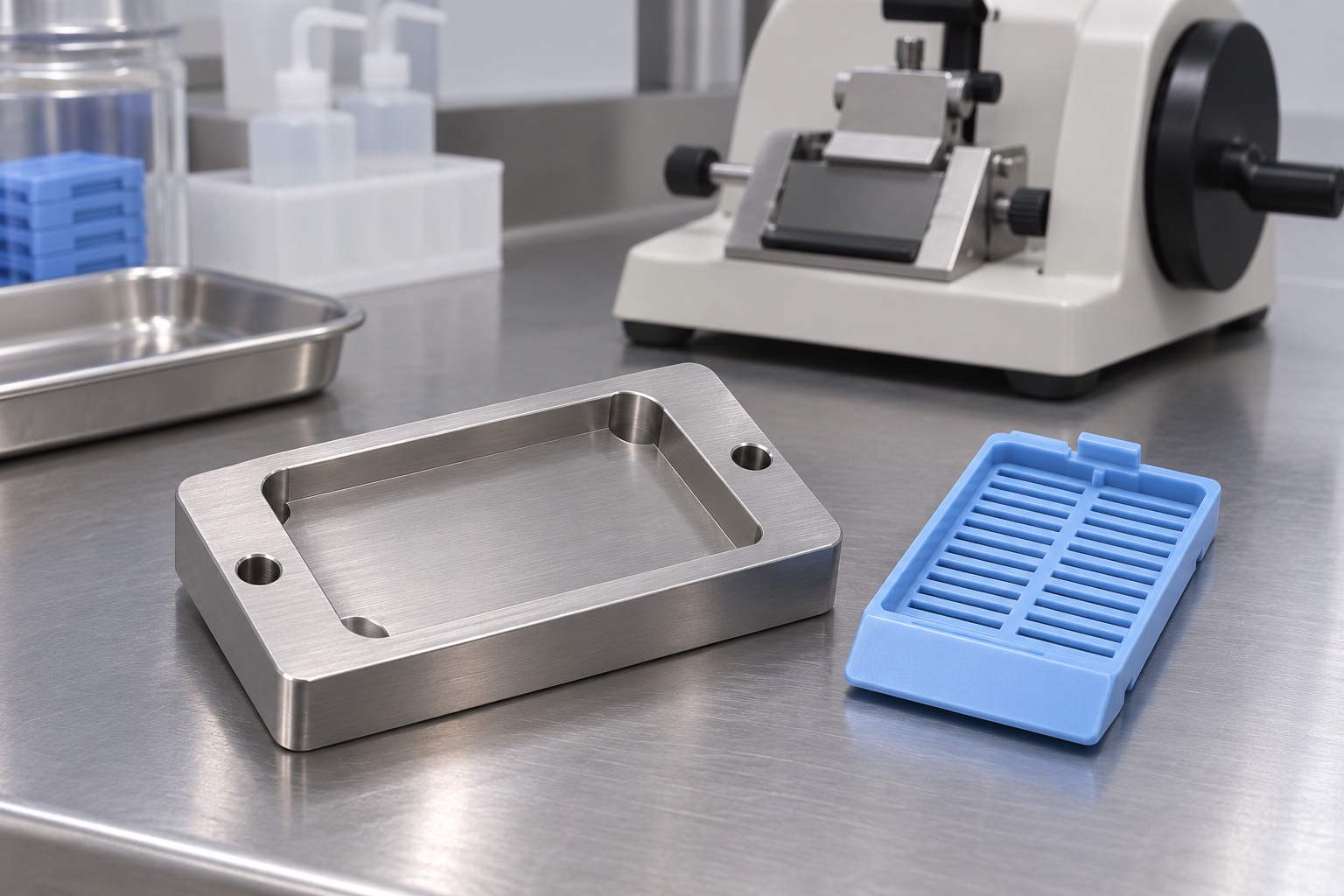
This representative manufacturing case considers a compact 316L stainless block for bench inspection of an empty histology cassette. The block has a shallow rectangular recess, corner reliefs and two fixture mounting holes. The design concept uses selected pocket surfaces for seating and leaves other areas clear. It does not hold a specimen during sectioning, and the example is not a customer delivery, approved microtome accessory or proof of diagnostic performance. Images are illustrative; they are not measurements or a fabrication drawing. The cassette shown is empty and is used only to explain the interface.

Set a boundary around the pocket
The engineering order would identify the cassette revision and show where the base and side edges can bear. The pocket depth would be linked to a repeatable inspection reference rather than copied from a picture. Two reliefs make it possible to clear corners or access an edge during removal, subject to the final drawing. If the enclosure of the cassette projects at a hinge or label area, the nest must not contact that feature unexpectedly. The first design review should mark which regions are seats, stops, clearance or handling access.
Identify the block and the cassette separately
Material documentation for the block would identify the stainless grade, stock form and lot. A machining shop cannot establish that information from surface appearance. The empty cassette or surrogate used in fit checks would also carry a revision and identifier. Use of a different cassette can change the fit even when the block is unchanged. A first sample should therefore tie the lot of the block to the trial reference, not store the two as anonymous samples. Surface finishing and cleaning would be defined separately from material identity.
Establish the base and the locating sides
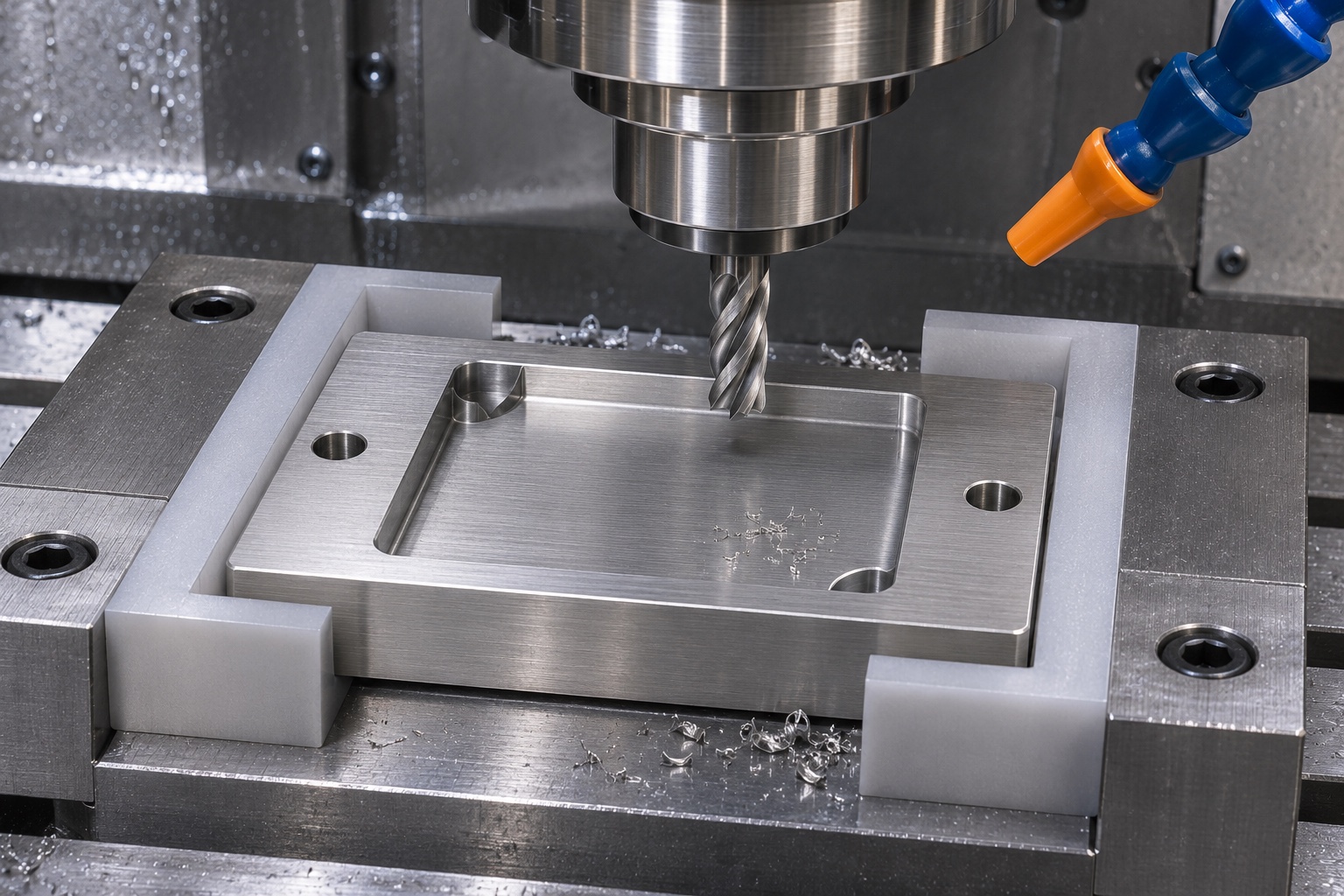
Face the lower surface as the mounting reference and create stable lateral reference surfaces. Verify that the blank lies on the intended supports before roughing the pocket. Mounting holes should not be interpreted as precision locators unless the drawing assigns them that role. The block should be held far enough from the shallow pocket so distortion can be evaluated after release. On a real drawing, review the tool access around the sides and corner reliefs before choosing a cutter diameter or planning the operations.
Rough the pocket while leaving the seats
Rough material from the center and keep finish stock at the support areas and the lateral reference edges. If the pocket is roughed too close to final depth, an unwanted height change after release may leave no material for a corrective pass. Check the remaining section around each mounting hole and relief. The machining sequence is illustrative, and no spindle speed, cutter engagement, dimensional value or resulting finish is claimed. The actual plan would use known stock and measured trials, with a controlled condition for any reinstallation.
Finish the seat and the reliefs as separate features
Finish the load-bearing areas with a method that retains their relationship to the base. The clearance pockets can be cut to a different depth where the drawing permits, with radii that do not interrupt a support area. Inspect hole exits after cutting because a small raised edge can hold the block off the test plate. Do not polish the visible cavity indiscriminately: blending a seat may change the result that the fixture is intended to measure. If rework is needed, identify the affected characteristics and check them again.
Document the geometry at named stations
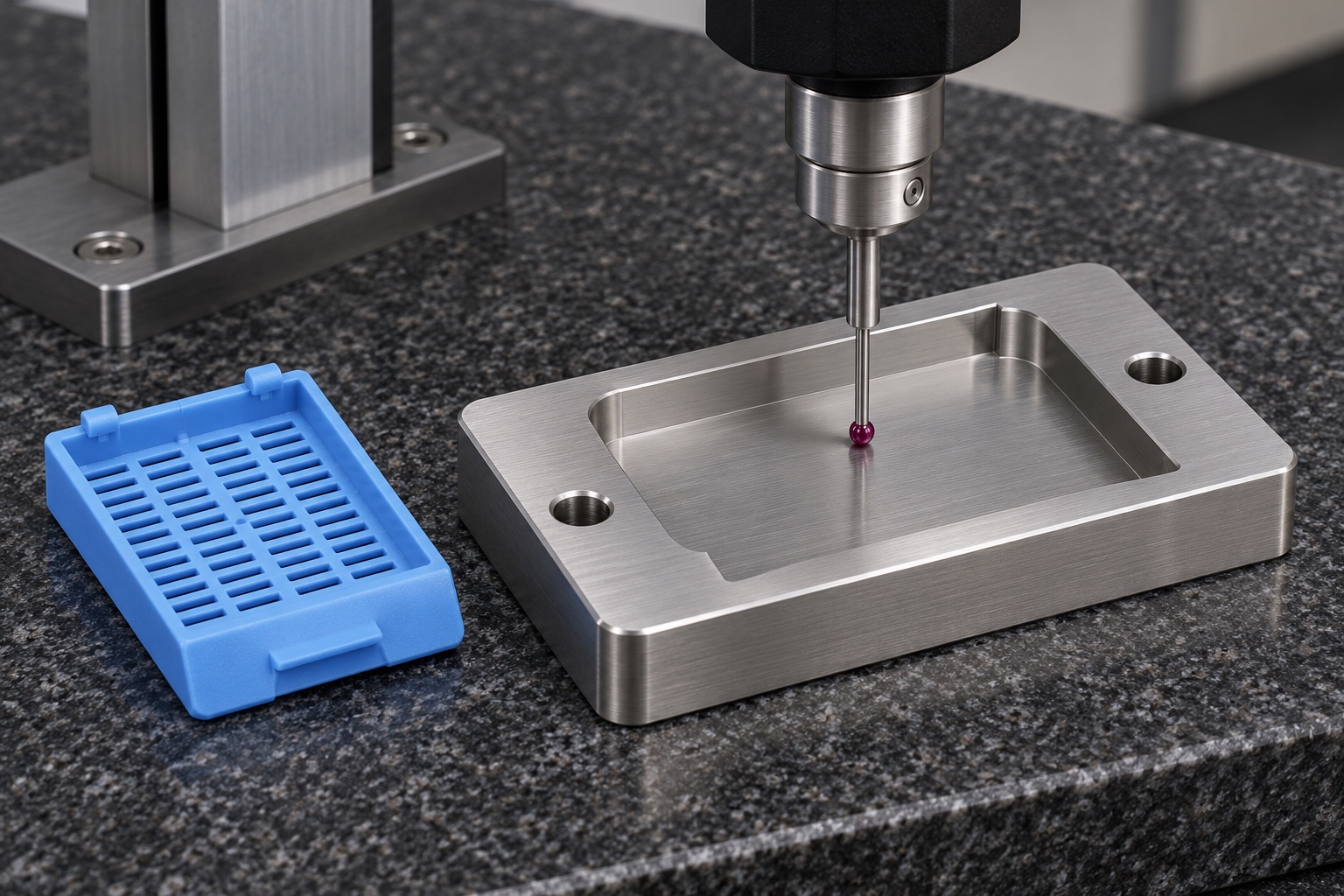
An example report would include mounting-plane condition, height of each seating area, lateral contact position and confirmation of corner clearance. Put lettered station markers on the inspection sketch and identify which face the indicator was referenced from. Include the block state during the check, whether free on the bench or secured to a defined test plate. Two values from different setups may not be comparable. No result is reported here; the illustration shows how access might be arranged, not evidence of a dimensional pass.
Evaluate an empty cassette on the bench
The trial would check an identified empty cassette without contacting a microtome knife or using tissue. Observe where it first contacts the nest, whether it seats without pressure and whether the reliefs leave enough clearance for removal. When an indicator is used, distinguish a reading on the plastic from the measured dimensions of the nest. Use independent reseats and record observations that recur. A mismatch should be investigated against the part drawings and reference condition, not hidden by applying force or selectively altering the trial cassette.
Investigate rocking before changing the pocket
If the trial piece rocks, first check the block support, debris, raised edges and whether the reference cassette is warped or has an interfering corner. Use a second identified reference piece where appropriate. A pocket clearance change can affect access and how the specimen is located; it should not be used to solve an unidentified problem. The review should record which contact was lost and under what condition. Keeping the original sample and setup makes a second inspection more informative than repeatedly pressing the same part into the same cavity.
Prepare the nest for receiving inspection
An approved cleaning process can remove loose machining chips from the seats, corner reliefs and mounting holes. Inspect for fragments and contact damage using agreed lighting and acceptance criteria. Put labels on the exterior or packaging, not where the cassette is located. If the order requests a defined surface treatment, separately confirm the specified treatment and measure features affected by it. A polished finish or a sealed-looking bag is not evidence of a validated cleaning process, corrosion resistance in service or preparation for clinical work.
Support the block outside its functional pocket
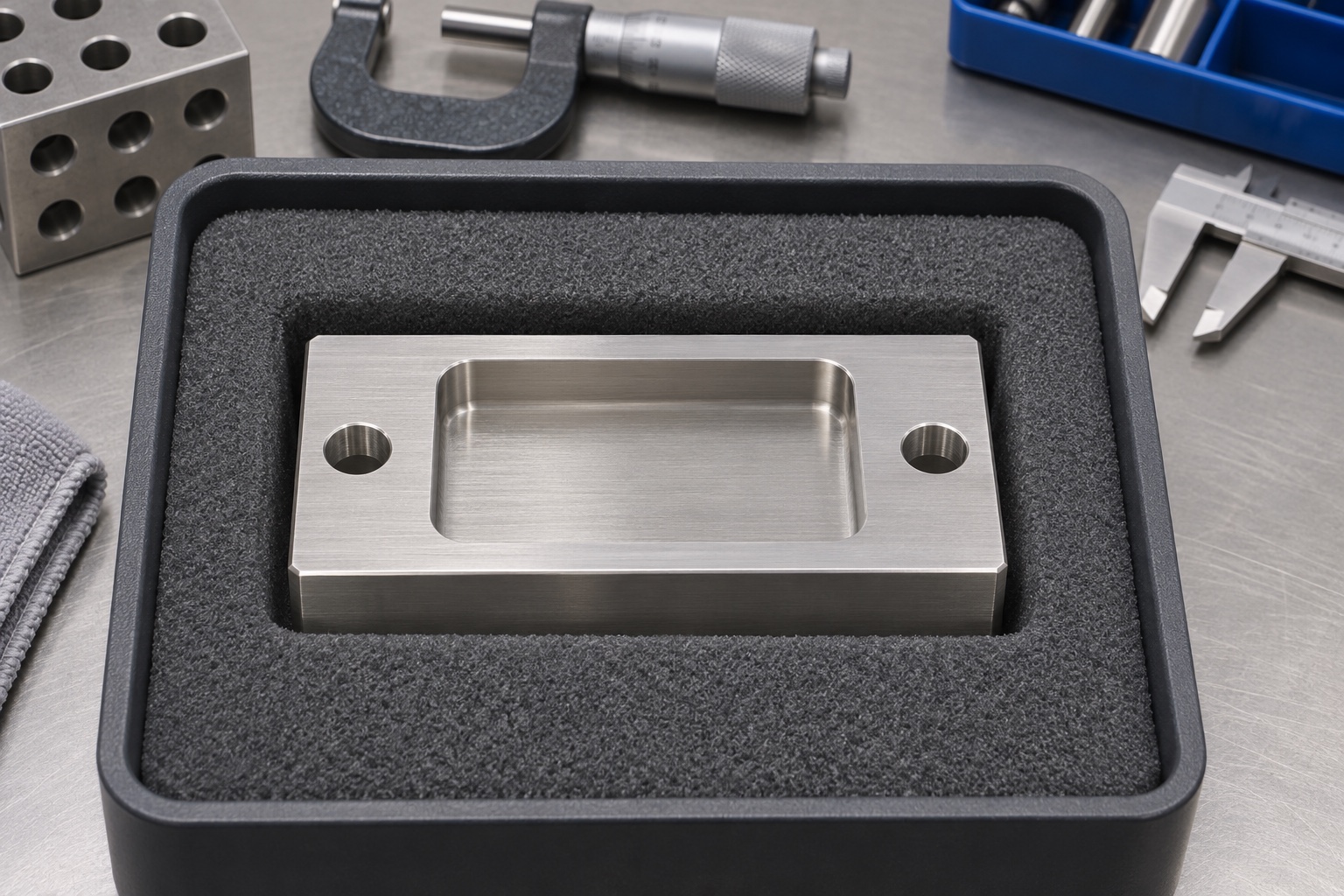
Use a fitted insert that contacts stable exterior faces and protects the pocket from other metal parts. Bag hardware separately if the order includes it. Link the packaged part to its drawing revision and material lot and keep the inspection record accessible. At receipt, check the insert for crush or movement, then inspect the block underside, seating edges and recess. If shipping damage is suspected, repeat the relevant checks under the same conditions. The packaging concept provides physical protection only, not a sterile barrier or a controlled-storage claim.
Close with a defined manufacturing record
A real purchase would require an approved drawing, material and surface requirements, confirmed reference cassettes, inspection plan and packaging instructions. The supplier would provide evidence about the finished block, while the owner would decide whether the fixture suits the intended inspection use. Any requested compatibility with a named microtome, contact with specimens or claim about sectioning would require additional evidence and is outside this example. The useful output is a clear relationship between the drawing, the machined contacts, the geometry report and a bench trial that can be repeated.
Manufacturer background reference: www.leicabiosystems.com.
FAQ
Was the nest supplied to a customer?
No. This is a representative machining example with illustrative images. It reports no customer, actual delivery, approval, measurements or verified clinical performance.
What does the shallow recess do?
It provides room for an empty cassette while selected surfaces define seating. Other regions are relieved to avoid false contact or to allow handling, subject to the approved drawing.
What are the two holes for?
They are mounting holes in the illustrative concept. Unless specified as locating features, their clearance should not be relied on to establish precise position.
Can the fit check replace dimensional inspection?
No. The fit check can reveal interference in the particular setup. The dimensional report records whether specified metal surfaces meet the drawing in the defined state.
Why keep the trial cassette identified?
Its geometry, wear and revision affect fit. An identified reference makes it possible to reproduce the check and separate variation in the cassette from variation in the nest.
Is the nest for use with tissue or a blade?
No. This example is limited to empty cassette inspection on the bench and is not an instruction to install tooling on a microtome.

tanghangyun@oemach.com