
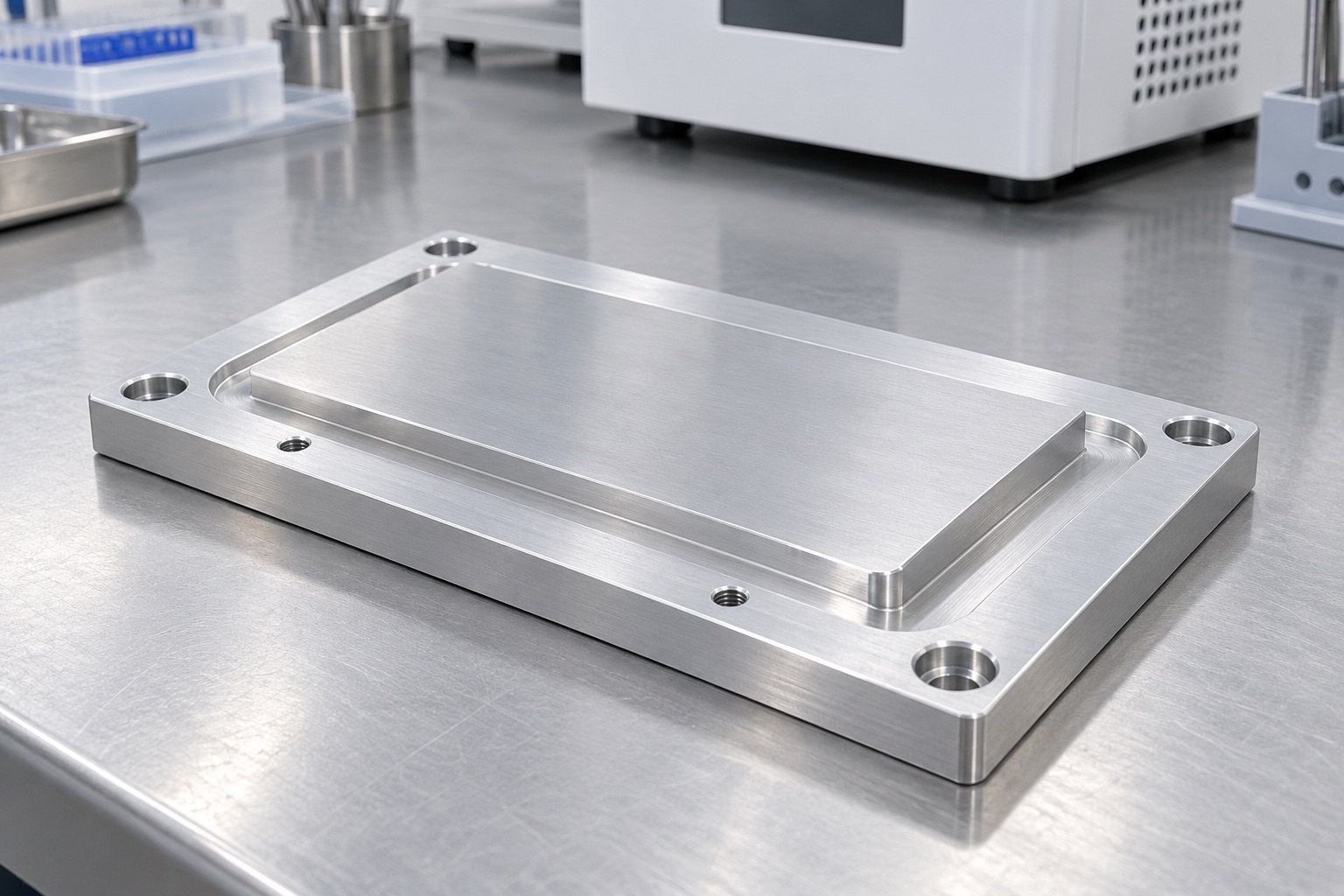
A representative solid-base component
This example considers a proposed 6061 aluminum heat-sink mounting base with a raised contact island, perimeter step and mounting holes for medical equipment electronics. It describes a possible CNC workflow, not an actual customer delivery, rated cooling assembly or validated medical device. The pictures illustrate concepts rather than achieved dimensions or test results. The final part would require an approved drawing, material condition and mating-interface documents. No heat dissipation capacity, operating temperature, electrical protection or achieved tolerance is claimed without the project-specific evidence needed to support those statements.

Review the contact and mounting package
The proposed order would begin with the controlled model and drawing, module contact arrangement and approved mounting information. The review would separate functional contact from clearance and appearance regions. A footprint alone would not define the underside geometry, interface material or installation requirements. Missing information would be returned for written clarification before the cost estimate and production route were finalized. The purchase scope would distinguish dimensional manufacture, any optional assembly demonstration and separate thermal evaluation, preventing an implicit assumption that a machined plate automatically qualifies the complete equipment cooling configuration.
Preserve the specified aluminum identity
The raw material specification would include 6061 together with the required condition and documentation. Lot identity would remain associated with the blanks after cutting and through machining, finishing and packing. A visually similar aluminum piece would not be an approved substitute merely because its color matched. The supplier would review raw material form and machining allowance against the stepped geometry. Any change intended to improve production efficiency would require authorization before altering the controlled configuration. The material choice would remain a design input, not a universal claim about cleaning compatibility, thermal capacity or medical certification.
Establish stable support for roughing
The route would maintain adequate support as material was removed around the contact island and perimeter step. Workholding would avoid bending the plate to satisfy a setup reference. The supplier would control chips at contact locations and check tool access before critical cuts. Intermediate measurements could confirm that the sequence remained suitable, but would not replace acceptance of the finished component. If the released geometry changed after substantial removal, the route would be reviewed rather than compensated through undocumented clamping force. The aim would be repeatable manufacture rather than one apparently correct part restrained by a fixture.

Transfer the functional references deliberately
The mounting plane and selected locating features would establish how the plate was positioned through subsequent setups. Contact height and mounting-hole geometry would remain related to the same approved reference scheme. A convenient raw blank edge would not silently become the acceptance reference. If several parts shared a fixture, each position would require suitable support and access. Setup verification would remain distinct from final inspection. A correctly located blank could still produce an unacceptable interface if later operations failed to preserve the required geometric relationships or if the part was measured under an inappropriate support condition.
Finish the specified contact island
The contact face would be finished to the approved geometric and surface requirements, with its relationship to surrounding steps preserved. The supplier would distinguish the drawing's form requirement from any separate texture requirement. Uncontrolled polishing would not be used to turn a visual impression into acceptance evidence. Tool access and edge transitions would be reviewed before machining so that any relief could be approved. The route would not infer an acceptable contact area from one unapproved module sample, and a change to the island would remain visible in the drawing revision and corresponding inspection requirements.
Complete mounting holes and controlled edges
Mounting holes and any specified screw threads would follow the approved hardware arrangement and functional references. Hole entrances, exits and step boundaries would be examined for burrs that could affect seating or access. Edge treatment would preserve the required contact geometry rather than round every surface indiscriminately. The supplier would resolve model and drawing discrepancies before production instead of asking the assembly team to work around them. Any authorized change to clear a fastener or module feature would be recorded before it became part of the repeat-production baseline and dimensional evidence package.
Apply only the approved final process
If the design required anodizing or another treatment, masking, documentation and final-state inspection would be agreed in advance. A contact region would not receive an unapproved coating merely to create uniform appearance. The example prescribes no coating thickness and claims no general resistance to cleaning chemicals. Appearance could be documented separately from functional acceptance. The treatment source and lot records would remain associated with the order, and a changed process would be reviewed for its effect on the accepted configuration rather than assumed to be a harmless cosmetic substitution.
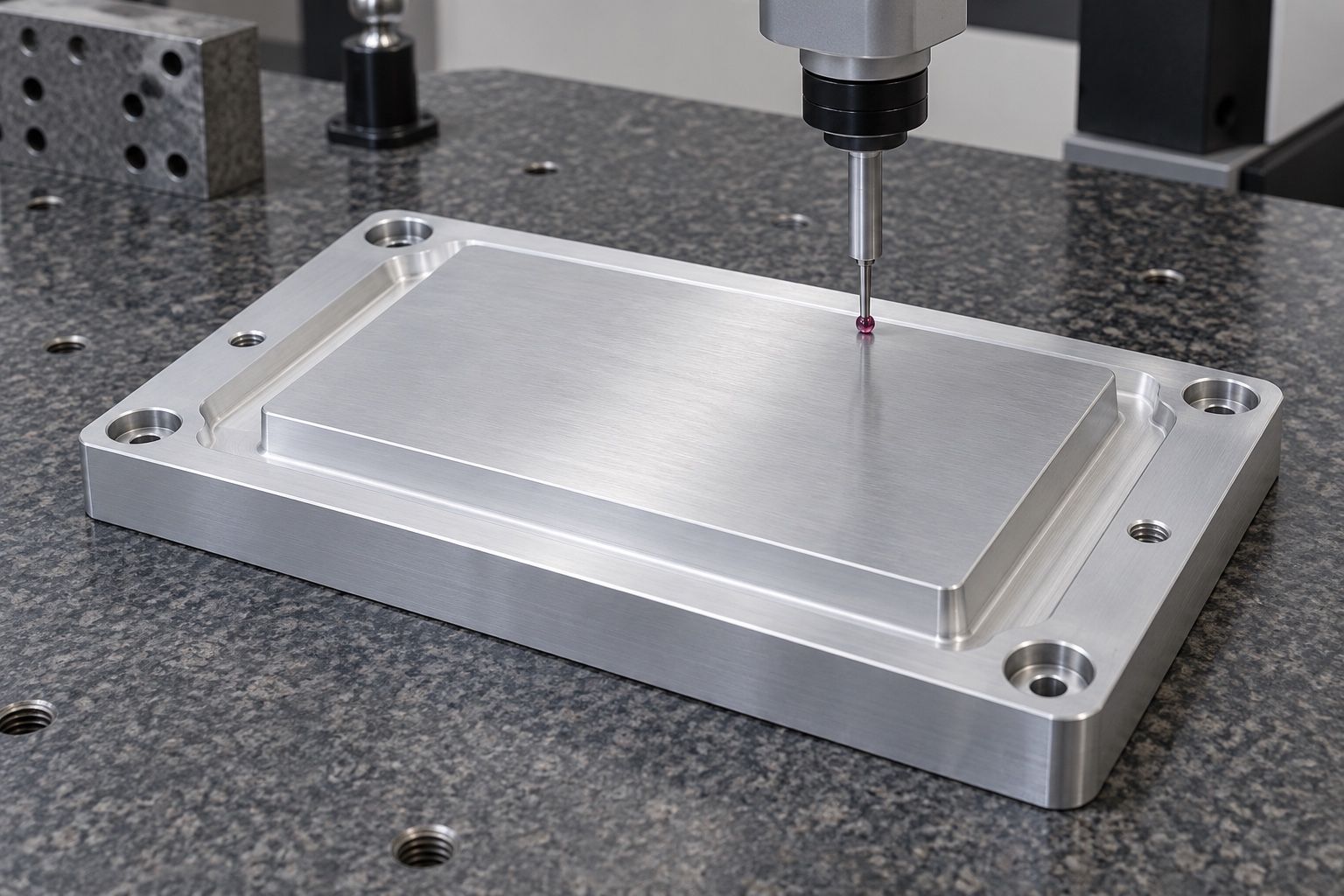
Create a drawing-linked first-part report
The first-part report would identify revision, lot and numbered requirements, covering the specified contact face, step height and mounting relationships. It would record support and measurement conditions, and would address any texture requirement through its agreed method. No numerical results are supplied because this example has no manufactured specimen or inspection record. Material and dimensional evidence could support component acceptance within the purchased scope, but would not establish heat dissipation, safe operating temperature or electrical protection. An installed-condition measurement, if required, would be documented separately from any free-condition acceptance requirements.
Define the optional assembly demonstration
A separately agreed demonstration could check seating, fastener access and clearance using identified approved components. The procedure would state the plate revision and mounting arrangement. It would not be described as thermal qualification unless an appropriate evaluation had been separately defined and performed by the responsible equipment program. If interference appeared, the team would document contact before changing the island or mating part. Hand fitting a prototype would not establish a production standard without approved documentation. Results would not transfer automatically to a different module, interface material, enclosure or installation arrangement.
Protect functional faces during shipment
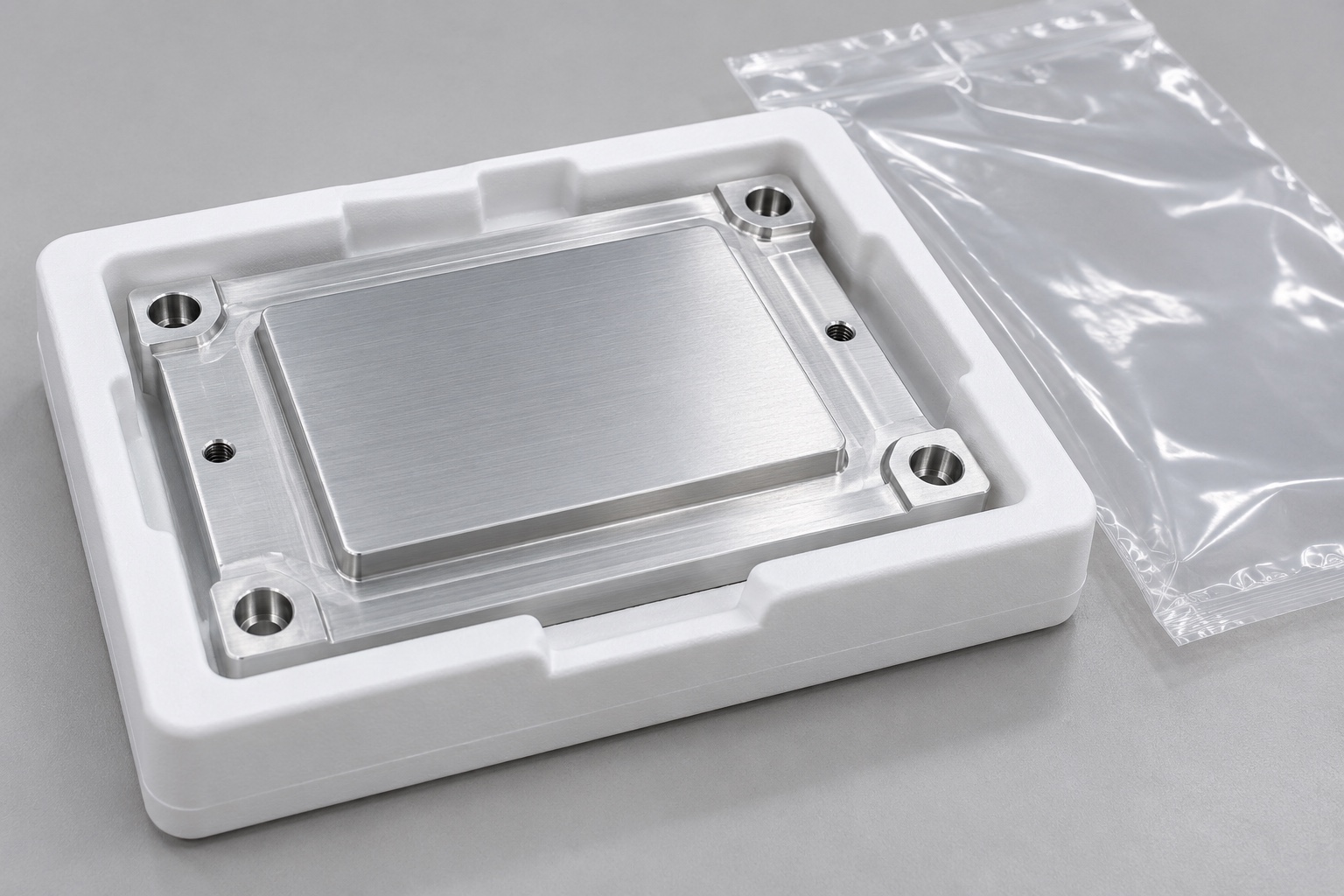
Packaging would separate plates and prevent rubbing or impact at the contact island and mounting references. Protective supports would avoid bending thin regions. The agreed cleaning scope would be stated accurately; ordinary bags would not be represented as sterile supply or quantified cleanliness evidence. Identification would remain with the lot without adding adhesive or unauthorized marking to functional contact areas. If an approved assembly sample traveled with the order, it would be identified separately from the accepted machined component so the recipient could preserve the correct configuration and avoid interpreting a trial assembly as completed equipment validation.
Keep repeat production tied to the approved interface
The repeat-order record would retain the drawing revision, material condition, contact arrangement, final process and inspection deliverables. Authorized prototype changes would be incorporated into controlled documents rather than left in a shop sample. The equipment owner would review altered modules, interface materials or installation before reusing prior conclusions. This representative example provides a disciplined purchasing framework for medical electronics components: define the interface, preserve the manufacturing references and supply agreed evidence, while keeping complete thermal and medical-device qualification separate from what a CNC component drawing and dimensional report can establish.
Manufacturer background reference: www.eaton.com.
FAQ
Is this a delivered and thermally qualified customer project?
No. It is a representative CNC manufacturing example. No customer shipment, cooling rating, achieved tolerance, certification or validated medical-device performance is asserted, and the pictures are not production inspection evidence.
What defines the contact island?
The approved component drawing and mating-interface documents define its geometry and requirements. A module footprint, photograph or unapproved sample is not a complete production specification for the contact arrangement.
What would the first-part report demonstrate?
It would document the agreed drawing features, references and measurement condition. It would not by itself establish heat dissipation, operating temperature or electrical protection in the complete equipment assembly.
Can anodizing be added after an untreated prototype is accepted?
Only through a reviewed change. Masking, final dimensions and functional contact conditions may require reassessment before the treated configuration is approved for production and repeat orders.
Can a module seating demonstration be included?
Yes, with identified components, a written procedure and explicit checks. It remains separate from thermal qualification unless that evaluation is independently defined, authorized and documented by the responsible program.
Which records control the repeat order?
Retain approved revision, material identity, surface process, contact arrangement, mounting information and inspection plan. Review changes to the module, interface material or installation before assuming earlier assembly conclusions remain applicable.

tanghangyun@oemach.com