
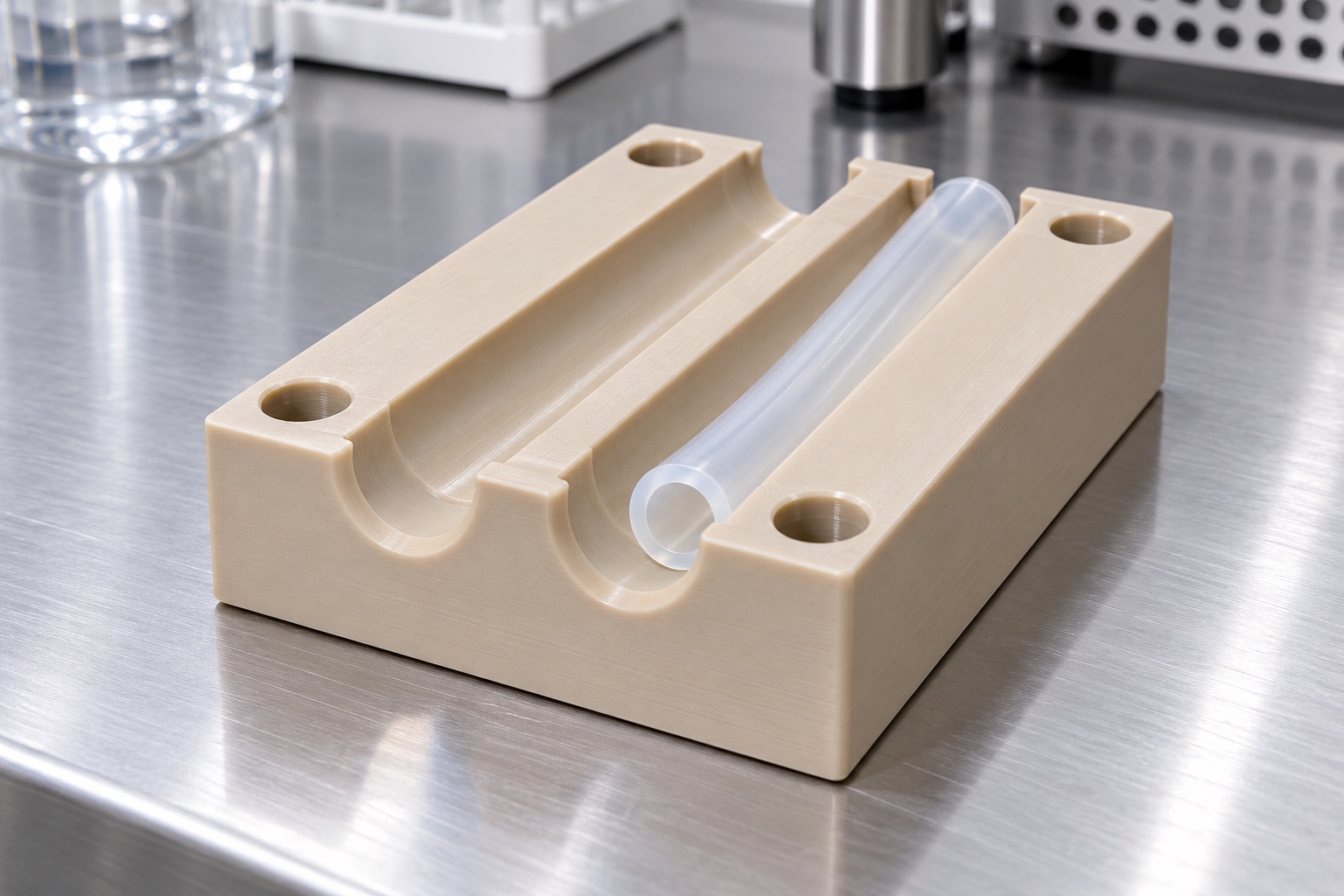
A proposed guide rather than a delivered valve
This representative example describes a small PEEK block with open tube-guiding channels, rounded entry transitions and a mounting-hole pattern. Its intended role is to support tubing outside the fluid path in a proposed medical equipment assembly. It is not an actual customer delivery, a tested pinch valve or an approved fluid-contact component. The images illustrate manufacturing stages and do not supply measured results. A production order would require controlled drawings and application review, including confirmation that the guide remains non-wetted in the actual equipment configuration.

Review tubing and actuator documents
The initial review would obtain the approved tube specification, the guide drawing and the relevant actuator envelope. It would identify where the tube is guided, where it is compressed and how it is inserted or replaced. Tube outside diameter would not be used as the sole design input. The review would also address wall thickness, allowed variation and the approved routing arrangement where relevant. Missing interface information would become a clarification request rather than an assumed manufacturing tolerance, and a cost estimate would state the limits of any assembly trial.
Purchase the specified PEEK material
The proposed raw material purchase would identify the approved PEEK grade and required traceability documents. Natural color alone would not be accepted as proof of grade. Raw material identification would remain linked to the lot through cutting, machining and packaging. Any proposed alternative would need review before use. The example does not claim that PEEK universally meets medical cleaning, biological or regulatory requirements. Those requirements depend on the actual application and supporting material evidence, while the machining route addresses how to create and verify the specified geometry.
Establish support and reference surfaces
The block would be supported at defined locations while reference faces were established. Workholding would avoid excessive force near the channel area and preserve access for later operations. The route would relate mounting features and channel geometry to the functional reference scheme shown on the approved drawing. The supplier would check that setup contact did not conceal chips or force a distorted blank into an apparently flat condition. After release, a suitable check would confirm that the workholding approach remained appropriate before the finishing sequence was accepted for repeat production.
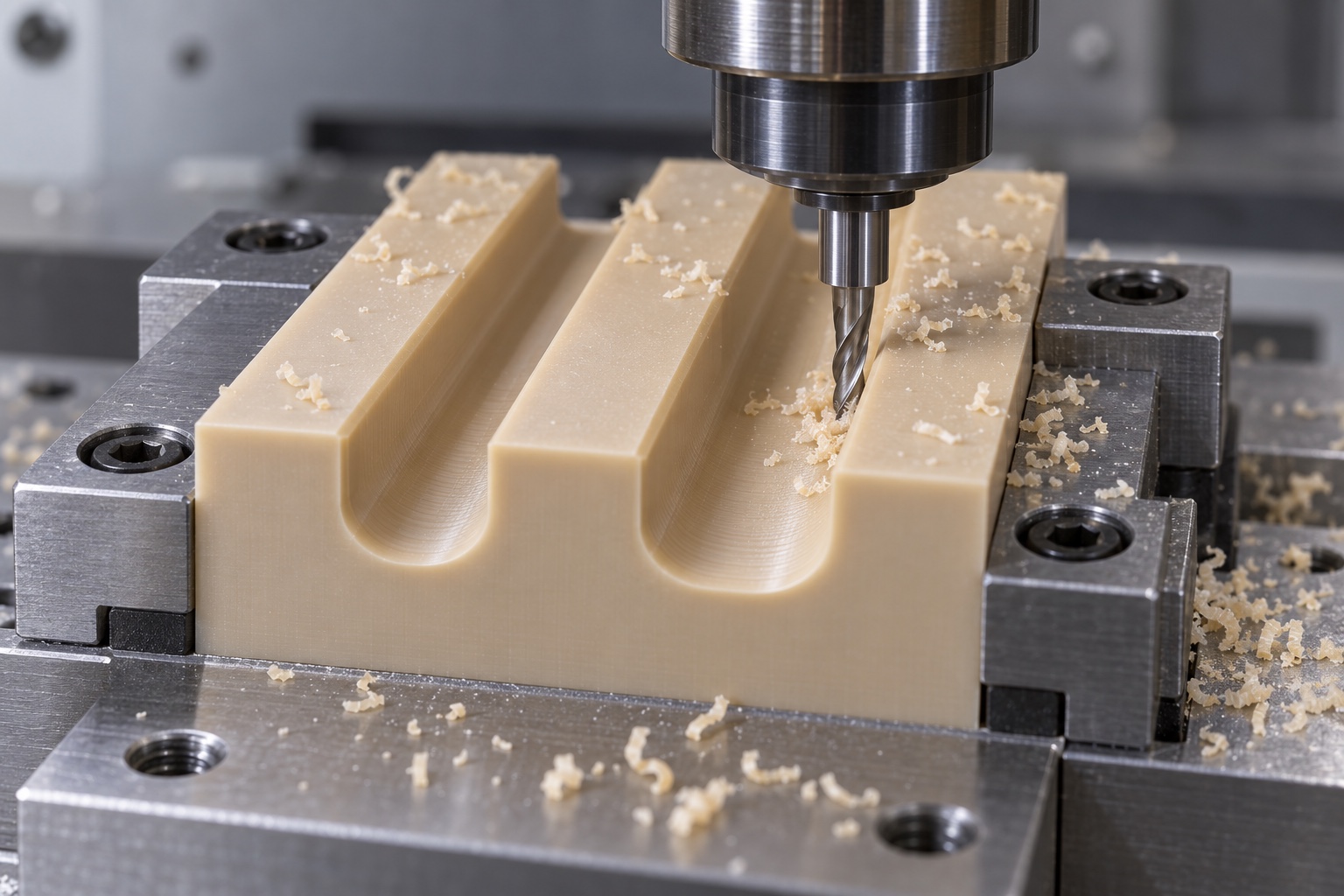
Machine the open channel profiles
The channel operation would be planned around the approved profile, entry transitions and tool access. A cutter selected for convenience would not justify changing the required channel radius or leaving an unapproved ridge. The route would maintain sufficient support as material was removed and keep loose polymer debris out of reference contacts. Cutting conditions would be established for the actual grade and equipment instead of copied from an unrelated polymer part. Intermediate checks could identify drift, but the final report would still verify the finished geometry under the agreed inspection condition.
Relate mounting holes to the tube route
Mounting holes and any specified counterbores would be produced relative to the controlled reference surfaces. Their positions would matter because the guide must align with the approved actuator and tube path when installed. The review would include fastener-head and tool clearance rather than considering the polymer block in isolation. A mounting screw should not become an unintended contact with the tube. If the model and drawing disagreed, the discrepancy would be resolved before production, and any resulting design change would be recorded in the approved revision.
Inspect and finish channel transitions
After machining, the supplier would inspect channel entrances, exits and hole edges for attached polymer material. The removal process would preserve the drawing-defined profile and avoid uncontrolled scraping or rounding. A glossy surface would not automatically be accepted as a verified texture. The proposed inspection would identify which surfaces contact the tubing and which are clearance areas. Any cleaning step would be compatible with the documented material and purchase requirements. The example does not authorize heat smoothing, solvent treatment or another unrecorded process merely because it improves the appearance of a photograph.
Stabilize the measurement condition
Before final dimensional acceptance, the block would be placed in the condition specified by the inspection plan. Where necessary, the method would address temperature, conditioning time and measurement force. Accessible channel profiles could be evaluated optically, while other methods could check mounting relationships. The chosen equipment would need to measure the actual drawing requirement, not a convenient proxy. Results would be associated with the part revision and lot. If the drawing required inspection in an installed condition, that arrangement would be defined separately from the free-condition measurements.
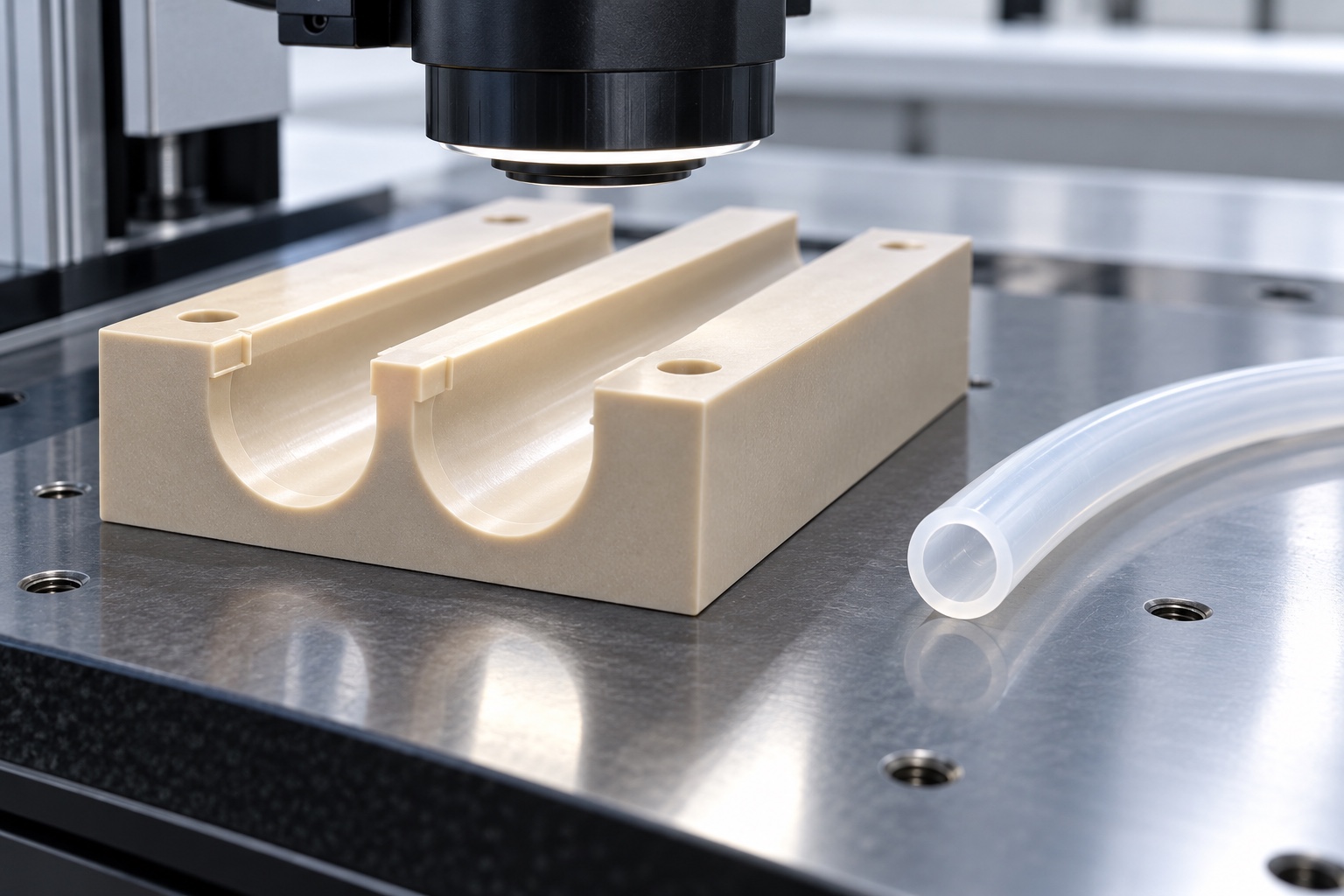
Build a traceable first-part record
The first-part report would map results to the drawing features, including the channel profile, entry transitions and mounting relationships. It would identify the inspection references and any agreed sampling arrangement. No tolerance achievement or measured value is asserted in this example because no physical production specimen or report has been supplied. Material documents and dimensional records would remain distinct evidence items. Together they could support an acceptance decision within the purchased scope, but they would not establish the performance or regulatory status of the complete pinch-valve system.
Specify the optional tubing trial
An optional trial could use the approved tubing and a documented mating arrangement to evaluate loading access and agreed interference checks. The record would identify tube grade, dimensions, guide revision and assembly configuration. It would not be described as proof of leak-tight closure or service life unless an appropriate assembly-level test was separately authorized and performed. An observed interference would lead to a documented review. Hand cutting a channel to make one sample fit would not become the production standard without an approved drawing change and corresponding inspection requirements.
Separate and protect finished blocks
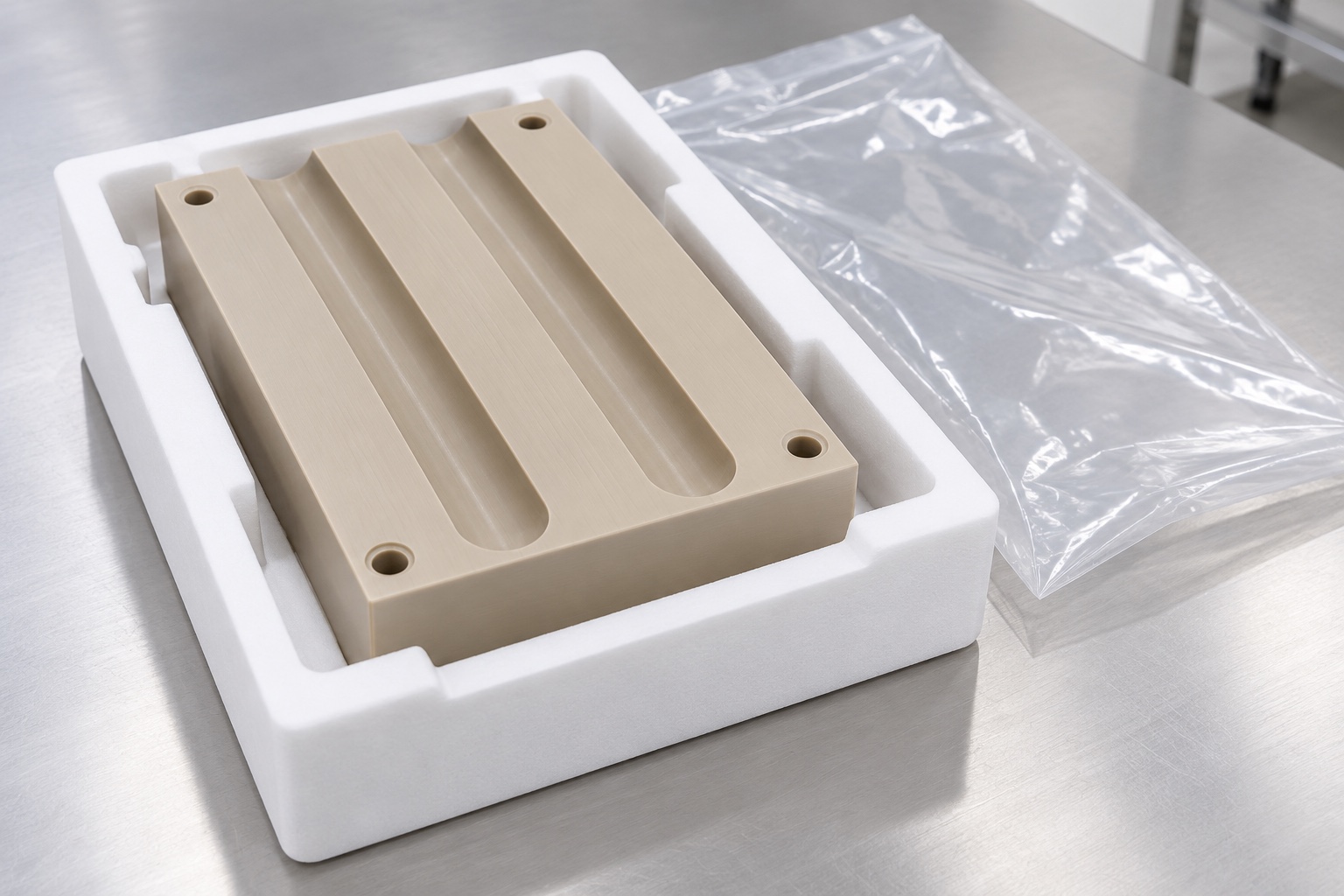
Packaging would prevent channel edges from rubbing and keep loose debris out of functional surfaces. Individual tray positions or another agreed protective arrangement could support that objective. Clean protective bags would be described accurately as transport protection, not as sterile barriers. Identification would remain associated with the lot and would not introduce an unapproved marking inside the tube contact area. If a quantified cleanliness requirement were part of the order, its verification would be specified independently. A visually clean package alone would not establish that the component meets an equipment program's cleanliness criteria.
Freeze the approved repeat-order scope
The repeat-order package would retain the component revision, material specification, channel inspection method, packaging requirements and any authorized prototype changes. The equipment owner would review changes to the tube, actuator or cleaning environment rather than assuming the old guide remains suitable. The supplier could then estimate production against a defined mechanical interface and evidence package. This example demonstrates a disciplined manufacturing approach, not a claim of completed clinical qualification. Clear boundaries make it possible to discuss CNC capability without inventing customer outcomes, universal tube compatibility or a tested valve performance result.
Manufacturer background reference: www.takasago-fluidics.com.
FAQ
Is this a documented customer project?
No. It is a representative CNC manufacturing example for a proposed non-wetted guide. No delivery, certification, measured performance or completed valve validation is claimed, and the illustrations are not production evidence.
What material information would be required?
The order would specify the approved PEEK grade, raw material form and traceability documents. Color is not enough to identify a polymer, and an alternative grade requires review before substitution.
Why measure the channels relative to mounting features?
The installed guide must align with the actuator and tubing route. A correct groove width alone does not establish that relationship, so the approved drawing must define references and relevant position requirements.
Can hand finishing change the channel profile?
Only within an approved process and drawing limits. Uncontrolled scraping or rounding may alter tube contact. Any necessary design change should be documented and followed by appropriate inspection rather than hidden in sample preparation.
Would an optional fit trial demonstrate shutoff?
Not unless a separately approved assembly-level procedure explicitly evaluates that function. A simple fit trial covers only the agreed loading and clearance checks using identified tubing and assembly components.
What must be reviewed before repeating the order?
Confirm the approved revision, polymer grade, tubing specification and actuator interface. Retain inspection and packaging requirements, and review changes that could alter contact geometry or the component's intended equipment environment.

tanghangyun@oemach.com