
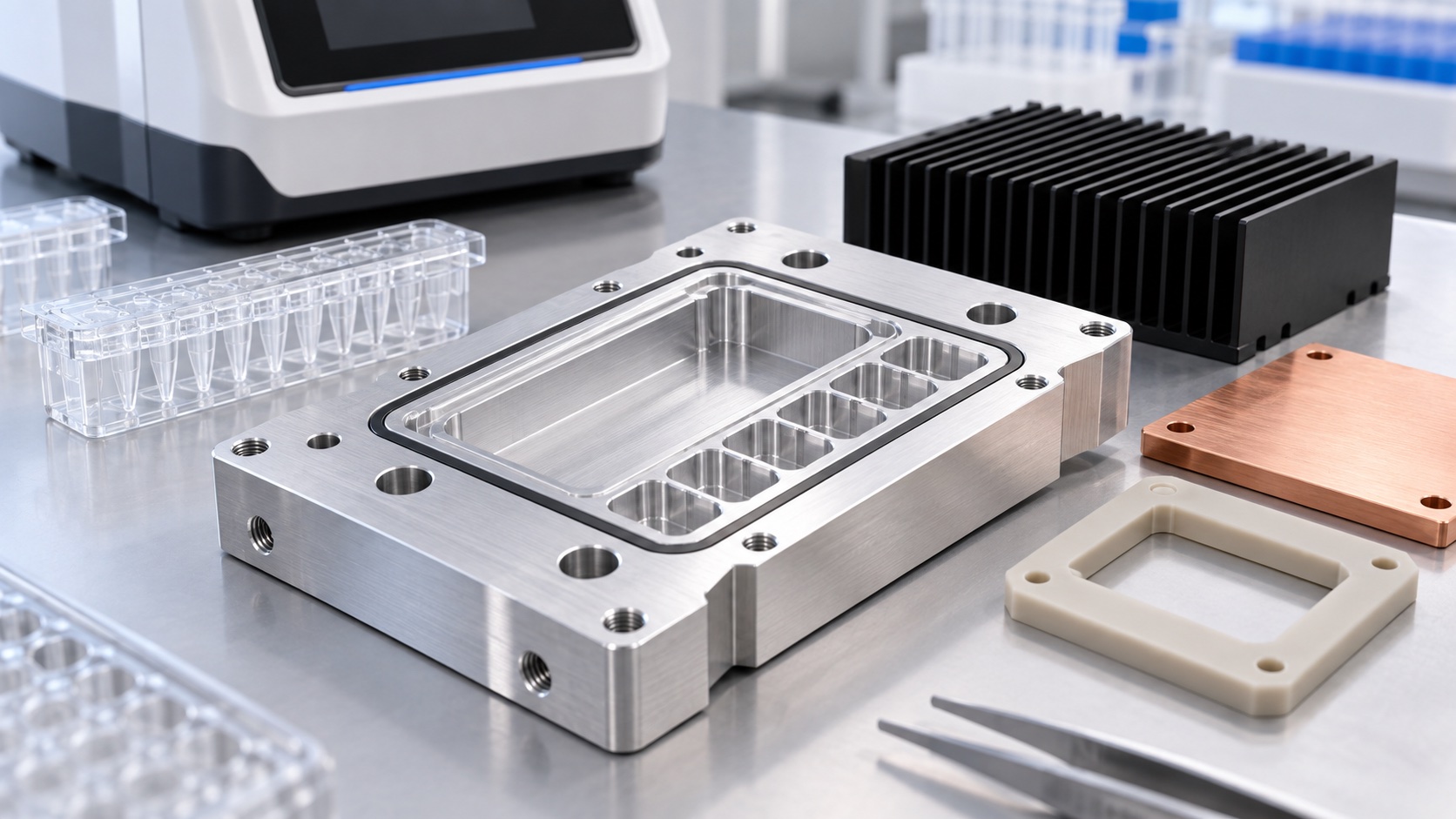
CNC Machined 6061-T6 Aluminum PCR Thermal Cycling Module Carrier
This product case describes a CNC machined 6061-T6 aluminum carrier used in a compact PCR thermal cycling module. The carrier supports a heated block, positions the disposable cartridge interface and provides mounting references for sensors and a small optical frame. Although the part is not exposed to patients, it directly affects thermal contact, assembly repeatability and long-term reliability of the diagnostic device.

The customer required a lightweight part with good thermal conductivity, tight pocket depth, controlled flatness and a finish suitable for repeated service inside an instrument. 6061-T6 aluminum was selected because it offers stable machining, good conductivity and reliable anodizing. The drawing defined a flat heater interface, two precision dowel holes, several threaded inserts, sensor clearance pockets and a black anodized surface on selected faces.
During DFM review, we focused on three risks: distortion around the thin pocket floor, burrs near the cartridge datum pads and coating buildup in threaded or dowel features. The machining plan used a stress-balanced roughing sequence, custom soft jaws and finish passes after the part relaxed. Masking notes were added for critical holes, while edges near the cartridge path received controlled break requirements instead of generic deburring.
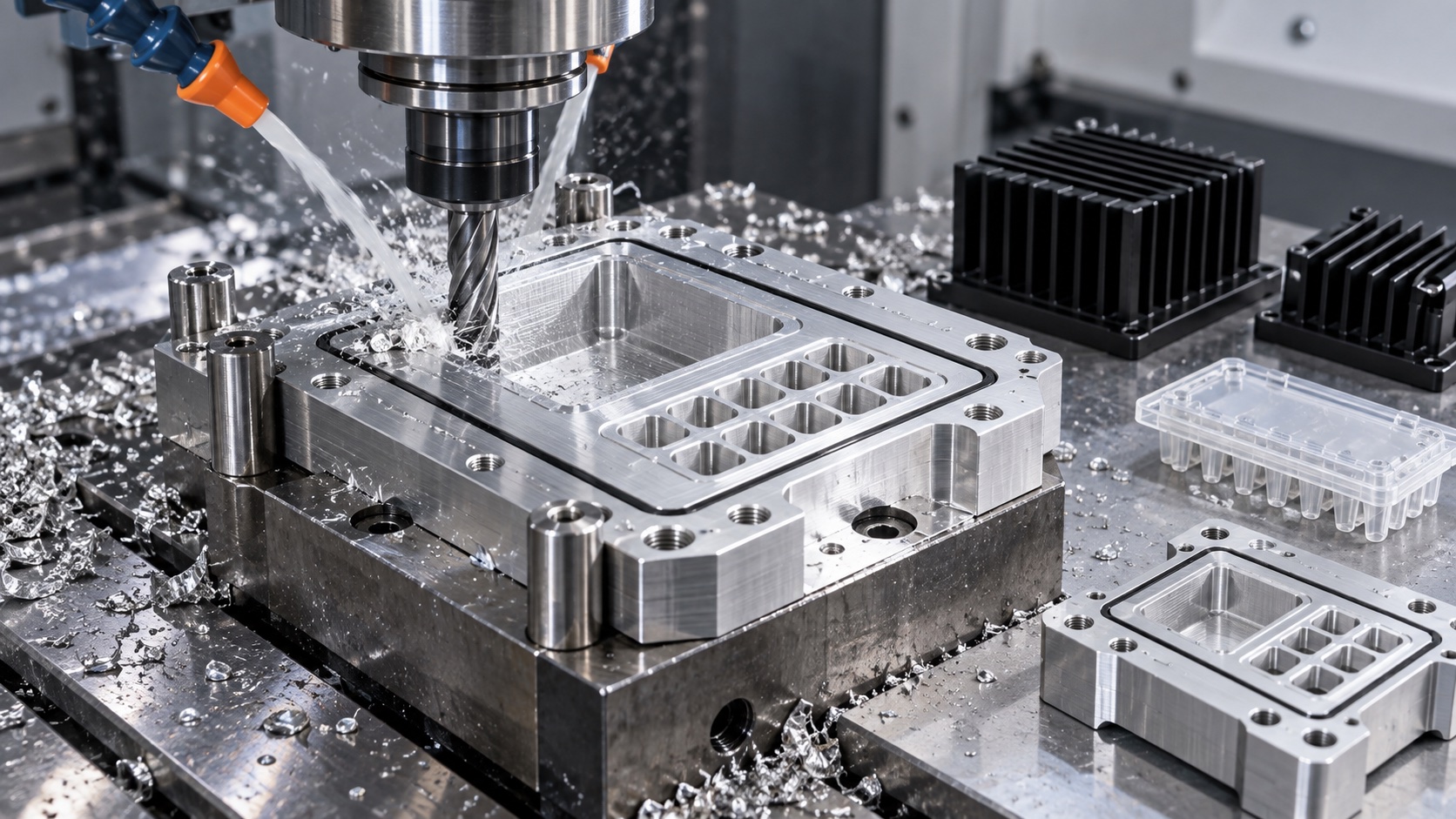
Inspection combined CMM measurement, pin gauges, thread gauges, surface finish checks and coating thickness review. The most important dimensions were not the most visually obvious ones: pocket floor flatness, dowel position relative to the cartridge datum and the heater interface height controlled system performance. First article inspection data was shared with the OEM before pilot production.
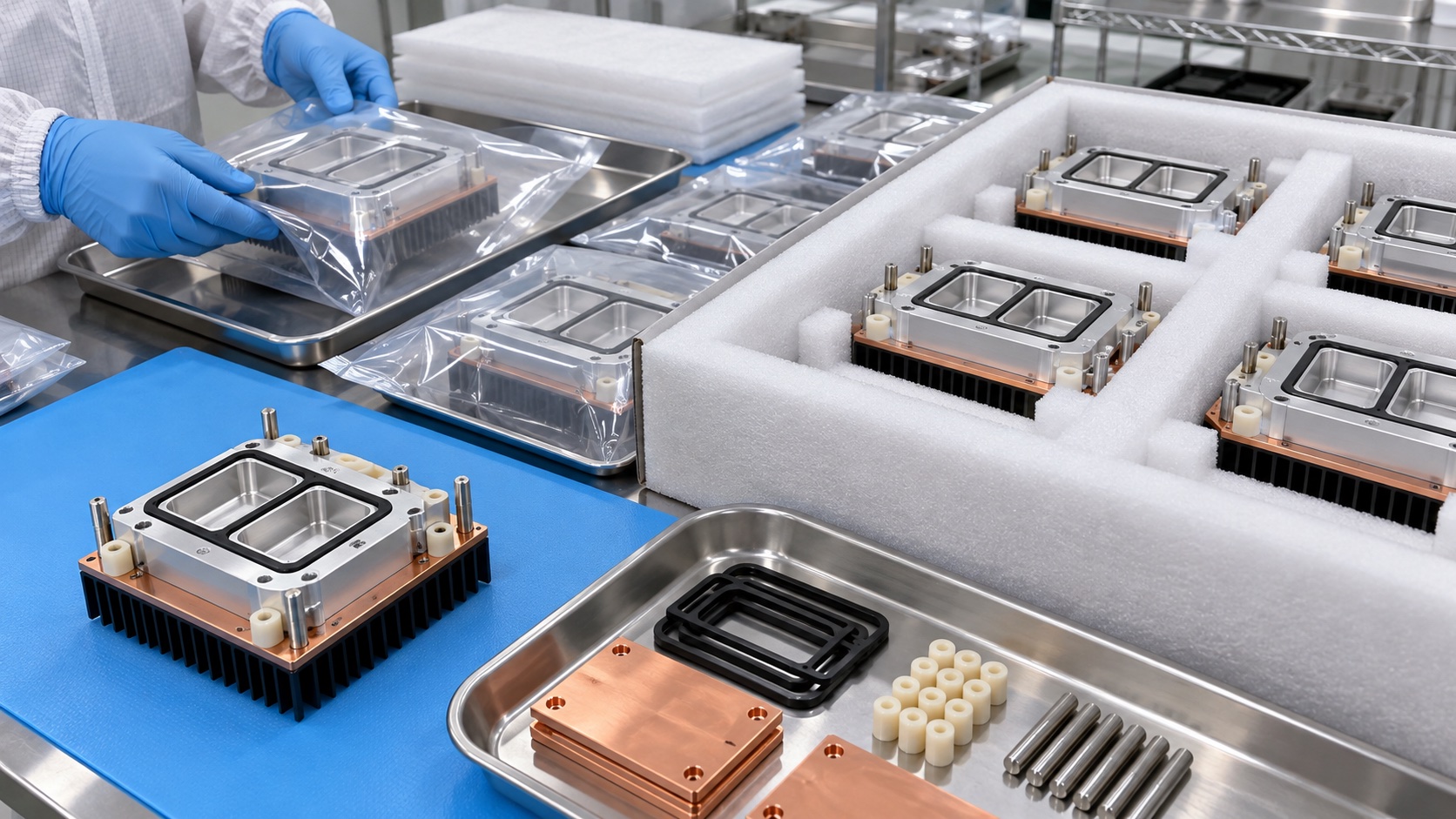
The black anodized finish reduced reflection around the nearby optical path while protecting the aluminum body. After finishing, parts were cleaned, visually inspected under bright light and packed individually to prevent scratches on contact faces. Lot labels linked each shipment to material certificates, coating records and inspection reports.
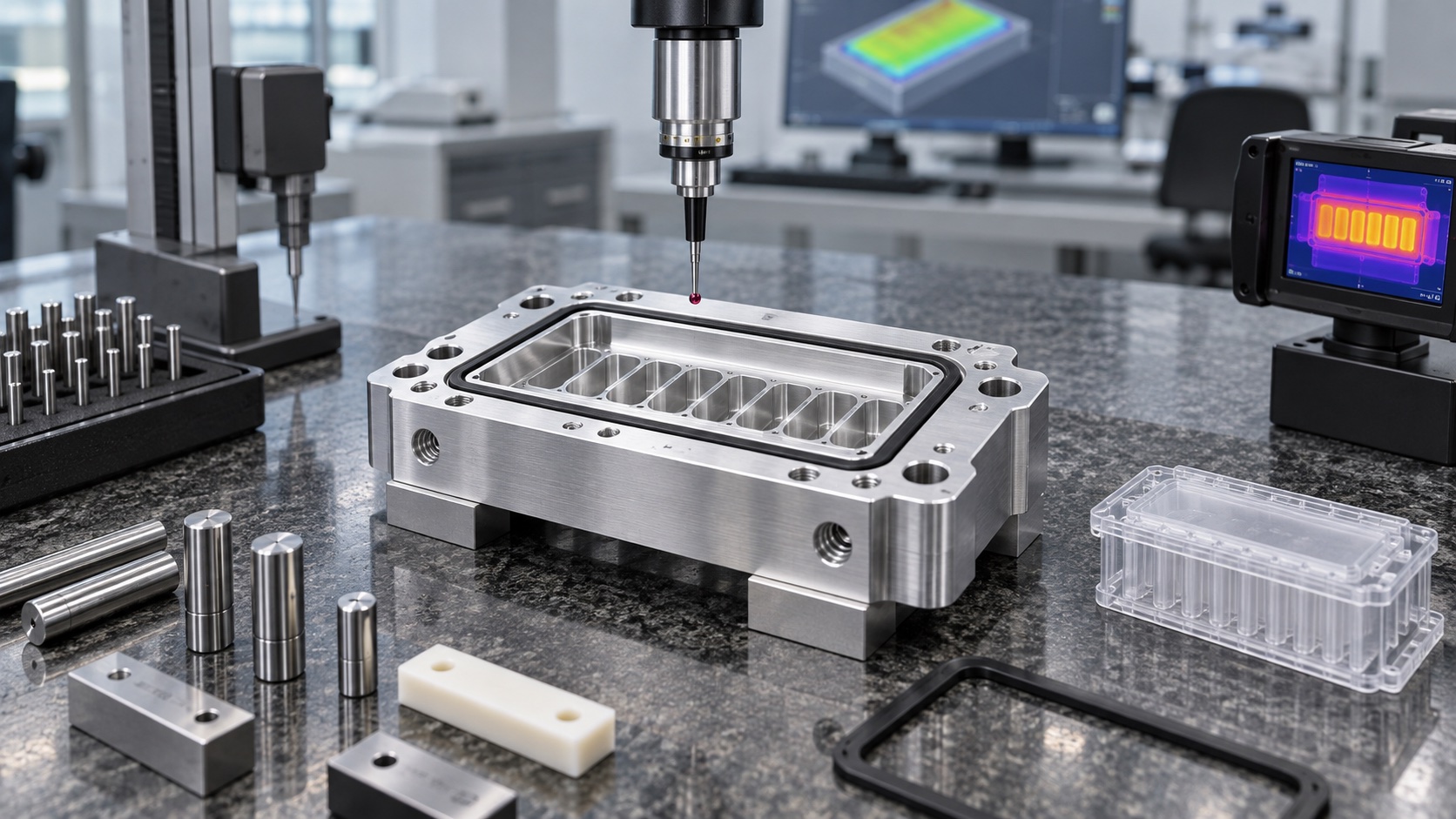
The result was a production-ready carrier that reduced assembly adjustment and improved thermal module repeatability. The project shows why medical equipment components benefit from early collaboration between design and manufacturing: small changes to datums, masking, edge breaks and inspection plans can prevent major delays during validation.
FAQ
What is the main function of a PCR thermal module carrier?
It holds the heated block or thermal module, transfers loads into the instrument frame and maintains the position of cartridge, sensor and optical references.
Why choose 6061-T6 aluminum for this carrier?
6061-T6 provides good thermal conductivity, stable machining, moderate weight and reliable anodizing, making it suitable for many diagnostic instrument structures.
Which dimensions were most critical?
Pocket floor flatness, heater interface height, dowel hole position, datum pad geometry and coating-controlled holes were treated as critical dimensions.
How was anodizing controlled?
Critical holes and contact faces were reviewed for masking or coating allowance, then coating thickness and visual quality were checked after finishing.
What documents were supplied with the parts?
Typical documentation included material certificate, first article inspection report, coating record and final inspection summary.
Can this approach be adapted for other diagnostic devices?
Yes. Similar machining and inspection logic applies to qPCR modules, sample preparation devices, cartridge readers and optical diagnostic platforms.
Contact: tanghangyun@oemach.com