
CNC Machined 316L Surgical Forceps Articulating Jaw Bracket
Product Overview
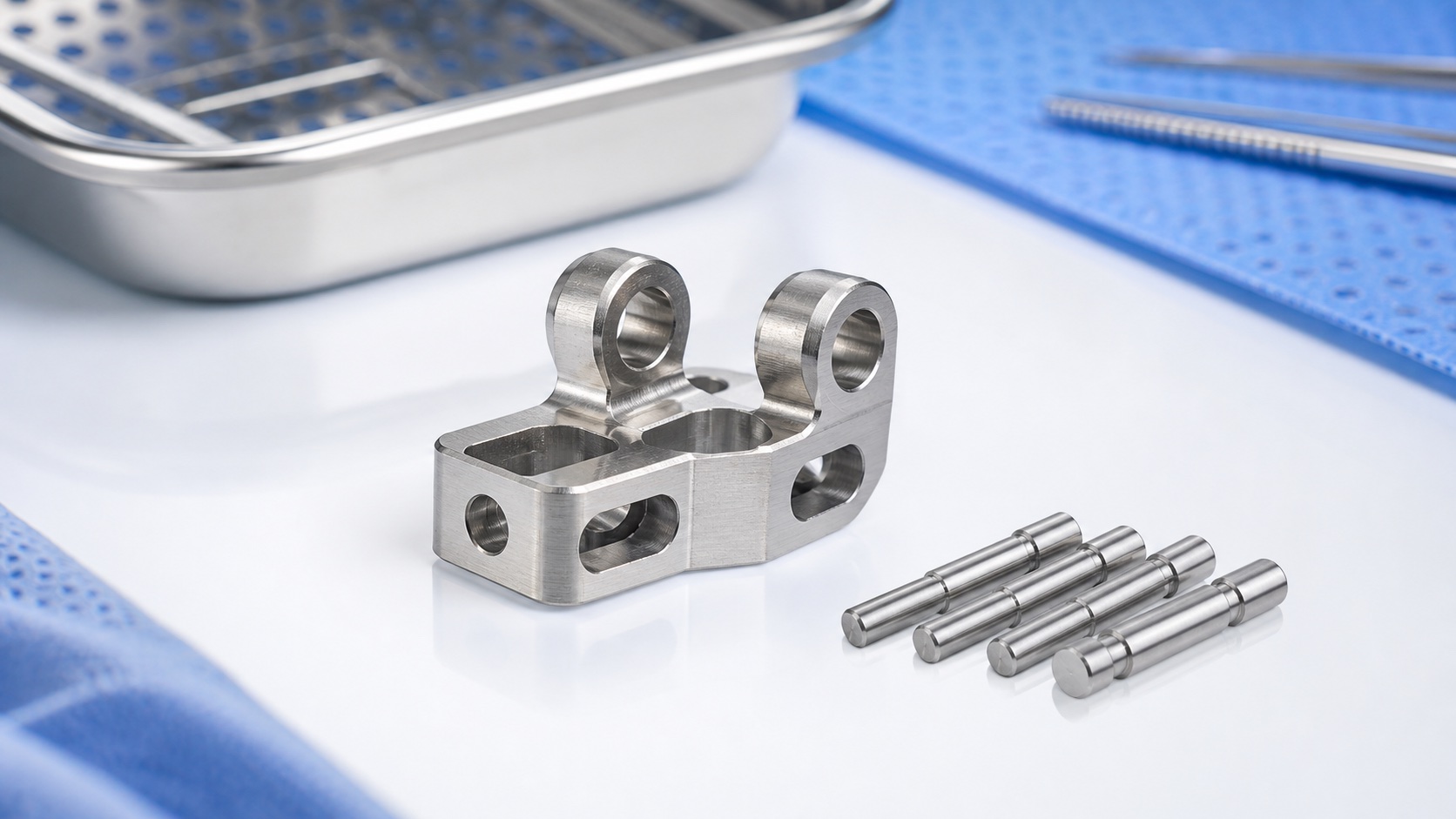
This product case focuses on a 316L stainless steel articulating jaw bracket used at the working end of a minimally invasive surgical forceps assembly. The part combines two hinge ears, pocketed weight-reduction geometry, cross holes, rounded outside profiles and matching hinge pins. Its function is to support smooth jaw movement while keeping the compact end-effector aligned inside a narrow instrument envelope. Although the bracket is small, it includes several features that must be controlled together: coaxial bores, ear thickness, pocket depth, slot width, edge break and surface finish.
Customer Requirement
The customer required a small batch for prototype validation and assembly testing. The part needed stable hinge fit, burr-free edges, clean cosmetic faces and protection during shipment. Because the bracket mates with pins and moving links, the most important dimensions were not only individual hole sizes, but also the relationship between holes, faces and slot walls. We reviewed the drawing to identify datum faces, inspection points and areas where manual deburring had to be tightly controlled.
Manufacturing Approach
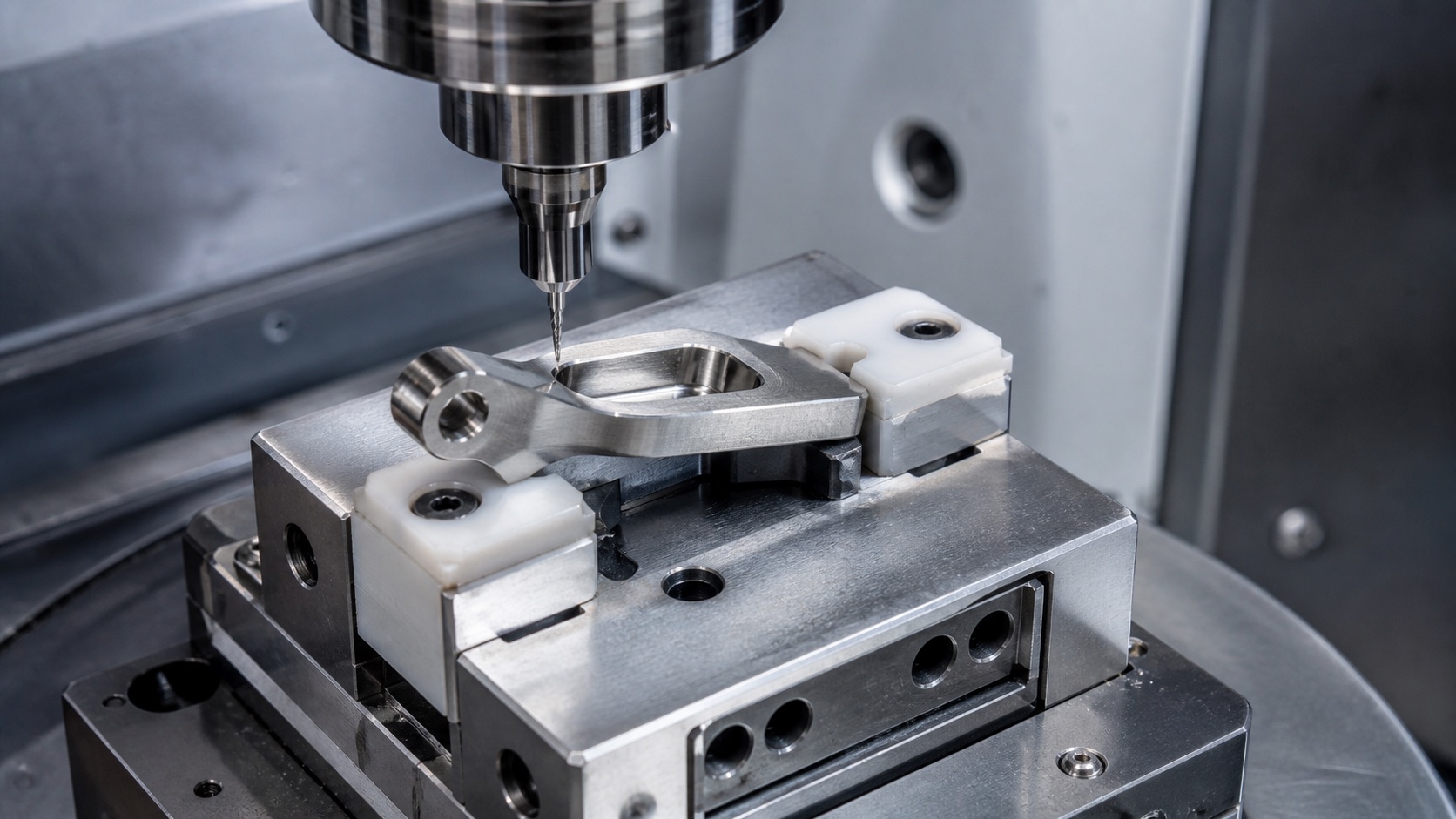
The process used CNC milling with custom soft jaws to support the small 316L blank. Rough machining left controlled stock on the ears and pocket walls. Finishing passes created the hinge bores, internal pockets, outside contours and chamfers. Tool selection emphasized rigidity and edge quality because stainless steel can work harden if rubbing occurs. The machining sequence avoided heavy cutting after the hinge features were finished, reducing the risk of distortion or positional drift.
Inspection and Quality Control
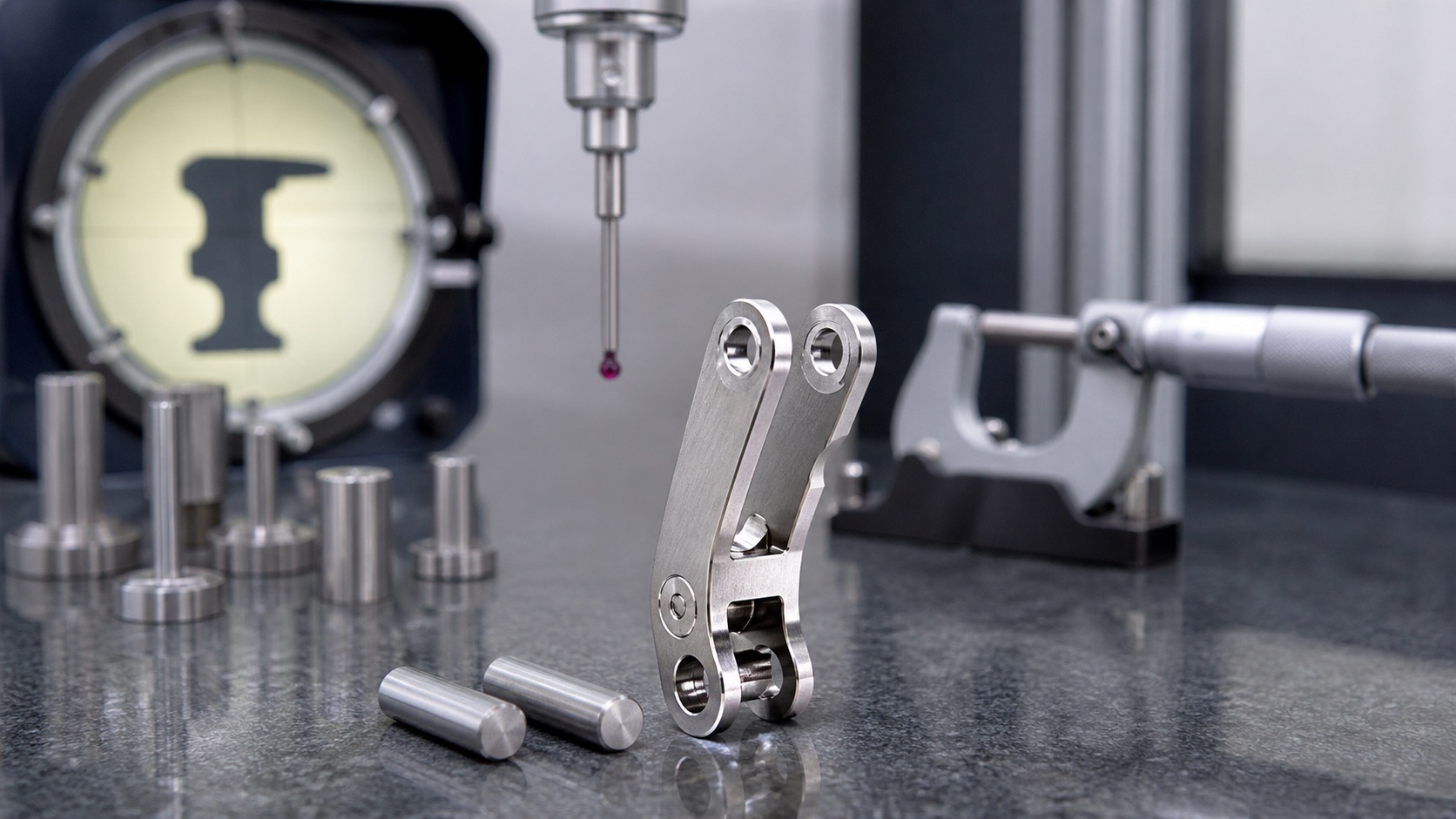
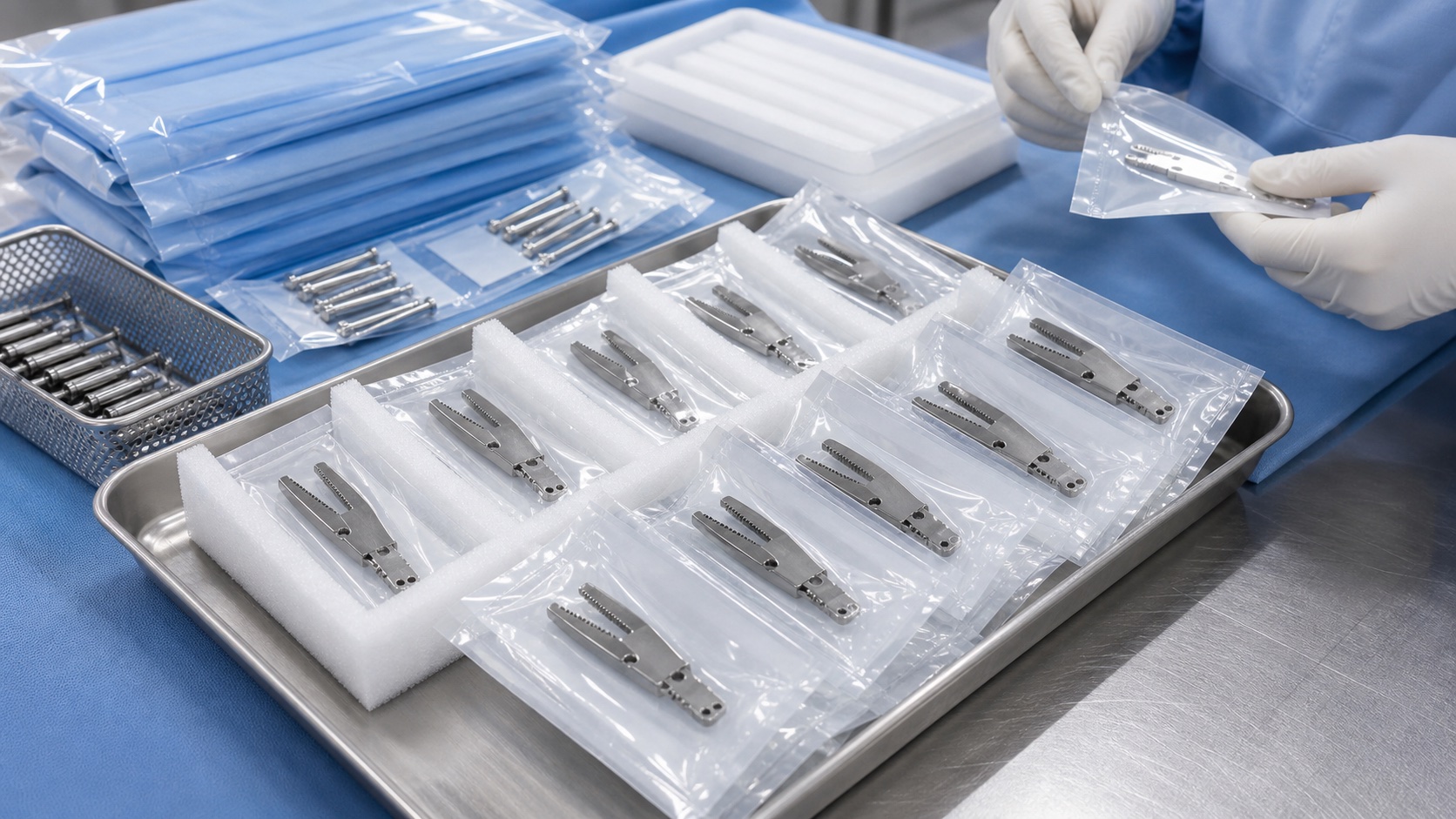
Inspection focused on hinge-hole diameter, coaxiality, parallelism between ears, pocket dimensions, slot width, chamfer consistency and visible burrs. Gauge pins checked assembly fit, while optical inspection confirmed small edge conditions around holes and serrated or narrow features. A first-piece review helped confirm that the fixture and datum strategy were correct before the batch continued. Finished parts were cleaned, separated from the pins and packed in protective trays or pouches.
Result
The completed jaw brackets provided stable assembly fit, smooth hinge movement and clean handling condition for prototype instrument testing. The case demonstrates how CNC machining can support medical device development when manufacturing review, fixture planning, burr control and inspection are treated as one workflow rather than separate steps.
FAQ
What material was used for this jaw bracket?
The case uses 316L stainless steel because it offers corrosion resistance, strength and suitability for medical instrument components.
What tolerances are important on the bracket?
Hinge-hole size and coaxiality, ear spacing, slot width, pocket depth and datum-face flatness are key inspection points.
Why use custom soft jaws?
Custom soft jaws support the small part securely while reducing deformation and surface marking during machining.
Can hinge pins be supplied with the bracket?
Yes. Matching hinge pins can be machined, inspected and packed with the brackets as an assembly kit.
How is burr control handled?
Burr control combines CNC chamfering, sharp tools, controlled manual finishing and magnified inspection.
Is this suitable for prototype and small-batch work?
Yes. This process is well suited for prototype validation, small-batch trials and design iteration before larger production.
Contact: tanghangyun@oemach.com