
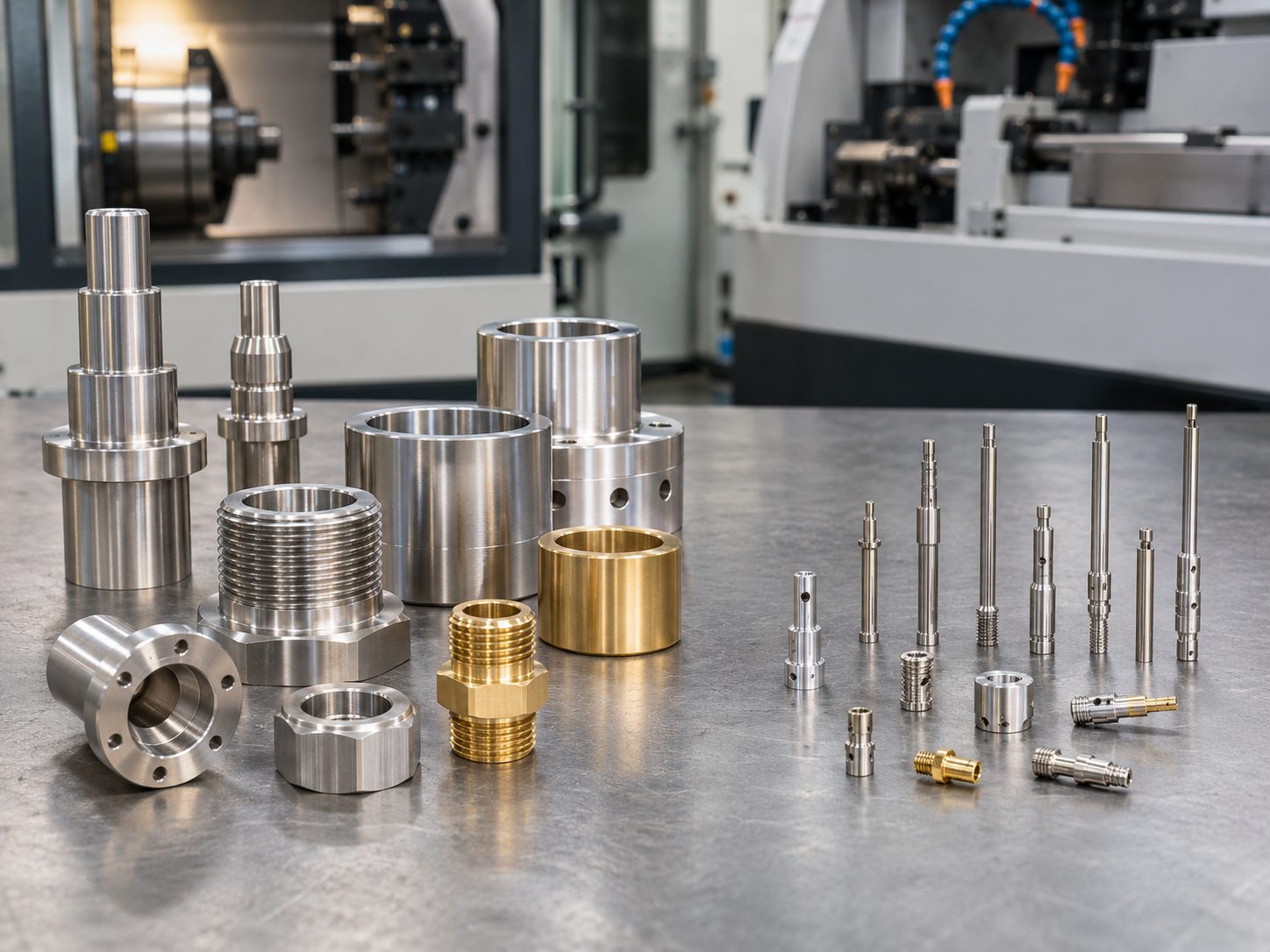
Choosing between conventional CNC turning and Swiss machining is not simply a question of which machine is more accurate. The right process depends on the part diameter, unsupported length, feature layout, material, production quantity and inspection requirements.
Both processes can produce shafts, pins, bushings, sleeves, connectors and threaded components. However, a short, rigid part with a larger diameter may be more economical on a conventional turning center, while a long, small-diameter component may benefit from the guide-bushing support and multi-operation capability of a Swiss-type lathe.
OEMach reviews the drawing-defined requirements before assigning a route. This guide explains the practical differences so engineering and sourcing teams can prepare a clearer request for quotation.
Quick Process Selection Guide
| Decision Factor | Conventional CNC Turning | Swiss Machining | RFQ Implication |
|---|---|---|---|
| Part geometry | Short to medium-length rotational parts, larger diameters and rigid profiles | Small-diameter, long or slender parts with closely spaced turned and milled features | Send overall length, maximum diameter and stock preference |
| Work support | Part is primarily supported by the chuck, collet or tailstock | Bar stock is supported close to the cutting tool by a guide bushing when used in guide-bush mode | Identify slender sections and surfaces sensitive to deflection |
| Feature mix | OD/ID turning, facing, grooves, threads, drilling and selected live-tool features | Turning plus cross holes, flats, slots and end features in one automated cycle, depending on machine configuration | Include a complete 3D model and a controlled 2D drawing |
| Quantity | Prototypes, small batches and production quantities | Often strongest for repeatable batches of small parts after setup is established | State prototype quantity and expected repeat demand |
| Material use | Flexible for cut blanks, forgings and bar stock | Commonly bar-fed; straightness, diameter consistency and remnant length affect planning | Specify material grade, condition and certificate needs |
| Cost driver | Setup, cycle time, number of operations and secondary handling | Setup and tooling can be higher, but reduced handling may lower unit cost at volume | Request a route review rather than specifying a machine without functional reasons |
The table is a starting point, not a fixed rule. Modern Swiss-type machines can run with or without a guide bushing, and conventional turning centers can use tailstocks, steady rests and live tooling. The drawing and production plan should control the decision.
What Is Conventional CNC Turning Best For?
CNC turning rotates the workpiece while cutting tools generate cylindrical surfaces, faces, grooves, threads, tapers and bores. It is a practical route for components such as motor shafts, collars, bearing sleeves, threaded adapters, spacers and bushings.
Conventional turning is often the better starting point when the component is relatively short and rigid, has a moderate or large diameter, or is required only in prototype and low-volume quantities. It can also be suitable when the blank is not supplied as standard bar stock or when the part requires substantial material removal.
Typical candidates include:
- Short shafts with shoulders, bearing seats and external threads
- Bushings and sleeves with controlled inside and outside diameters
- Flanges, collars and round adapters
- Larger-diameter connectors and threaded components
- Prototype turned parts where setup flexibility matters more than high-volume automation
If a turned part also contains extensive pockets, off-axis surfaces or complex milled geometry, the route may involve live tooling, a second milling operation or a different process. The supplier should evaluate the complete feature set rather than treating every round blank as a turning-only component.
What Is Swiss Machining Best For?
Swiss machining services use a sliding-headstock architecture. In guide-bush operation, the bar is supported close to the cutting zone, reducing the unsupported length during cutting. This arrangement is especially useful for small-diameter parts whose length would otherwise make deflection, vibration or surface-finish control more difficult.
Swiss-type machines may combine turning, drilling, cross drilling, slotting, thread making and back-working in one automated cycle. That can reduce work transfers and improve repeatability between related features. The process is commonly considered for precision pins, miniature shafts, electrical contacts, medical-device components, instrument parts and small connectors.
Strong candidates include:
- Long, slender shafts and pins
- Small-diameter parts with tight relationships between several turned features
- Components with cross holes, flats, slots or milled details
- Repeat orders where stable bar-fed production can offset setup effort
- Parts that benefit from front and back operations in one cycle
Swiss machining is not automatically the lowest-cost route for every small part. Bar-stock requirements, guide-bushing compatibility, setup time, tooling and expected quantity all matter. Short components with simple geometry may still be more economical on a conventional lathe or in guide-bush-less operation.
Seven Factors That Determine the Better Process
1. Diameter and Length-to-Diameter Ratio
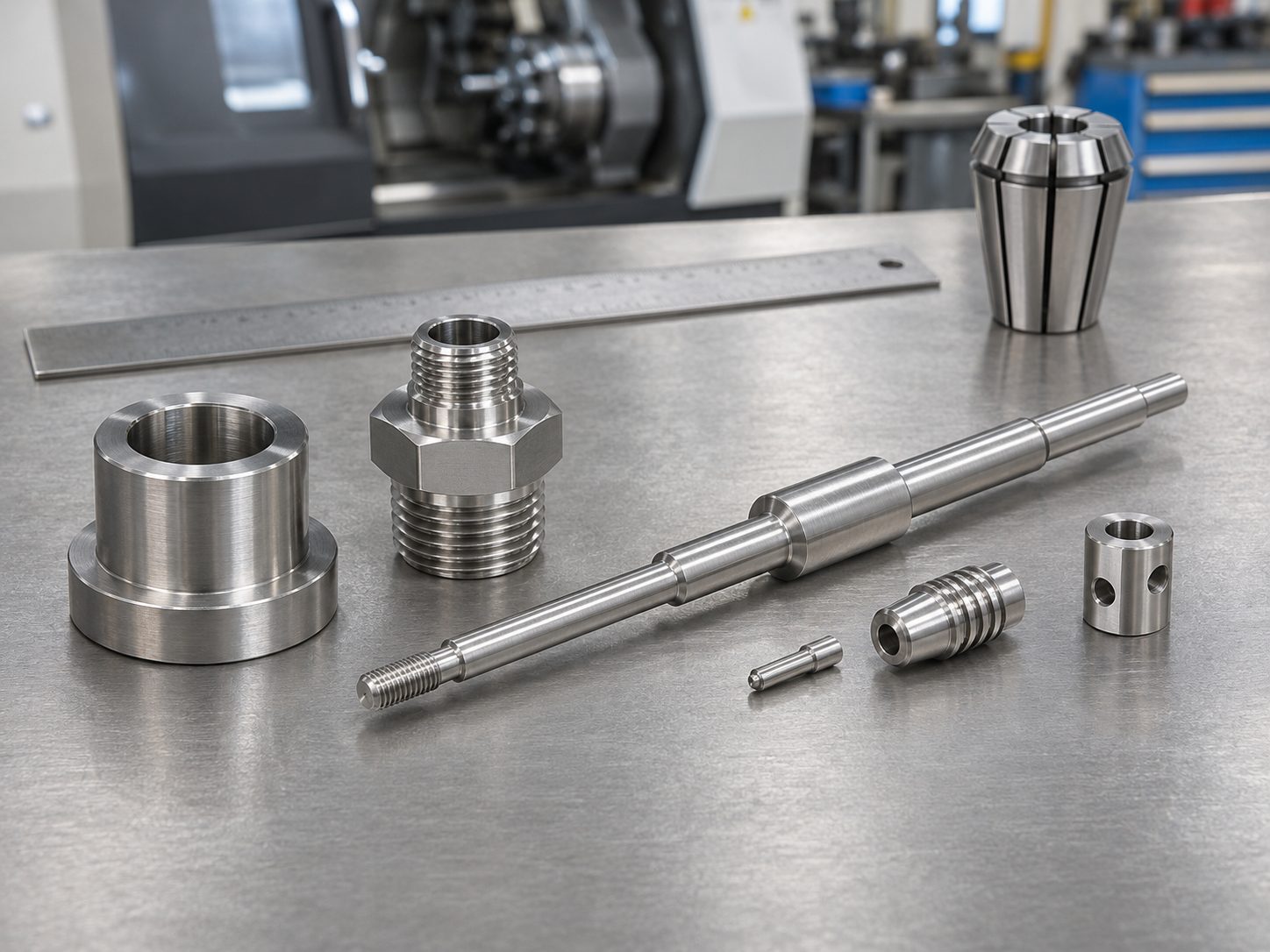
The most visible difference is often the relationship between part length and diameter. As a part becomes longer and more slender, cutting forces can cause deflection or chatter. Supporting the stock close to the tool can improve stability, which is why Swiss machining is frequently considered for long small-diameter components.
Do not evaluate the overall part ratio alone. A component may have one slender stem connected to a larger head, or a long length may contain only noncritical surfaces. Mark the diameters, journals and surfaces that control function so the supplier can focus the process review where it matters.
2. Part Rigidity and Wall Thickness
Thin walls, deep bores and narrow sections can move during cutting or clamping. Conventional turning may still be suitable if the part can be supported with a tailstock, custom soft jaws or process-specific tooling. Swiss machining may reduce unsupported cutting length, but it does not eliminate deformation caused by thin geometry or material stress.
The RFQ should identify minimum wall thickness, fit-related diameters and any surfaces that must remain free from jaw marks or distortion.
3. Cross Holes, Flats and Milled Features
When a turned component also needs cross holes, wrench flats, slots or radial threads, secondary handling can become a major cost and alignment driver. A Swiss-type machine with live tooling may complete these features in one route. A conventional turning center with live tooling may do the same, depending on machine configuration and part size.
Ask the supplier to confirm which features are completed in the primary setup and which require a secondary operation. This is more useful than requesting a specific machine name without knowing its tool configuration.
4. Tolerance, Runout and Surface Finish
Diameter tolerance is only one requirement. Bearing seats, sealing surfaces and multi-diameter shafts may also need controlled runout, coaxial relationships, straightness and surface roughness. The best route is the one that establishes a clear datum strategy and minimizes unnecessary re-clamping between related features.
For critical components, provide a 2D drawing that identifies the datum axis, runout requirements, surface-roughness values and inspection expectations. Refer to the Tolerance Guide when preparing these notes.
5. Material and Bar-Stock Condition
Stainless steel, aluminum, brass, copper alloys, titanium and engineering plastics can all be turned, but they behave differently during cutting. Material hardness, toughness, thermal growth, chip control and residual stress affect tool choice and cycle planning.
Swiss machining also relies heavily on consistent bar stock. Bar diameter, straightness and surface condition can influence guide-bushing selection and stable feeding. When requesting stainless-steel parts, brass or copper components or engineering-plastic parts, state the exact grade and any material certificate requirement.
6. Quantity and Repeat Demand
Swiss machining can be efficient for repeatable batches because multiple operations may be integrated into one automated cycle. However, the initial setup, program, tooling and bar preparation still need to be justified.
For a prototype quantity of five pieces, a conventional lathe may offer a faster and simpler path. For hundreds or thousands of recurring small parts, Swiss machining may reduce handling and per-part cycle cost. Tell the supplier both the immediate order quantity and the expected annual demand; quoting only the first sample quantity can produce the wrong production recommendation.
7. Inspection and Documentation
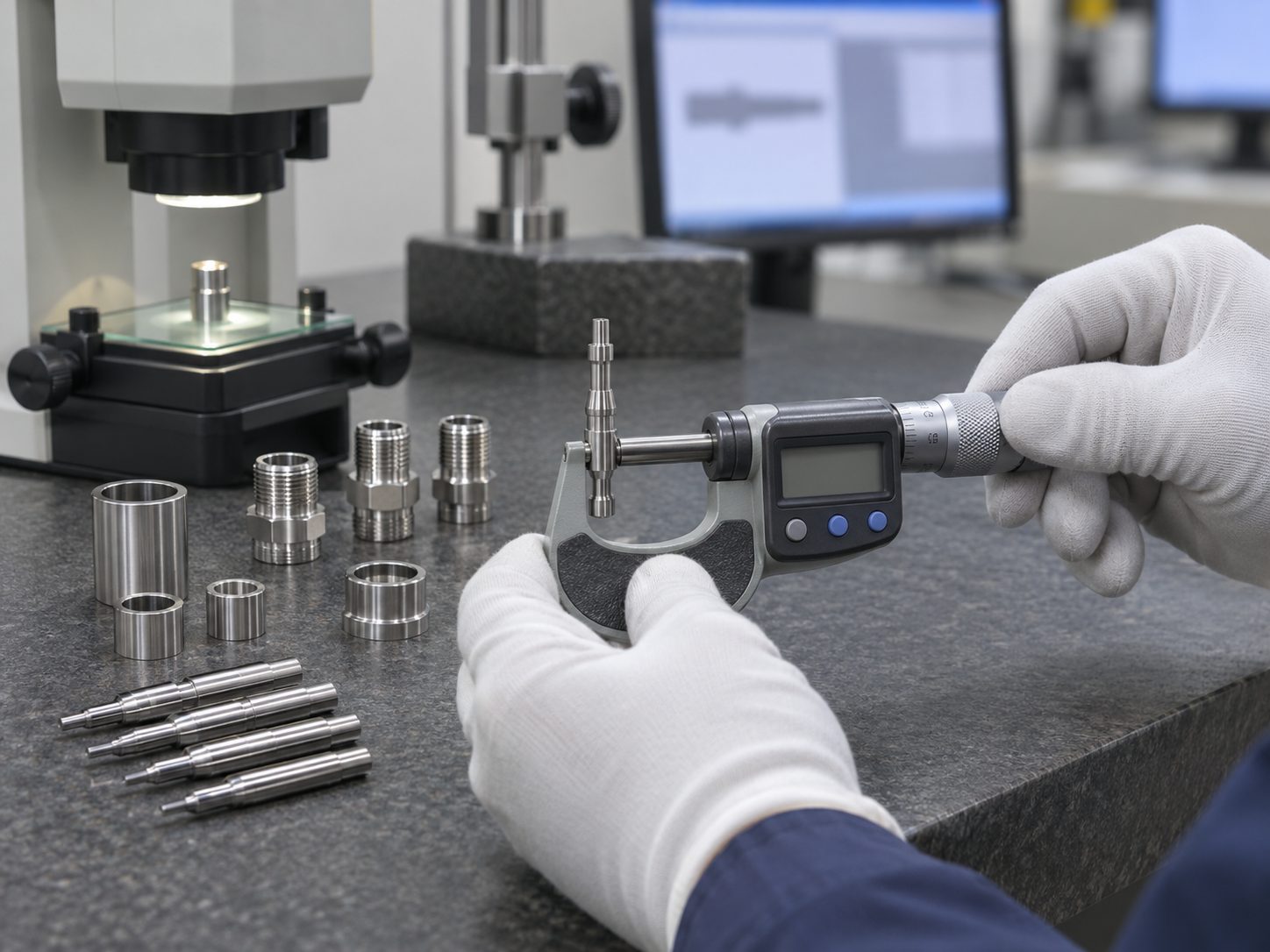
The process should support the required verification method. Micrometers, bore gauges, thread gauges, optical systems, roundness equipment and CMM inspection may be used depending on feature size and tolerance. Very small features may need a different inspection plan from larger shaft diameters.
State whether the order needs a dimensional report, first article inspection, material certificate, CMM report, surface-roughness result or special packaging. Inspection work affects both lead time and price and should be reviewed before quoting.
Typical Part Examples
| Part Type | Likely Starting Route | Why |
|---|---|---|
| Short bearing sleeve with OD, ID and face controls | Conventional CNC turning | Rigid geometry and straightforward turned features |
| Long locator pin with a small diameter | Swiss machining | Close work support can reduce deflection during cutting |
| Threaded adapter with a larger body | Conventional CNC turning | Larger diameter and short profile suit a standard turning setup |
| Small connector with cross holes and flats | Swiss machining or live-tool turning | Combining turned and milled features may reduce handling |
| Prototype motor shaft, quantity 10 | Conventional CNC turning | Lower setup burden may be more economical for a small first order |
| Recurring precision pin, quantity 5,000 | Swiss machining | Bar-fed repeat production can improve throughput and consistency |
These examples are not process guarantees. Final routing depends on the drawing, equipment envelope, stock condition, tooling and inspection plan.
Cost and Lead-Time Tradeoffs
The cheapest machine rate does not necessarily produce the lowest total part cost. A conventional turning route may have a simpler setup but require secondary milling, manual transfer or additional inspection. A Swiss route may have more setup work but complete more features in one cycle.
Important cost drivers include:
- Programming, setup and special tooling
- Raw material diameter, condition and minimum purchase quantity
- Cycle time and tool life
- Secondary operations and re-clamping
- Deburring, cleaning and surface finishing
- Inspection reports and certificates
- Batch size, repeat frequency and delivery schedule
For an apples-to-apples quote, give each supplier the same model, drawing, quantity, material, finish and documentation requirements. If alternate processes are acceptable, say so. A supplier may identify a simpler route that preserves function without changing the controlled drawing requirements.
How OEMach Reviews the Machining Route
OEMach begins with the functional features rather than assigning the process by part name. The review considers maximum and minimum diameters, overall length, slender sections, datum relationships, cross features, threads, surface finish, material, quantity and inspection needs.
Depending on the part, the recommended route may use conventional CNC turning, Swiss machining, micro CNC machining or a combination of turning and milling. Any assumptions that affect price or manufacturability should be clarified before production.
RFQ Checklist for Turned and Swiss-Machined Parts
Send the following information for a useful route review:
- STEP or STP model showing the complete part geometry
- Controlled 2D PDF drawing for tolerances, datums, threads and surface finish
- Material grade, condition and certificate requirement
- Prototype quantity, production quantity and expected repeat demand
- Critical diameters, fits, runout or coaxial relationships
- Cross holes, flats, slots and features requiring live tooling
- Heat treatment, plating, passivation, anodizing or other finishing
- Inspection report, first article or packaging requirements
- Target delivery date and shipping destination
The RFQ Checklist can help teams assemble this package before contacting suppliers.
Frequently Asked Questions
Can Swiss machining be used for short parts?
Yes. Many Swiss-type machines can produce short components, and some can operate without a guide bushing. Whether this is economical depends on the geometry, quantity, bar stock, tooling and available machine configuration. A short, simple part may still be cheaper on a conventional turning center.
Is Swiss machining always more accurate than CNC turning?
No. Both processes can produce precision parts when the machine, tooling, setup and inspection plan match the requirement. Swiss machining provides a useful support arrangement for small, slender components, but accuracy still depends on material behavior, feature relationships, tool wear and measurement method.
What part diameter is suitable for Swiss machining?
There is no universal cutoff because Swiss-type machines have different bar capacities. The practical decision also depends on length, feature complexity and quantity. Send the maximum diameter, overall length and expected volume so the supplier can check a specific equipment route.
Can both processes make cross holes and flats?
Potentially, yes. Conventional turning centers and Swiss-type machines may both use live tooling, but machine configuration varies. The supplier should confirm whether the cross features can be completed in the primary cycle or require secondary milling.
What files should I send for a turning or Swiss-machining quote?
Send a STEP or STP model plus a 2D PDF drawing when the part has critical diameters, threads, runout, surface roughness or inspection requirements. Include material, quantity, finish, documentation needs and delivery target.
Request a Manufacturing Review
Send your STEP/STP files, 2D drawings, material grade, quantity, finish and inspection requirements to qiancj@oemach.com. OEMach will review part geometry, process suitability, tolerance risks and the proposed machining route before quoting.
For a large drawing package, use the website RFQ form.
Send drawings for a manufacturing review. Email your STEP/STP files, 2D drawings and requirements to qiancj@oemach.com, or use the drawing upload form below for a large file package.