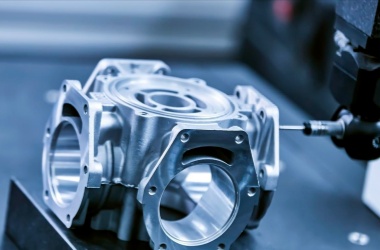
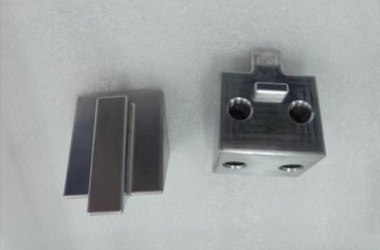
Casting and machining are two common processing methods in the manufacturing industry, each with its unique advantages and application areas. Choosing the appropriate processing method not only affects production efficiency, but also directly relates to cost control. In this article, we will delve into whether casting processing is more economical than machining, as well as the various factors that affect the cost of both.
1、 Basic concepts of casting and machining
1. Casting processing: Casting is the process of heating metal materials to a molten state and pouring them into a mold to cool and form. Usually used for manufacturing large, complex, or irregular parts, with high material utilization and the ability to produce in large quantities.
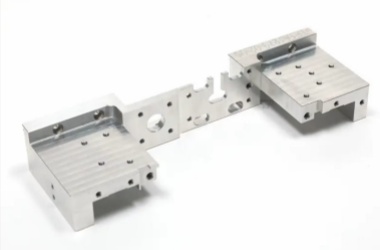
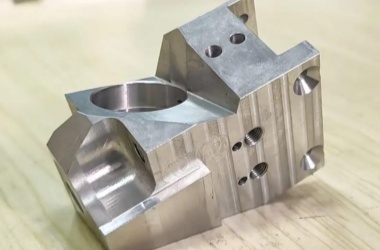
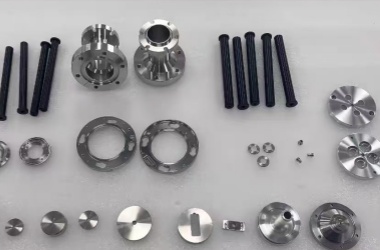
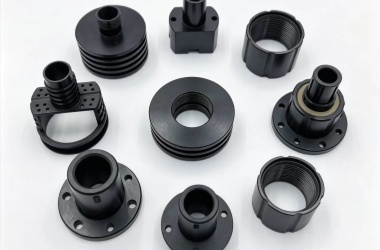
2. Machining: Machining is the process of cutting, polishing, and other treatments on metal parts using mechanical equipment to achieve the desired shape and accuracy. The commonly used machining methods include turning, milling, drilling, etc., which are suitable for high-precision, small batch production.
2、 Cost composition analysis
1. Material cost:
-Casting processing usually uses metal alloys, and the market price changes of these alloys will directly affect casting costs. Meanwhile, the casting process can effectively utilize waste materials, thereby reducing material costs.
-Machining usually requires the use of bulk materials, which makes material costs relatively high, especially when producing complex shaped parts, resulting in a large amount of waste.
2. Labor cost:
-The casting process has a relatively high degree of automation and less manual participation, so in large-scale production, labor costs are significantly reduced.
-Although machining also has modern equipment, there is a high demand for skilled workers in the operation and adjustment process, especially when highly precise machining is required, resulting in more significant labor costs.
3. Equipment investment:
-Casting equipment generally includes furnaces, casting molds, etc. The initial investment is relatively large, but because multiple parts can be produced at once, the long-term cost of each part is relatively low.
-Machining equipment such as CNC machine tools, milling machines, etc., although the investment for a single device is relatively low, requires continuous maintenance and technological updates, and the cost of long-term use gradually increases.
4. Production cycle:
-Casting processing usually requires a long production cycle, especially in mold making, and the cost of mold making also needs to be taken into account. However, for large-scale demand, casting can achieve good economic benefits in terms of time.
-Machining is relatively flexible in production cycle, suitable for small batch orders, especially in response to market fluctuations, and can quickly adjust production.
3、 The relationship between engineering complexity and cost
When deciding whether to use casting or machining, the complexity of the parts and design requirements are often important considerations.
1. Advantages of casting: For parts with complex shapes and uneven wall thickness, casting can easily handle them without the need for later processing, which can significantly reduce costs. For example, casting is a more valuable choice for large parts such as the cylinder block of a car engine.
2. Advantages of machining: Machining is more suitable when extremely high dimensional accuracy and surface smoothness are required. Although the output of machining is slower, the quality control is stricter, which can ensure the accuracy of each part and is suitable for industries such as aerospace.
4、 Case study on cost comparison between casting and machining
By using specific cases, the cost difference between casting and machining can be analyzed more intuitively.
-Case 1: Production of automotive parts
Assuming that 1000 car wheels need to be produced, casting processing can be completed in one go, while machining requires multiple processes. In terms of materials, casting can utilize recycled materials, saving 30% of costs, while machining requires the purchase of new metal blocks, adding an additional 40% of material costs. Combining labor costs and equipment maintenance, the final cost of casting each wheel rim was 45 yuan, while machining reached 80 yuan.
-Case 2: Aviation components
For the components of a certain aircraft, due to its high requirements for safety and accuracy, the design team decided to choose machining to ensure that each part meets the standards. After multiple tests and reprocessing of the finished product, although the cost of machining is high, it is a necessary investment to ensure product quality, and the final safety factor is guaranteed.
5、 Which is cheaper, casting or machining?
Overall, when considering mass production and low requirements for shape and size, casting processing is significantly cheaper than machining. However, once entering the field of high precision and high technology, machining demonstrates its irreplaceable advantages.
When choosing a processing method, enterprises should conduct a comprehensive cost analysis, deeply consider various factors such as product demand, production batch, R&D cycle, material properties, etc., in order to select the most cost-effective solution. By combining the advantages of two processing methods, enterprises can also find the best balance between flexibility and economy, promoting production efficiency improvement and cost control optimization.
Through the above analysis, we hope to help more manufacturing companies gain a deeper understanding of the respective characteristics of casting and machining, so as to occupy a favorable position in the fiercely competitive market.